
How Live Dealer Casinos Actually Work for Australians in 2026
A live dealer casino runs on a studio floor somewhere in Europe or Asia, with real cards, a real wheel, and a real human dealing them, streamed to a betting interface on a phone or laptop. For Australians, that is the appeal in one sentence: land-based casinos are scarce and concentrated in capital cities, and live tables online bring the felt to the screen. The complication is structural. The Interactive Gambling Act 2001 makes online casino illegal to provide to anyone in Australia, and no Australian state or territory issues an online casino licence. A player signing up to any brand on this page is using an offshore, Curacao-licensed operator, with no Australian consumer protection, no recourse to local complaints bodies, and a site the ACMA can block at any time.
Verified as of 22 November 2026 against the ACMA register and the listed operators’ licence pages.
Table of Contents
- What a Live Dealer Casino Actually Is (and Why Australians Seek It Out)
- The Live Dealer Games That Matter — Blackjack, Roulette, Baccarat, and the Shows Driving the Boom
- The Best Live Dealer Casinos Accepting Australians in 2026
- Why Your Live Casino Bonus Is Smaller Than It Looks
- Crypto at the Live Table — Bitcoin, Speed, and What the Ban Means for You
- The Offshore Reality Every Australian Live Dealer Player Faces
- Staying in Control — Responsible Gambling Tools That Work (and the Ones That Don’t Offshore)
- How We Picked and Ranked These Live Dealer Casinos
- Your Live Dealer Checklist — Where to Start Without Getting Burnt
- Frequently Asked Questions
What a Live Dealer Casino Actually Is (and Why Australians Seek It Out)
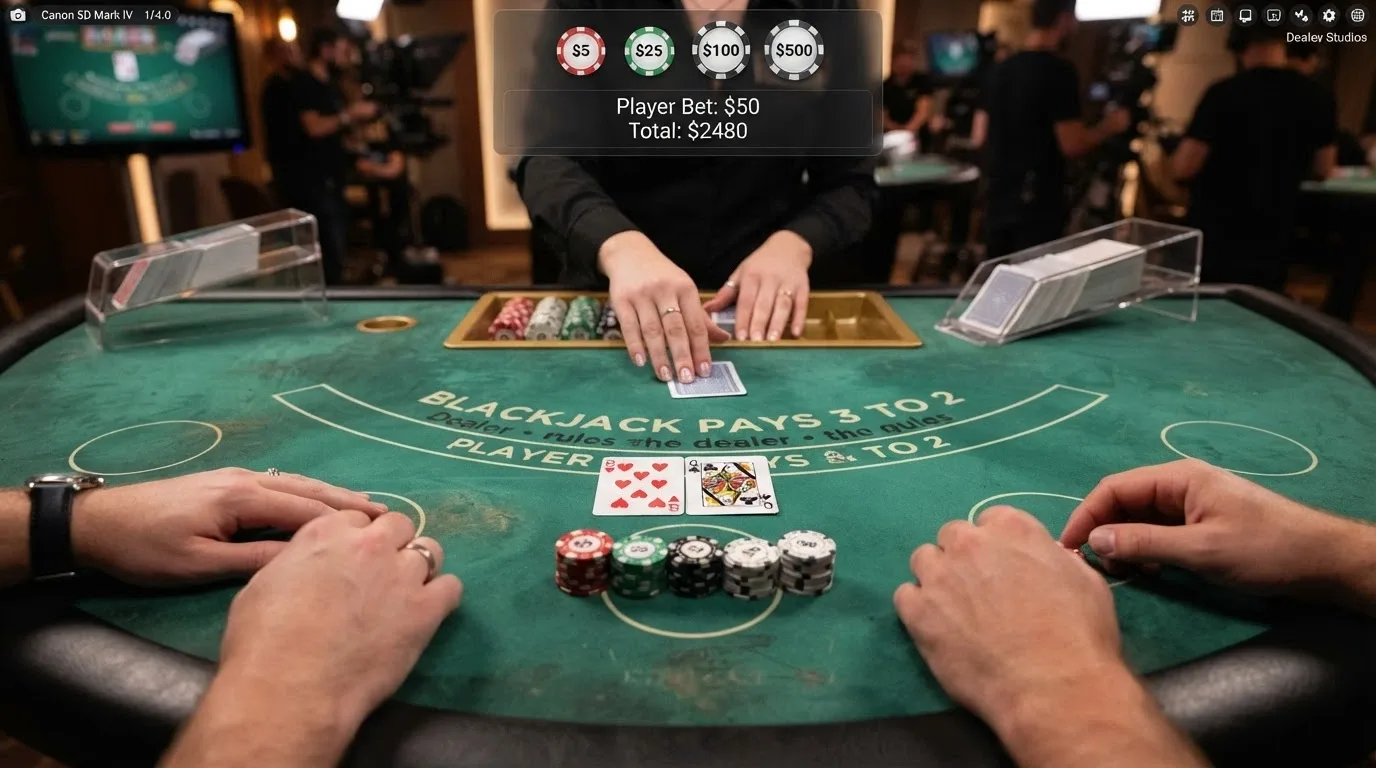
The format is older than most players realise. Live dealer studios have been streaming real games over the internet since the mid-2000s, and the technology has converged on a stable shape: a physical table in a purpose-built studio, several HD cameras covering the dealer and the felt, a chat window where players type to the dealer and each other, and a betting overlay on the player’s screen that translates clicks into chips on the table. A croupier in Riga or Bucharest deals real cards to real shoes; the player in Sydney sees them in their browser and decides whether to hit.
What has changed over the last few years is scale. Evolution Gaming, the dominant studio provider, runs hundreds of tables from multiple studios across Europe and North America, and Pragmatic Play Live has built a parallel catalogue. Game-show formats — Crazy Time, Monopoly Live, Lightning Roulette — pulled in casual players who never sat at a blackjack table, and live dealer is now the largest single growth vertical in the online casino segment. Australia’s online gambling market sat at roughly USD 5.2 billion in 2024 with a projected 5.88% annual growth rate through 2033, and the online casino segment is growing faster, at double-digit rates through 2034. Live dealer is a meaningful slice of that.
What a Live Dealer Game Actually Is
A live dealer game is a streamed casino game. The dealer is a person in a studio, not a computer algorithm. Cards come from a real shoe, roulette comes from a real wheel, dice come from a real croupier’s hand. Cameras — usually three or four — capture the dealer, the table, and close-ups of the cards or wheel as the round resolves, and the player watches on a standard internet connection. Decisions (hit, stand, bet on red, take another card) happen on a digital betting interface overlaid on the stream.
The contrast with a standard online casino game is direct. Standard online table games are RNG-based: a random number generator decides each card, and the round resolves in roughly half a second. Live dealer rounds move at human speed — twenty to forty seconds per hand at most tables, faster at the “Speed” variants — which gives players time to think, time to chat, and the sense of being at a real table rather than playing a slot machine with cards. The social layer matters. Most studios include a chat window where players type to the dealer; the dealer responds by name, reads out a player’s bet, congratulates a win. It is not the same as a casino floor, but it is not the same as an RNG game either.
The Australian Online Market — Distance, Isolation, and the Land-Based Gap
Australia’s land-based casinos number in the dozens and concentrate in capital cities — Crown Melbourne, The Star Sydney, Crown Perth, plus a small set of state-based venues. For most Australians, the nearest casino is a flight or a long drive. The country is geographically isolated, its population clusters on the coasts, and the venues that do exist are not evenly distributed. As one industry summary put it, “with the isolated nature of Australia, its few casinos are limited to the big cities. By playing at live tables, people get the social interaction of the actual brick-and-mortar visit, with the convenience of playing from home.”
The Interactive Gambling Act 2001 closes the obvious domestic alternative. It is illegal to provide online casino games — live dealer included — to anyone in Australia, and no Australian state or territory issues a licence for an online casino. There is no federally-licensed live dealer product. Every option on this page, every brand reviewed below, every table a player clicks into from an Australian IP address, is run from outside Australia by a Curacao or equivalent offshore licence holder. That is the structural feature of this market, and it is worth stating plainly before the names appear.
Real-Money Play — Stakes, Tables, and How It Works
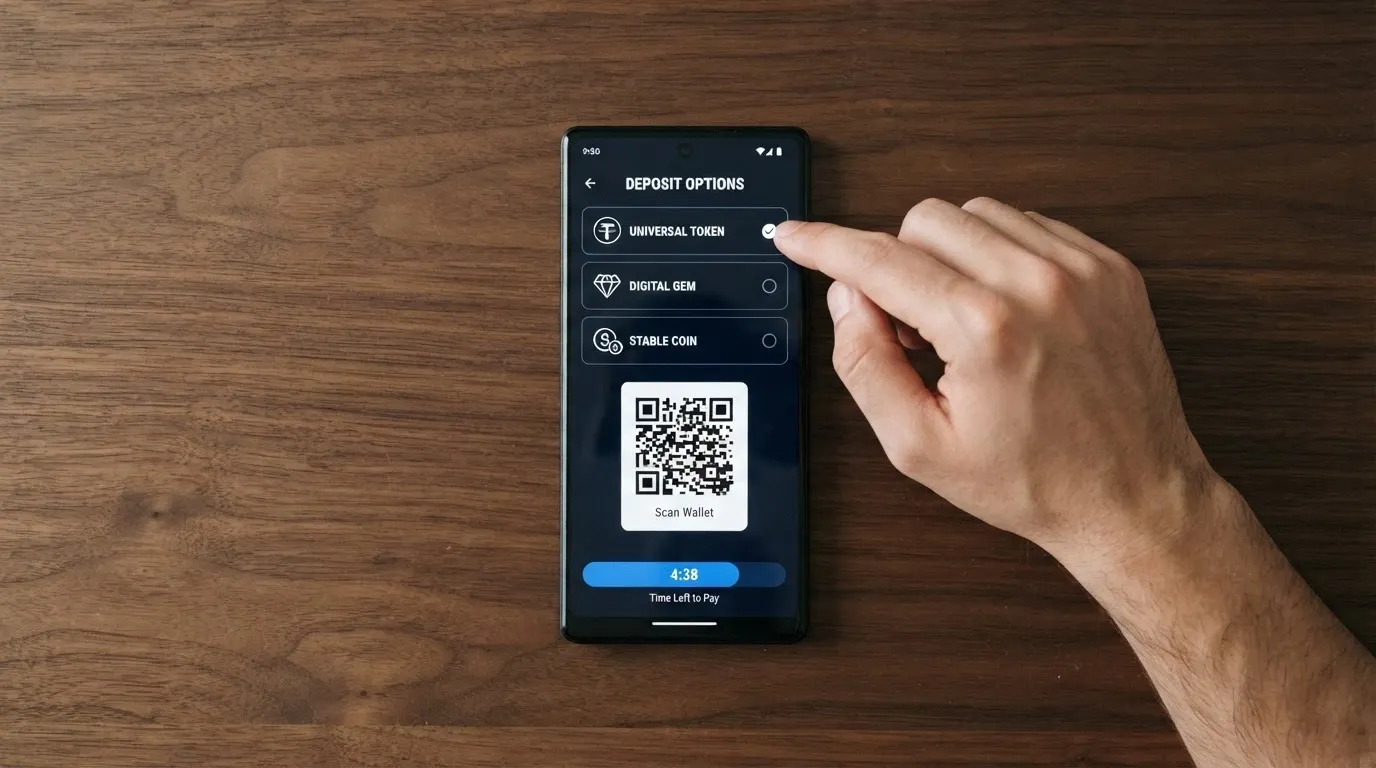
A real-money live dealer session starts with an account. The player registers an email and password, supplies basic identification for the offshore operator’s KYC check (the timing varies: some brands ask at cashout, others at signup), and deposits. The two practical deposit routes from Australia are AUD — debit card, POLi, PayID at the brands that support them, with bank transfer as a slower fallback — and crypto, which most offshore brands accept and which clears fastest. Minimum deposits range from A$10 to A$30 at most AU-facing brands; crypto minimums are denominated in coin (0.0001 BTC, roughly A$10, is typical at the live tables themselves).
Once funded, the player picks a table. Live blackjack is the most popular entry point and the easiest to find at low stakes: Bizzo’s blackjack floor runs from A$1 to over A$1,000 per hand, with most other brands in a similar A$1–A$20 range at the standard tables and higher minimums at VIP rooms. Live roulette sits at A$0.50–A$1 minimums on the outside bets. Live baccarat minimums are usually A$1–A$5. From there the round is the round — same rules as a physical casino, same payouts, same house edge. The difference is the pace, the camera, and the chat window.
Winnings return to the player balance on settlement. Withdrawals follow the operator’s stated speed: crypto, often minutes; debit cards, hours to a couple of days; bank transfer, three to five business days in the standard case. That speed gap is the structural reason crypto dominates at offshore live dealer casinos — the section on crypto at the live table covers it in detail.
Mobile Play and Free-Access Tables
Roughly 80% of bets placed in Australia’s online gambling sector are placed on a mobile device. Live dealer studios have been designed for this since the late 2010s: tables render in portrait or landscape, betting interfaces scale to a thumb, and the video stream adapts to mobile bandwidth. Most brands run the live casino inside the mobile browser rather than a dedicated app — browser-based access avoids app-store restrictions on real-money gambling apps in some jurisdictions and lets the same login work across phone, tablet and desktop. A handful of brands offer dedicated apps; performance is comparable.
Free-play is harder. Live dealer studios do not run demo tables the way an RNG slot does — the dealer is being paid by the minute, the studio cannot afford to host an empty table, and free-play live tables are vanishingly rare at offshore brands. RNG versions of blackjack, roulette and baccarat do offer demo mode on most sites, which is the closest substitute. A player who wants to practise live blackjack strategy plays a few hands of RNG blackjack first, then moves to a live table with low stakes once they are comfortable.
The Live Dealer Games That Matter — Blackjack, Roulette, Baccarat, and the Shows Driving the Boom
The live dealer catalogue is built on three table staples and a fourth category that did not exist a decade ago. Blackjack, roulette and baccarat have been streamed since the format’s earliest days and remain the volume base. Game shows — Crazy Time, Lightning Roulette, Monopoly Live, Funky Time — arrived later and now drive a striking share of Australian wagers: roughly 35% of all live casino bets placed nationally go through game-show formats, not through the table games.
That share matters because it tells the reader where the catalogue is moving. Evolution Gaming holds around 70% of the global live-dealer market and its catalogue appears in full on 22 of 30 reviewed AU-facing platforms. The remaining eight offer partial Evolution coverage, usually blackjack and roulette only, supplemented by Pragmatic Play Live or smaller providers. A player picking a brand for live dealer play is, in practice, picking an Evolution catalogue — and Evolution’s catalogue is built around the three classics plus a fast-growing game-show shelf.
Blackjack, Roulette, and Baccarat — the Core Table Variants
Each of the three core games arrives in multiple live variants with different pacing and side bets. Live blackjack: standard seven-seat tables sit alongside Infinite Blackjack (one hand, unlimited players, no seat scarcity), Salon Privé tables for high rollers, and Blackjack Party for a casual pace with two dealers chatting through the round. Live roulette: standard European and American wheels, Immersive Roulette with slow-motion replays of the ball drop, Speed Roulette at roughly half the round time of the standard version, Lightning Roulette with random multipliers on straight-up numbers, and Auto Roulette with no dealer for players who want pure wheel-spin. Live baccarat: standard punto banco, Speed Baccarat, Squeeze Baccarat (the dealer slowly reveals cards the way a Macau table does), and controlled-tempo variants that slow the round to a couple of minutes.
Side bets and rule variations separate live variants from their RNG cousins. Evolution’s Infinite Blackjack offers side bets (Hot 3, 21+3, Bust It) the standard seven-seat table does not. Lightning Roulette replaces even-money inside-bet payouts with multiplied payouts on a few randomly chosen numbers each round. Live baccarat adds pairs and tie side bets the RNG version usually omits. A player moving from RNG to live is not playing the same game with a different interface — they are picking a variant with different payouts and a different house edge, sometimes significantly different.
Game Shows and Specialty Tables — the Fastest-Growing Segment
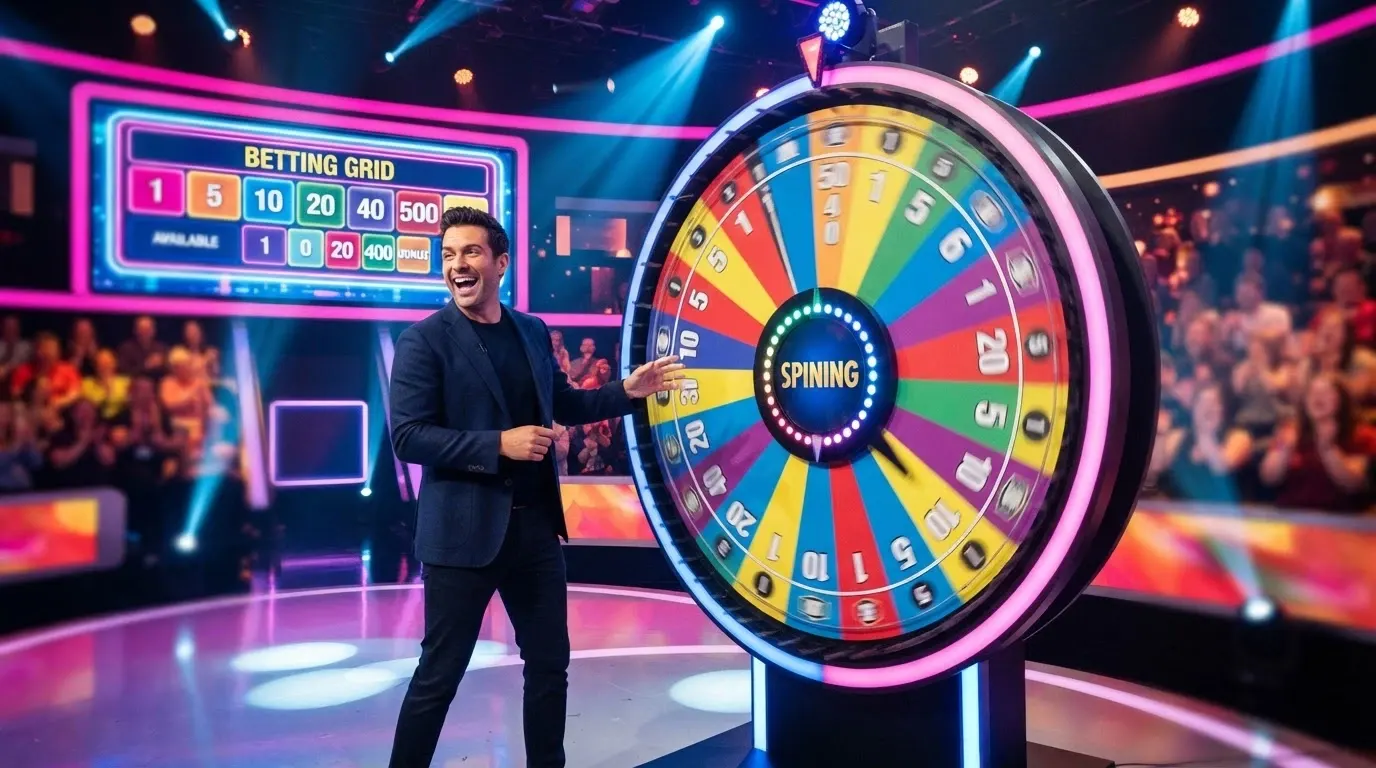
Crazy Time is a money wheel with four bonus rounds. Monopoly Live is a money wheel that, on a bonus segment, drops a 3D Mr Monopoly onto a virtual board and rolls for cash prizes. Lightning Roulette and Lightning Dice attach randomised multipliers to individual numbers. Funky Time is a 1970s disco-themed wheel with bonus rounds. These formats are not table games dressed up; they are their own product, built around the host rather than the dealer, around the bonus round rather than the spin, and around a pace that keeps a player watching rather than deciding.
The Australian figure is the one to hold onto: roughly 35% of all live casino wagers placed nationally go through game-show formats. Crazy Time and Lightning Roulette lead, Monopoly Live and Funky Time are close behind, and the segment keeps growing as Evolution and Pragmatic Play ship new titles. A player who walks into a live casino lobby and clicks the first table they see is more likely than not to land on a game show. A player prioritising a quieter environment may need to scan the lobby for low-traffic tables.
The Providers Powering the Tables — Evolution, Pragmatic Play, and the Rest
Evolution Gaming built the live-dealer industry and still runs it. Around 70% market share globally, hundreds of tables in multiple studios, and a catalogue that reaches from standard blackjack to branded game shows. Pragmatic Play Live is the second force — smaller catalogue, smaller market share, but present at most major AU-facing brands and offering its own game shows (Mega Wheel among them). Ezugi, OnAir Entertainment and Authentic Gaming fill out the long tail with regional studios and localised tables; they appear at fewer AU-facing brands, often as a supplement to an Evolution catalogue rather than a replacement.
Provider choice drives the experience in concrete ways. Stream quality: Evolution and Pragmatic run at HD at most tables, with 4K at the flagship studios. Game variety: a brand that runs Evolution’s full catalogue offers 100+ live tables; a brand that runs Ezugi plus partial Evolution may run a couple of dozen. Localised tables: some providers offer native-speaking dealers (Italian, German, Spanish) for players who want that layer. A player comparing two brands for live-dealer play is, in practice, comparing their Evolution coverage.
Table Limits, Pacing, and What a Live Session Actually Feels Like
A live dealer round resolves at human speed. Standard blackjack tables run 50–70 hands per hour at a controlled pace; Speed Baccarat and Speed Roulette roughly double that. RNG versions resolve in milliseconds. The difference is noticeable on a mobile screen and takes some adjustment for players used to RNG pace — a Speed Baccarat round at a fast table is fast enough that players who like to think between decisions may want a controlled-tempo variant instead.
Table limits span four orders of magnitude. Standard tables sit at A$1–A$20 minimums on blackjack and baccarat, A$0.50–A$1 on roulette. VIP and Salon Privé tables push minimums to A$100, A$500 and beyond, with maximums that scale to match. Crypto tables open the lower bound: minimums as low as 0.0001 BTC (roughly A$10) are common, and maximums run 5–10 BTC per hand at the high-stake tables.
Seat availability is the structural constraint a player feels first. Standard seven-seat blackjack tables fill up at peak times — Friday and Saturday nights in Australian time, which is European morning and afternoon — and a player who cannot get a seat has to wait or move to Infinite Blackjack. Game shows do not have seats in the same sense; players bet on the outcome without occupying a position. The chat function is consistent across formats: dealer reads a player’s name on a big bet, congratulates a win, jokes through a cold streak. It is the social layer that distinguishes live dealer from RNG, and it is the part of the format a player either values or does not.
The Best Live Dealer Casinos Accepting Australians in 2026
Before the table: every brand on this list is offshore and unlicensed in Australia. No operator can hold an Australian online casino licence, because none exists. The licences listed in the table below are the licences those brands do hold, issued by regulators in Curacao and equivalent jurisdictions, and they do not give an Australian player any of the protections an Australian-licensed wagering service would.
| Operator | Licence | Welcome Bonus | Wagering × | Live Dealer Contribution | Standout for Live Dealer Players |
|---|---|---|---|---|---|
| Rocket Play | Curacao | Match + free spins | 40x | Excluded | Highest AU market share in the featured set; full Evolution catalogue |
| Skycrown | Curacao | 100% up to A$1,000 + 100 FS | 30x | — | Lowest wagering multiplier in the set |
| Stake | Curacao | Crypto bonus (terms not confirmed) | — | — | Global crypto scale, A$1.6B monthly deposits, F1 naming rights |
| Bizzo | Curacao | A$2,500 + 300 FS | 40x | 40x | Full Evolution game-show suite from A$1 blackjack minimums |
| Royal Reels | Unconfirmed | — | — | — | AU-facing presence, limited confirmed terms |
| WinSpirit | Curacao (Complete Technologies N.V.) | Up to A$2,000 + FS | 35x | Excluded | Mid-set terms, no-deposit cashout cap stated |
| Hell Spin | Curacao 048/JAZ 2017-067 | 150% up to A$450 + FS on Wild Walker | 40x | ≤10% | Only confirmed Curacao sub-licence number; PayID supported |
| BitStarz | Curacao | Up to 5 BTC + 180 FS across 4 deposits | 40x | 5% | Crypto pioneer, sub-10-minute BTC payouts |
| Ignition | Curacao sub-licence | 150% match (casino + poker) | 25x (deposit + bonus) | 0% | Lowest wagering multiplier, sharpest live-dealer trap |
| Wild Tokyo | Curacao eGaming | Up to A$3,300 + 450 FS across 3 deposits | 50x | — | 150+ simultaneous live tables, the largest live-dealer floor |
How We Ranked — the Criteria That Matter for Live Dealer Players
The ranking weighs what a live-dealer player actually uses, not a generic casino score.
- Evolution catalogue coverage. A brand running Evolution’s full live suite offers 100+ tables; a brand running partial coverage offers a couple of dozen. Full Evolution catalogue is a tie-breaker in favour of a brand, since 22 of 30 reviewed AU-facing platforms carry it.
- Live-dealer game variety. Blackjack, roulette, baccarat and game shows are the four categories a live player navigates. A brand offering all four outranks a brand offering only the three table classics.
- Bonus terms as they apply to live games. A 40x wagering multiplier on the bonus amount reads differently when live games contribute 5% or 0%. The bonus terms column shows the headline multiplier; the contribution column shows what it actually costs.
- Payment routes from Australia. AUD deposit routes (debit card, POLi, PayID where supported) and crypto deposit routes (Bitcoin, Ethereum, USDT). Crypto is faster; AUD is simpler.
- Operator track record and transparency. Confirmed licence numbers, published terms, transparent bonus conditions. Hell Spin’s published Curacao sub-licence number is a positive signal; Royal Reels’ unconfirmed licence is a negative one.
This is a qualitative ranking. There is no numerical score underneath, and the criteria above are not weighted. A reader who weights crypto speed above bonus size will reach a different ordering than one who weights wagering multiples above provider coverage, and the table is built to let them do that without my making the choice for them.
Offshore by Default — Every Option Sits Outside Australian Regulation
This must be said before any of the names above mean anything. The Interactive Gambling Act 2001 makes it illegal to provide online casino games — live dealer included — to anyone in Australia. No licence exists federally or in any state or territory. Every brand in this ranking, and every brand a reader might find outside it, is an offshore operator running on a Curacao or equivalent licence. That licence permits them to accept Australian players. It does not give Australian players Australian protections.
What Curacao licensing does: it sets minimum standards for the operator (KYC checks, segregated player funds, dispute resolution processes at the licence-issuer level). What it does not do: it does not give an Australian player recourse to an Australian complaints body if the operator refuses a withdrawal. The Australian Communications and Media Authority, which enforces the IGA, can direct Australian ISPs to block the operator’s domain. Since November 2019, the ACMA has had 1,564 illegal gambling and affiliate sites blocked, and more than 225 services have withdrawn from the Australian market since 2017. A live dealer casino a player uses today can be on the next blocking list, and the brand may withdraw from the Australian market in response, in which case any balance still on the site is recoverable only through the operator’s own dispute process.
Rocket Play — Broad Live Dealer Selection with AU Focus
Rocket Play holds the highest AU market share in this ranking at 9.4%, a figure that reflects both its scale and how Australian-facing the product is. The brand runs Evolution Gaming’s full live suite — the standard tables plus the game-show shelf — on a 2,000+ game floor that covers slots and tables alongside the live vertical. The welcome package is structured as a deposit match plus free spins with a 40x wagering multiplier on the bonus amount, in line with the offshore market’s average of 35x–50x. The live-dealer contribution is reduced or excluded; pokies contribute 100%. A live-dealer-first player reading the small print will see the bonus is built for the slot floor, not the table floor.
The verdict: best AU-facing coverage in the featured set on raw catalogue, with welcome terms that read standard for the offshore market. A player who wants the largest Evolution footprint at a brand with proven AU reach gets it here. Players intending to clear a bonus via live dealer play should verify the effective contribution rate beforehand, as it rarely tracks with headline figures.
Skycrown — Low Wagering and a Capped Bonus Cashout
Skycrown’s headline number is the wagering multiplier: 30x on the bonus amount, the lowest in the featured set against an offshore market average of 35x–50x. The welcome is a 100% match up to A$1,000 plus 100 free spins on the first deposit, with a 30-day validity window that is generous against the 5-day to 14-day windows seen elsewhere. The catch sits in two places. First, the maximum cashout from bonus funds is A$500 — claim the full A$1,000 match, clear the wagering, and the operator will only release A$500 of any winnings derived from the bonus. Second, the live-dealer contribution rate is not fixed across the industry; the standard offshore range is 5%–10%, which means the effective play-through at the live tables could be ten to twenty times the headline figure.
Net effect: the lowest wagering multiplier in the set reads well until the cashout cap lands. Skycrown suits a player making a smaller deposit who wants time to clear the bonus and is willing to play the slots rather than the live tables.
Stake — Crypto-First Live Casino with Global Scale
Stake runs at a scale the rest of this ranking does not approach. Monthly deposit volume around A$1.6 billion globally, F1 car naming rights, and a crypto-first product that has made it the primary brand in the crypto live-dealer niche. Evolution and Pragmatic Play Live both run on the platform, giving a player the dominant catalogues. The Australian-facing bonus terms were not confirmed from an operator page in this round — Stake runs promotions rather than a fixed welcome package — which is itself a signal: the brand assumes a player already understands what a crypto live-dealer bonus looks like and does not need a long terms page to explain it.
The structural flag is the payment model itself. Since 11 June 2024, credit cards and digital currency have been banned as payment for online wagering in Australia. Stake accepts crypto. Every deposit an Australian makes at Stake is an offshore transaction by definition, outside the Australian regulatory framework. There is no prosecution risk on the player’s side — the IGA targets the provider, not the individual — but the protection gap is the entire point of the offshore prohibition.
Take it if: the priority is crypto scale and payout speed and the player is comfortable weighing the brand against a fixed-term welcome package rather than against the rest of this list directly.
Bizzo Casino — Evolution’s Full Suite from A$1 Hands
Bizzo runs the full Evolution game-show catalogue — Crazy Time, Lightning Roulette, Monopoly Live, Funky Time — alongside the standard tables, all from 40+ providers. The blackjack floor sits at A$1 minimums on the standard tables, scaling past A$1,000 on the high-roller rooms. The welcome package is among the largest in the featured set: A$2,500 plus 300 free spins. The wagering multiplier is 40x specifically on live games, which is the operator’s way of stating the contribution rate through a different door — it tells a live player what they actually face rather than letting them read between the lines of a 5% contribution figure. AUD accounts and POLi integration make the deposit side simple for Australian players without crypto.
The read: lowest live-dealer entry stake in the set, full Evolution catalogue, and an AUD-native deposit flow. Bizzo suits a player who wants to walk into a live dealer lobby at a low-stakes table without setting up crypto. The market share (0.57%) is the lowest in the featured set, which is the only structural flag against an otherwise strong offering.
Royal Reels — AU-Facing with Limited Confirmed Data
Royal Reels holds 2.51% AU market share, which puts it in the middle of the featured set by reach but at the bottom on confirmed terms. The licence jurisdiction was not confirmed from a non-affiliate source in this round. Game providers, welcome bonus structure, wagering multiplier, validity window and live-dealer contribution rate all sit in the same unconfirmed column. What can be said is that the brand has a measurable AU audience, which is itself a signal of market position even without the supporting numbers.
Honest assessment: a brand with a real AU footprint but a thin confirmed specification sheet. A player who already has an account at Royal Reels and is comfortable with its terms can read the rest of this ranking to compare. A player comparing Royal Reels to a brand with confirmed terms will find the comparison one-sided, and that is the honest read of the data this round.
WinSpirit — Curacao-Licensed with Competitive Wagering
WinSpirit operates under a Curacao licence issued to Complete Technologies N.V., which gives a player the corporate entity behind the brand rather than a registration in a more transparent jurisdiction. The welcome package reaches up to A$2,000 plus free spins, with a 35x wagering multiplier in the middle of the market’s 35x–50x band. The validity window is 7 days — short against Skycrown’s 30 days, in line with Hell Spin and Rocket Play. No-deposit bonus cashouts are capped in a US$50–US$100 range, which is consistent with the no-deposit segment generally rather than specific to WinSpirit. The live-dealer contribution is reduced or excluded, again in line with the offshore norm.
Suits: a player who reads welcome packages in detail and finds ordinary terms reassuring. Mid-set on every measure — wagering, validity, bonus ceiling — WinSpirit is the brand a player picks when none of the other nine in the ranking stand out for the right reason.
Hell Spin — Transparent Terms and PayID Access
Hell Spin is the only brand in the featured set whose Curacao sub-licence number is confirmed: 048/JAZ 2017-067, issued to TechOptions Group B.V. The welcome package is 150% up to A$450 plus free spins on Wild Walker, with a 40x wagering multiplier on the bonus amount and a 7-day validity window. Free-spin winnings carry a separate 40x multiplier and an A$100 cashout cap, both stated in the terms. The game floor runs 3,500–4,000 titles from 40+ studios. PayID, Visa, Mastercard and crypto are accepted at the cashier; the minimum deposit is A$10, the lowest in the set. The live-dealer contribution rate is 10% or below — the highest of any featured brand with a confirmed rate, which is the small-print win for a live-dealer-first player.
In numbers: smallest bonus in the set, lowest minimum deposit, most transparent terms sheet, only confirmed Curacao sub-licence number. Hell Spin suits a player who values knowing what they are signing up for over chasing the largest package. PayID support is the practical edge for Australian players who do not want crypto.
BitStarz — Multi-Currency Crypto Pioneer with 4,500+ Games
BitStarz has been operating since 2014 and built its reputation on multi-currency support and crypto-friendly banking. The welcome package is up to 5 BTC plus 180 free spins across four deposits — 100% up to 1 BTC plus 180 FS on the first, then 50%, 50% and 100% on the next three — with a 40x wagering multiplier on the bonus amount. The game floor runs 4,500+ titles from Evolution, Pragmatic Play, NetEnt and others. BTC payouts are advertised at sub-10-minute settlement, which is the fastest end of the crypto spectrum. The live-dealer contribution rate is 5%, identical to the broader offshore norm and well below the 100% pokies contribution.
Where it lands: same 5% live trap as every other brand on this page, but the four-deposit welcome and the BTC payout speed are the upside. A player planning to clear a BitStarz bonus at the live tables is doing ten to twenty times the headline play-through, and that arithmetic does not get better just because the bonus is large.
Ignition — Low Wagering Multiplier but 0% Live Contribution
Ignition carries the lowest wagering multiplier in the featured set: 25x on the deposit plus bonus combined. The welcome is a 150% match split between a casino portion and a poker portion, with no free spins in the standard package. The bonus terms look generous until the live-dealer contribution line: live dealer games often count 0% toward wagering, which is the sharpest setting in the featured set and the clearest statement in the market that the bonus is built for slots and poker, not for the live casino floor. Ignition operates under a Curacao sub-licence, and the brand has used domain-hopping to evade ACMA blocking — a transparency flag worth holding onto.
Sharpest line on the page: the lowest wagering multiplier paired with the most punitive live-dealer contribution. A player who clears an Ignition bonus at the live tables is, in practice, not clearing it at all. The brand suits a slots and poker player, not a live-dealer player, and the page includes it because the live catalogue exists and the brand is AU-facing — not because the welcome package is built for the tables.
Wild Tokyo — 150+ Simultaneous Live Tables and a Massive Welcome Package
Wild Tokyo runs the largest live-dealer floor in the featured set: 150+ simultaneous live tables at peak times, on a 10,000+ game total floor that is among the largest in the offshore market. The welcome package is the largest too: up to A$3,300 plus 450 free spins across three deposits, with a 110% high-roller first-deposit variant that pushes the headline figure higher. The wagering multiplier is 50x on both cash and free spins — the steepest in the set — and the validity window is 5 days, the shortest in the set by a margin. The live-dealer contribution rate was not confirmed from the operator page in this round, but a 50x wagering on a 5-day window strongly implies the bonus is built for fast slot play, not for table grinding.
Bottom line: most live tables and steepest terms in the featured set, with a 5-day window that decides who the welcome package is for. A player with a large bankroll who wants the biggest live catalogue and is willing to clear a high-multiplier bonus quickly on the slots gets what they came for. A player who plans to grind the bonus at the live tables will find the 5-day window an order of magnitude too short.
Why Your Live Casino Bonus Is Smaller Than It Looks
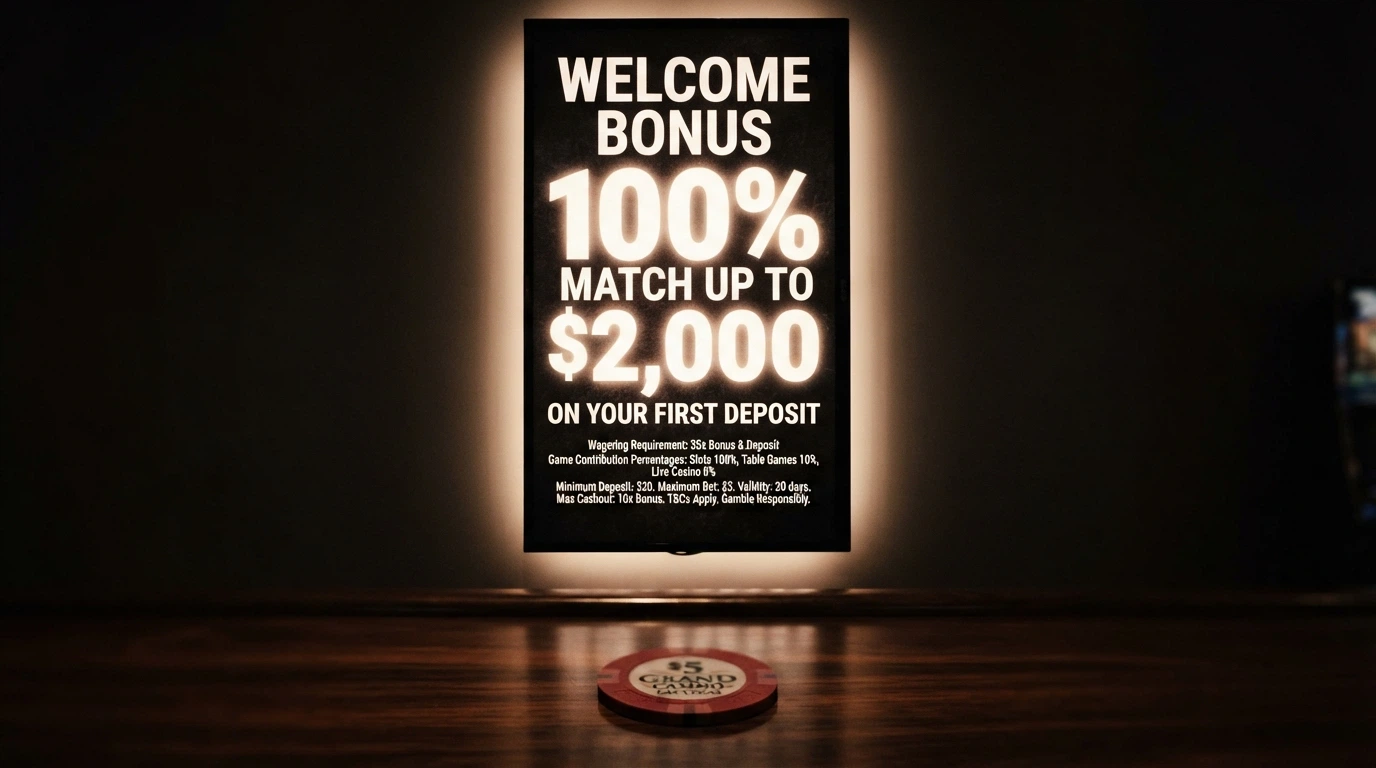
The headline bonus is not what it costs. A 100% match up to A$1,000 with a 40x wagering multiplier looks like a free A$1,000, and the small print turns it into A$40,000 of required turnover before a cent is withdrawable. The smaller print turns it into more: live dealer games contributing 5% means the effective turnover on the live tables is A$400,000, and at 0% the bonus is unwinnable at the tables altogether. The offshore welcome package is built for the slot floor, and a live-dealer-first player who reads it like a slot player is going to clear nothing.
| Offer Type | Typical Wagering × | Typical Validity | Live Dealer Contribution | What It Costs in Practice |
|---|---|---|---|---|
| Welcome match bonus (e.g. Skycrown, Rocket Play, Wild Tokyo) | 30x–50x | 5–30 days | Often 0%–10% | A$20,000+ in turnover on a A$500 bonus; live tables multiply the figure further |
| No-deposit bonus (e.g. Caswino, AUS55) | 50x | 24 hours – 14 days | 0%–5% | Test-drive only; A$500 cashout cap means even a successful clear returns small |
| Free spins bundle (e.g. Hell Spin, Bizzo, BitStarz) | 40x on winnings | 7 days | N/A (slots only) | Spin value is small; the multiplier applies to winnings, not to the spin value itself |
Welcome and Match Bonuses — What the Numbers Actually Mean
A welcome match bonus adds a percentage of the player’s first deposit as bonus funds, subject to a wagering multiplier and a validity window. Skycrown’s 100% up to A$1,000 with 30x wagering on the bonus amount means a player depositing A$500 receives A$500 in bonus funds and must turn over A$15,000 before withdrawing any winnings derived from the bonus. Hell Spin’s 150% up to A$450 with 40x on the bonus amount means A$675 in bonus funds on a A$450 deposit requires A$27,000 in turnover. Wild Tokyo’s 50x on a 5-day window raises the stakes further: A$500 in bonus funds requires A$25,000 in turnover in five days, which is roughly A$5,000 a day at a standard pace — an order of magnitude faster than the Skycrown rate.
The offshore market’s average wagering range is 35x to 50x. The featured set sits inside that band, with Skycrown at 30x the clear low and Wild Tokyo at 50x the high. Validity windows range from 5 days (Wild Tokyo) to 30 days (Skycrown). The shorter the window and the higher the multiplier, the more aggressive the bonus — and the more it favours slot play at 100% contribution over table play at 5% or 0%.
No-Deposit Bonuses — the Free-Start Offers Worth Claiming
No-deposit bonuses are the free-start offers: a small bonus credited at registration, no deposit required, with terms tighter than the welcome package. The typical structure is 20 free spins or a small cash bonus (A$10–A$25), with a 50x wagering multiplier, a 24-hour to 14-day validity window, and a cashout cap of A$500. Caswino’s 20 free spins no-deposit offer runs at 50x wagering in a 24-hour window. AUS55’s no-deposit offer runs up to A$25 plus 20 free spins, at 50x wagering in 14 days, with a A$500 maximum withdrawal and live casino contributing 5%.
A no-deposit bonus is a test-drive, not a profit opportunity. The cashout cap means even a successful clear returns a small fixed amount. The 24-hour window at Caswino is too short for most table play. The live-dealer contribution is often 0% or 5%, which means clearing the bonus at the tables takes ten to twenty times the headline play-through. A player who claims a no-deposit bonus, plays a few hands to feel the platform, and moves on has used it for what it is worth.
The Live-Dealer Contribution Trap — Why 5% Changes Everything
Wagering contribution is the small-print mechanic that decides whether a bonus is realistic at the tables. Pokies contribute 100%: every A$1 wagered on a slot counts A$1 toward the wagering requirement. Live dealer games contribute a much smaller share. Hell Spin sets the rate at 10% or below. BitStarz sets it at 5%. Ignition sets it at 0%. The arithmetic is unfriendly: a 40x wagering requirement on a A$500 bonus demands A$20,000 in turnover at 100% contribution. At 5%, the same bonus demands A$400,000 in turnover. At 0%, the bonus cannot be cleared at the tables.
The pokies-to-live-dealer gap is the structural reason offshore welcome bonuses are slot-floored. The bonus is built around the slot catalogue, the wagering multiplier assumes 100% contribution, and the live-dealer contribution rate is set low enough that a live-first player either plays at twenty times the headline turnover or clears the bonus on slots and then plays live. Casino Rocket’s terms exclude live dealer, table games and video poker from wagering contribution entirely. DeeSpin runs 5% on live dealer. The featured set contains all four variants — 0%, 5%, 10%, and excluded — and the right answer for a live-first player is to read the contribution line before claiming.
Crypto at the Live Table — Bitcoin, Speed, and What the Ban Means for You
Crypto is the speed layer of the offshore live-dealer market. Australian crypto casinos processed over A$2.3 billion in transactions in 2025 — a figure that reflects what the Australian payment ban cannot reach. Roughly 17% of all iGaming bets globally are placed in crypto, and altcoins’ share of those bets rose from 25% in early 2023 to over 47% by late 2024. At a live dealer table, crypto means deposits clearing in minutes and withdrawals landing in minutes, against fiat’s three to five business days.
The Australian complication is the payment ban. Since 11 June 2024, credit cards, credit-related products and digital currency have been banned as payment for online wagering in Australia. The ban applies to licensed wagering. It does not reach offshore casinos, because offshore casinos are not licensed. Every crypto deposit an Australian makes at a live dealer casino is an offshore transaction by definition — a deposit the Australian framework has explicitly removed from the licensed market and that an Australian player can only make by leaving the licensed market.
Bitcoin, Ethereum, and USDT at the Live Dealer Table
Bitcoin is the dominant cryptocurrency at the live tables. Bitcoin’s L1 network averages 22 minutes for deposits and 12 minutes for withdrawals at AU-facing brands; the Lightning Network drops both to under five seconds for players who use a Lightning-compatible wallet. Ethereum deposits clear in roughly three minutes and withdrawals in roughly eight. USDT on the TRC-20 network is the fastest at the table: two minutes for deposits and five minutes for withdrawals in research testing, which is the speed layer Australian players reach for when they want to move between tables in a session.
Live-dealer table minimums in BTC terms are lower than fiat minimums at most brands: 0.0001 BTC, roughly A$10, is a common floor. Maximums reach 5–10 BTC per hand at the high-stake tables. A player who plans to bet small at the tables gets into live dealer at the same A$10 minimum regardless of currency; a player who plans to bet large can push the maximums in BTC without the conversion friction a fiat high-roller faces at a VIP table.
The Speed Advantage — Crypto Withdrawals vs Fiat Wait Times
The structural reason Australians use crypto at offshore live dealer casinos is the speed gap. Crypto withdrawals drop from the three to five business days a fiat bank transfer takes to under one hour. TRC-20 withdrawals tested in May 2025 cleared in three minutes eighteen seconds. Visa debit withdrawals averaged seventeen hours. Bank transfers averaged three to five business days. A player who wants to withdraw winnings on a Friday night and play another brand on Saturday morning cannot do that on fiat rails; on TRC-20 they can.
Stake’s monthly deposit volume — over A$1.6 billion — is the size of the gap. Crypto brands handle that volume because the rails are faster and the player base is global. Fiat brands serving Australian players face the card and bank rails that do not reach offshore, and that is why most AU-facing live-dealer brands have built dual-track deposit flows: AUD for players who want simplicity, crypto for players who want speed.
What the 2024 Payment Ban Means for Australian Crypto Deposits
The Interactive Gambling Amendment (Credit and Other Measures) Act 2023 took effect on 11 June 2024. It banned credit cards, credit-related products and digital currency as payment for online wagering in Australia. The penalty for an operator that fails to enforce the ban is up to A$247,500 per offence. The law applies to licensed wagering — sports, racing, the products that do hold Australian licences. It does not apply to online casino, because online casino is not licensed and the ban’s terms target operators the regulator can reach.
The practical meaning for an Australian player is structural. Crypto deposits at a live dealer casino are an offshore transaction by definition. The payment ban does not reach the player — there is no prosecution risk on the individual — but it also does not protect the player. No Australian consumer protection applies. The brand can refuse a withdrawal. The site can be blocked at the DNS level with a balance on it. From 1 January 2027, banks and payment providers gain express authority to block transactions to illegal gambling operators, which means a bank-block on a crypto deposit is a real possibility even though the crypto leg of the transaction was never licensed.
The Offshore Reality Every Australian Live Dealer Player Faces
Every live dealer casino an Australian signs up to is offshore. That is not editorial framing; it is the legal architecture of the Australian online gambling market under the Interactive Gambling Act 2001 and its amendments. The IGA prohibits online casino, the ACMA enforces it, and the player’s recourse is the dispute resolution the offshore operator and its licence issuer provide.

One piece of the architecture that surprises readers: the tax treatment is, on its face, favourable. Betting and gambling winnings are not assessable income under section 6-5 of the ITAA 1997, and losses are not deductible under section 8-1, unless the person is carrying on a business of betting or gambling. No Australian case has held the winnings of an ordinary punter assessable. That does not make the offshore loop safer; it just clarifies that the ATO is not part of the enforcement picture for recreational players.
The Interactive Gambling Act — What It Actually Bans
The Interactive Gambling Act 2001 makes it illegal to provide online casino games — including live dealer — to anyone in Australia. The list of prohibited services is explicit: online casinos, online pokies and in-play sports betting. The Act targets the provider, not the individual player; the individual is not prosecuted. The 2017 amendment closed loopholes offshore operators had been using and gave the Australian Communications and Media Authority the enforcement and blocking powers it now exercises. No Australian state or territory issues an online casino licence. The minimum age for any commercial gambling in Australia is 18.
What is licensable is pre-event wagering on racing and sport, which sits under state and territory regulation. The Northern Territory Racing and Wagering Commission, administered through Licensing NT, is the de facto national licensor. Online wagering brands licensed under this regime are legitimate Australian products — but they are sportsbooks, not casinos. A player using a licensed Australian product is using it for racing or sports. A player using a live dealer casino is using an offshore product.
ACMA Enforcement — Blocking, Fines, and 1,564 Sites Shut Out
The ACMA has had blocking powers since 2017 and has used them at scale. Since its first blocking request in November 2019, the authority has had 1,564 illegal gambling and affiliate websites blocked at the DNS level by Australian ISPs. More than 225 illegal services have withdrawn from the Australian market entirely since 2017 rather than face continued enforcement action. The mechanism is straightforward: the ACMA directs Australian ISPs to block the domain, the ISP complies, and the site becomes unreachable from an Australian IP address.
The enforcement is real and ongoing. A live dealer casino a player uses today can be on the next blocking list, and the brand may withdraw from the Australian market in response, in which case any balance still on the site is recoverable only through the operator’s own dispute process. The 2026 reform, which commences on 1 January 2027, gives the ACMA further powers — including express authority for banks and payment providers to block transactions to illegal gambling operators, which tightens the financial side of the offshore loop.
Player Protection That Doesn’t Reach Offshore Casinos
BetStop — the National Self-Exclusion Register — launched on 21 August 2023. One registration excludes a person from every Australian-licensed online and phone wagering service in a single step. As at 31 March 2026, 59,830 people had registered on BetStop and 37,247 had active exclusions, with 78% of registrants under 40 and 38% opting for lifetime exclusion. The register binds Australian-licensed wagering services. It does not bind offshore casinos. An offshore brand is not connected to BetStop and will not block a registered player from opening an account or playing.
That is the most concrete harm of the offshore route. A player who recognises they need to stop gambling can self-exclude from every Australian-licensed product in a single BetStop registration and continue to play at every brand on this page with no friction. The consumer-protection framework the Australian government has built is real and well-resourced; it simply does not extend offshore. No Australian complaints body has jurisdiction over an offshore operator, and the recourse on a refused withdrawal is the licence issuer’s dispute process, not an Australian tribunal.
What Changes on 1 January 2027 — the Reform Bill Passed
The Interactive Gambling Amendment (Gambling Reform) Bill 2026 passed Parliament on 19 August 2026 and its measures commence on 1 January 2027. The reform’s key changes are on advertising, inducement marketing and payment blocking. From 1 January 2027, wagering advertising on television and radio is capped at three ads per hour between 6:00 am and 8:30 pm, with a live-sport blackout from fifteen minutes before until five minutes after a live sporting event. Athletes, celebrities and influencers are barred from promoting wagering products. Direct marketing of inducements is prohibited for fourteen days after a customer signs up, for three months after a person deregisters from BetStop, and indefinitely for customers identified as at risk of gambling-related harm.
The reform also gives banks and payment providers express authority to block transactions to illegal gambling operators. That authority is the structural change with the most direct effect on an Australian crypto live-dealer player: a bank-block on a crypto deposit to an offshore site is a real possibility from 2027 onward, even though the deposit itself was never on a licensed rail. The reform is law; it is not yet in force. For the remainder of 2026, the rules are the rules that applied before the bill passed.
Staying in Control — Responsible Gambling Tools That Work (and the Ones That Don’t Offshore)
Australian-licensed wagering services carry deposit limits, session time-outs, activity statements and the BetStop self-exclusion register. The architecture is real. Offshore live dealer casinos may carry some of those tools, but they are not mandated by any Australian regulator and cannot be enforced by one. The tools a player brings themselves are the only safeguards the offshore market guarantees.
Self-Exclusion — BetStop and What It Actually Covers
BetStop excludes a player from every Australian-licensed wagering service with a single registration. The minimum exclusion period is three months, with options extending to a lifetime exclusion; 38% of registrants choose lifetime. The register is operated by the ACMA and binds every licensed brand. A player who has registered on BetStop cannot open an account or place a bet with any Australian-licensed sportsbook or wagering service while their exclusion is active.
What BetStop does not do is exclude a player from offshore live dealer casinos. An offshore brand is not connected to the register and has no obligation to check it. A player who has self-excluded can open an account at any of the ten brands in this ranking and play with no friction. The practical step for a player who needs broader exclusion is to combine BetStop with the responsible-gambling tools offered by individual offshore brands (where available) and the player’s own deposit and session controls, and to reach out to the help services in the section below.
Deposit, Wagering, and Session Limits
Licensed Australian wagering operators offer customer-set deposit limits under state and territory conditions, with no national ceiling because the product those ceilings would govern is banned outright. Activity statements summarise a player’s wagering and outcome over a set period. Take-a-break and session time-out functions lock a player out for a chosen window. Offshore live dealer casinos may carry equivalent tools — most do, in some form — but they are not mandated by an Australian regulator and the operator can change them without notice.
The honest framing: the offshore brand’s responsible-gambling tools are a courtesy, not a protection. The protection that holds is the player’s own. Setting a weekly deposit cap before signing up, treating any bonus as a slot-floor product rather than a live-table one, and withdrawing winnings early to test the withdrawal pipe before committing a larger balance are the practical steps the offshore market rewards.
Help Resources — 1800 858 858 and Gambling Help Online
Free, confidential, 24/7 help exists regardless of where a player gambles.
- The National Gambling Helpline is 1800 858 858 — free, confidential and staffed around the clock.
- Gambling Help Online offers 24/7 chat and email counselling under that name.
- The scale of harm in Australia is large and worth holding onto: approximately 2.1% of Australian adults — roughly 430,000 people — experience problem gambling; an estimated 1.97 million Australian adults are at-risk or problem gamblers; and 3.29 million Australians aged 5 and over are affected annually by their own or another person’s gambling, accounting for over 400,000 Years Lived with Disability. The infrastructure to help is built around those numbers and is reachable at any hour.
A player who recognises the early signs — chasing losses, hiding play from family, gambling with money earmarked for essentials — should reach out before the offshore casino becomes the place those signs land.
How We Picked and Ranked These Live Dealer Casinos
The ranking rests on five information sources. The Australian Communications and Media Authority’s public register and blocking lists confirmed the IGA prohibition, the cumulative count of 1,564 blocked sites, and the active enforcement environment. The Northern Territory Racing and Wagering Commission’s published licensing framework confirmed what Australian licences do and do not cover. The listed operators’ own terms pages and licence footers confirmed the welcome bonuses, wagering multipliers, validity windows and Curacao sub-licence numbers used in the ranking. Affiliate-audit sites and an AU operators dataset supplied market-share figures and live-dealer contribution rates where the operator page did not.
The criteria were qualitative, not numerical: Evolution catalogue coverage, live-dealer game variety, bonus terms as they apply to live games, payment routes from Australia, and operator transparency. The ranking is a judgement against those criteria, not a weighted score, and the table above is built so a reader who weights the criteria differently can reach their own ordering without my making the choice for them. The featured set is ten operators; the Australian-facing live-dealer market runs into the hundreds of brands. The ranking is a starting point, not the field.
Your Live Dealer Checklist — Where to Start Without Getting Burnt
The structural truth first: every option on this page is offshore and unlicensed in Australia. The four things to check before depositing are the licence, the live-dealer contribution rate, the withdrawal method and speed, and the bonus validity window. The licence tells a player which regulator the operator answers to and which dispute process applies if a withdrawal is refused. The contribution rate tells a player whether the welcome bonus can be cleared at the live tables or whether it is, in practice, a slot-floor product. The withdrawal method and speed tell a player how quickly winnings land. The validity window tells a player how long they have to clear the bonus before the bonus funds expire.
The sensible entry path: claim a no-deposit bonus first, play a few live tables to feel the platform, withdraw a small amount to test the withdrawal pipe, and only then make a first deposit. The smaller the first deposit, the smaller the exposure if the site is on the next ACMA blocking list. Treat any bonus as a slot-floored product rather than a live-table one unless the live-dealer contribution rate is confirmed at 10% or higher. Never deposit more than a player can afford to lose to a site the ACMA can block tomorrow with a balance still on it.
And one last line, which is the line that should sit at the bottom of any page about gambling: 1800 858 858 is free, confidential and staffed 24/7. BetStop binds Australian-licensed wagering, not the offshore brands on this page. The player’s own limits — deposit caps, session time-outs, a hard rule on what balance is acceptable to leave on a site — are the only protections the offshore market guarantees.
Frequently Asked Questions
Can the ACMA block the live dealer casino I use — and do I lose my money if it does?
Yes. The ACMA can direct Australian ISPs to block an offshore operator’s domain at the DNS level — the mechanism behind 1,564 blocked sites since November 2019. A balance on a blocked site is recoverable only through the operator’s own dispute process. From 1 January 2027, banks gain express authority to block payments to illegal gambling operators, which tightens the loop further.
Does BetStop stop me playing at offshore live dealer casinos?
No. BetStop binds every Australian-licensed wagering service — sportsbooks and racing operators — but offshore live dealer casinos are not connected to the register. A BetStop-registered player can open an account and play at any brand on this page with no friction. The offshore brand has no obligation to check the register.
Why do live dealer games count for so little toward clearing a bonus?
Because the bonus is built for the slot floor. Pokies contribute 100% toward wagering at most offshore brands; live dealer contributes 5%–10%, and 0% at some. A 40x wagering on a A$500 bonus means A$20,000 in turnover at 100% contribution — but A$400,000 at 5%, the figure a live-first player actually faces.
How do I deposit at a live dealer casino from Australia now that credit cards are banned?
Crypto is the most common route at offshore brands: Bitcoin, Ethereum and USDT (TRC-20) are accepted across the featured set, clearing in minutes rather than days. AUD routes — debit card, POLi, PayID where the operator supports it, and bank transfer — are also available. The credit card and crypto ban applies to licensed wagering, not offshore casinos.
Is Bitcoin safe to use at a live dealer casino from Australia?
Bitcoin rails work: TRC-20 deposits tested in May 2025 cleared in 42 seconds and withdrawals in just over three minutes. Safe rails are not protected rails — no Australian consumer protection applies offshore, no local complaints body has jurisdiction over a refused withdrawal, and the 2027 bank-blocking authority could see an Australian bank decline a payment.