
100 Free Spins No Deposit in Australia: What the Headline Leaves Out
Current as of 13 September 2026 · Terms verified against the ACMA banned-services framework and the operator’s own bonus pages

A “100 free spins no deposit” offer sounds like the casino’s gift. It is not. The Interactive Gambling Act 2001 makes it illegal for any provider to offer online casino games or online pokies to a person physically in Australia, and the ACMA’s enforcement record shows 1,564 sites blocked and more than 225 illegal services withdrawn from the market since 2017. Every operator offering 100 free spins to Australian players is, by definition, offshore. None holds an Australian licence, because no such licence exists. That is the legal frame around every number on this page, and it stays in view from the first figure to the last.
What follows is not a promotion. It is what the terms actually do to the value of “free” — the A$0.10 typical spin value that gives a 100-spin package a gross face value of A$10, the 30× to 60× wagering that sits between those winnings and a withdrawal, the A$50 to A$200 cashout cap that hard-codes the ceiling, and the seven-day-to-30-day expiry that turns the offer into a clock. Ten operators are profiled, including the two with a genuine no-deposit route into the spins and the eight whose “100 free spins” headline only opens after a deposit lands. The arithmetic at the end of the page is the same arithmetic the operator has already done, just on the other side of the transaction.
Table of Contents
- How 100 Free Spins No Deposit Bonuses Actually Work
- Real-Money Spins versus Bonus Spins: The Difference That Changes Everything
- Pokies, Slots and Online Casino: What Australian Players Need to Know About the Terms
- Why Your 2026 Free Spins Bonus Is Smaller Than the Advertised Number
- The Offshore Operators Behind Australia’s 100 Free Spins No Deposit Offers
- Turning Bonus Spins into Cash: The Withdrawal Reality for Australian Players
- Claiming 100 Free Spins on Mobile: What Changes and What Does Not
- Bitcoin Casinos and Free Spins: What Australian Players Need to Know
- The Pokies Your 100 Free Spins Will Actually Land On
- New Casinos, Same Offshore Reality: Free Spins from Recent Launches
- The Legal Reality: Every 100 Free Spins Offer Targeting Australia Is Offshore
- Playing Safely When the Safeguards Do Not Cover You
- How We Selected and Ranked These Operators
- Should You Claim a 100 Free Spins No Deposit Offer in 2026? Here Is What the Figures Say
- Frequently Asked Questions
How 100 Free Spins No Deposit Bonuses Actually Work
A no-deposit free spin package starts the moment a registration form is submitted and an account is verified. The operator credits 100 spins, usually at A$0.10 each, to a single named pokie or a short list of pokies. The spin winnings do not land in a withdrawable cash balance. They land in a bonus balance, and that balance is locked behind a wagering requirement — typically 30× to 60× the bonus amount for offshore offers targeting Australian players. Until that multiple is played through on eligible games, the balance is not money the player can move.
Three other terms sit on top. A maximum bet of around A$5 per spin is standard during the wagering period; breaching that ceiling voids the bonus. A cashout cap — most often between A$50 and A$200 for no-deposit bonus winnings — hard-codes the maximum amount a player can withdraw, regardless of how high the bonus balance has climbed. And an expiry window, typically 7 to 30 days, after which the bonus and any winnings tied to it are voided. Each of these is a lever the operator uses to keep the value of the offer inside a band they have already priced.
The structure is uniform across the offshore market because the underlying business model is uniform. The operator pays a fixed cost per signup and recovers that cost from the population of players who fail to convert the bonus balance into withdrawable cash before the clock runs out. The 30× to 60× range is not arbitrary: it is calibrated so that, on average, more players forfeit than complete. “Free” is the word the marketing uses. The terms are the actual product.
Real-Money Spins versus Bonus Spins: The Difference That Changes Everything
“Real money” appears in many search terms for this offer, and it is the single most misleading word in the niche. A “real money” free spins package does not pay out cash for each spin. The spins themselves are free. The winnings from the spins are real money only in the sense that they have a real-money value once the wagering requirement is satisfied; until that moment, the balance is bonus money with a ceiling on it. A player who wins A$500 from a 100-spin no-deposit session on a A$200 cashout cap does not withdraw A$500. The operator pays A$200, and the remaining A$300 disappears from the balance at the point of withdrawal.
This is the difference between a no-deposit free spin and a deposit-funded free spin. A deposit-funded offer — SkyCrown’s first-deposit 100 free spins on Book of Dead, for instance — uses real cash on the line, and the winnings from the spins sit in a cash balance once the wagering requirement is met. The spins are still free; the deposit that triggered them is not. The no-deposit variant replaces the deposit with a tighter cashout cap and a shorter expiry, because the operator has no committed capital from the player to leverage. The “real money” framing is a search-term artefact, not a product attribute.
Reputable offers in the segment give at least 48 hours to use the spins. Aggressive offers give 24 hours. The 48-hour mark is the soft floor below which an offer is best read as a pressure tactic, not a gift: a 24-hour window is too short for a working player to log in, verify, read the terms, and play through a 30× wagering requirement without rushing decisions. The bonus code or auto-credit mechanic is a separate gate. Some offers credit on signup; others need a code entered at registration or at the cashier; entering the code incorrectly means missing the spins outright.
Pokies, Slots and Online Casino: What Australian Players Need to Know About the Terms
Pokies is the Australian word for what the rest of the English-speaking gambling world calls slots. The terms describe the same product: spinning reels with a random number generator determining outcomes, return-to-player percentages, and bonus features. Offshore operators serving Australian players typically list their eligible games under the “pokies” heading rather than “slots”, which is a signal that the operator is positioning for the AU market even though it is not licensed to serve it.
What counts as a pokie for free-spin eligibility is a narrower question than what counts as a pokie for play. Operators almost always restrict the 100 free spins to one named title, or to a short list drawn from a single studio. Starburst, Book of Dead, and Big Bass Bonanza are the three titles named most often across the AU-facing offshore market, and they show up in the eligibility lists of operators as different as SkyCrown (Book of Dead on the first deposit) and Bizzo Casino (Big Bass Bonanza 1000, in daily 25-spin batches). The eligible-game restriction is the operator’s way of limiting which games the bonus balance touches — and which games’ return-to-player configuration applies.
“Online casino” is the framing the offshore market uses to describe its own product. In Australia, that product is prohibited. The ACMA’s own description of the Interactive Gambling Act 2001 names online casinos in its list of banned services, alongside in-play sports betting and lottery outcome betting. The IGA targets the provider, not the individual player, but the practical consequence is that there is no Australian-licensed body an Australian player can complain to about a Curaçao-licensed operator that refuses to pay. That asymmetry sits underneath every comparison in the table that follows.
Why Your 2026 Free Spins Bonus Is Smaller Than the Advertised Number
The headline “100 free spins” is the number the operator wants read. The real value of the offer sits underneath it, in the wagering requirement, the cashout cap, the expiry, and the max bet. Each of these terms subtracts from the headline value, and they subtract in sequence. A 100-spin package at A$0.10 a spin has a face value of A$10. A 40× wagering requirement on a A$10 win means A$400 must be turned over before a cent is withdrawable. A A$5 max bet during wagering forces that A$400 to be played in 80 separate spins or bets, each of which has a 3.91% expected loss against Starburst’s 96.09% RTP. A A$75 cashout cap — Rocket Play’s published ceiling — means anything above A$75 the player accumulates during wagering is forfeit on withdrawal. A five-day bonus validity means the entire A$400 turnover has to happen in five days, or the bonus balance is voided along with the winnings.
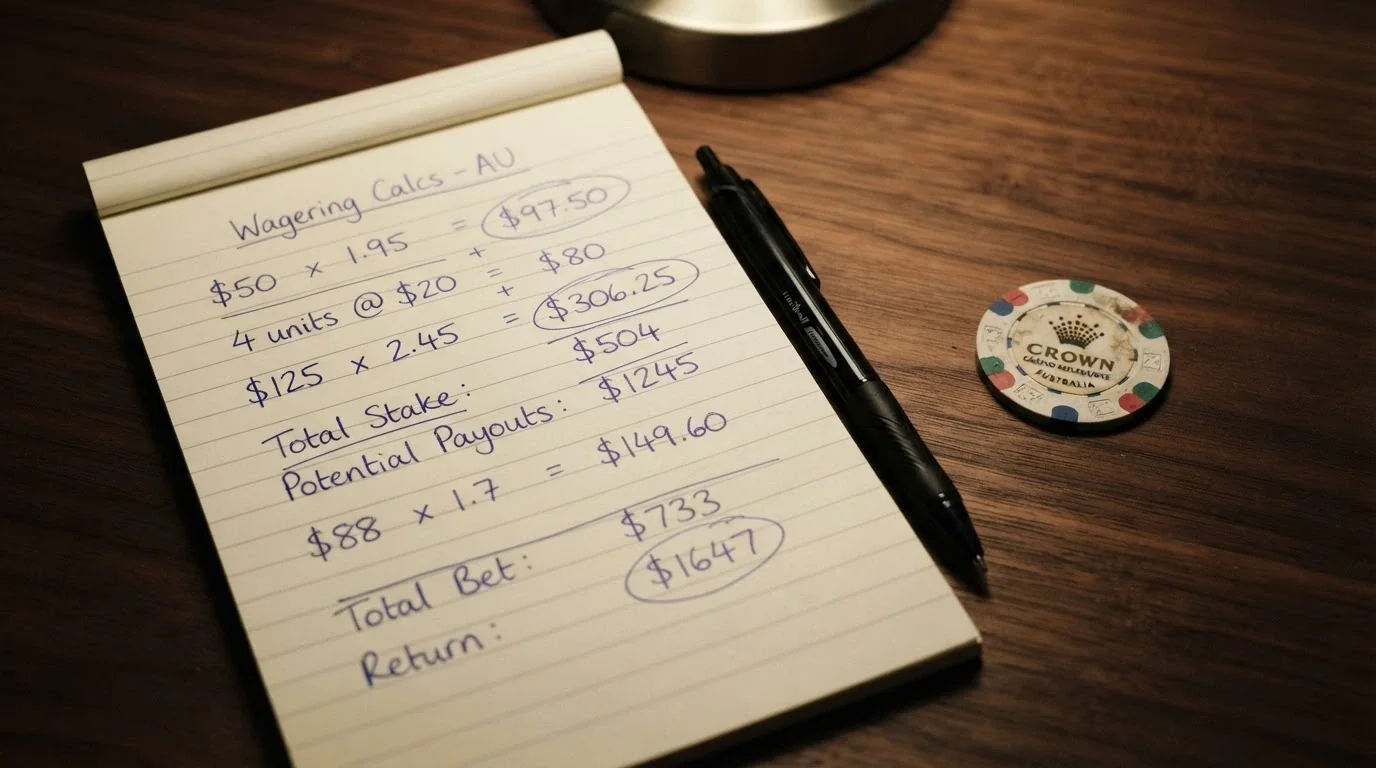
Each layer subtracts. The cumulative effect of all of them is what makes comparing terms more useful than comparing spin counts. Two offers of 100 free spins at A$0.10 are the same on the headline. A 30× wagering, A$200 cashout, 30-day-validity offer is not the same product as a 60× wagering, A$50 cashout, 7-day-validity offer, even though the spin count and the spin value are identical. The arithmetic in the calculation that runs later on this page makes the cumulative subtraction explicit.
Wagering Requirements: The 30×–60× Multiplier That Decides Whether You Cash Out
A wagering requirement — also called a playthrough or rollover — is the multiple of the bonus amount (or the bonus winnings) that must be turned over before the balance becomes withdrawable. A 30× wagering requirement on a A$10 bonus win means A$300 in total bets must be placed across eligible games. A 60× requirement on the same A$10 win means A$600 in bets. The offer’s wagering multiple is the single largest determinant of whether a player converts a free-spin win to cash, because it scales linearly with the volume of play required.
The 30× to 60× range describes the typical spread across AU-facing offshore no-deposit offers. The bottom of the range is what well-run operators use; the top of the range is what aggressive operators use and what the worst of them push past (80× is documented in the segment). The reason the range exists is that the wagering multiple directly controls the operator’s expected cost per signup. A 30× multiple on a A$10 bonus win, played through at Starburst’s 96.09% RTP, costs the operator roughly A$11.70 in expected value. A 60× multiple on the same win costs the operator roughly A$23.40. The operator that wants to pay out more converts more players and pays more; the operator that wants to pay out less uses a higher multiple and converts fewer.
Wagering applies to the winnings from the spins, not the face value of the spins. A 100-spin package at A$0.10 per spin is A$10 of spins, but the wagering target is calculated on whatever the player wins from those spins. Win A$2 and the 40× playthrough target is A$80. Win A$50 and the same 40× playthrough target is A$2,000 — A$2,000 in bets, at a A$5 max bet, is 400 separate spins, and most offers do not give the player long enough to play 400 deliberate spins before the bonus expires. The wagering multiple is calculated to look proportionate to the offer. The proportionality collapses the moment the player wins a non-trivial amount.
Maximum Cashout Caps: Why You Cannot Keep Everything You Win
The maximum cashout cap is the single most material term on a no-deposit free spin offer, and the one players most often miss. Most no-deposit bonuses restrict maximum cashout withdrawals to between A$50 and A$200. The cap is applied at the moment of withdrawal, not at the moment of winning: a player who has accumulated a A$500 bonus balance at the end of wagering and then attempts to withdraw receives A$200 (or A$100, or A$50, depending on the offer), and the rest of the balance is removed from the account.
The mechanism is the operator’s protection against the rare-but-costly outcome where a player wins big on the first session of a no-deposit offer. It also serves a quieter purpose: it caps the operator’s downside on every signup, which is why the A$200 ceiling, the A$100 ceiling, and the A$50 ceiling all coexist in the same market. Operators who are willing to pay more compete for players with higher caps; operators who are willing to pay less use lower caps. The cap is not a side condition. It is the price ceiling of the offer.
Rocket Play’s no-deposit bonus has a published A$75 cashout cap, which is at the conservative end of the A$50 to A$200 range. A player who wins A$200 from the bonus, plays through the wagering, and requests a withdrawal receives A$75. The other A$125 is forfeit. The psychological effect is what the operator is buying with the cap: a player who has just spent a week working through a 30× wagering requirement and finally requests a withdrawal is highly motivated to accept a A$75 payout over no payout at all, even knowing that the balance was A$200 a moment earlier. The cap is the term that quietly decides the expected value of the offer.
When a Bonus Code Is Required — and When the Spins Land Automatically
Some offers credit the free spins automatically the moment an account is verified; others require a bonus code to be entered either at the registration stage or at the cashier before the deposit. Missing the code, or entering it incorrectly, means the spins do not credit. A player who signs up, makes the first deposit, and then realises the code was not entered has missed the offer — and the operator’s customer support will sometimes honour the missed spins and sometimes will not, depending on the operator’s stated policy.
Where the code lives is its own question. The operator’s own promotions page is the source — affiliate sites that list bonus codes often carry codes that are outdated, region-locked, or both, because the affiliate market is built on redirecting players to operators and the codes that worked last week are not guaranteed to work this week. A code that is valid for UK players is not necessarily valid for Australian players. A code that worked in 2026 last month may have been retired and replaced. The honest version of the advice is: the operator’s site, not an affiliate’s table, is the source of truth for which code, if any, applies.
For the two no-deposit offers profiled later in this article — Royal Reels’ A$10 no-deposit free chip and Play Fortuna’s 100 free spins on Fire Toad — the credit mechanic and any code requirement are stated on the offer’s own terms page. The auto-credit versus manual-entry split is roughly 50/50 in the segment: operators that want to minimise signup friction auto-credit; operators that want to track marketing-channel conversion require a code.
Bonus Expiry and the Clock That Starts the Moment You Claim
A no-deposit bonus clock starts at the moment the offer is credited, not at the moment the player first plays a spin. Most no-deposit bonuses expire within 7 to 30 days of activation; the 5-day window is used by operators with tighter terms (Rocket Play’s bonus validity is published at 5 days from receipt). The clock governs the wagering requirement as well as the free spins themselves: a player who has not completed the playthrough by the expiry date forfeits the bonus balance and the winnings.
24-hour windows on free spins are designed to pressure players. A 24-hour clock is too short for a working player to read the terms, plan the play, and complete a 30× or 40× wagering requirement on a meaningful win without making rushed decisions. The 48-hour mark is the soft floor below which an offer is best treated as a marketing pressure tactic, not a genuine promotional credit. Reputable AU-facing offers in this segment give at least 48 hours, and most give 7 days or more.
What happens when the clock runs out is the part the small print is best at hiding. The bonus balance is voided. Any winnings tied to the bonus are voided. The player’s cash balance (if any) is unaffected. For a player who has played through part of the wagering requirement and then run out of time, the result is straightforward: a portion of the bonus is forfeit, the rest is never paid, and the player starts again from zero on the next offer. The expiry is the second-largest determinant of whether a player converts, after the wagering multiple. The third is the cashout cap.
The Offshore Operators Behind Australia’s 100 Free Spins No Deposit Offers
Every operator in the table below is offshore. None holds an Australian licence, because no licence for online casino exists in any Australian state or territory. The table does not rank them on a quality scale — it ranks them on the question a player actually asks: what does this offer cost me to claim, and what does the offer actually pay out if I win. Two of the ten (Royal Reels and Play Fortuna) offer a genuine no-deposit route into the spins; the other eight require a deposit to trigger the headline package. Three carry “not confirmed” entries (WinSpirit, Scream Casino, and one of the deposit-gated tiers for Fair Go’s cap) because the operator’s own terms page was not surfaced in the source review, and the table reflects that gap rather than papering over it.
The wagering column is the single most important number on the table. The cashout cap is the second. The bonus validity is the third. The max bet is the fourth. The licence jurisdiction is structural: a Curaçao licence means the operator is regulated by the Curaçao Gaming Authority, an Anjouan licence means it is regulated by the Anjouan Gaming Control Board, and either is recognised as offshore from Australia’s perspective. Stake’s Curaçao licence is paired with a surrendered UKGC licence (surrendered March 2025), which is part of its own history and tells its own story about the operator’s licensing footprint.
| Operator | Licence Jurisdiction | Welcome Offer | Wagering | No-Deposit Offer? | Bonus Validity | Max Bet | Game Providers |
|---|---|---|---|---|---|---|---|
| Rocket Play | Curaçao (inferred) | Up to A$6,000 + 300 FS across deposits | 30×–40× | No (A$75 no-deposit cap is on a separate offer) | 5 days | A$7.50 | Multiple studios (RTG, Pragmatic Play, others) |
| SkyCrown | Curaçao (confirmed on-site) | A$8,000 + 400 FS across 4 deposits; first deposit 100% up to A$500 + 100 FS on Book of Dead | 40× bonus / 30× FS winnings | No | 14 days per tier | A$5 | Play’n GO, Pragmatic Play, others |
| Royal Reels | Curaçao (inferred) | 100% up to A$500 + 50 FS; also A$10 free chip (no-deposit) | 30× (welcome); 30× (no-deposit chip) | Yes — A$10 free chip | Shown at activation | A$5 | Multiple studios |
| WinSpirit | Curaçao (inferred) | Not confirmed this run | Not confirmed | Not confirmed | Not confirmed | Not confirmed | Not confirmed |
| Stake | Curaçao (CGA); UKGC surrendered March 2025 | 200% up to US$2,000 | 40× | No | 30-day window | Not confirmed | 20+ cryptocurrencies, multiple studios |
| Rainbet | Anjouan | 250% up to A$1,750 + 60 FS across 3 deposits | 40× (locked) or no-wager gradual release | No | 7 days | 2% of deposit (locked route) | 7,000+ games, 25+ studios, 14 originals |
| Scream Casino | Curaçao (inferred) | Not confirmed this run | Not confirmed | Not confirmed | Not confirmed | Not confirmed | Not confirmed |
| Fair Go | Curaçao (inferred) | 100% up to A$200 × 5 deposits (A$1,000 total) | 30×–40× | No | Not confirmed | A$10 | RTG only (~280 games) |
| Bizzo Casino | Curaçao (inferred) | Up to A$7,250 + 175 FS across 4 deposits; 125% on first deposit (A$250+) | 40× | No | 14 days | A$8 | Pragmatic Play, 8,000+ titles |
| Play Fortuna | Curaçao | 100 FS on Fire Toad (no-deposit) | 20× | Yes | 7 days | Not specified (typically A$5–10) | Multiple studios |
The two “not confirmed” entries — WinSpirit and Scream Casino — appear in the table because both operators have a documented AU-facing presence (BLASK market data places WinSpirit at 1.55% market share and A$110.3M estimated revenue, and Scream Casino at 0.99% and A$94.87M). The bonus terms for both were not surfaced in the source review, which means the table reflects what is not known rather than guessing. A player comparing offers should treat those two rows as placeholders to be checked on the operator’s own current terms page before any decision is made.
Rocket Play: A$75 No-Deposit Cashout Cap and a Curaçao Backdrop
Rocket Play is a long-established offshore operator whose no-deposit terms are among the more explicit in the set. The A$75 maximum withdrawal cap on no-deposit bonus winnings is published on the bonus terms page rather than buried in a footnote, and the A$7.50 max bet during wagering is stated for AUD accounts. Bonus validity runs 5 days from receipt unless the specific promotion states otherwise, which is at the tight end of the 7-to-30-day market range. The main welcome package runs across multiple deposits — up to A$6,000 + 300 free spins — and the game library draws on multiple studios including RTG and Pragmatic Play.
For a player who reads the terms before claiming, Rocket Play’s no-deposit offer is one of the more legible: the A$75 cap is the published ceiling, the 5-day validity is the published window, and the 30×–40× wagering range is consistent with the market. The trade-off is the cap itself — A$75 is at the conservative end of the A$50 to A$200 range, and a player who wins A$200 from the bonus receives A$75 on withdrawal. Rocket Play’s transparency on the cap provides a clear baseline for evaluating downside, even if the ceiling itself restricts the potential win.
SkyCrown: A$8,000 Welcome Package Built on Book of Dead Free Spins
SkyCrown’s deposit-gated welcome is the largest in the set on the headline number — A$8,000 + 400 free spins across four deposits, with the first deposit’s 100 free spins locked to Book of Dead. The wagering structure splits between the bonus and the free-spin winnings (40× on the bonus, 30× on the free-spin winnings), which is a slightly more generous structure than a single 40× multiple on the whole balance, and the 14-day per-tier validity is the market standard. The A$5 max bet during wagering is the same ceiling most operators use.
The real-money extraction on the SkyCrown package is slow. A first-deposit 100% match up to A$500 with 40× wagering on the bonus means a player who deposits A$500 and uses the full match must turn over A$20,000 in bets to release the bonus balance. At the A$5 max bet, that is 4,000 individual spins, played within 14 days. The free-spin winnings on Book of Dead (96.21% RTP, high volatility) are subject to 30× wagering, which is a lighter requirement but a stricter multiple than the typical 40×. The size of the package requires a longer commitment than most, making it better suited to players who prioritise volume over the speed of the bonus conversion.
Royal Reels: The Rare A$10 No-Deposit Free Chip in a Deposit-Gated World
Royal Reels is one of only two operators in the set with a genuine no-deposit offer — a A$10 free chip credited on signup, with 30× wagering on the chip amount. The main welcome match is 100% up to A$500 plus 50 free spins, with the A$30 minimum deposit and 30× wagering on the bonus. The free-chip mechanic is the closest this segment comes to a true zero-cost entry: a player can claim the A$10 chip, play it through the wagering requirement, and exit with whatever the cashout cap allows (shown at activation, rather than published in advance).
The 30× wagering on both the free chip and the welcome match is at the lighter end of the 30× to 60× range, which is the most attractive feature of the offer. The deposit minimum of A$30 is on the lower end of the segment, which keeps the entry point accessible. What Royal Reels does not publish in advance is the no-deposit cashout cap, which is stated at the point of activation rather than before signup. A player who wants to know the cap before registering has to register, verify, and read the activation terms — a sequence that puts the cap on the same page as the claim button, which is the structural reason most operators do not publish the cap up front.
WinSpirit: A 1.55% Market-Share Operator Whose Current Bonus Terms Were Not Confirmed
WinSpirit has a documented AU-facing presence: BLASK market data places the operator at 1.55% market share and approximately A$110.3M in estimated revenue from the Australian market, which makes it one of the larger offshore operators by player volume. The licence jurisdiction is Curaçao (inferred from the standard pattern of the segment). The current bonus terms — the welcome offer, the wagering multiple, the no-deposit availability, the validity window, the max bet — were not surfaced in the source review.
For a player who already plays at WinSpirit, the market data confirms the operator is a meaningful destination rather than a transient brand. For a player evaluating the offer against the rest of the set, the gap in the data is the answer: the current terms should be checked directly on the operator’s own promotions page before any decision is made, because the table cannot tell the player what was not found. The same caveat applies to a smaller operator below.
Stake: The Curaçao-Licensed Giant Whose UKGC Licence Was Surrendered
Stake is the highest-profile name in the set, and its licensing footprint is more public than most. The operator holds a Curaçao Gaming Authority licence plus four Latin American market authorisations, and its UK Gambling Commission licence was surrendered in March 2025 — a fact that tells its own story about the operator’s regulatory geography. The welcome offer is a 200% deposit match up to US$2,000 (Stake’s base currency is the US dollar; the offer is converted to AUD at the time of deposit) with 40× wagering, and the platform is crypto-native, supporting 20+ cryptocurrencies across deposits and withdrawals.
The 40× wagering on the deposit match is the market median. The 30-day window is at the longer end of the validity range, which gives a player more time to work through the playthrough than most competitors. The surrender of the UKGC licence in March 2025 is a datapoint worth sitting with: a regulator of the UK Gambling Commission’s standing does not see licence surrenders from operators on good terms, and the surrender puts Stake firmly in the offshore category from an Australian player’s perspective. For a crypto-comfortable player, the breadth of supported currencies is a real advantage. For a player who wants AUD-fiat rails, the platform’s USD base is friction.
Rainbet: Anjouan-Licensed, 7,000+ Games and a No-Wager Gradual-Release Option
Rainbet is the only Anjouan-licensed operator in the set, and the only one that offers a genuine no-wagering alternative to the standard 40× playthrough. The welcome structure is 250% up to A$1,750 plus 60 free spins across the first three deposits; the player chooses between a locked route with 40× wagering or a no-wager gradual-release option that pays out the bonus in tranches as playthrough milestones are hit. The 2% max bet on the locked route is unusually low — A$5 on a A$250 deposit — which slows the playthrough by design. Rainbet launched in 2023, the game library runs to 7,000+ titles across 25+ studios, and the 14 provably fair originals are a differentiator.
The no-wager gradual-release option is the structural feature that separates Rainbet from the rest of the set. A player who picks that route does not face a binary convert-or-forfeit outcome at the end of a 7-day window: the bonus releases in stages, with each stage paid out as a separate withdrawal-eligible balance. The trade-off is that each stage is smaller than the equivalent lump-sum bonus, and the player is committed to a longer relationship with the operator. For a player who is happy to play on Rainbet across multiple sessions, the gradual release is the most player-friendly structure in the segment. For a player who wants one-shot conversion, the locked route behaves like the rest of the market.
Scream Casino: A 0.99% Market-Share Operator With Unconfirmed Bonus Terms This Run
Scream Casino is a documented AU-facing operator with 0.99% market share and A$94.87M in estimated revenue from the Australian market, which places it in the middle of the offshore pack by player volume. The licence jurisdiction is Curaçao (inferred from the segment’s standard pattern). The specific bonus terms — welcome offer, wagering, no-deposit availability, validity, max bet, eligible games — were not surfaced in the source review.
The market data confirms the operator is a real destination for Australian players, not a placeholder. The gap in the bonus terms is the answer for a player evaluating the offer: like WinSpirit, the operator’s own current terms page is the source of truth, and the table reflects the absence rather than a guess. A player who is already a Scream Casino customer will know the offer from the operator’s own communications; a player evaluating Scream Casino against the rest of the set needs to check the live terms before any decision is made.
Fair Go: RTG-Only, A$1,000 Across Five Deposits and an Australian-Facing Brand Name
Fair Go is a long-running AU-targeted brand whose product mix is unusual: the game library runs on RTG (RealTime Gaming) software exclusively, with approximately 280 titles. The welcome offer is 100% up to A$200 on each of the first five deposits, totalling up to A$1,000, with wagering of 30×–40× and a A$10 max bet during bonus play. There is no confirmed no-deposit offer for Fair Go in the source review, and the bonus validity and no-deposit cashout cap are not publicly stated.
The RTG-only library is the segment’s narrowest game selection (Bizzo’s 8,000+ titles, by contrast, run across the full Pragmatic Play catalogue and beyond), and the AU-facing brand name signals an operator that has chosen to position for the Australian market despite the offshore licence. For a player who values the RTG catalogue specifically, Fair Go is the only option in the set. For a player who wants the breadth of a multi-studio platform, the library is the cost of the brand familiarity. The A$10 max bet during wagering is at the higher end of the segment, which speeds the playthrough.
Bizzo Casino: A$7,250 Welcome, 8,000+ Titles and Big Bass Bonanza Free Spins
Bizzo Casino has the largest game library in the set — 8,000+ titles across Pragmatic Play and other studios — and the second-largest headline welcome (up to A$7,250 + 175 free spins across four deposits). The first-deposit match is 125% on deposits of A$250 or more, with 40× wagering on every part. Bonus validity runs 14 days, and the max bet with an active bonus is A$8, which is at the higher end of the segment. The free spins are delivered in 25-spin daily batches and are eligible on Big Bass Bonanza 1000, the high-volatility Pragmatic Play title with a 2,100× max win.
The market data on Bizzo places the operator at 0.57% market share with A$51.38M in estimated revenue from the Australian market, which is a smaller slice than the larger operators in the set but a meaningful one. The 8,000+ title library and the Pragmatic Play-led free-spin eligibility make Bizzo the natural pick for a player who values game breadth and is willing to play through 40× wagering on a 14-day clock. The 25-spin daily batch delivery is unusual — most operators credit free spins in a single block on the qualifying deposit — and it extends the experience across the bonus window rather than concentrating it on day one.
Play Fortuna: 100 Free Spins on Fire Toad With No Deposit Required and 20× Wagering
Play Fortuna is the second of the two operators in the set with a genuine no-deposit offer — 100 free spins on Fire Toad, credited on signup with no deposit required. The 20× wagering on the free-spin winnings is the lowest wagering multiple in the entire set, well below the 30× to 60× market range and a structural advantage that the headline “20×” delivers without qualification. Bonus validity is 7 days, which is on the shorter side but workable for a 20× playthrough. The licence is Curaçao, and the game library draws on multiple studios.
For a player whose decision turns on the wagering multiple, Play Fortuna’s 20× is the standout number in the comparison. A 100-spin no-deposit win of A$20, played through 20× wagering at Fire Toad, requires A$400 in turnover — half the A$800 a 40× offer would require on the same win, and a quarter of the A$1,600 a 60× offer would require. The 7-day validity is the trade-off: the player has a working week to clear the bonus, which is tight for a non-trivial win but feasible for the typical no-deposit outcome. Combined with Royal Reels’ A$10 no-deposit free chip, Play Fortuna is the cleaner of the two genuine no-deposit options in the set, and the one to favour if the wagering multiple is the deciding factor.
Turning Bonus Spins into Cash: The Withdrawal Reality for Australian Players
Free-spin winnings sit behind two gates in sequence. The first is the wagering requirement, which converts the bonus balance to a withdrawable balance once the playthrough is complete. The second is the cashout cap, which limits how much of the withdrawable balance the operator will actually pay. A player who clears the wagering requirement at A$200 in bonus balance, against a A$75 cap, withdraws A$75 — the second gate, not the first, is what determines the payout.
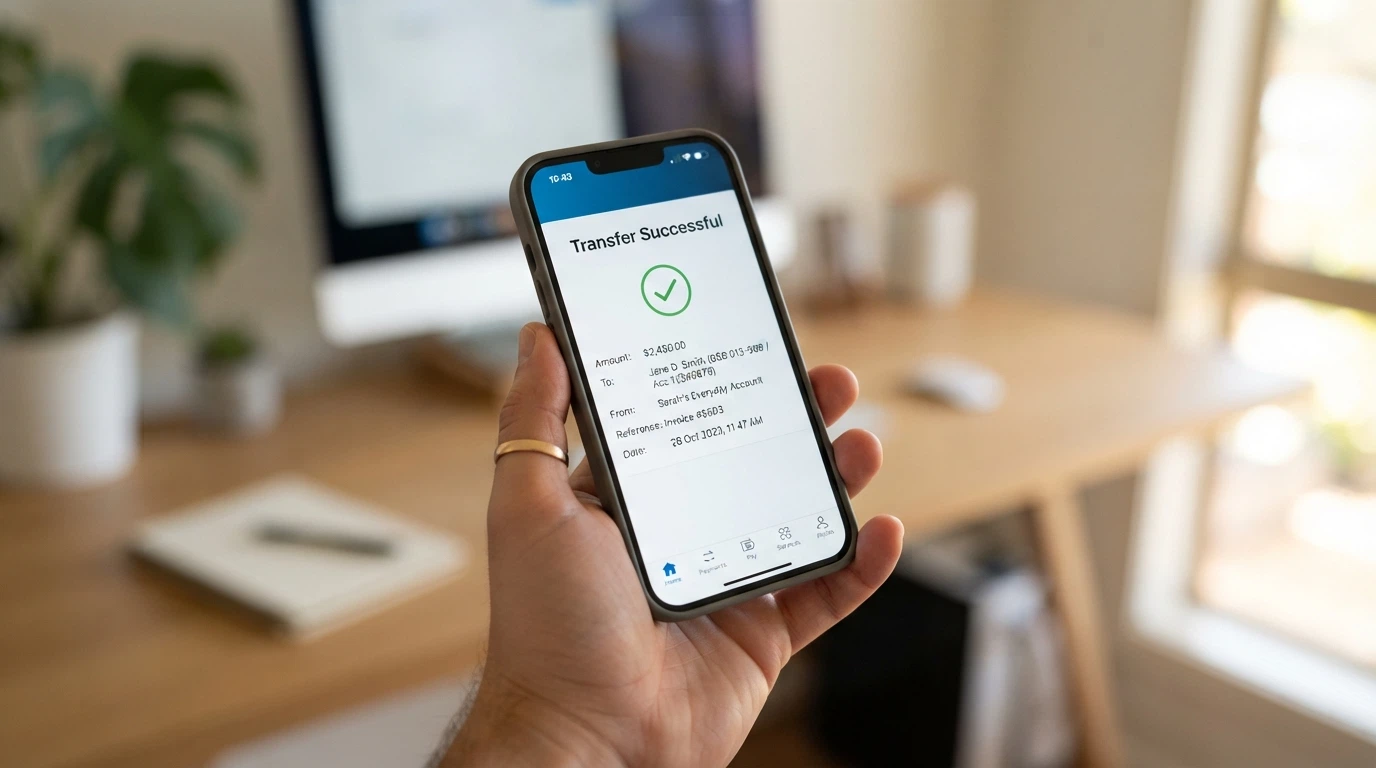
The methods AU-facing offshore operators offer fall into four tiers by speed. Cryptocurrency is the fastest: 10 minutes to 4 hours from approval, with a median of 42 minutes in August 2026 testing. PayID is the fastest AUD-native route: 1 to 4 hours, median around 2 hours. E-wallets (Skrill, Neteller, eZeeWallet) sit in the middle at 4 to 24 hours. Debit and credit cards are 1 to 5 business days. Bank transfer is the slowest at 3 to 5 business days. The “fastest” tier is a relative term — even PayID’s 2-hour median is gated on a wagering requirement that takes days of play to clear.
The payment-method landscape is also a regulatory tell. Since 11 June 2024, credit cards and digital currency (crypto) have been banned as payment for online wagering in Australia, under the Interactive Gambling Amendment (Credit and Other Measures) Act 2023. An operator that asks for a credit card or a crypto deposit is, by definition, operating outside the Australian regulatory framework — the payment method is the proof. Legal deposit routes for licensed Australian wagering are debit card, bank transfer, PayID/Osko and BPAY. An offshore casino does not process those routes through the Australian banking system; it processes them through its own payment partners. The deposit the player makes is a real-money transaction; the regulatory protection around it is the one missing.
PayID, Crypto and the Payment Methods That Actually Work from Australia
| Payment Method | Typical Speed | Notes |
|---|---|---|
| PayID / Osko | 1–4 hours (median ~2 hours) | Fastest AUD-native route; available at most AU-facing offshore operators |
| Cryptocurrency (BTC, ETH, USDT, etc.) | 10 min–4 hours (median 42 min) | Fastest in absolute terms; banned as a deposit method for licensed AU wagering since 11 June 2024 |
| E-wallets (Skrill, Neteller, eZeeWallet) | 4–24 hours | Middle-ground option; some operators exclude e-wallet deposits from bonus eligibility |
| Debit / credit card | 1–5 business days | Credit cards banned since 11 June 2024; debit cards remain technically legal but rarely honoured at offshore operators |
| Bank transfer | 3–5 business days | Slowest option; only practical for large withdrawals |
The fastest routes are the ones with the most friction for an Australian player. PayID works because it is the same instant-payment rail the player already uses for non-gambling AUD transfers, and the operator’s payment partner absorbs the Australian banking relationship. Crypto works because it is a bearer-asset transfer that does not pass through the Australian banking system at all, which is precisely why the credit-and-crypto ban was targeted at licensed operators. The two fastest routes sit on opposite sides of the regulatory line, and the offshore market operates on the crypto side of it.
A practical recommendation: for a player using an offshore operator, PayID is the cleanest AUD-fiat route that does not require holding cryptocurrency. For a player who is crypto-comfortable, the speed advantage of crypto is real, and the regulatory status of the deposit is the same as PayID’s at an offshore site — neither is processed through the Australian licensed framework. The choice between them is about which speed-versus-convenience trade-off fits the player’s situation, not about which is “more legal” (neither is, at the offshore operator).
The Tax Question: Why Your Free Spin Winnings Are Not Taxable in Australia
Australian players do not pay income tax on gambling winnings. The basis is section 6-5 of the ITAA 1997, which sets out the assessable-income rules: betting and gambling winnings are not included as assessable income for an individual who is not carrying on a business of betting. Section 8-1 of the same Act governs deductions, and gambling losses are not deductible against ordinary income. The mirror-image structure — winnings in, losses not deductible — is the long-standing Australian position, and no case has held an ordinary punter’s winnings assessable.
The exception is real. A person who is carrying on a business of betting — the ATO criteria in Taxation Ruling IT 2655 set out the indicators, which include systematic, organised, profit-seeking activity at a scale and frequency beyond ordinary wagering — is treated differently. Their winnings are assessable, their losses are deductible, and they are operating as a business for tax purposes. For a player using a 100 free spins no-deposit offer, the question does not arise. The activity is recreational. The winnings are not taxable, the losses are not deductible, and the A$200 withdrawal that arrives in the bank account is the player’s net of tax.
The operator side is a different story. Wagering operators pay tax where the customer is. The Northern Territory levies a 5% wagering tax on wagers minus payouts plus a 0.05% racing levy; each state sets its own point-of-consumption tax, typically 10–15% of net wagering revenue. Offshore operators do not pay Australian point-of-consumption tax on the play they accept from Australian residents — that is one of the structural features of the offshore model. The Australian-licensed alternative is regulated; the offshore alternative is not, and one of the things that is not is the operator’s tax contribution.
Claiming 100 Free Spins on Mobile: What Changes and What Does Not
Mobile claiming is near-universal among AU-facing offshore operators. The signup form, the account verification, the bonus code entry (if required), and the free-spin play itself are all browser-based, and the same terms apply as on a desktop session. The wagering requirement, the cashout cap, the expiry window, and the max bet are identical. The mobile channel does not change the offer — only the screen does.
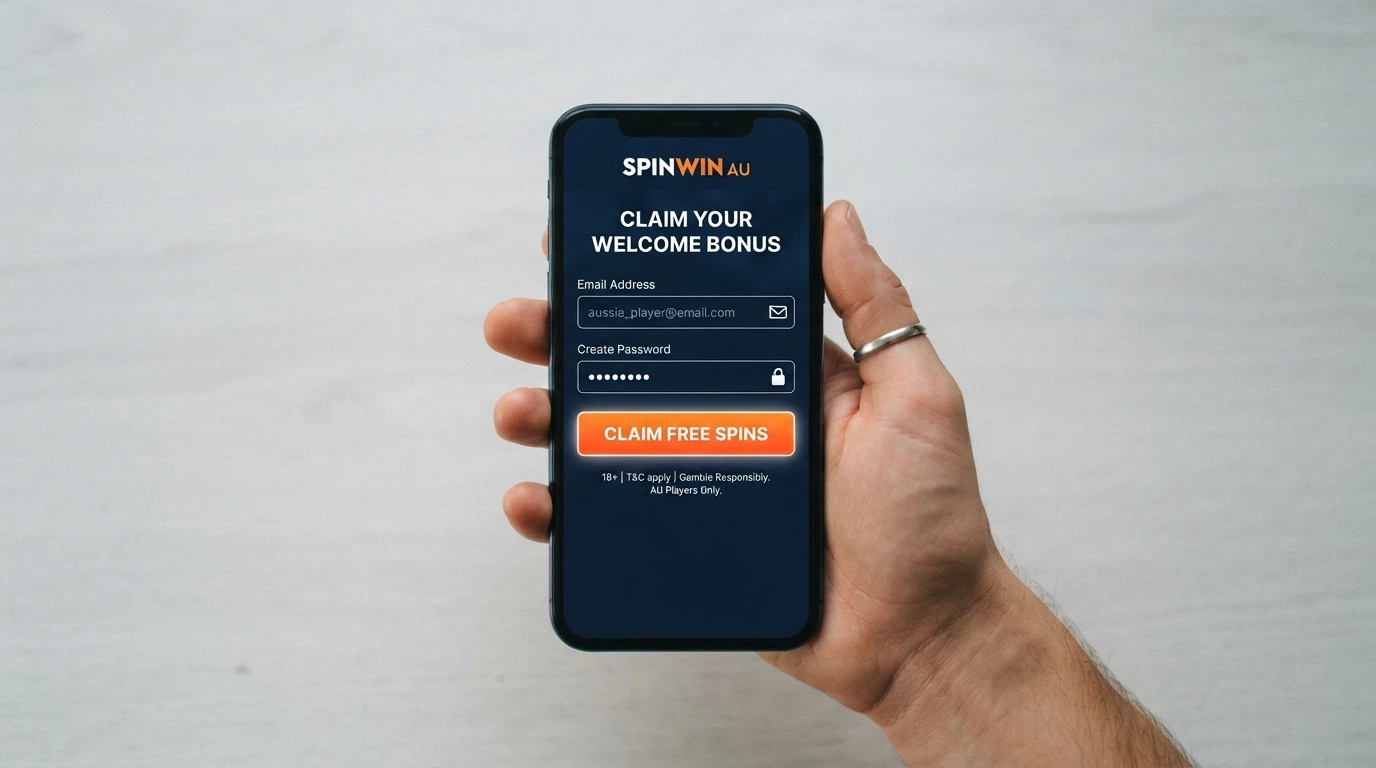
A dedicated casino app is rare in the offshore segment. Most AU-facing operators run mobile-browser play rather than native apps, because the app-store approval process is one more regulatory touchpoint and because a browser-based product is faster to update than an app-store-deployed binary. The mobile experience on a current iPhone or Android device is comparable to desktop for the vast majority of the eligible games, and the touchscreen play is responsive enough that the A$5 max bet during wagering does not introduce any control-friction penalty.
The registration flow on mobile is the part that warrants a small note. The form is shorter than the desktop version at most operators (the mobile form is a streamlined subset), and a player who needs to upload identity documents for KYC will do that through the mobile browser too. The verification step can take longer on mobile than on desktop because the camera-based document capture is sometimes flaky on older devices, and the fallback (email the documents) is slower. The offer terms are unaffected. The friction is in the verification, not the bonus.
Mobile Pokies and the Free-Spin Experience on a Phone Screen
The titles eligible for free spins at AU-facing offshore operators are designed mobile-first. Starburst (NetEnt, 96.09% RTP, low volatility) was rebuilt as a mobile-native title in the early 2010s and runs cleanly on any current phone. Book of Dead (Play’n GO, 96.21% RTP, high volatility) is one of the most-played mobile pokies in the offshore market and supports both portrait and landscape orientations. Big Bass Bonanza (Pragmatic Play, 96.71% RTP, high volatility) is similarly mobile-optimised, and the touchscreen interface for the bonus round is precise enough to be a genuine advantage over desktop.
The part of the mobile experience that is worse than desktop is wagering-progress tracking. A small-screen session makes it harder to keep an eye on the bonus balance, the remaining turnover, the time to expiry, and the max-bet compliance simultaneously, because the operator’s mobile interface typically surfaces the same information as the desktop interface in a more compressed layout. A player who is close to the bonus cap and needs to track the next few spins carefully is better off on a tablet or laptop for the final session. A player who is in the early or middle stages of the playthrough will not notice the difference.
Bitcoin Casinos and Free Spins: What Australian Players Need to Know
A bitcoin casino offering 100 free spins to an Australian player is operating at the intersection of two banned payment methods. The spins themselves may be real, the offer terms may be published, and the operator may be a long-established Curaçao-licensed brand. The deposit route the player is asked to use is the problem. Since 11 June 2024, crypto has been banned as a deposit method for online wagering in Australia, under the same amendment that banned credit cards — and an operator that processes a crypto deposit from an Australian player is, by definition, processing a payment that the Australian framework prohibits.
The penalty for an Australian-licensed operator that fails to enforce the ban is up to A$247,500 per breach. The penalty is the operator’s, not the player’s, and the player using an offshore bitcoin casino is not the one the regulator can reach. The IGA targets the provider; the deposit-ban targets the provider; the individual player does not face prosecution for using the site. That is the legal frame. The practical frame is different: the player is using a site that is demonstrably outside Australian rules because the deposit rail is one Australia has explicitly prohibited, and the consumer protections that follow from being inside the rules do not follow at all.
The anonymity trade-off is the operator’s pitch for the crypto route, and it is partly real. A crypto deposit does not leave the same banking-trail evidence that a debit-card deposit does, and the player’s name is not attached to the wallet address in any public ledger. That is the upside the marketing emphasises. The downside is the same fact from the consumer-protection side: there is no Australian bank to reverse a fraudulent charge through, no Australian ePayments code to invoke, no Australian Financial Complaints Authority to escalate to. The anonymity that protects the player from one set of consequences also removes the recourse the player would have in another.
For a player who is determined to use an offshore casino and is choosing between a PayID-funded AUD account and a crypto-funded USD or BTC account, the practical difference is the speed of withdrawal and the friction at the deposit stage. PayID is faster at the AUD-deposit stage (because the operator’s payment partner handles the conversion). Crypto is faster at the withdrawal stage (because the payout does not pass through Australian banking hours or cutoffs). Neither route is “more legal” than the other from the Australian regulator’s perspective. Both are equally outside the licensed framework.
The Pokies Your 100 Free Spins Will Actually Land On
Free spins are not universal across an operator’s library. The 100 free spins in a typical no-deposit offer land on a single named pokie or a short list, and the operator chooses the title for reasons that are about their own economics, not the player’s preferences. The eligible game is the operator’s way of routing the bonus balance through a pokie where the RTP configuration favours the house.
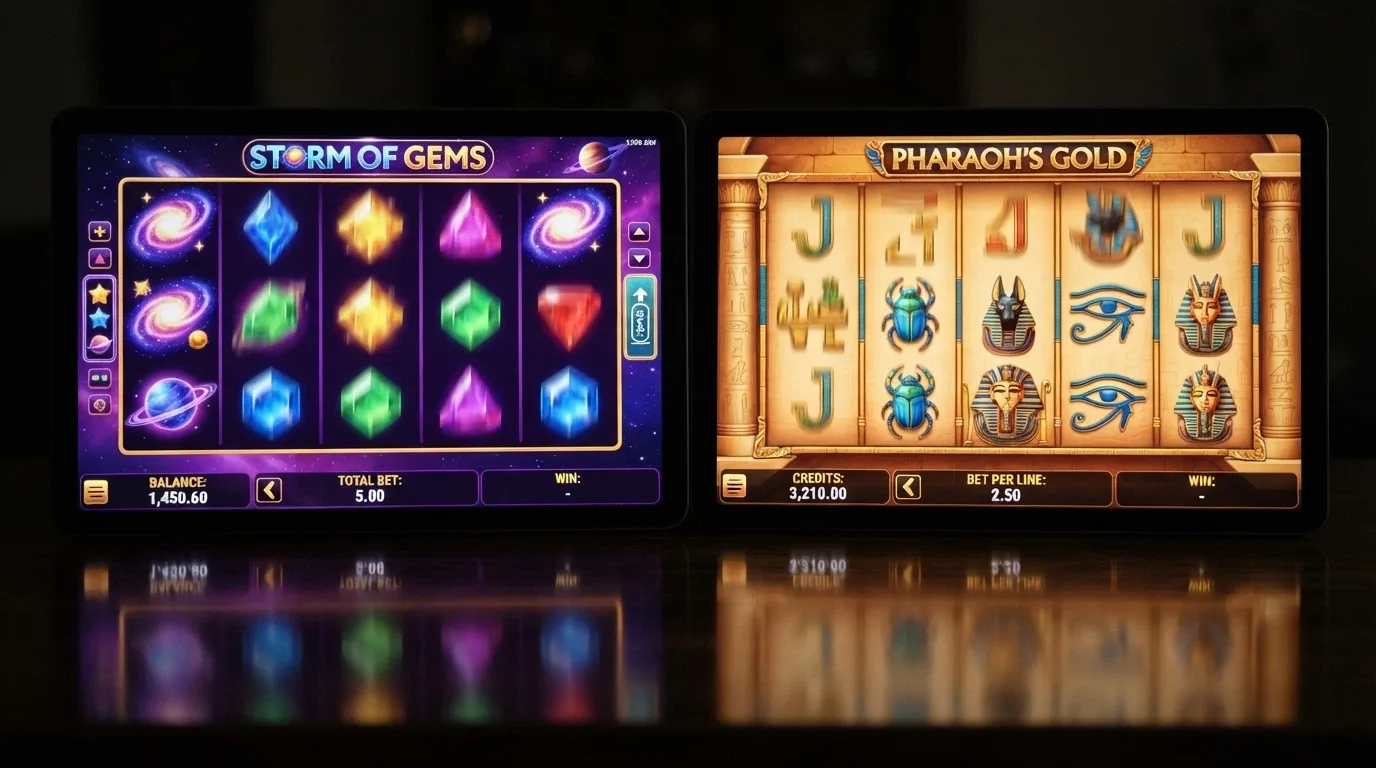
Three titles are named most often across the AU-facing offshore market. Starburst (NetEnt, 96.09% RTP, low volatility, 500× max win) is the slot for the low-risk end of the offer spectrum — long sessions, frequent small wins, and a bonus balance that tends to be consumed slowly. Book of Dead (Play’n GO, 96.21% RTP, high volatility, 5,000× max win) is the slot for the high-volatility end — short sessions, infrequent large wins, and a bonus balance that either converts dramatically or expires. Big Bass Bonanza (Pragmatic Play, 96.71% RTP, high volatility, 2,100× max win) is the middle option — high volatility with a slightly higher base RTP than Book of Dead, and a popular bonus round that the marketing uses because it photographs well.
A complicating factor is RTP configuration. Big Bass Bonanza is documented at three different RTP levels in the market: the 96.71% theoretical maximum, a 94.02% deployment used by some UK operators, and a 92% deployment used by the most aggressive operators. The RTP the player sees on the in-game help screen is the deployment configuration the operator chose, not the theoretical maximum. Two players playing Big Bass Bonanza at two different operators can be playing materially different games for the purposes of expected value. The RTP configuration is one of the operator-side levers the headline RTP figure conceals.
The Slot RTP Table: What the Three Most-Eligible Titles Actually Return
| Slot Title | RTP | Provider | Volatility | Max Win |
|---|---|---|---|---|
| Starburst | 96.09% | NetEnt | Low | 500× stake |
| Book of Dead | 96.21% | Play’n GO | High | 5,000× stake |
| Big Bass Bonanza | 96.71% theoretical (96.71% / 94.02% / 92% deployed) | Pragmatic Play | High | 2,100× stake |
The RTP figures describe the theoretical long-run return of each title. The volatility describes how that return is distributed across individual sessions — low volatility (Starburst) means the player sees frequent small wins and a slow bonus balance burn; high volatility (Book of Dead, Big Bass Bonanza) means the player sees long dry stretches punctuated by larger wins. The max win is the upper bound of any single spin’s payout, expressed as a multiple of the stake. A 500× max win on Starburst at a A$0.10 spin value caps a single spin at A$50; a 5,000× max win on Book of Dead at the same stake caps a single spin at A$500.
For a player who wants the most efficient bonus conversion, the choice between the three titles is a choice between short-term variance and long-term grind. Starburn’s low volatility is the slow path to the cashout cap. Book of Dead’s high volatility is the fast path or the no-path. Big Bass Bonanza sits between them. The arithmetic on the calculation that runs later on this page uses Starburst’s 96.09% RTP because it is the most common eligible title in the segment and the closest thing to a default assumption the data supports.
Pragmatic Play, NetEnt and the Studios Behind the Spins
The studio behind an eligible title is not just a brand on the splash screen. It is a structural feature of the offer, because the studio determines the game’s RTP configuration, volatility, bonus mechanics, and max win. Three studios dominate the free-spin eligibility lists in the AU-facing offshore market, and a player who knows the studio knows the shape of the bonus before the spins credit.
Pragmatic Play is the dominant provider in the segment. Big Bass Bonanza, the studio’s signature title, appears in the eligible-game lists of operators as different as Bizzo Casino (25-spin daily batches on Big Bass Bonanza 1000) and the broader market consensus. The studio’s catalogue runs to several hundred titles, and the high-volatility bonus-round mechanics that the marketing loves — fishing for cash values, collecting scatter pays, expanding reels during free-spin rounds — are a feature of the studio’s design language. For a player who values game breadth and bonus-round sophistication, Pragmatic Play’s catalogue is the centre of gravity.
NetEnt is the second pillar, and Starburst is the studio’s representative in the free-spin market. NetEnt’s catalogue is smaller than Pragmatic Play’s but the studio’s titles are higher-profile per release, and Starburst’s status as the most-deployed free-spin game in the segment is partly a function of brand familiarity — operators know the title and players recognise it. Play’n GO is the third studio, and Book of Dead is its free-spin flagship. The high-volatility mechanics of Book of Dead make it the natural pick for offers that want the marketing upside of a big-win headline.
Fair Go’s RTG-only library is the segment outlier. The RealTime Gaming catalogue runs to approximately 280 titles at Fair Go, which is the narrowest game selection in the set. For a player who plays RTG specifically, the choice is clear: Fair Go is the only RTG-dedicated option. For a player who values game breadth, the multi-studio operators (SkyCrown, Bizzo, Rainbet with 7,000+ titles) are the natural pick.
New Casinos, Same Offshore Reality: Free Spins from Recent Launches
Newly launched offshore casinos use 100 free spins as an acquisition tool for a specific reason: the offer is cheap per signup, and the signup is the conversion event. A new Curaçao or Anjouan licence is still an offshore licence from the Australian player’s perspective, and a 2024 or 2025 launch date is no protection against the IGA prohibition that applies to every offshore operator regardless of when it opened. The licence jurisdiction tells the player which regulatory body oversees the operator; it does not change the fact that the body is not an Australian one.
Rainbet, which launched in 2023 under an Anjouan licence, is the clearest example in the set. The 7,000+ title library, the 14 provably fair originals, the 25+ studio mix and the no-wager gradual-release option are the launch-era features of a new-casino product designed to compete on differentiation rather than on the heritage of an established brand. The no-wager gradual-release option in particular is a feature most established operators do not offer, because it cuts into the binary convert-or-forfeit model the established operators have built their margins around. A new operator can use the no-wager structure as an acquisition lever because the operator has no legacy bonus liabilities to defend.
For a player evaluating a new offshore casino, the checklist is the same as for an established one, with two additions. The licence check is the first: a new Curaçao or Anjouan licence number should be verifiable on the regulator’s own register, not just stated on the operator’s own site. The terms transparency is the second: a new operator’s terms page should state the wagering multiple, the cashout cap, the validity window, and the max bet in plain language, and the player should be able to find each of those four numbers before signing up. If any of the four is missing, the offer is not ready to be evaluated. The third — the withdrawal track record — is the one a new operator cannot prove at launch, because there is no track record yet. The first cashout is the test.
The Legal Reality: Every 100 Free Spins Offer Targeting Australia Is Offshore
The Interactive Gambling Act 2001, strengthened by the Interactive Gambling Amendment Act 2017, makes it an offence for a provider to offer online casino games, online pokies, in-play sports betting, lottery-outcome betting, or unlicensed sports betting to a person physically in Australia. The ACMA’s own description of the Act is explicit: “The Interactive Gambling Act 2001 makes it illegal for gambling providers to offer some online services to people in Australia. Banned services include: betting on the outcome of a lottery, sports betting services which do not hold an Australian licence, in-play sports betting, online casinos.” Online casino is named in the ban. There is no carve-out for a no-deposit free spin offer. The offer is the product, and the product is prohibited.
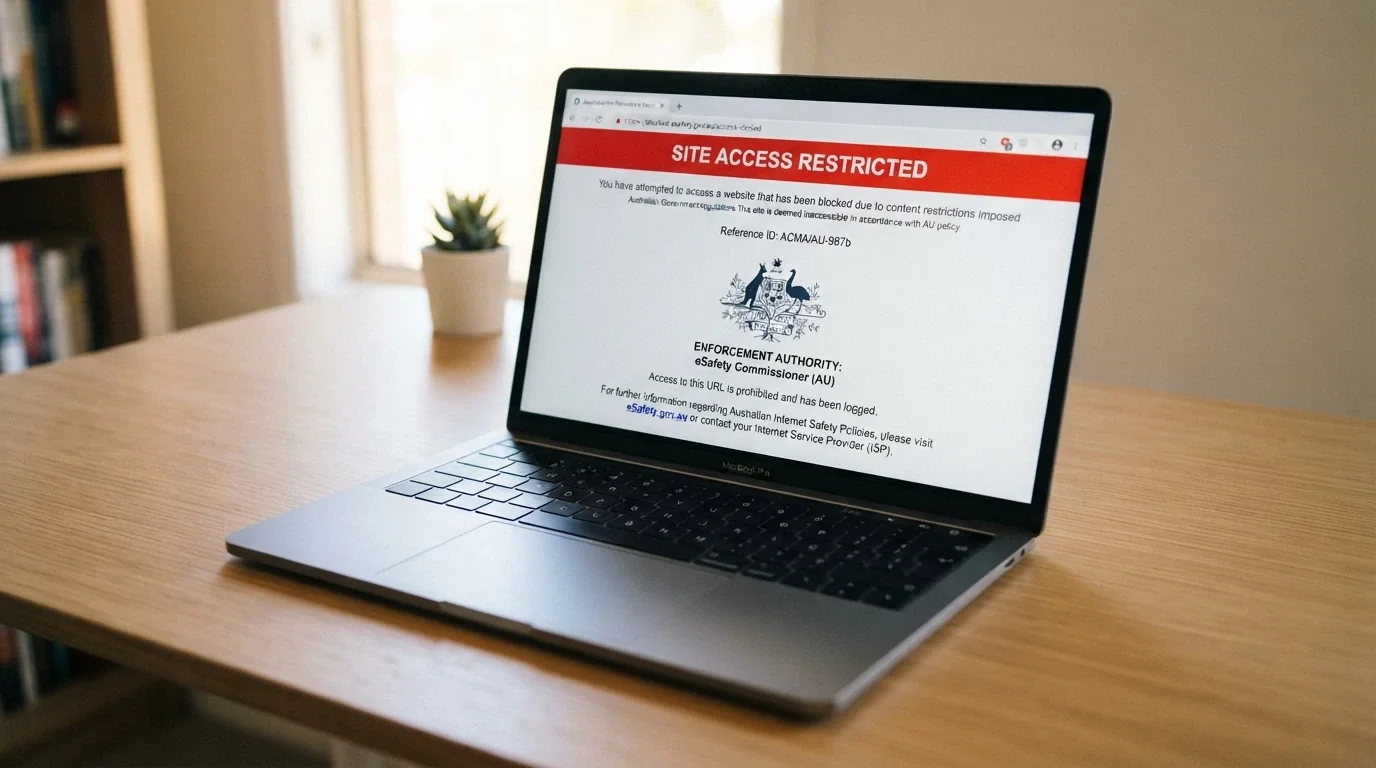
What is legal in Australia is narrower than the marketing suggests. Pre-event wagering on sport and racing is licensable, by state and territory regulators; the Northern Territory Racing and Wagering Commission is the de facto national licensor for online wagering. Lotteries and keno are legal. Land-based casinos (Crown, The Star) are state-licensed. None of those licences covers the online casino product. A player who places a bet on a horse race through a licensed Australian bookmaker is inside the framework; a player who claims 100 free spins at a Curaçao-licensed offshore operator is outside it.
The IGA targets the provider, not the player. Australian players are not prosecuted for using offshore casinos. The enforcement action runs against the operator — through formal warnings, civil penalty proceedings, referral for further action, and ISP-level blocking of the operator’s domains. The ACMA has directed Australian ISPs to block 1,564 illegal gambling and affiliate websites since November 2019, and more than 225 illegal services have withdrawn from the Australian market since enforcement was strengthened in 2017. The blocking is DNS-level, which means it can be circumvented with a VPN but is effective at the population level. The casino a player used last week can be on the blocked list this week, and the operator’s domain simply does not resolve from an Australian IP address.
The Payment Method That Gives the Game Away: Credit Cards and Crypto Are Banned
Since 11 June 2024, credit cards, credit-related products and digital currency (crypto) have been banned as payment for online wagering in Australia. The ban was enacted under the Interactive Gambling Amendment (Credit and Other Measures) Act 2023, and the penalty for an operator that fails to enforce it is up to A$247,500 per breach. Legal deposit routes for licensed Australian wagering are debit card, bank transfer, PayID/Osko and BPAY — the same instant-payment and traditional-banking rails Australian consumers use for non-gambling transactions.
The practical consequence is that a site asking for a credit card or a crypto deposit is, by the payment method alone, demonstrably outside the Australian regulatory framework. A licensed Australian wagering operator cannot legally accept either. An offshore casino does accept both, which is one of the structural tells that separates the licensed market from the offshore one. The payment method is the proof, and the player who sees a credit card or crypto deposit field on a gambling site is being served by an operator that is not subject to the Australian rules at all.
The 2027 bank-blocking authority extends the framework. From 1 January 2027, banks and payment providers gain express authority to block transactions to illegal gambling operators, which means an Australian bank can refuse to process a debit-card payment to an offshore casino at its own discretion. The authority is not retroactive — it does not change the status of transactions processed before that date — but it is a forward-looking tightening of the payment infrastructure around the offshore market. Combined with the existing credit-card and crypto ban, the bank-blocking authority means the payment routes available to an Australian player using an offshore casino are narrowing over time, not expanding.
The 2026 Gambling Reform: What Changes on 1 January 2027
The Interactive Gambling Amendment (Gambling Reform) Bill 2026 passed the Senate on 19 August 2026, and its measures commence on 1 January 2027. The reform package does not legalise online casino. The IGA prohibition on online casino games, online pokies and in-play sports betting remains in force, and the offshore operators offering 100 free spins to Australian players remain outside the law after the reform as before it. What changes is the wagering advertising and inducement framework that surrounds the licensed Australian market.
Three changes are central. AdStop, a national wagering advertising opt-out register administered by the ACMA and funded by a cost-recovery levy on wagering companies, gives Australian consumers a single mechanism to opt out of wagering advertising across all channels. The 14-day post-signup and 90-day post-BetStop-deregistration prohibition on direct marketing of inducements closes the window in which licensed operators can target new sign-ups and recent BetStop deregistrants with bonus offers. The live-sport blackout extension moves the start of the advertising blackout to at least 15 minutes before a game begins, from the previous 5-minute window. None of these changes touches the offshore no-deposit free spin market, because the offshore market is not the licensed market the reform is aimed at.
The reform is phased across three years. Phase 1 (Year 1) bans wagering ads during news and current affairs programming and during school-commute radio. Phase 2 (Year 2) extends the live-sport blackout to its 15-minute pre-game window and adds in-stadium and on-uniform advertising restrictions. Phase 3 (Year 3) moves toward a comprehensive prohibition on wagering advertising across the remaining channels. The full effect of the reform will not be visible in 2026; the early effects (the 14-day and 90-day inducement prohibitions, the AdStop register) are the ones Australian players will encounter first.
What Australian Players Risk When They Use an Offshore Casino
The risks are not theoretical, and they are not the same as the risks of using a licensed operator. An Australian player using an offshore casino has no Australian consumer protection — the Australian Consumer Law does not apply to a Curaçao-licensed operator serving players from overseas. There is no Australian complaints body to escalate to. There is no Australian ePayments code to invoke if a withdrawal is refused. There is no recourse if the operator voids a win on a technicality, or refuses to process a withdrawal on a KYC grounds the player does not understand. The operator’s own terms govern, and the operator’s own dispute resolution (typically an external alternative-dispute-resolution service based in Curaçao or Malta) is the only channel.
BetStop, the National Self-Exclusion Register launched in August 2023, does not cover offshore casinos. The register binds only Australian-licensed wagering services — Sportsbet, bet365, Ladbrokes, the NT-licensed bookmakers, the state TABs. An offshore casino is not connected to BetStop, which means a person who has registered with BetStop to exclude themselves from licensed wagering is still able to deposit and play at an offshore site. The self-exclusion does not extend. The 67,480 BetStop registrations recorded as at 31 July 2026, with 41,290 still active, do not translate to a clean exit from the offshore market — they translate to a clean exit from the licensed market only.
The site-disappearance risk is the most concrete. The ACMA has directed Australian ISPs to block 1,564 illegal gambling and affiliate websites since November 2019, and the list is updated as new operators enter the market and existing ones are added. A player with a balance at an offshore casino that is added to the block list loses access to the casino’s domain from an Australian IP address. The balance does not disappear — it sits in the operator’s system, accessible via VPN or via the operator’s alternate domains — but the player’s everyday access is interrupted, and the withdrawal path becomes a technical exercise. The ACMA blocks at the DNS level. The casino re-registers a new domain. The block catches up. The cycle continues.
Playing Safely When the Safeguards Do Not Cover You
Australian harm-prevention infrastructure is among the most developed in the world. The National Gambling Helpline (1800 858 858) is free, confidential and staffed 24 hours a day, 7 days a week. Gambling Help Online (gamblinghelponline.org.au) provides online chat and counselling. BetStop (betstop.gov.au) is the National Self-Exclusion Register for licensed Australian wagering services, with 67,480 registrations recorded as at 31 July 2026. GambleAware runs state-based services (NSW: gambleaware.nsw.gov.au). SHARC (1300 660 068) and HealthDirect (healthdirect.gov.au/gambling-addiction) are additional entry points. None of these is a resource for offshore casino play specifically — they are resources for gambling harm generally, and the staff on the helpline have heard every version of the offshore-operator problem.
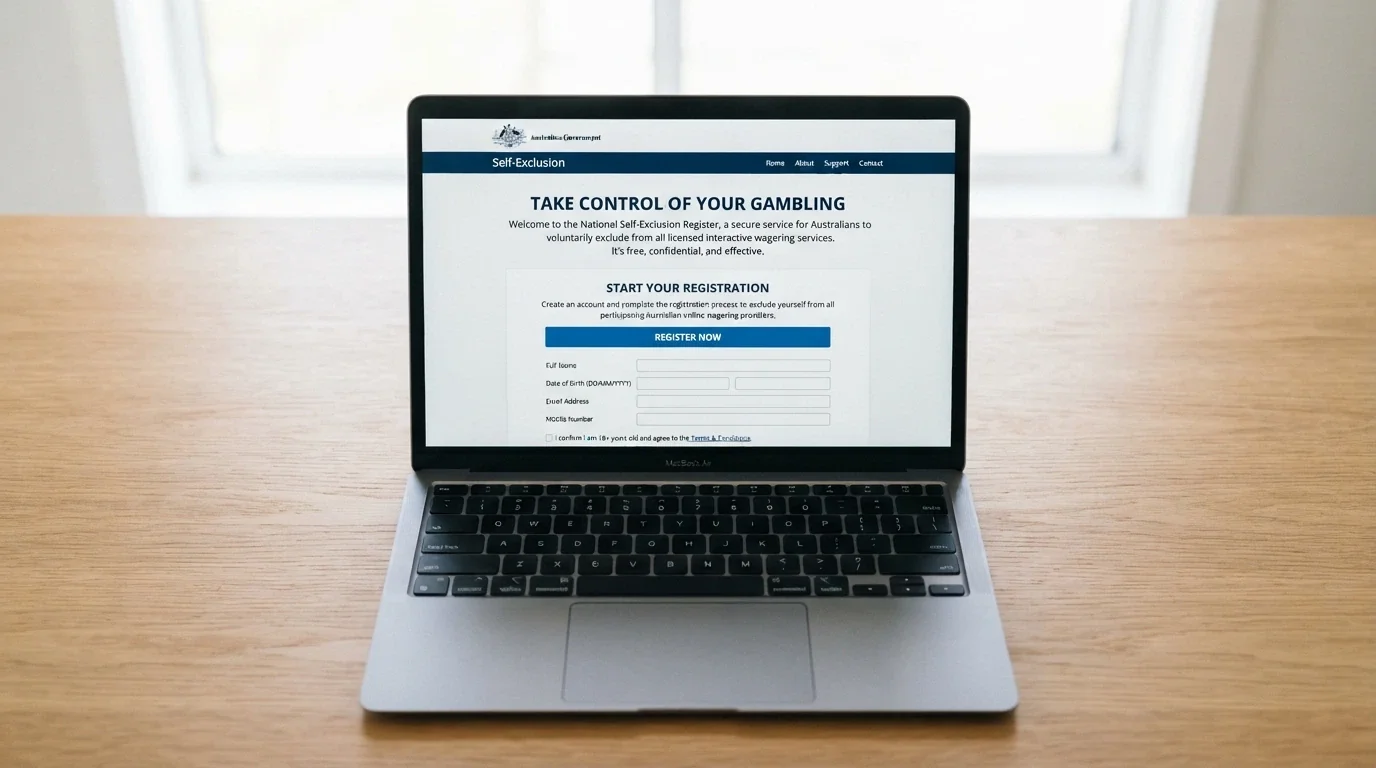
The gap is the structural problem. BetStop does not reach an offshore casino. A self-exclusion under BetStop blocks a person from every Australian-licensed online and phone wagering service, but the offshore operator the person is using is not on the list. The self-exclusion does not extend. A person who wants to exclude themselves from the offshore market has to do it the hard way — by closing accounts at each operator, by using a gambling-blocking software product, by leaning on the financial controls (cancel PayID, block the operator’s payment partner) — because there is no register the offshore operators are connected to. The self-exclusion is the player’s responsibility, not the operator’s, and the offshore operator has no obligation to honour a request that is not connected to a register they recognise.
The help infrastructure does not discriminate by where the player has been playing. A person with a gambling problem who has been using an offshore casino can call 1800 858 858 and receive the same counselling, the same referrals, the same treatment pathways as a person with the same problem who has been using a licensed Australian bookmaker. The staff are not there to enforce the IGA; they are there to support the person who called. The help is real, and it is available regardless of how the harm was incurred.
The Harm the Numbers Reveal: 3.32 Million Australians Affected
The prevalence data behind the harm is not abstract. An estimated 3.32 million Australians — 15.1% of the adult population — are experiencing some level of gambling harm, according to Roy Morgan data as of March 2026. The 13.0% who are experiencing harm from their own gambling behaviours is approximately 2.86 million people; the remaining 2.1% are affected by someone else’s gambling. A model-based study in the Journal of Gambling Studies puts the at-risk or problem-gambling population at approximately 1.97 million Australian adults. The annual health loss associated with gambling-related harm in Australian adults is over 400,000 Years Lived with Disability.
The NSW Gambling Survey 2024 breaks the harm down by activity. Gaming machines are responsible for 54.8% of gambling harm in NSW; wagering for 16.5%; casino table games for 7.7%. The remaining 21% is distributed across lotteries, keno, instant scratch tickets, and informal betting. The fact that licensed land-based gaming machines are the single largest source of harm — a product that is legal, regulated, and taxed in every Australian state and territory — is the single most important context for any discussion of Australian gambling policy. The offshore online casino market is a smaller share of the total harm than the local pub’s poker machines, and the regulatory response to the local product is the dominant policy question, not the offshore one.
The 13.5% help-seeking rate among people experiencing moderate or high-risk gambling is the gap between the population that needs support and the population that reaches it. The 86.5% who do not seek help are not necessarily in denial — many of them do not identify their own behaviour as problematic, or they do not know the help exists, or the help is not reachable from their situation. The figure is up from 11% in 2019, which suggests the public-health effort is moving the needle, but the gap remains. Australians spend approximately A$25 billion on legal forms of gambling each year; the A$20.7M the NSW Responsible Gambling Fund received in 2025-26 is the response from one state to a multi-billion-dollar industry.
Help Resources That Work: 1800 858 858, BetStop and Where to Go Next
The 1800 858 858 number is the single most useful thing on this page for any reader who has read this far and recognised something in it. The line is free, confidential, staffed 24/7, and the call does not require the caller to identify themselves or to disclose the name of any operator they have been using. The counsellors are trained in gambling-specific support, and the call is the entry point to a referral network that includes face-to-face counselling, financial counselling, and (where appropriate) clinical treatment. Gambling Help Online (gamblinghelponline.org.au) provides the same support in a chat or video-counselling format, which is the right first step for a reader who is not ready to make a phone call.
BetStop is the right step for a reader who wants to exclude themselves from licensed Australian wagering. The registration is at betstop.gov.au, the minimum exclusion period is three months, and the options run from there to a lifetime exclusion. The registration blocks the person from every Australian-licensed online and phone wagering service, and 38% of BetStop registrants have chosen the lifetime option. The register does not cover offshore casinos. A reader who is using an offshore site and wants to stop needs to combine BetStop with direct account-closure requests to the offshore operators, and the helpline staff can walk through that process.
State-based services add depth. GambleAware NSW (gambleaware.nsw.gov.au) supported 4,170 people in 19,422 counselling sessions in 2024-25, and the GambleAware Helpline provided 9,538 people with telephone crisis support over the same period. SHARC (1300 660 068) is the Self Help Addiction Resource Centre, and HealthDirect (healthdirect.gov.au/gambling-addiction) is the federal health-information portal. In-language support is available through GambleAware for diverse cultural backgrounds. The help is free, it is confidential, and it is available to anyone who reaches out — regardless of where they have been playing or how much they have lost.
How We Selected and Ranked These Operators
The ten operators in this article are not the ten largest offshore casinos globally, nor the ten most-marketed in the Australian search results. They are the operators that Australian players actually encounter, drawn from the affiliate listicle pages that dominate the search-result landscape and from the market-share data that BLASK publishes on AU-facing operators. The selection was constrained by the requirement that each operator’s terms be confirmable from a sourceable reference — the operator’s own terms page, the affiliate pages that publish the same terms, or the BLASK market data for the operators whose bonus terms were not surfaced. Where the terms could not be confirmed, the table records the gap rather than guessing.
The criteria used to compare the operators, in order of weight: the offer transparency (whether the wagering multiple, cashout cap, validity window, and max bet are all stated in plain language on the operator’s terms page), the term fairness (where the offer sits within the 30× to 60× wagering range, the A$50 to A$200 cashout range, and the 7-to-30-day validity range), the no-deposit availability (the structural differentiator that separates the two genuine no-deposit offers from the eight deposit-gated packages), the eligible-game disclosure (which titles the free spins land on and what the player should know about those titles’ RTPs), and the licence status (Curaçao, Anjouan, the surrendered UKGC licence in Stake’s case). No invented weightings were used; the criteria are stated in the order the player would encounter them.
The licence check was the IGA framework. Every operator in the table is prohibited in Australia under the Interactive Gambling Act 2001, because no Australian licence for online casino exists. The licence jurisdiction column states where the operator is regulated, not where it is licensed to serve Australian players. An operator with a Curaçao licence is regulated by the Curaçao Gaming Authority; an operator with an Anjouan licence is regulated by the Anjouan Gaming Control Board. Neither is an Australian licence. The column is a structural fact about the operator, not an endorsement of the regulatory regime, and the ACMA enforcement record (1,564 sites blocked, 225+ services withdrawn since 2017) is the Australian regulator’s response to the operators the table documents.
Should You Claim a 100 Free Spins No Deposit Offer in 2026? Here Is What the Figures Say
The expected value of a “free” offer is negative, and the legal protection around it is zero. Those two sentences are the whole answer, and the rest of this section is the arithmetic that supports them.
A 100 free spin no-deposit package at A$0.10 per spin has a gross face value of A$10 — 100 spins × A$0.10 = A$10. Played through a 40× wagering requirement (the midpoint of the 30× to 60× range) on Starburst (96.09% RTP), the expected cost of the bonus to the player is calculated from the required turnover and the RTP gap. Required turnover is the winnings × 40. Assuming the player wins the full A$10 face value from the spins (the optimistic scenario), turnover is A$400, and the expected loss at Starburst’s 96.09% RTP is turnover × (1 − 0.9609) = A$400 × 0.0391 = A$15.64. The player has invested nothing, has wagered A$400, and has lost A$15.64 in expected value before the cashout cap applies. The A$75 cashout cap at Rocket Play (or the A$50 to A$200 cap elsewhere) does not change the expected loss — it changes the maximum possible gain.
The expected loss is a statistical average over many spins. It is not a prediction of what any individual player will lose. A single player will either win a non-trivial amount and convert it (subject to the cap), or will run the bonus balance down to zero before the wagering is complete. The expected loss is what the player loses on average across many such sessions, and it is the number the operator has used to price the offer. The operator is selling a product whose expected cost to the player exceeds the face value of the product. That is the meaning of “the house always has an edge”, and it applies to no-deposit free spins the same way it applies to every other casino product.
The legal protection is zero, and that is the second half of the answer. The IGA makes the product illegal to provide to Australian players. The ACMA blocks the operator’s domains. The credit-card and crypto deposit ban is in force. BetStop does not cover the offshore operator. There is no Australian consumer law to invoke if the operator refuses a withdrawal, no Australian complaints body to escalate to, and no Australian ePayments code to fall back on. The deposit the player makes is a real-money transaction processed through the operator’s payment partner; the regulatory framework that would normally govern that transaction does not exist on the other side of the offshore border. The help infrastructure (1800 858 858, Gambling Help Online, BetStop for the licensed market, GambleAware) is real, it is free, and it is available regardless of how the harm was incurred.
The reader’s decision frame, stated plainly: the expected cost of the offer is negative on average, the maximum upside is capped, the legal protection is absent, and the harm data shows 3.32 million Australians are already experiencing some level of gambling harm. A player who has read the terms, understands the wagering requirement, and is willing to write off the deposit they make at an offshore casino is making a recreational-choice decision that is theirs to make. A player who feels the offer is too good to refuse, or who feels the urge to chase a withdrawal, or who has previously tried to control their gambling and failed — the helpline is at the other end of 1800 858 858, and the call is free.
Frequently Asked Questions
Is it legal for Australian players to use offshore casino sites offering 100 free spins?
No Australian licence for online casino exists, so every operator offering 100 free spins to Australian players is operating outside the Interactive Gambling Act 2001. The ACMA enforces the prohibition by directing ISPs to block 1,564 illegal sites since November 2019, and 225+ services have withdrawn from the market since 2017. The IGA targets the provider, not the player, so the individual is not prosecuted, but the offshore operator offers no Australian consumer protection.
Can no-deposit free spins actually pay out real withdrawable cash?
Yes, but the cap matters more than the headline. Most no-deposit free spin offers carry a maximum cashout of A$50 to A$200, and any winnings above the cap are forfeit at withdrawal. A player who wins A$200 from the spins, plays through the 30× to 60× wagering requirement, and then requests a withdrawal receives the cap amount, not the balance. Royal Reels’ A$10 no-deposit free chip and Play Fortuna’s 100 free spins on Fire Toad are the two genuine no-deposit offers in the comparison set.
What is the step-by-step process to activate a 100 free spins no deposit offer?
Register an account with the operator using a unique email and a strong password, verify the email address, complete the KYC identity check if required, and the spins will either credit automatically or appear in the bonus section pending a code. If a bonus code is required, the operator’s own promotions page is the source — affiliate codes are often region-locked or outdated. Once credited, the spins are played on the eligible game, the winnings land in a bonus balance, and the wagering requirement runs from that point.
Are offshore casinos safe for Australian players?
The structural answer is no. The offshore operator is not covered by Australian consumer law, BetStop, the Australian ePayments code, or any Australian complaints body. The ACMA blocks the operator’s domains at the DNS level, which means a player with a balance can lose access. The operator’s own terms govern, and the operator’s dispute-resolution service is the only channel if a withdrawal is refused or a win is voided. The 1,564 sites blocked since November 2019 are the regulator’s response to the segment.
What happens to my winnings if an offshore casino is blocked by the ACMA?
The balance does not disappear from the operator’s system, but the player’s everyday access to the operator’s domain is interrupted. The ACMA blocks at the DNS level, which can be circumvented with a VPN, and the operator often re-registers under a new domain that the block eventually catches. A player with a balance who cannot reach the operator’s domain needs to contact the operator’s support through an alternate channel — typically a mirror domain, an email address, or a live-chat widget embedded in the operator’s mobile app if one was downloaded before the block. The withdrawal is technically still possible; the friction is in the access.
Where can I get help if I have a gambling problem in Australia?
The National Gambling Helpline is 1800 858 858 — free, confidential, staffed 24 hours a day, 7 days a week. Gambling Help Online (gamblinghelponline.org.au) provides online chat and counselling. BetStop (betstop.gov.au) is the National Self-Exclusion Register for licensed Australian wagering services, with a minimum exclusion period of three months and a lifetime option. GambleAware state-based services, SHARC (1300 660 068) and HealthDirect (healthdirect.gov.au/gambling-addiction) are additional entry points. The help is available regardless of where the person has been playing, and the staff are not there to enforce the IGA — they are there to support the person who called.