
The dollar deposit at an Australian online casino in 2026: what you walk into, what is real, and what is offshore
 Available in AU
The $1 minimum deposit is the cheapest door into real-money online pokies an Australian player can find in 2026, and the door leads somewhere most casino guides do not describe honestly. The dollar is real, the games are real, and the licence is not. Every casino that takes an Australian dollar for online pokies runs from outside Australia. No Australian regulator has approved it, no Australian dispute body can touch it, and from 1 January 2027 Australian banks gain express authority to block the payment at source. The point of this page is to walk you through what the $1 deposit actually buys, who the operators behind it are, and what the framework you are stepping outside of would have given you.

The numbers in this review are current as of 18 October 2026 and the licence claims have been checked against the Australian Communications and Media Authority register and the Interactive Gambling Act 2001 (IGA) framework as it stands.
Table of Contents
- Why a $1 deposit is the shrewdest move an Australian player can make in 2026
- The legal reality: why no $1 deposit casino holds an Australian licence
- Where Australians actually play: the 10 offshore casinos dominating $1 deposits in 2026
- Which pokies give your dollar the longest run
- How to move a dollar in and out: payment methods at the $1 threshold
- The same dollar on a smaller screen: mobile $1 deposit casinos
- New offshore casinos taking Australian $1 deposits in 2026
- How we selected and ranked these $1 deposit casinos
- What an Australian player should actually do about $1 deposit casinos in 2026
- Frequently asked questions
Why a $1 deposit is the shrewdest move an Australian player can make in 2026
A single dollar is the smallest bankroll that gets a player through the cashier and onto a real-money pokie. The reason this threshold exists at all is a numbers game: an operator wants the player in the door, and a $1 deposit lowers the cost of admission from $10 or $20 to the price of a soft drink. For a player who wants to try a new casino or stretch entertainment money across several sessions, the dollar deposit is the cheapest possible commitment.
But the practical effect of a $1 deposit is not what most players assume. One dollar buys entry — not a session, not a meaningful run, and not the right to compare a casino against its rivals on equal terms. A $1 bankroll at the typical $0.10 minimum bet buys ten spins. At $0.20 it buys five. Whether those spins last ninety seconds or ninety minutes depends on what is happening on the reels, and the casino’s marketing tends to skip that part. The thing the dollar does well is keep the financial exposure down. The thing it does not do is change the legal reality, the offshore licence, or the absence of Australian consumer protection. Those follow the player in regardless of the deposit size.
What “$1 minimum deposit” actually means — and what it doesn’t
The dollar floor is a payment-system feature, not a session-cost feature. A casino advertising a $1 minimum deposit is saying its cashier will accept a one-dollar top-up. It is not saying a dollar buys a meaningful experience, and it is not saying the offer is free of the usual wagering requirements, withdrawal minimums and bonus terms that apply at every other deposit level. The dollar only marks the entry point.
Casinos offer low deposit thresholds because the first deposit is the most expensive one to lose. A player who tries an operator for $1 and walks away cost the operator one dollar. A player who tries for $20 and walks away cost the operator twenty. The marketing logic is straightforward: convert as many first-time depositors as possible, then rely on the welcome offer and the game catalogue to keep a fraction of them. The player logic should be just as straightforward — treat the dollar as a real-money trial, not as a budget.
The gap between an advertised minimum and a real-world acceptance is the other thing worth knowing. Some operators list a $1 minimum on their payments page but require a $10 or $20 deposit to actually trigger the welcome offer, or to qualify for free spins, or to clear a withdrawal threshold. The cashier page is the only honest answer, and it is worth opening it before signing up.
Real-money play at a dollar: what you can actually do
A $1 bankroll on a pokie at the lowest stake buys a handful of spins. The arithmetic is unforgiving — at ten spins, the house edge eats a measurable slice before any feature can land, and a session that ends in under two minutes is not unusual. That is the trade-off the dollar deposit makes: low financial cost, low entertainment return. For a player who only wants to feel the rhythm of a new game or confirm a casino’s cashier works end-to-end, the dollar is enough. For a player who wants a real session, it is the wrong tool.
The difference between real-money and demo-mode pokies at this deposit level is mostly one of stake size and payout potential. Demo play costs nothing, runs indefinitely and carries zero financial risk. Most offshore casinos offer demo access to their pokies without requiring a deposit. Real-money play starts the moment the dollar clears, and the same pokie behaves the same way in both modes — the difference is what each spin costs and what each spin pays back.
Some titles lock bonus features below a stake threshold. A pokie with a feature-buy option usually offers better hit rates at higher bets, and a few titles gate progressive jackpots behind a minimum stake. At a $0.10 spin level, the player is in the game but not in the upper tier of the game’s mechanics. That is not unique to dollar deposits — it is the mechanic working as designed.
The AU-facing casino landscape: offshore by default
Every online casino taking Australian dollars in 2026 is offshore. The Interactive Gambling Act 2001 makes it an offence to provide online casino games or online pokies to a person in Australia, and no Australian licence covers that product. State and territory licensing covers sports and racing wagering before the event, lotteries, and keno. The Northern Territory Racing and Wagering Commission is the main online wagering body. Casino games and pokies sit outside every licence framework the country has.
The regulator that enforces the prohibition is the ACMA. As of March 2026, the ACMA had directed ISPs to block 1,564 illegal gambling and affiliate websites. Since enforcement was strengthened in 2017, more than 225 illegal services have withdrawn from the Australian market. Enforcement tightened in 2017 and has not let up.
The subject is real, the licensing is not. What an Australian player reaches is the offshore end of a global industry — Curaçao-licensed, Malta-licensed, occasionally Kahnawake-licensed operators that have not applied for Australian authorisation because none is on offer. The brand name looks Australian. The website accepts AUD. The licence behind it is somewhere else.
The legal reality: why no $1 deposit casino holds an Australian licence
The Interactive Gambling Act 2001 is the bluntest piece of consumer protection in Australian gambling law. It does not regulate online casinos — it prohibits them. The Act names online casino games, online pokies and in-play sports betting as prohibited interactive gambling services. There is no licence path for any of them. There is no transitional arrangement. There is no state-level carve-out. The product is simply not legal to provide.

What follows is the rest of the picture: who enforces it, how the enforcement works, what the offshore operator does instead, and what the player loses by depositing with one.
The Interactive Gambling Act and the offshore reality
The Interactive Gambling Act 2001 (IGA) makes it an offence to provide a prohibited interactive gambling service to a person in Australia. The list of prohibited services covers online casino games, online pokies and in-play sports betting. State and territory regulators handle wagering, lotteries and keno — not casino games.
| Regulatory Aspect | Status for Online Casinos |
|---|---|
| Licence Framework | Prohibited (No path exists) |
| Enforcement Body | ACMA |
| Enforcement Tool | ISP Blocking |
| Consumer Protection | None (Offshore only) |
The Australian Communications and Media Authority (ACMA) enforces the prohibition. Its main tool is directing Australian internet service providers to block illegal sites. The number is stark: as of March 2026, 1,564 illegal gambling and affiliate websites have been blocked. The ACMA also moves against the affiliates that advertise those operators, which is why the figure covers “gambling and affiliate” sites rather than casino brands alone.
The 2026 reform tightens the screws. The Interactive Gambling Amendment (Gambling Reform) Bill 2026 passed Parliament on 19 August 2026, with measures commencing on 1 January 2027. The headline changes to the Australian gambling landscape, some of which directly affect offshore operators, include banks and payment providers gaining express authority to block transactions to illegal gambling operators, the prohibition of direct marketing of inducements for 14 days after a customer signs up and for three months after a person deregisters from BetStop, an outright ban on broadcasting sporting odds, barring athletes, celebrities and influencers from promoting wagering products, and a live-sport blackout between 6:00 am and 8:30 pm with an hourly cap of no more than three wagering ads.
The bank-blocking authority is the change that matters most for offshore dollar deposits. From 1 January 2027, an Australian player’s own bank can refuse to send the dollar. The deposit that worked in 2026 may not work in the next calendar year, and not because the casino changed its terms.
What you give up when you play outside the Australian system
Playing at an offshore $1 deposit casino strips away every protection the Australian framework was built to provide. BetStop — the National Self-Exclusion Register — had 67,480 registrations as at 31 July 2026, with 41,290 exclusions still active; however, the register binds only Australian-licensed services, and an offshore casino is not connected to it. Australian consumer-law recourse is likewise unavailable, so if the casino withholds a withdrawal, closes the account or voids a win, the player has no Australian body to complain to. Sites can also be blocked with balances still held, as the ACMA’s ISP-blocking power operates independently of player accounts. Furthermore, no Australian financial ombudsman or consumer tribunal has jurisdiction over these offshore disputes. Finally, the payment method is itself a tell: an Australian who is asked for a credit card or a crypto deposit by a gambling site is being served by someone operating entirely outside Australian rules.
The right comparison is not between offshore casinos. The right comparison is between offshore play and not playing at all — and between licensed wagering on sports or racing, which the IGA does cover, and unlicensed casino play, which it does not.
Help is always available: responsible gambling resources for Australian players
About 2.1% of Australian adults — roughly 430,000 people — experience problem gambling, according to the Australian Institute of Health and Welfare (2022). That figure does not change because the casino is offshore. The help lines do not either.
The National Gambling Helpline is 1800 858 858. It is free, confidential and staffed 24 hours a day, seven days a week. Gambling Help Online provides web-based counselling and self-help resources. The minimum age for all commercial gambling in Australia is 18, and an offshore casino that asks for a date of birth before letting a player in is following the same floor every Australian operator follows — but it is the only Australian rule the offshore set honours by default.
BetStop is the National Self-Exclusion Register. It binds Australian-licensed wagering services. The figures tell their own story: 78% of BetStop registrants were under 40, and 38% chose lifetime exclusion. The register does not reach an offshore casino. A player who has self-excluded and then opens an offshore account has not broken Australian law — the IGA targets the provider, not the player — but the safety net they registered for is not in place.
Where Australians actually play: the 10 offshore casinos dominating $1 deposits in 2026
The ten operators ranked below are the most-trafficked offshore casinos Australian players reach in 2026. Every one is offshore. Every one lacks an Australian licence for casino games. The numbers are tracked AU market share — the share of Australian gambling traffic each operator captures — sourced from the Operators Skill (AU backbone).
| Casino | Licence Status | AU Market Share | Game Focus |
|---|---|---|---|
| Rocket Play | Offshore (likely Curaçao) | 9.4% | Pokies/Slots |
| Skycrown | Offshore (likely Curaçao) | 8.55% | Pokies/Slots |
| Royal Reels | Offshore (likely Curaçao) | 2.51% | Pokies/Slots |
| WinSpirit | Offshore (likely Curaçao) | 1.55% | Pokies/Slots |
| Stake | Offshore (likely Curaçao) | 1.28% | Pokies/Slots/Crash |
| Rainbet | Offshore (likely Curaçao) | 1.28% | Pokies/Slots/Crash |
| Scream Casino | Offshore (likely Curaçao) | 0.99% | Pokies/Slots |
| FairGO | Offshore (likely Curaçao) | 0.8% | Pokies/Slots |
| Bizzo Casino | Offshore (likely Curaçao) | 0.57% | Pokies/Slots |
| Rocket Casino | Offshore (likely Curaçao) | — | Pokies/Slots |
The shape of the list tells its own story. The top two — Rocket Play and Skycrown — sit well clear of the rest, together capturing nearly 18% of tracked Australian gambling traffic. The long tail stretches from Royal Reels down to Bizzo, each operator holding a single-digit share of a market that exists in defiance of the regulator that is supposed to clear it.
No Australian casino licence exists for any operator in this table. The Australian gambling market’s overall share is held by licensed wagering brands — SportsBet at 19.57%, PointsBet at 2.66%, Neds at 2.25% — which is a separate product, governed by separate rules, and the only part of the Australian market the IGA permits.
Rocket Play — the largest of the offshore set
Rocket Play leads the offshore set at 9.4% of tracked Australian gambling traffic. The game focus is pokies and slots — the offshore product the IGA prohibits. The licence is offshore, most likely Curaçao, which is the jurisdiction most of this set operates from. Rocket Play’s welcome offer and wagering requirements are not confirmed by an independent source this run; the operator’s own promotion page is the only place those terms appear.
For a player comparing the top of the table, the relevant facts are the licence status and the market position. Rocket Play holds the largest share of the AU-facing offshore dollar-deposit market — a fact that tells you how many Australian players reach it, not whether it is safe to do so. The Curaçao licence is a real licence with real obligations, but none of those obligations extend to an Australian player. The welcome offer carries the usual wagering terms; reading them before claiming is the only step the operator does not take for the player.
Skycrown — the close second
Skycrown sits at 8.55% of tracked Australian traffic, just behind Rocket Play. The focus here is pokies and slots, the licence is offshore, and the profile mirrors Rocket Play’s. The two operators between them account for the bulk of the offshore AU market’s tracked reach — a duopoly at the top of a list the regulator is supposed to empty.
The difference between Skycrown and Rocket Play at the dollar-deposit level is mostly brand familiarity. Both offer pokies-heavy catalogues, both run from Curaçao, both advertise low deposit thresholds. Welcome offer specifics are qualitative this run; the wagering terms are the usual offshore pattern. The market-share gap is small enough that the choice between them is closer to a coin flip than a ranking.
Royal Reels — brand recognition at 2.51%
Royal Reels holds 2.51% of tracked AU traffic — a smaller share than the top two, but still well ahead of the long tail. The catalogue features pokies and slots, the licence is offshore, and the brand carries enough recognition to keep a steady stream of Australian depositors.
The relevant comparison is not with Rocket Play or Skycrown — the gap there is too large to bridge with welcome-offer generosity. The comparison is with the operators sitting between Royal Reels and the tail: WinSpirit, Stake, Rainbet. Royal Reels’ market position is closer to those brands than to the top of the table, and its pitch to the player sits in the same neighbourhood.
FairGO — the Australia-branded offshore operator
FairGO’s name signals the target market — it reads as an Australian-facing brand, and the 0.8% AU market share confirms Australians do reach it. The licence is still offshore. The branding does not change what the regulator has to say about it. The ACMA’s blocking regime catches FairGO the same way it catches every other offshore operator on this page, regardless of how local the marketing looks.
For a player who has heard of FairGO through Australian affiliate sites, the relevant question is the same as for any other operator here: which offshore licence is it actually running on, and what does that licence entitle an Australian player to. The brand recognition is real. The Australian regulatory cover is not.
WinSpirit — mid-pack with 1.55% share
WinSpirit sits at 1.55% of tracked AU traffic — mid-pack, well clear of the tail, well behind the top two. The operator provides a range of pokies and slots, though the welcome-offer specifics remain qualitative this run.
The honest comparison for a player weighing WinSpirit is with Royal Reels, Stake and Rainbet — the operators around it in the ranking. None of them hold an Australian licence, none of them offer Australian consumer protection, and the difference between them is which offshore brand the player trusts most. WinSpit’s 1.55% share says a meaningful slice of Australian players have answered that question in its favour.
Stake — pokies, crash games and 1.28% of Australian traffic
Stake holds 1.28% of tracked AU traffic and the catalogue mixes pokies with crash games. Crash games are a different mechanic — a multiplier that climbs until it crashes, with the player choosing when to cash out — and they sit outside the traditional pokie format. For a $1 deposit, the crash-game entry point is usually lower than the pokie minimum bet, which stretches the bankroll across more rounds.
The offshore licence applies the same way it does to every operator on this page. The Australian regulatory framework does not differentiate between a casino that offers pokies and one that offers crash games — both fall under the IGA’s prohibition. The ACMA blocking regime catches Stake the same way it catches Rocket Play.
Rainbet — crash games join the pokies at 1.28%
Rainbet holds the same 1.28% AU share as Stake and shares the pokies-plus-crash catalogue. The two operators are interchangeable on the metrics this review carries: same share, same offshore licence reality, same game focus. The choice between them is a brand preference rather than a regulatory or financial one.
For a player who wants crash games and a low deposit threshold, both Stake and Rainbet reach the $1 mark. Neither carries Australian consumer protection. The 1.28% share each operator holds says a comparable number of Australians have made that choice.
Scream Casino — under 1% but in the game
Scream Casino holds 0.99% of tracked AU traffic — just below the 1% line, but in the game. The operator features a selection of pokies and slots, and the brand sits at the edge of the long tail rather than in it.
For a player who has already considered the top of the table and decided the welcome offers do not justify the licence gap, Scream is one of several brands offering the same offshore product with a smaller share. The honest pitch is that the share is small enough that fewer Australians have tested the operator’s withdrawal reliability — a real consideration when the casino has no Australian dispute body to answer to.
Bizzo Casino — rounding out the tracked set at 0.57%
Bizzo Casino holds 0.57% of tracked AU traffic — the smallest share on the table. The casino offers various pokies and slots, rounding out the set without distinguishing itself on any metric this review carries.
A sub-1% share is a real signal. It means fewer Australian players have tested the operator’s payout reliability, its bonus terms in practice and its handling of disputes. The licence is the same offshore licence as the rest of the set; the track record with Australian players is thinner. For a player who values years of operational history behind a brand, Bizzo is the smallest established option on the page.
Rocket Casino — the featured operator without a public traffic figure
Rocket Casino shares the Rocket brand name with Rocket Play but does not appear in the tracked AU market-share data this run. The operator features pokies and slots, and its standing among Australian players is not measurable from the figures available.
The absence of a tracked share is information. It means Rocket Casino has not surfaced in the Australian traffic data Operators Skill tracks, which is the same data the rest of this ranking is built from. A player weighing Rocket Casino against the rest of the set has less to compare on. The licence status and game focus are the same; the AU track record is thinner.
Which pokies give your dollar the longest run
A $1 bankroll is too small for bonus-buy features and too small for progressive jackpots. The pokies that stretch a dollar are the ones with low minimum bets, adjustable paylines and mechanics that pay small amounts often. RTP and volatility are the two numbers that decide what a $1 session feels like. Demo mode is the tool that lets a player feel it before paying for the privilege.
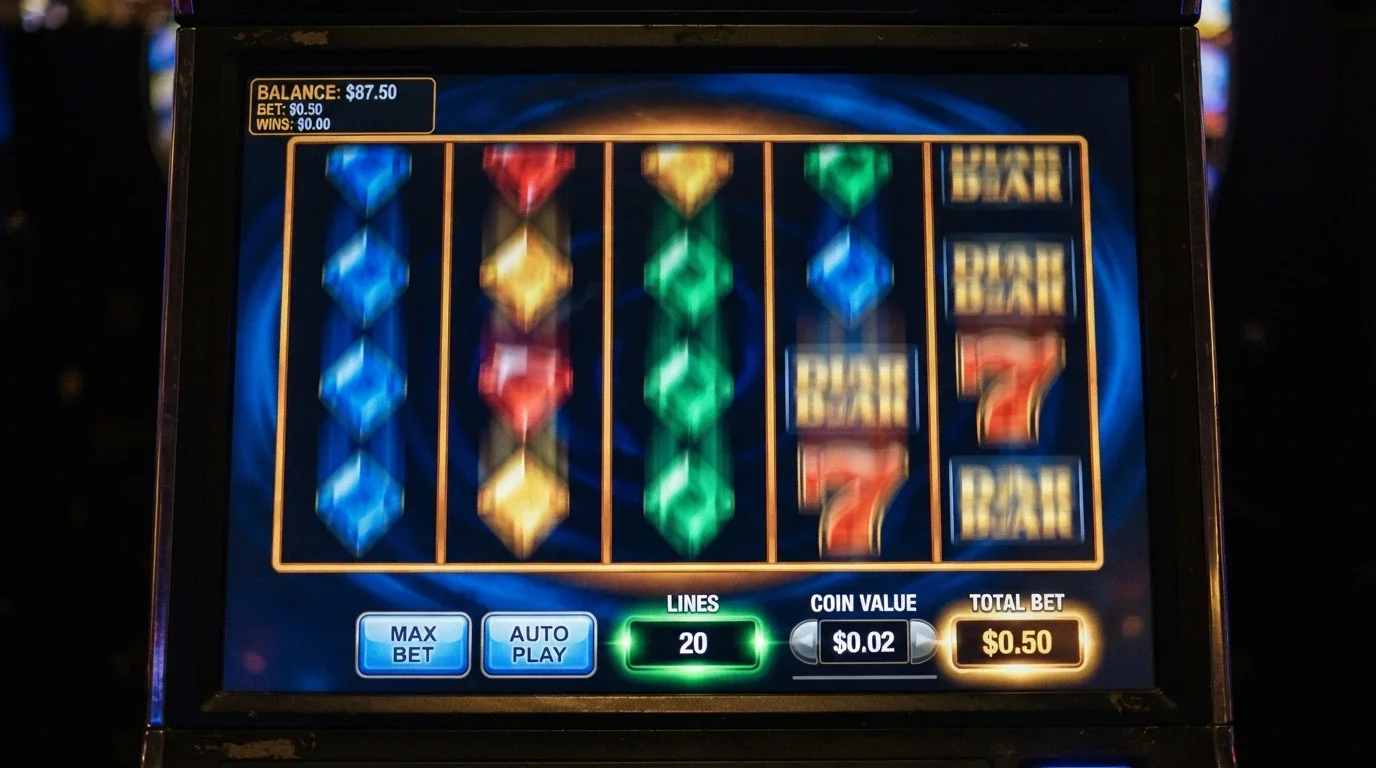
This review carries no per-title RTP or volatility data this run. The numbers below are stated as illustrative industry averages, not as figures for any specific pokie. Actual RTP varies by title and by operator.
RTP and volatility at the dollar level: what the numbers mean
Return-to-player (RTP) is the percentage of wagered money a pokie pays back over a long run. An industry-average RTP sits around 96% — meaning a pokie keeps roughly 4% of what is wagered over millions of spins. That number is an average. A session of ten spins can return 0%, 200%, or anything in between. The 96% is the long-run figure, not the next-spin figure.
Volatility is how that average is distributed. A low-volatility pokie pays small amounts often. A high-volatility pokie pays rarely, and the wins are larger when they land. At a $1 bankroll, the combination matters more than either figure alone. A 96% RTP pokie with high volatility will burn through ten spins without a meaningful hit. A 94% RTP pokie with low volatility will return small wins often enough to stretch the bankroll into a longer session.
For a dollar deposit, the practical rule is: low-to-medium volatility with an RTP above the operator’s published minimum. The exact numbers are not carried on this page; the operator’s game information panel is the source for any specific title. Reading it before depositing costs nothing.
Demo mode: test every pokie before your dollar touches the reels
Demo play is the single best pre-deposit check a player has. It runs on the same pokie, with the same mechanics and the same payout table, but with a fake balance. Demo mode costs nothing, carries no financial risk, and lets a player feel the volatility in five minutes of free spins.
Most offshore casinos offer demo play on pokies without requiring a deposit. The feature is not universal — some operators restrict demo access to registered accounts, and a few gate it behind a minimum deposit. The cashier page is the place to confirm demo access before signing up, and the difference between a casino that offers demo and one that does not is information worth having.
The relationship between demo-mode RTP and real-money RTP is straightforward: where an operator discloses both, they should match. Where the operator does not disclose a real-money RTP, the demo number is what the player has. Where neither is disclosed, the player is betting on a title whose long-run payback the casino has not published.
Pokies built for micro-stakes: what to look for
Not every pokie works at $0.10 a spin. The features that matter at micro-stakes are minimum bet per spin, adjustable paylines, and bonus mechanics that trigger at low stakes.
A pokie with adjustable paylines lets the player drop the line count to stretch the bankroll. A pokie with a fixed 25-payline minimum at $0.01 per line is a $0.25 spin minimum. A pokie with adjustable paylines can drop to $0.01 per line on a single payline for a $0.01 spin minimum. At a $1 bankroll, the difference is four spins versus one hundred.
Provider families known for low-minimum-bet titles include the major studios whose games appear across the offshore set. The relevant check is on the individual title, not the provider. A pokie’s information panel lists the minimum bet, the maximum bet and the payline structure. Reading it costs nothing.
Bonus-buy features are an upper-tier mechanic. They let the player pay a fixed multiple of the stake — usually 50× to 100× — to trigger the bonus round directly. At a $1 bankroll, a bonus-buy feature is not in reach. The mechanic is part of the game’s design but not part of a dollar deposit’s economy.
How to move a dollar in and out: payment methods at the $1 threshold
The payment method a player chooses decides whether a $1 deposit is even possible. Two methods are off the table for Australian players by law. One method is the AU-native backbone. The rest are operator-by-operator.
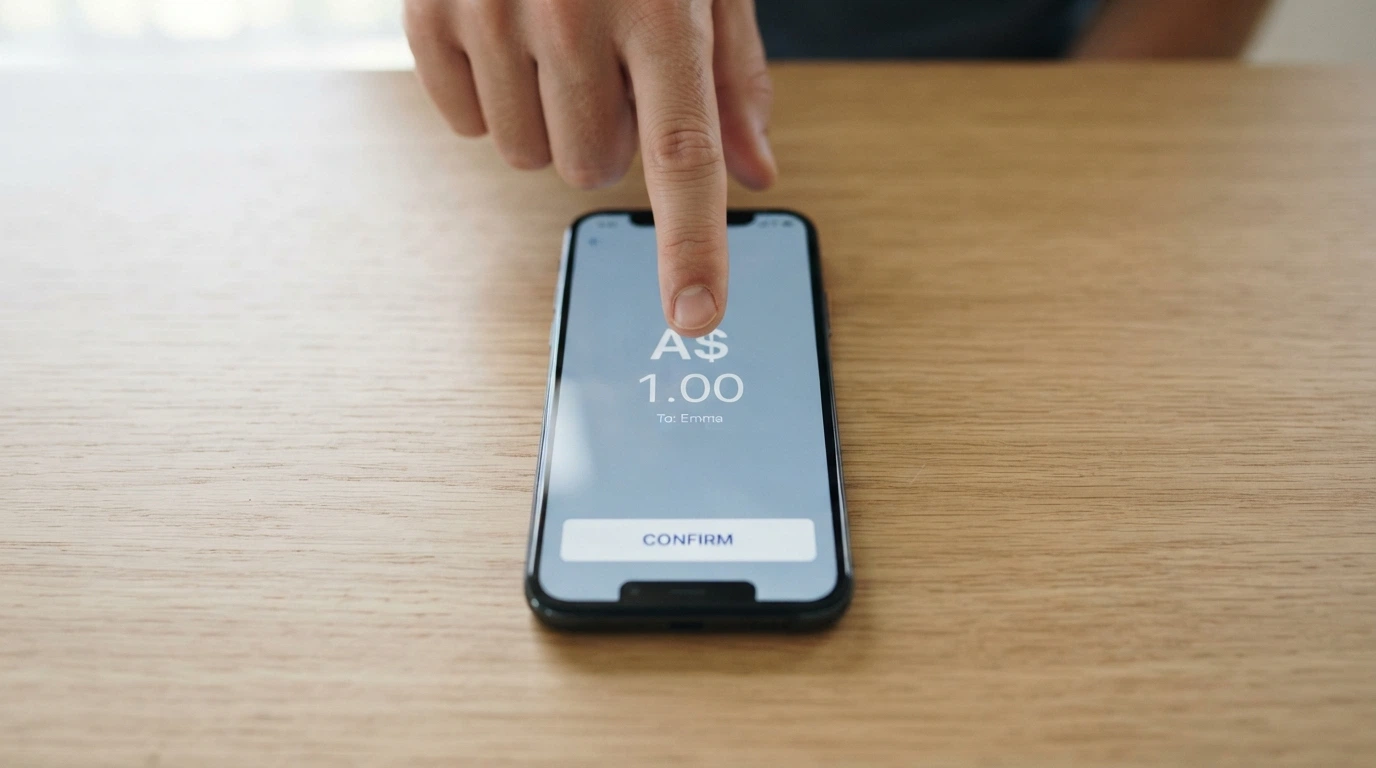
PayID and bank transfers: the Australian low-deposit backbone
PayID is the Australian low-deposit backbone. It links a bank account to a mobile number or email address, processes in seconds, and is widely accepted by AU-facing operators. For a $1 deposit, PayID is the most likely method to actually clear at the dollar mark. Bank transfers — direct deposits from an Australian bank account to the casino’s account — are slower, often take a business day or longer, and usually carry higher minimums.
The honest answer on minimums is qualitative. PayID acceptance at the $1 mark varies by operator. Some offshore casinos accept $1 PayID deposits without issue; others set a higher minimum or require a $10 PayID deposit to trigger the welcome offer. The cashier page is the only place that number is reliable. Research this run did not carry per-operator PayID minimums, and the player should not assume the $1 threshold works everywhere just because it works somewhere.
Credit cards and crypto: why they are off the table for Australian players
Credit cards, credit-related products and digital currency (crypto) have been banned as payment for online wagering in Australia since 11 June 2024. The ban covers credit cards and crypto. It does not cover PayID, debit cards, or bank transfers. An offshore casino asking for a credit card or a crypto deposit is signalling that it is operating outside the Australian rules.
The 11 June 2024 ban is part of the IGA framework and binds Australian-licensed operators. It also covers the payment providers themselves. An Australian bank that processes a credit-card payment to an illegal gambling operator is in breach. An Australian player using a credit card is unlikely to face prosecution — the IGA targets the provider, not the player — but the transaction can be refused at the bank level, and the player’s own bank may close the account.
For a $1 deposit, the practical implication is that the dollar has to come from somewhere on the AU-legal list: PayID, bank transfer, debit card. Anything else is either illegal or a tell that the operator is not following Australian rules.
Deposit methods at the $1 threshold: what reaches and what falls short
Not every payment method accepts a $1 deposit. E-wallets sometimes carry their own minimums that sit above the casino’s deposit floor. Prepaid cards have their own limits. Some methods are simply not built for micro-deposits.
The methods that typically reach the $1 mark in the AU-facing offshore set are PayID, some debit-card routes and a handful of e-wallets. The methods that typically do not are credit cards (banned), crypto (banned), and several e-wallets whose minimums sit at $10 or above. The cashier page of any operator is the only honest answer, and it should be opened before signing up.
Operator-level minimums can override payment-provider minimums. A PayID deposit at $1 might be accepted by the payment system and refused by the casino. A $20 minimum deposit at the casino will block a $1 PayID deposit regardless of what the payment system allows. The number to check is the casino’s minimum, not the method’s minimum.
The same dollar on a smaller screen: mobile $1 deposit casinos
Every featured operator works on a phone. The question is whether the $1 experience holds up on a 6-inch screen. For pokies, the answer is mostly yes — the games are built mobile-first, the controls scale to touch, and the bet sizes do not change between desktop and mobile. For the cashier, the answer depends on the operator’s mobile deposit flow.

Mobile pokies: the micro-stake experience on a phone
Mobile pokies handle low-stake betting controls through the same interface the desktop version uses — a coin-size selector and a bet-level selector, scaled for touch. A $0.10 spin on a five-reel pokie is the same $0.10 on a phone as on a desktop. The portrait layout most mobile pokies use fits a single reel column at a time, which works fine for low-stake sessions.
Landscape mode is usually available and gives the full reel spread. For pokies with adjustable paylines, the line selector is in the same place it is on desktop. For bonus-buy features, the controls are typically accessible but not relevant at a $1 bankroll.
Provider families known for mobile-optimised titles include the major studios whose games appear across the offshore set. Most modern pokies are built mobile-first, and the difference between a good mobile pokie and a desktop port is hard to feel at micro-stakes.
What to check before depositing $1 on a mobile casino
The pre-deposit checklist for a mobile $1 deposit is short: does the casino load in a mobile browser or require a download (most offshore casinos run in-browser, though some offer apps not always available to Australian players), does the mobile cashier accept a $1 deposit (verify this on the mobile cashier page rather than assuming from the desktop version), and is the game library the same on mobile as on desktop? The honest test is to load the operator on a phone, open the cashier without signing up, and check the minimum deposit field. If the mobile cashier accepts $1 and the game library includes the pokies the player wants to try, the operator is mobile-compatible.
The honest test is to load the operator on a phone, open the cashier without signing up, and check the minimum deposit field. If the mobile cashier accepts $1 and the game library includes the pokies the player wants to try, the operator is mobile-compatible. If either is missing, the operator is not.
New offshore casinos taking Australian $1 deposits in 2026
Fresh operators arrive regularly. The AU-facing offshore market is not closed to new entrants; the regulator’s blocking regime chases them after they appear, but new brands surface each quarter. The same offshore licence reality applies to every new entrant — there is no Australian licence path, and no new casino has solved that problem by arriving later.

What a new casino needs to earn a place on your shortlist
A new brand, a fresh welcome offer, and no track record. The evaluation criteria that matter before depositing a dollar:
- Licence verification. The licence should be checked against the regulator’s own register. Curaçao, Malta, Kahnawake — each has a public lookup. A casino that does not name its licence or refuses to share the licence number is not worth a deposit.
- Game providers. The game library’s provider list is a quality signal. Established providers publish RTPs and run independent audits. A new casino with an unknown provider list is asking the player to take its word on payout rates.
- Bonus terms. A new casino’s welcome offer is often more generous than an established operator’s, and the generosity is often paid for in higher wagering requirements, shorter validity windows, or max-cashout caps. The terms matter more than the headline figure.
A new casino that fails any of these three checks is not worth a $1 deposit, because the dollar will not recover what a missed check costs.
New Australian-facing operators versus the established offshore set
The featured set in this review has years of Australian traffic behind it. Rocket Play’s 9.4% share and Skycrown’s 8.55% share are not built overnight — they reflect the number of Australian players who have tested the cashier, played the games and tried to withdraw. A new entrant cannot offer that history.
The trade-off is straightforward. A new casino offers a more aggressive welcome offer and the freshness of an unreviewed brand. An established operator offers a track record, a stable game library and a known withdrawal pattern. For a player who wants the welcome-offer value, the new entrant is worth considering. For a player who wants to know whether the casino pays out, the established set is the safer bet.
Market-share data lags for new operators. The Operators Skill data behind this ranking is built from tracked Australian traffic, and a brand that has been live for six months will not yet have a meaningful share. The absence of a share figure is not the same as a low share figure — it is a thin data point.
How we selected and ranked these $1 deposit casinos
The evaluation basis for this ranking is tracked AU market share, sourced from Operators Skill (AU backbone). The licence-status check was run against the ACMA register and the IGA framework. The criteria that ordered the ranking were:
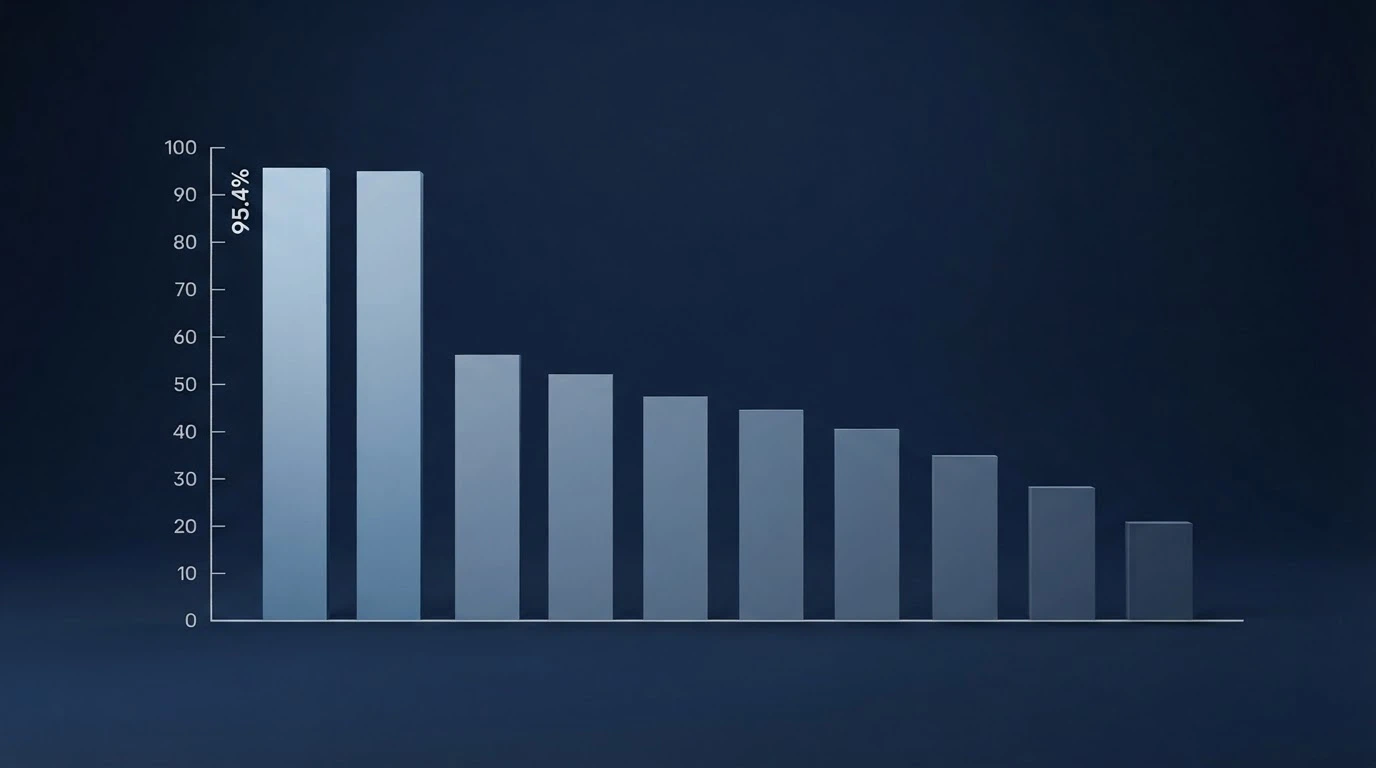
- AU market share as the primary sort, highest to lowest.
- Licence status as a qualifier — every operator in the ranking is offshore and likely Curaçao-licensed; none holds an Australian casino licence.
- Game focus as a secondary qualifier — pokies and slots as the dominant offering, with crash games at Stake and Rainbet.
What this review does and does not cover: this review does not include per-operator minimum-deposit confirmation (research this run did not carry cashier-page minimums, and the $1 figure should be verified on each operator’s payments page before depositing), nor does it include per-operator welcome-offer specifics (research this run marked welcome and wagering terms qualitative, as the operator’s own promotion page is the source for those figures), and it does not include payout-time benchmarks, withdrawal-fee structures, or game-by-game RTP data, as those are out of scope for a market-share ranking.
The ranking is a snapshot of where Australian players actually send their money in 2026. It is not a recommendation of where to play. The legality section of this page is the place to read about what that distinction means.
What an Australian player should actually do about $1 deposit casinos in 2026
The dollar is real, the risk is real, and the licence is not. The numbers on this page — 1,564 blocked sites, 9.4% market share for the offshore leader, 67,480 BetStop registrations — describe a market that exists in defiance of the regulator that is supposed to clear it. The decision a player makes about whether to deposit is theirs to make. The information they make it on should be honest.

The concrete steps that minimise exposure include verifying the licence on the operator’s own page and against the regulator’s register before depositing, keeping in mind that a Curaçao licence is real but not Australian. Players should read the welcome terms before claiming any offer to understand the impact of wagering requirements, withdrawal minimums and max-cashout caps. Using demo mode to test pokies before committing real money is free and effectively answers the volatility question. Keeping deposits small is a form of risk management that limits financial exposure. Finally, players should familiarise themselves with support resources: the National Gambling Helpline is 1800 858 858, which is free, confidential and staffed 24/7, and Gambling Help Online provides web-based support. BetStop covers Australian-licensed services, but although it does not reach offshore casinos, registration remains a valuable step for other forms of Australian gambling.
From 1 January 2027, Australian banks gain express authority to block transactions to illegal gambling operators. A $1 deposit that works in 2026 may not work in the next calendar year, and not because any casino changed its terms. The offshore market is shrinking on a regulator’s schedule, and the dollar deposit is the smallest possible stake in a market that is being closed.
Frequently asked questions
Can I actually win real money with a $1 deposit at an Australian-facing casino?
Yes — real-money wins at offshore casinos are paid in real money, and a $1 bankroll can produce a win. The practical barrier is the withdrawal minimum, which most operators set well above the deposit minimum, and any wagering requirements on a welcome bonus, which require a turnover multiple before winnings become withdrawable. A $1 win on a pokie with no bonus attached is usually real; a $1 win behind a 35× wagering multiple on a bonus is a different proposition.
Are $1 deposit casinos safe for Australian players?
Safety is relative. Every option in the offshore set is unlicensed for casino play in Australia, which means no Australian consumer protection, no Australian dispute body, and no recourse through Australian law if a casino withholds a withdrawal. The offshore licence is real but foreign. The ACMA has blocked 1,564 illegal sites since enforcement began, and sites can be blocked while balances remain. BetStop does not cover offshore casinos. The legal reality section of this page covers what those facts mean in practice.
What are the best pokies to play when you only deposit a dollar?
The pokies that stretch a dollar are low-volatility titles with adjustable paylines, low minimum bets and an RTP the operator publishes. Demo mode is the best way to test a title before depositing, and the operator’s game information panel is the source for the RTP and minimum bet. A specific title recommendation depends on the player’s risk tolerance and the game’s volatility profile — there is no single best pokie for a $1 bankroll, and any review that names one without disclosing the underlying RTP and volatility is guessing.
Which payment methods let me deposit just one dollar?
PayID is the most likely method to accept a $1 deposit at an AU-facing offshore casino. Bank transfers often carry higher minimums. Credit cards and crypto are banned as payment for online wagering in Australia since 11 June 2024. The cashier page of any operator is the only place to confirm the $1 minimum actually clears — operator minimums override payment-system minimums.
What wagering requirements apply to a $1 casino bonus?
A welcome bonus typically carries a wagering multiple — often in the 30× to 50× range, applied to the bonus amount, the deposit amount, or both. A 35× multiple on a $1 bonus means $35 of wagered play before the bonus converts to withdrawable cash, and $35 of wagered play at $0.10 a spin is 350 spins. The exact multiple varies by operator, the eligible games vary by operator, and the bonus terms page is the only place those figures are reliable. A welcome bonus at a $1 deposit level is rarely worth claiming without reading the terms first.
Published by the Instant Withdrawal Casinos AU team.