
PayID, Neosurf or crypto? Choosing a payment method at an Australian-facing casino
 Available in AU
Data current as of 18 October 2026, verified against ACMA enforcement records, AUSTRAC registers and operator cashier pages.
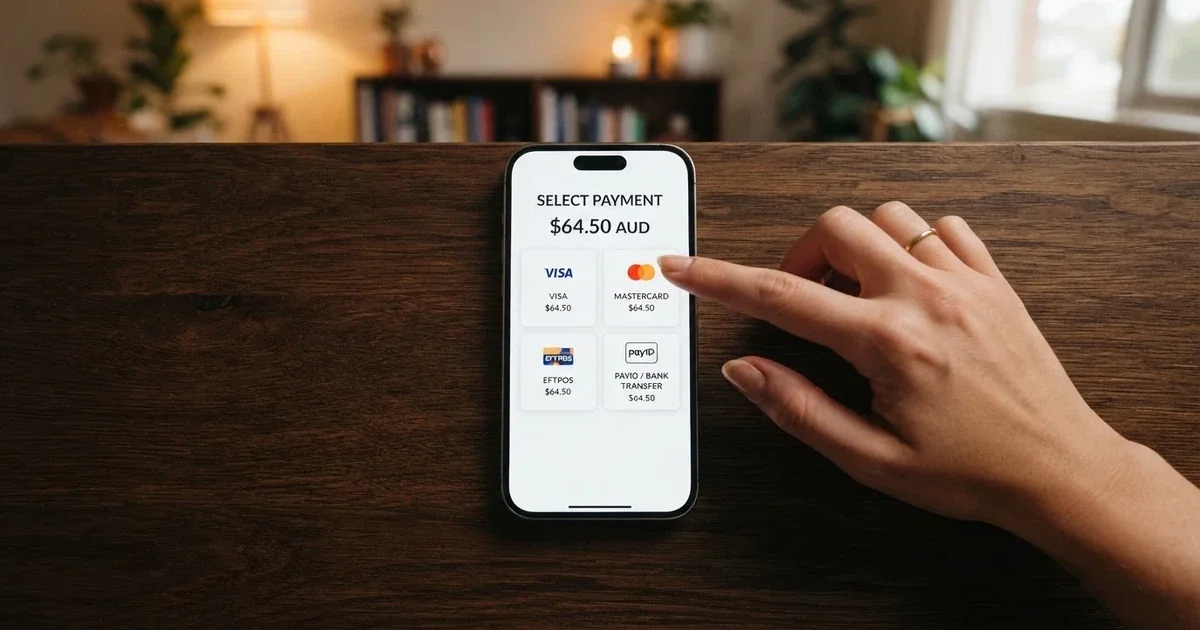
The deposit button is the most underrated part of an online casino. Pick a method in five seconds and you have decided how fast your money arrives, how fast it comes back, who sees your bank details, and whether Australian consumer law can reach the operator when something goes wrong. Most players pick on autopilot. They reach for whatever the cashier offers first and never think about the choice again. That choice is doing more work than the welcome bonus.
This page is about that choice. It runs through the payment methods Australian players actually use at offshore casinos, what each one costs in speed and fees, and where each one sits relative to Australian law. There is one structural fact at the centre, and every method in this guide has to be read against it.
Table of Contents
- Why your casino payment method matters more than you think
- Payment methods Australian players actually use in 2026
- Crypto casino payments — fast, anonymous, and outside Australian rules
- Mobile and phone payments at online casinos
- Top 10 online casinos ranked by payment methods for Australian players
- Australian gambling law — what is legal, what is blocked, and what is changing in 2026
- Responsible gambling — the tools your payment method either supports or sabotages
- How we evaluated and ranked these casino payment methods
- Choose your casino payment method like it is your first line of defence — because it is
- Frequently asked questions about Australian online casino payment methods
Why your casino payment method matters more than you think
No online casino is licensed in Australia. The Interactive Gambling Act 2001 prohibits online casino games, online pokies and in-play betting from being offered to people in Australia. Every operator on this page is offshore, every cashier on this page operates outside Australian rules, and every payment method discussed here reaches that operator without Australian consumer protection behind it. The payment channel is not just a convenience question. It is the first signal of where you are sitting in the system.
The AU player’s payment choice in 2026
Australian players want three things from a casino payment method, and the methods on offer serve those three things very unevenly. Speed dominates — over 42% of Australian players now use PayID specifically because deposits settle in seconds rather than days. Privacy matters, but unevenly: a Neosurf voucher buys it through cash; an e-wallet buys it through a middleman; a debit card hands the merchant your bank details by default. Fees are rarely the deciding factor, because most AU-facing operators do not charge deposit fees, but the withdrawal side is where charges bite — Skrill’s 1.45% fee, the A$25-A$50 flat on international wires, the 1% weekend markup Revolut adds on currency conversion.
What the regulated system offers does not line up with what players want. Licensed Australian wagering can take only debit cards, bank transfers, PayID/Osko and BPAY. No credit. No crypto. No Neosurf. The methods players prefer for speed and privacy — credit, crypto, e-wallets — are exactly the methods the licensed system prohibits. So the choice an Australian player actually makes is not between two payment methods. It is between a fast payment on an unlicensed site, or a slower payment on a licensed one. Most pick the fast one. The system they pick it on is what this guide explains.
How your payment method tells you whether the casino follows Australian rules
Since 11 June 2024, the Interactive Gambling Amendment (Credit and Other Measures) Act 2023 has banned credit cards, credit-related products and digital currency for online wagering in Australia. An operator that fails to enforce the ban faces penalties of up to A$247,500. The licensed Australian wagering world accepts exactly four method families — debit card, bank transfer, PayID/Osko and BPAY — and nothing else. A casino that offers you a credit card deposit is not following Australian rules. A casino that offers you a crypto deposit is not following Australian rules. The presence of either method on a cashier page is itself a regulatory signal, and it tells you the operator sits outside the licensed system.
The same logic runs the other way. AU banks block transactions tagged with Merchant Category Code 7995 — the MCC that designates gambling merchants — which is why a perfectly valid debit card deposit to an offshore casino is often declined. It is not a glitch. It is the bank following the same enforcement architecture that bans credit cards at the licensed end. From 1 January 2027, banks and payment providers gain express statutory authority to block transactions to illegal gambling operators, so the gate is going to get narrower rather than wider.
The practical test is simple. Before any deposit, look at what the cashier asks for. Credit card or crypto means the operator is outside the rules. Debit card, PayID or BPAY means the operator might be a licensed Australian wagering service — and if it is offering online casino games, the licence it carries does not cover them anyway. There is no cashier option that puts a player inside Australian consumer protection for online casino. There are only cashier options that mark how far outside the player is.
Payment methods Australian players actually use in 2026
Seven method families reach an Australian player’s offshore casino cashier. They are not interchangeable. PayID moves money in seconds and back in hours. Neosurf moves money in once and not at all on the way out. E-wallets add privacy at a fee. Debit cards are universal at the deposit step and routinely blocked. Bank transfers are slow but carry the highest limits. BPAY fills the gap when PayID’s daily cap is too low. Crypto is the fastest rail and the most legally exposed.

The order below starts with the method that dominates Australian deposits and works outwards to the niche options.
PayID — Australia’s instant banking rail for casino deposits and withdrawals
PayID is the New Payments Platform’s instant settlement layer, paired with Osko for real-time transfers. Australian banks adopted it as their default for retail transfers, and the casino industry followed. Over 42% of Australian players now use PayID at offshore casinos — the most popular fiat method, and the one that defines what “fast” means on this page.
PayID deposits clear in under 30 seconds at most AU-facing offshore casinos, any day of the week, including weekends and public holidays. There is no batch window to wait for, no cut-off time, no business-day clock. The money arrives before the player has put the phone down. PayID withdrawals settle in 1 to 4 hours at most operators, with some processing in under an hour. Compared to the 3 to 5 business days a Visa or Mastercard withdrawal takes after operator approval, that gap is the entire reason PayID dominates.
Minimums are friendly to a small bankroll. PayID deposit minimums at offshore casinos sit between A$10 and A$20. PayID withdrawal minimums run A$25 to A$50. PayID withdrawals are typically 100% free — no operator fee, no bank fee on the receiving side — which makes PayID the cheapest fast rail on the page. The constraint is the daily transfer limit set by the player’s bank, which is determined by the player’s bank, which is why higher-volume players sometimes hit BPAY instead.
Neosurf — the prepaid voucher that keeps your bank out of the casino
Neosurf is a fixed-value voucher. A player buys a A$30, A$50, A$100 or larger voucher in cash at a retail outlet or online, scratches off a PIN, and types the PIN into the casino cashier. The deposit lands instantly. The casino never sees a bank account, never sees a card number, never sees a name. The transaction is anonymous on the casino’s side and frictionless on the player’s side.
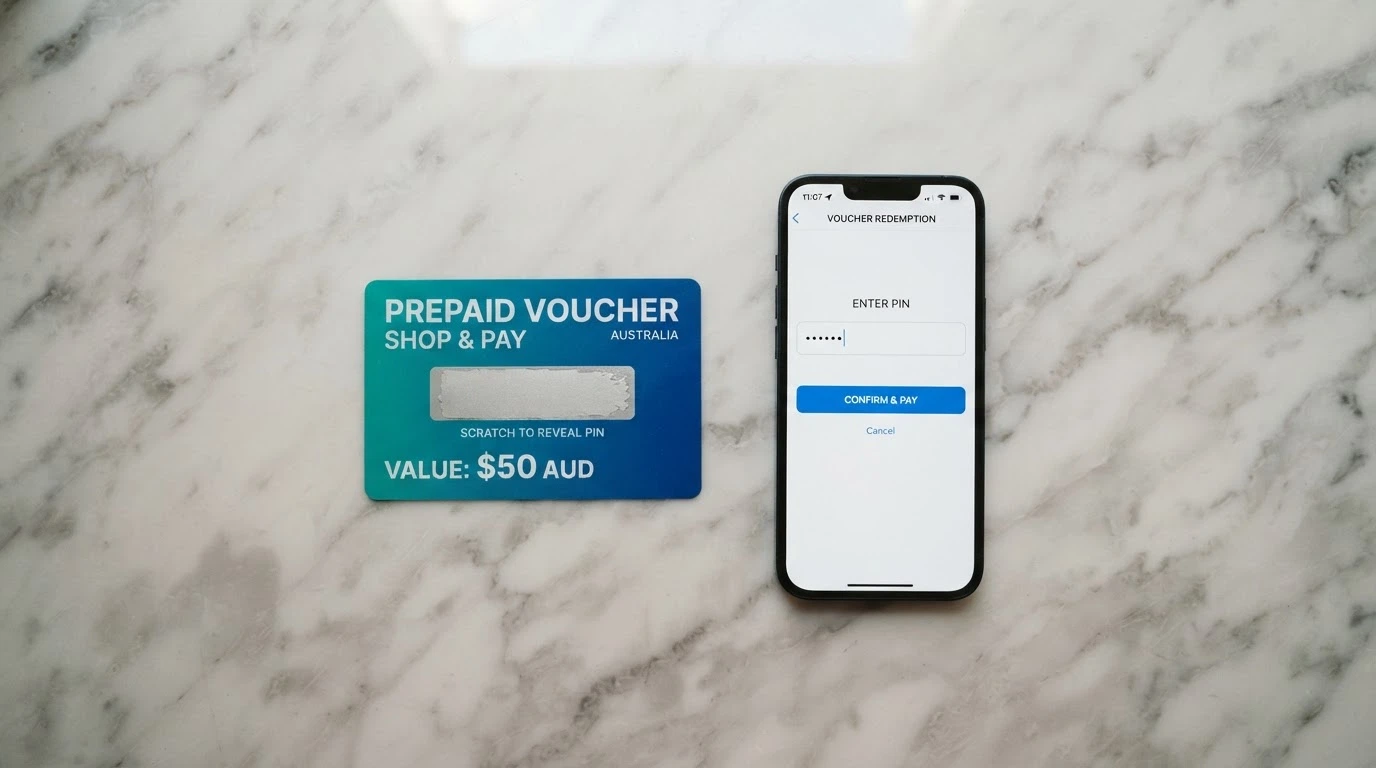
There is no currency conversion charge when a Neosurf voucher is bought in AUD, and most featured AU-facing casinos do not add a processing fee on top. The minimum to trigger a welcome offer at most featured Australian casinos is A$30, which lines up with the most common voucher denomination. Neosurf is deposit only. Withdrawals are not possible through Neosurf, so any player who deposits with a voucher needs a second method lined up to cash out — bank transfer, e-wallet or crypto.
The fixed-value structure has a side effect that no marketing copy mentions. A voucher is a natural budget. The player cannot deposit more than what is on the PIN, and a single voucher cannot be topped up mid-session. That hard cap is the only spending control baked into a payment method on this page. Whether the player treats it as a feature or an inconvenience depends on what they came to the cashier for.
E-wallets — Skrill, MiFinity, eZeeWallet and the digital middlemen
E-wallets sit between the player’s bank and the casino. The player funds the e-wallet once, then uses the e-wallet balance at the casino. The casino never sees the player’s bank or card. Three e-wallets reach most AU-facing offshore cashiers: Skrill, MiFinity and eZeeWallet. Revolut sits in a separate category — it is a multi-currency account that adds mobile-wallet and card behaviour on top, often used to dodge a bank gambling block.
Speed is the headline. Skrill averaged 47 minutes for a withdrawal across 60+ test withdrawals in Q2 2026, against Neteller’s 68 minutes. MiFinity is typically instant once approved; eZeeWallet clears within hours. Skrill’s 1.45% withdrawal fee is the real cost — small per transaction, but it compounds across a session of small cashouts. MiFinity and eZeeWallet typically have low or zero fees. Revolut charges nothing on card payments including gambling, but if the casino cashier charges in EUR or USD, Revolut exchanges at the interbank rate up to A$2,000 on the free Standard plan with a 0.5% fair-usage fee, plus a roughly 1% weekend markup.
E-wallets also get past the AU bank gambling block more reliably than direct card payments. A transaction routed through a Skrill or MiFinity balance does not carry an MCC 7995 tag at the bank level — the player’s bank sees a transfer to the e-wallet provider, not a gambling merchant. It is one of the reasons e-wallet use is high among AU players whose banks decline card deposits.
Debit cards, the credit card ban and why your casino card payment gets declined
Debit Visa and Mastercard are the most universally accepted method at the offshore casino cashier. Almost every operator takes both. Almost every AU player has at least one. And almost every player with a major Australian bank has had a deposit declined anyway, because AU banks strictly block transactions tagged with Merchant Category Code 7995 — the code that designates gambling merchants. The deposit is rejected at the bank’s end before the casino ever sees it. This is not the casino’s fault. It is the bank following the same enforcement architecture that bans credit cards for online wagering.
The legal picture: credit cards and credit-related products have been banned for online wagering in Australia since 11 June 2024 under the 2023 Act, with penalties of up to A$247,500 per operator that fails to enforce the ban. A debit card is legal. A credit card is not. The distinction matters because some credit-card issuers may treat a casino deposit as a cash advance, adding interest and a processing charge on the player’s next statement, even when the card is presented as a “credit” path at the cashier.
Visa and Mastercard withdrawals at offshore AU casinos take 3 to 5 business days after operator approval, on top of the operator’s own processing time. Standard offshore casino withdrawal processing is up to 48 business hours from the moment of request — so a card withdrawal can mean a week and a half between request and money in the bank.
POLi deserves its own footnote. POLi deposits cleared instantly when the service ran, but POLi shut down in 2023 and is no longer available at any Australian casino. Any site still listing POLi as a payment method is outdated or dishonest about its cashier. The same flag applies to operators still showing POLi logos.
Bank transfer, BPAY and international wire withdrawals
Bank transfer is the slow, high-limit rail. It is the method a player chooses when speed is not the priority and the amount justifies the wait. Standard offshore casino withdrawal processing is up to 48 business hours; on top of that, bank transfers take 3 to 7 business days to land. International bank wire withdrawals take 5 to 9 business days with flat fees of A$25 to A$50. The cost is real and the timeline is real, but the per-transaction ceiling is high enough to handle sums that would breach PayID’s daily cap.
BPAY fills a specific gap in this picture. BPAY deposits at offshore casinos take 1 to 2 business days; BPAY withdrawals take 3 to 5 business days. It is best suited for planned larger deposits — A$500 or more — where the player is happy to wait. Some banks allow A$20,000 or more per BPAY payment, which makes it the practical choice for high-volume deposits where PayID’s daily limits are too low. BPAY is not instant. BPAY is the answer to the question of what to use when PayID is too small and a bank wire is too slow.
The slow rail earns its place on one condition: the player is moving a sum large enough that the processing time is worth the higher ceiling, and the player has read the withdrawal terms at the specific operator before depositing. Pending times vary by operator, and a bank transfer at an operator with a 72-hour pending window turns “3 to 7 business days” into closer to two weeks.
Payment method speed and fee comparison at a glance
The table below compares the seven method families across the dimensions an Australian player weighs before depositing. Use it as a quick reference, then read the prose for the trade-offs each row hides.
| Method | Deposit Speed | Withdrawal Speed | Fees | Deposit Limits | Best For |
|---|---|---|---|---|---|
| PayID / Osko | Under 30 seconds | 1 to 4 hours | Free | A$10–A$20 min; bank daily cap applies | Players who want the fastest AUD-native fiat rail |
| Neosurf | Instant | Not supported | No casino fee; no FX on AUD vouchers | Fixed voucher values (e.g., A$30, A$50, A$100+) | Privacy-first deposits with a hard spending cap |
| E-wallets (Skrill, MiFinity, eZeeWallet) | Instant | 47 min (Skrill) to same day; MiFinity/eZeeWallet often instant | Skrill 1.45% on withdrawal; MiFinity and eZeeWallet low or zero | Set by e-wallet and operator | Players whose bank blocks MCC 7995 or who want a privacy layer |
| Debit Visa / Mastercard | Instant at cashier, often declined by bank | 3 to 5 business days after operator approval | Usually none; FX on non-AUD cashiers | Set by operator, often A$10–A$20 min | Players whose bank does not block MCC 7995 |
| Bank transfer / International wire | 1 to 2 business days | 3 to 7 business days domestic; 5 to 9 international | A$25–A$50 flat on international wires | High; often A$10,000+ per transaction | Larger planned deposits or withdrawals |
| BPAY | 1 to 2 business days | 3 to 5 business days | Usually none | Some banks allow A$20,000+ per payment | A$500+ planned deposits where PayID’s daily cap is too low |
| Cryptocurrency (BTC, ETH, USDT, LTC) | 10 minutes to 1 hour after confirmations | 15 minutes to 2 hours; LTC/USDT often 5 to 30 minutes | Platform fee fractions of a cent to A$2 | Set by network and operator | Speed and bank-block bypass; carries legal exposure |
The trade-off the table does not show is the one that actually decides the deposit. PayID is fast and free, but it sends your name and the transaction through your Australian bank — every deposit is a row in your statement, and from 1 January 2027 banks gain express statutory authority to block transactions to illegal gambling operators. Neosurf is private but deposit-only. Crypto is the fastest and bypasses the bank block entirely, but it is also the method the Interactive Gambling Act 2001 specifically bans for licensed wagering. Speed, cost, privacy and legality pull in different directions. The right column of “Best For” is the trade-off, not the answer.
Crypto casino payments — fast, anonymous, and outside Australian rules
Crypto has grown to about 22% of total AU pokies volume in 2026. That number is not coming from licensed Australian wagering — crypto has been banned for licensed online wagering since 11 June 2024 under the 2023 credit and crypto ban. The volume is running entirely through offshore operators that accept it anyway. Crypto withdrawals typically clear in 15 minutes to 2 hours — the fastest rail on this page — and crypto deposits bypass Australian bank gambling-merchant blocks entirely. That is the pitch. The pitch does not mention that the operator offering the rail is one that the IGA prohibits, or that the same transaction a player makes in seconds is a row in an AUSTRAC-tracked exchange’s compliance file.

Bitcoin, Ethereum and USDT — which cryptocurrencies Australian casinos actually take
Three coins dominate the cashier at AU-facing offshore casinos: Bitcoin (BTC), Ethereum (ETH) and Tether (USDT). Litecoin (LTC) appears as the low-fee option for smaller deposits, with withdrawals often clearing in 5 to 30 minutes at platform fees of fractions of a cent up to a maximum of around A$2. Dogecoin (DOGE), Bitcoin Cash (BCH) and Tron (TRX) appear at operators that want to signal breadth. Some operators go further — Rainbet lists 25 tokens — but the practical cashier question is whether BTC, ETH or USDT is supported, because those three are the ones that move reliably across exchanges and self-custody wallets.
Per-operator crypto support at the featured set: Rocket Play takes BTC, ETH, LTC, DOGE, BCH and USDT. Skycrown takes BTC, ADA, BCH, BNB, ETH, LTC, TRX, USDT, DOGE and XRP. Royal Reels takes BTC, ETH, LTC, USDT and DOGE. Stake runs crypto-primary with BTC, ETH, LTC, USDT, DOGE, XRP, TRX and more. Fair Go takes BTC and LTC only. Bizzo takes BTC, ETH and USDT. Neospin takes BTC, ETH, USDT and LTC.
The mechanics are uniform. The player copies a wallet address from the casino cashier, sends the deposit from a personal wallet or exchange, waits for blockchain confirmations (usually one to three), and the casino credits the balance. Withdrawals run the same path in reverse — casino sends to the player’s wallet address, confirmations land, the funds are spendable. The speed is genuine. The fee structure is genuinely small. The legal status is what the rest of this section is about.
Crypto wallets, AUSTRAC-registered exchanges and the Travel Rule
An Australian player does not arrive at a casino crypto cashier with crypto already in hand. They arrive with AUD in a bank account and a need to convert it. The conversion happens at an AUSTRAC-registered exchange — CoinSpot and Swyftx are the two Australian players actually use. Both are AUSTRAC-registered digital currency exchanges, both hold AUD in trust, both support PayID funding for the AUD-to-crypto leg. The deposit leg at the casino then goes from the exchange’s wallet or a self-custody wallet the player controls.
The Travel Rule, mandatory in Australia from 1 July 2026 and enforced by AUSTRAC, is the new constraint at this step. Crypto platforms must collect and pass on basic sender and recipient information for withdrawals, which means an exchange will know that its customer is sending funds to a casino wallet address. Some exchanges already flag or decline gambling-bound transfers. The Travel Rule does not change what the player can do at the casino end — that is still the operator’s choice — but it changes what the player’s exchange is willing to let them do.
The structural conclusion for this section is short. Crypto is the fastest payment method on the page, and the only one that bypasses every layer of AU banking enforcement. It is also the only method that the IGA 2001 specifically bans for licensed wagering — so the operator offering it is, by definition, one operating outside Australian rules. Speed and exposure rise together.
Mobile and phone payments at online casinos
The phone is the casino for most Australian players. Deposits happen on the bus, withdrawals get checked at lunch, identity documents get photographed in the same session. The mobile payment picture at AU-facing offshore casinos is patchier than the desktop one. Apple Pay and Google Pay are accepted at a small but growing share of operators. SMS billing and carrier billing are almost absent from the AU-facing offshore market. The phone is the device; the cashier is still mostly the same cashier as desktop.
Apple Pay, Google Pay and mobile wallet deposits
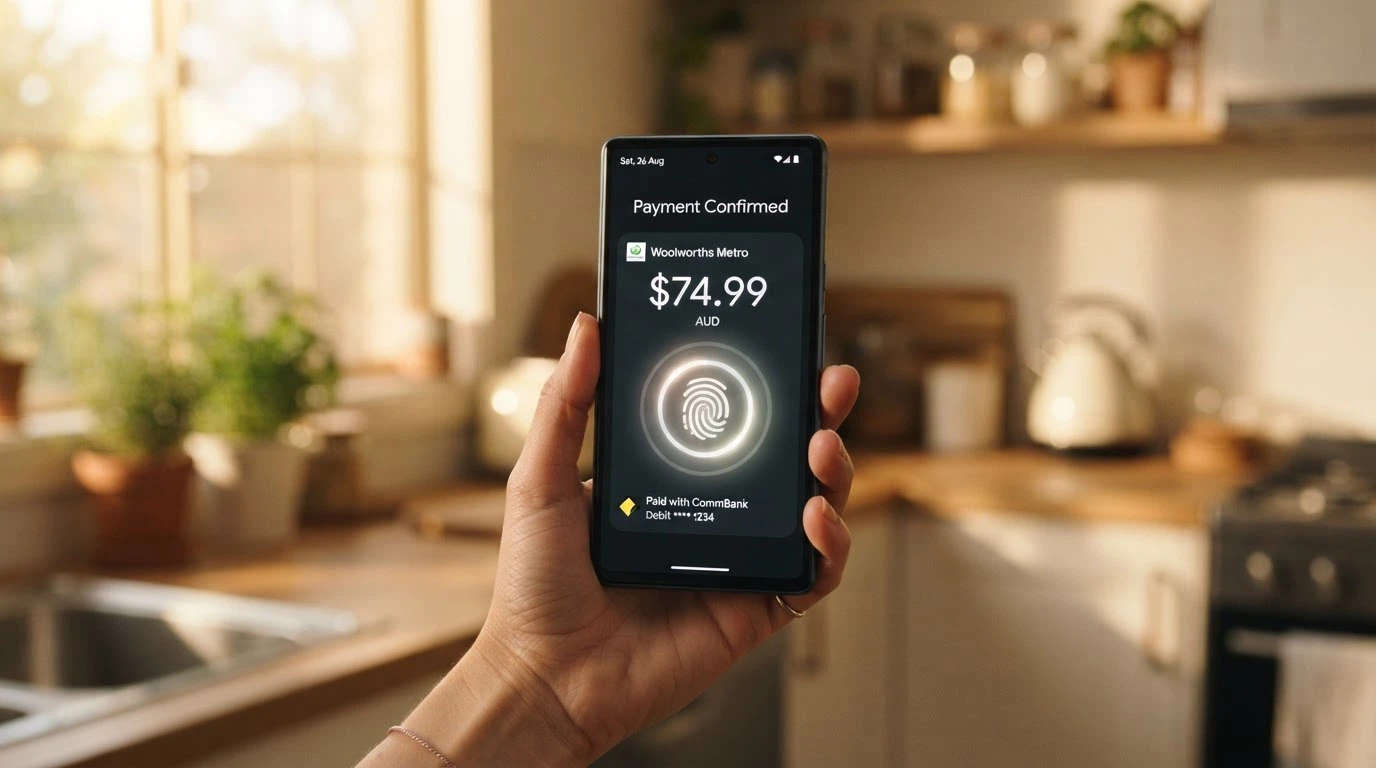
Apple Pay and Google Pay work at the cashier the same way they work anywhere else. The player chooses Apple Pay or Google Pay at the deposit step, authorises the transaction with FaceID or TouchID, and the casino receives a tokenised card number rather than the player’s actual card details. The tokenisation is the security advantage — a casino breach exposes a token, not a card — and the biometric step is the friction advantage.
Acceptance at AU-facing offshore casinos is limited. Skycrown is the operator research confirms takes Apple Pay, alongside PayID, Visa, Mastercard, MiFinity, CashtoCode, Neosurf and ten cryptocurrencies. Beyond Skycrown, the picture is uneven — some operators integrate Google Pay on Android but not Apple Pay on iOS, some integrate both, some integrate neither. A player who wants to deposit from a phone should not assume the wallet works at any given cashier without checking. The trend is towards broader acceptance. The current state is that broad acceptance is not yet here.
SMS and phone-bill casino payments
SMS billing and carrier billing — where a casino deposit appears on the player’s mobile phone bill or is deducted from prepaid credit — exists in some markets but has very limited availability at AU-facing offshore casinos as of 2026. The mechanics are simple: the player enters a mobile number, receives a confirmation SMS, authorises the charge, and the deposit is added to the phone bill or deducted from prepaid credit. The caps are carrier-imposed and typically low — often A$10 to A$50 per day — and the fees can be punitive relative to the deposit size.
For an Australian player, the practical reality is that SMS and phone-bill deposits are unlikely to appear at the cashier at any major AU-facing offshore operator. Where they do appear, the caps make them suitable only for very small first deposits. The mobile-payment section that matters for an Australian player is Apple Pay and Google Pay, not carrier billing.
Top 10 online casinos ranked by payment methods for Australian players
Every operator below is offshore. None holds an Australian casino licence, because such a licence does not exist. They are ranked here by how well they serve an Australian player’s payment needs — breadth of methods, speed of withdrawals, AUD-native options, PayID support — not by any claim of Australian regulatory standing. The table is the summary; the operator blocks underneath it are the detail.

| Operator | Welcome Bonus | PayID | Crypto Supported | Withdrawal Speed |
|---|---|---|---|---|
| Rocket Play | 100% up to A$1,000 + 100 FS (min A$30) | No | BTC, ETH, LTC, DOGE, BCH, USDT | MiFinity instant; crypto instant; bank transfer 3–7 business days |
| Skycrown | Multi-tier welcome package (qualitative) | Yes | BTC, ADA, BCH, BNB, ETH, LTC, TRX, USDT, DOGE, XRP | E-wallets 24h; cards 1–3d; bank transfer 3–5d; pending up to 72h |
| Royal Reels | A$20 welcome-bonus deposit benchmark | Yes | BTC, ETH, LTC, USDT, DOGE | PayID 5–24h up to A$9,000; weekly cap A$10,000 |
| Stake | Rakeback/cashback model (no traditional welcome) | No | BTC, ETH, LTC, USDT, DOGE, XRP, TRX and more | Crypto minutes to under 1 hour |
| Fair Go | 100% up to A$200 on each of first five deposits (total A$1,000) | Yes | BTC, LTC | BTC instant after KYC; bank transfer up to 15 business days (A$50 fee) |
| Bizzo Casino | Up to A$7,250 + 175 FS over four deposits | Yes | BTC, ETH, USDT | PayID both ways (specific times not confirmed) |
| WinSpirit | Not confirmed from primary sources | Not confirmed | Not confirmed | Not confirmed |
| Rainbet | 100% + 20 FS / 50% + 20 FS / 100% + 20 FS (≈ A$46–A$1,070 equiv) | No | 25 tokens (BTC, ETH, USDT, LTC, BNB, SOL and more) | Crypto instant to ~10 minutes; fiat 1–5 business days |
| Scream Casino | Not confirmed from primary sources | Not confirmed | Not confirmed | Not confirmed |
| Neospin | Not confirmed from primary sources | Yes | BTC, ETH, USDT, LTC | PayID ~2h; eZeeWallet instant; crypto 1–30 min |
Rocket Play
Rocket Play’s payment spread is the broadest in the featured set. Twelve methods reach the cashier: Visa, Mastercard, MiFinity, CashtoCode, six cryptocurrencies (BTC, ETH, LTC, DOGE, BCH and USDT), bank transfer and Neosurf. The welcome offer is 100% up to A$1,000 plus 100 free spins on first deposit, with a A$30 minimum. Min deposits vary by method — A$25 for cards and CashtoCode, A$30 for MiFinity and bank transfer.
MiFinity withdrawals are instant once approved. Crypto withdrawals are instant after blockchain confirmations. Bank transfer withdrawals take 3 to 7 business days on top of the operator’s processing window. There is no PayID at Rocket Play, which rules out the AUD-native instant rail and pushes Australian players towards MiFinity or crypto for fast cashouts. Verdict: the broadest cashier in the set, paired with the fastest e-wallet rail, but no PayID means a player who specifically wants an AUD-native instant withdrawal has to look elsewhere.
Skycrown
Skycrown is one of the few AU-facing offshore casinos offering PayID and Apple Pay alongside a ten-token crypto cashier. The welcome package runs across multiple deposit tiers (specific amounts are not confirmed from primary sources for this run), with a 3x deposit turnover required before withdrawal — a lighter wagering load than most bonus-driven sites. Min deposit and min withdrawal both sit at A$20. Weekly withdrawal cap is A$7,500; monthly cap is A$45,000, with pending time up to 72 hours.
The cashier takes Visa, Mastercard, MiFinity, PayID, Apple Pay, CashtoCode, Neosurf and ten cryptocurrencies including BTC, ADA, BCH, BNB, ETH, LTC, TRX, USDT, DOGE and XRP. E-wallet withdrawals clear within 24 hours, card withdrawals take 1 to 3 days, bank transfers 3 to 5 days. Game providers run to 70+ studios. Verdict: rare combination of PayID, Apple Pay and crypto breadth in one cashier — the AU-facing operator with the strongest method spread for players who want options on both the fiat and the digital rail.
Royal Reels
Royal Reels runs a PayID-first cashier. The minimum deposit via PayID is just A$10, and the PayID withdrawal window is 5 to 24 hours after checks, with a per-withdrawal ceiling of A$9,000. The weekly withdrawal cap sits at A$10,000. Crypto withdrawals have a A$30 minimum; fiat withdrawals have a A$50 minimum.
The cashier also lists Visa, Mastercard, Neosurf, Skrill, Neteller and crypto (BTC, ETH, LTC, USDT, DOGE). One warning worth flagging: the cashier still lists POLi, and POLi shut down in 2023. A casino listing a payment method three years after that method stopped operating is either behind on its own cashier page or signalling a level of attention that does not match the rest of the operation. Verdict: the low PayID minimum and the A$9,000 PayID withdrawal cap make this the PayID-first choice in the set, but the POLi listing is a tell that the cashier page needs a closer read before any deposit.
Stake
Stake is crypto-primary. The cashier runs on BTC, ETH, LTC, USDT, DOGE, XRP, TRX and more. Fiat on-ramp is available through MoonPay and third-party providers, but it is not the operator’s first language — Stake is built around crypto rails, and the fiat path is an add-on rather than a peer. Crypto withdrawals typically settle in minutes to under an hour after blockchain confirmations.
The welcome offer picture is unusual. Stake typically runs on rakeback and cashback rather than a traditional deposit-match welcome bonus — there is no headline A$1,000 sign-up bonus here, and that is by design rather than an information gap. Game providers include proprietary titles and multi-provider content. Verdict: the fastest withdrawal rail in the featured set for any player already holding crypto, with a rewards model built around long-term rake rather than first-deposit capture. A poor fit for a player who arrived expecting a deposit match.
Fair Go
Fair Go is a Real Time Gaming (RTG) casino with a five-deposit welcome structure: 100% match up to A$200 on each of the first five deposits, for a total of up to A$1,000 in bonus value. Wagering is 30x on the combined deposit and bonus amount, with no maximum cashout limit on the welcome bonus — a notable contrast to most AU-facing operators, which cap bonus-derived winnings.
The cashier takes Visa, Mastercard, Bitcoin, Litecoin, Neosurf, eZeeWallet, bank transfer (withdrawal only) and PayID. Min deposits are A$10 for Neosurf, LTC and BCH; A$20 for Visa, Mastercard, eZeeWallet and PayID; A$25 for Bitcoin. Min withdrawals are A$100 for Bitcoin and bank transfer. Bitcoin withdrawals are instant after KYC. Bank transfer withdrawals take up to 15 business days and carry a A$50 fee — the most punitive withdrawal fee on the page. Game providers run to RTG only — single-provider content. Verdict: the no-max-cashout welcome is the standout offer, but the 15-day, A$50 bank transfer withdrawal is the standout cost. Bitcoin or eZeeWallet is the exit route for any player who wants to keep their money moving.
Bizzo Casino
Bizzo runs a four-deposit welcome reaching up to A$7,250 plus 175 free spins, with 40x wagering and an A$8 maximum bet. The first-deposit 125% tier requires a A$250+ deposit to unlock — a higher entry bar than most operators’ first-tier bonuses. There is also a no-deposit offer of 10 free spins for installing the PWA (progressive web app) version of the casino, with 40x wagering and a A$75 win cap on any winnings from those spins.
The cashier takes PayID for both deposits and withdrawals, alongside Visa, Mastercard, e-wallets and crypto (BTC, ETH, USDT and others). Game providers run to 70+ studios with 8,000+ games. Verdict: the largest headline welcome package in the set, paired with the rare combination of PayID in both directions. The A$250 first-deposit threshold and the A$8 max bet are the practical constraints that decide whether the headline number is reachable.
WinSpirit
WinSpirit earns its place on AU-facing presence rather than confirmed payment detail. The operator supports AUD via e-wallets — that is the confirmed line. The welcome offer, specific e-wallet methods, minimum deposit, withdrawal speed and game providers are not confirmed from primary sources for this run. There is information about WinSpirit that did not surface, and writing otherwise would be filling gaps with what looks like data.
What is confirmed is that AUD deposits via e-wallet are supported at WinSpirit, which puts it on the AU-relevant list. What is not confirmed is the shape of the cashier — which e-wallets, what limits, what speed, what fees, what bonus sits behind the sign-up. Verdict: a brand worth a second look for a player who already has WinSpirit on their shortlist, but the cashier picture needs to be read off the operator’s own site before any deposit rather than taken from this page.
Rainbet
Rainbet runs a three-deposit welcome package — 100% plus 20 free spins / 50% plus 20 free spins / 100% plus 20 free spins — from approximately A$46 equivalent up to approximately A$1,070 equivalent, with 40x wagering and a 1% active stake cap. The cashier takes 25 crypto tokens including BTC, ETH, USDT, LTC, BNB, SOL and more, plus bank transfer, debit cards, credit cards, e-wallets, Interac, AstroPay and Rainbet gift cards.
Min deposit is approximately A$23 equivalent; min withdrawal is approximately A$23 equivalent. Crypto withdrawals are often instant to around 10 minutes. Fiat withdrawals take 1 to 5 business days. Rainbet charges no platform withdrawal fee. Verdict: the broadest crypto selection in the featured set, paired with no platform withdrawal fee. The fiat side is slower than the crypto side, so a player choosing Rainbet for crypto access will get the speed the brand is built for, and a player choosing it for fiat access will get the slower side of the rail.
Scream Casino
Scream Casino appears in the AU-facing market but arrives here with more unknowns than knowns. The welcome bonus, payment methods, minimum deposit, withdrawal speed and game providers are not confirmed from primary sources for this run. The operator’s AU-facing presence is documented — it appears in AU-facing casino guides — but the specifics that would let a player decide sit outside what research turned up.
What is not confirmed is most of the picture. There is no cashier table to quote here, no welcome offer to fact-check against the operator’s own page, no withdrawal timeline to defend. A player considering Scream needs to read the cashier on the operator’s own site, confirm the welcome terms against the operator’s own T&Cs, and treat anything written elsewhere with the gap that exists. Verdict: a brand on the AU-facing radar, included here because its presence is documented, but with the cashier specifics flagged as needing direct verification rather than carried as confirmed figures.
Neospin
Neospin is built around fast AU payouts. PayID withdrawals typically clear within 2 hours, with a A$50 to A$5,000 per-request range. eZeeWallet withdrawals are instant once approved, with a A$20 to A$4,000 per-request range. Crypto withdrawals clear in 1 to 30 minutes after blockchain confirmations, with a A$100 equivalent minimum. Bank transfer withdrawals run A$200 to A$10,000 in 1 to 3 business days.
The cashier takes PayID, bank transfer, eZeeWallet and four cryptocurrencies (BTC, ETH, USDT and LTC). Neospin charges no platform deposit or withdrawal fees — a player’s bank may charge separately on the receiving side, but the operator side is clean. Verdict: the fastest PayID withdrawal in the set with a 2-hour typical clearance, no operator fees on any rail, and an eZeeWallet instant option for smaller cashouts. The welcome offer is not confirmed for this run, so the operator ranks here on payment behaviour rather than bonus headline.
Australian gambling law — what is legal, what is blocked, and what is changing in 2026
The Interactive Gambling Act 2001 prohibits online casino games, online pokies and in-play betting from being offered to people in Australia. The Act does not prohibit an Australian from accessing these services — it prohibits the provider from offering them. The individual player is not prosecuted under the IGA. The Act targets the operator, with civil penalties of up to A$2,475,000 per day for an individual and A$12,375,000 per day for a corporation. The provider penalty is the architecture; the player consequence is the loss of every Australian consumer protection that would have applied if the service were licensed.

What is permitted and licensable: wagering on racing and sporting events placed before the event begins, lotteries, and keno, through operators licensed by an Australian state or territory. The Northern Territory Racing and Wagering Commission, administered through Licensing NT, is the de facto national licensor for online wagering, with licence terms of up to 20 years. Minimum age for all commercial gambling is 18.
The Interactive Gambling Act and the online casino prohibition
The ACMA — Australian Communications and Media Authority — enforces the online prohibition at the federal level. Since the ACMA’s first blocking request in November 2019, 1,788 illegal gambling and affiliate websites have been blocked by Australian ISPs as of August 2026. Over 230 illegal gambling services have withdrawn from the Australian market since the ACMA started enforcing new illegal online gambling rules in 2017. The enforcement is real, not theoretical. The blocks are DNS-level, and they are issued by the regulator rather than negotiated with the operator.
What stays licensable is narrower than most players assume. Pre-event racing and sports wagering — TAB-style fixed-odds bets placed before a race or a match starts — is licensable. In-play wagering on a sporting event once it has started is not. Lotteries and keno are licensable. Online casino games and online pokies are not. Land-based casinos — Crown, The Star and others — exist and are state-licensed, but that licence does not extend to an online casino floor. An online casino offering table games, slots or live dealer content to an Australian player is offering a product for which no Australian licence exists.
The credit card and crypto ban — your payment method as a legal tell
The 2024 credit and crypto ban prohibits credit cards, credit-related products and digital currency (crypto) as payment methods for online wagering in Australia. The ban commenced on 11 June 2024. An operator that fails to enforce it faces penalties of up to A$247,500. The legal deposit routes for licensed Australian wagering are debit card, bank transfer, PayID/Osko and BPAY. That is the full list.
The practical test this enables is simple, and it is the same test the opening of this page made. An Australian asked for a credit card or crypto deposit by a gambling site is being served by someone outside Australian rules. The payment method is not a side detail of the regulatory status. The payment method is the regulatory status. A casino offering credit-card deposits is operating in breach of the 2024 ban; a casino offering crypto deposits is operating in breach of the same ban; either way, the operator is one the ACMA can act against, and the player’s deposit has no Australian consumer protection behind it.
The second layer is at the bank. Australian banks strictly block transactions tagged with Merchant Category Code 7995 — the MCC for gambling merchants — which is why many card deposits at offshore casinos are declined. Some credit-card issuers may treat casino deposits as cash advances, adding interest and a processing charge on the player’s next statement. The MCC block is enforcement in disguise, and it is the reason a debit card is not a reliable deposit method at offshore casinos.
The 2026 reform — what changes on 1 January 2027
The Interactive Gambling Amendment (Gambling Reform) Bill 2026 passed Parliament on 19 August 2026. Its measures commence on 1 January 2027. On a 2026-dated page these are law with a start date — not binding today, but a few months from being so.
The measures with the most direct impact on payments and player choice are these. Banks and payment providers gain express statutory authority to block transactions to illegal gambling operators, which turns the current MCC 7995 block from an industry practice into a statutory obligation. Direct marketing of wagering inducements is prohibited for 14 days after a customer signs up, for 3 months after a person deregisters from BetStop, and indefinitely for customers identified as at risk of gambling-related harm. Wagering advertising is capped at no more than 3 ads per hour between 6:00 am and 8:30 pm, with a live-sport blackout from 15 minutes before to 5 minutes after each event. Athletes, celebrities and influencers are barred from promoting wagering products, and wagering ads in sports venues and on player or official uniforms are banned.
None of these rules apply to an offshore casino. An operator outside the Australian system does not follow ACMA advertising rules, does not respect BetStop marketing restrictions, and does not stop an inducement email because of a statutory cooling-off period. The reform tightens the licensed side of the market. The unlicensed side — where every casino on this page sits — is unaffected.
Responsible gambling — the tools your payment method either supports or sabotages
A payment method is a harm-minimisation decision as much as a convenience decision. The licensed Australian market has a harm-minimisation architecture: BetStop, deposit limits, activity statements, customer-set timeouts. The offshore market has none of it by default. The payment method a player chooses decides which of those tools can reach them and which cannot.

BetStop, self-exclusion and the offshore casino blind spot
BetStop — the National Self-Exclusion Register — is Australia’s strongest player-protection tool for online and phone wagering. A single registration excludes a person from every Australian-licensed wagering provider in one step. As at 31 July 2026, BetStop has recorded 67,480 registrations, with 41,290 exclusions still active; 78% of registrants were under 40, and 38% chose lifetime exclusion. Self-exclusion periods range from a minimum of 3 months to a lifetime. A person cannot apply to be removed in the first 3 months, and any early removal requires a statutory declaration confirming they received counselling.
BetStop binds Australian-licensed wagering services only. An offshore casino is not licensed in Australia, is not connected to the register, and will continue accepting a self-excluded person’s deposits. That gap is the most concrete harm of the offshore route. A player who has taken the most serious step available to them — a BetStop lifetime exclusion — is fully covered at a licensed Australian bookmaker. At an offshore casino on this page, the protection does not extend. The deposit method a player chooses after a BetStop registration is the only line of defence left, and none of the methods on this page can refuse the deposit on the player’s behalf.
Deposit limits, prepaid budgeting and where to get help
The structural features of each payment method have direct consequences for harm minimisation. Where a method offers a built-in spending cap, the player gets friction for free. Where a method is open-ended, every limit has to be self-imposed by the player or set by the operator — and at an offshore casino, the operator’s settings vary.
The infrastructure for help, regardless of the offshore question, is:
- National Gambling Helpline — 1800 858 858 — free, confidential, staffed 24 hours a day, 7 days a week, with online chat and email counselling through Gambling Help Online
- Gambling Help Online — gamblinghelponline.org.au — free 24/7 chat and email counselling
- BetStop — National Self-Exclusion Register — one-step exclusion from all Australian-licensed wagering providers; 67,480 registrations, 41,290 active as at 31 July 2026, with 78% of registrants under 40 and 38% choosing lifetime exclusion
- About 2.1% of Australian adults — roughly 430,000 people — experience problem gambling, with high-risk gambling at 1.8% (Australian Institute of Health and Welfare, 2022). Self-exclusion periods range from 3 months minimum to a lifetime, and any early removal requires a statutory declaration confirming the person received counselling
Neosurf is the only method on this page with a hard spending cap built into the instrument itself. The voucher is fixed-value, so the deposit cannot exceed the PIN. PayID and crypto are open-ended — every cent the player’s bank or wallet will release is reachable in a single click. The decision a player makes about which method to use is the decision a player makes about how much friction sits between them and a repeat deposit.
How we evaluated and ranked these casino payment methods
The evaluation ran on four Australian-specific criteria: payment-method breadth, deposit and withdrawal speed, AU-specific accessibility (PayID support, AU-bank-block compatibility, AUD-native rails), and the operator’s actual legal status as it sits under the Interactive Gambling Act 2001 and ACMA enforcement records. Each operator was checked against these criteria from primary sources where possible — the operator’s own cashier and T&Cs pages, ACMA blocking and withdrawal data, AUSTRAC registers for the crypto exchanges, and the ACMA’s own BetStop records.
The ranking itself is qualitative. No scoring system was used, no weighted formula was applied, and no percentage score was assigned to any operator or method. Where two operators offer comparable breadth, the one with the faster, cheaper or more AU-native rail ranks higher. Where an operator’s data could not be confirmed from primary sources, that gap is flagged in the operator block rather than carried as if it were confirmed. The criteria above are the full list — there is no secret fifth criterion, and there is no behind-the-scenes ranking that the prose does not describe.
The sources are the ACMA’s official enforcement and blocking data, the ACMA’s BetStop records, AUSTRAC’s digital currency exchange register, and the cashier and bonus pages of each operator as published at the time of writing. Market share figures for operator selection were used from the operators skill and are not published in this guide. The Australian Institute of Health and Welfare prevalence data is from 2022 and is the most recent national figure available.
Choose your casino payment method like it is your first line of defence — because it is
Three things follow from the payment method a player picks. How fast the money comes back. Whether the bank knows it was a casino. Whether Australian consumer law can reach the operator when something goes wrong. The fastest method and the safest method are rarely the same thing. PayID is fast and AUD-native, and every deposit is a row in the player’s bank statement. Neosurf is private and deposit-only. Crypto is the fastest of all and bypasses every banking control, and it is the method the IGA 2001 specifically bans for licensed wagering. Bank transfer is the highest-limit and the slowest. There is no method on this page that combines speed, privacy, low fees and legal cover, because the legal cover is not available for any online casino product an Australian can reach.
The one practical rule an Australian player can apply before every deposit: look at what the cashier asks for. A credit card or crypto prompt means the operator is outside Australian rules. A POLi prompt means the operator’s cashier page has not been updated since 2023. A PayID prompt means the operator sits outside Australian rules but is at least offering the same AUD-native rail a licensed Australian wagering service uses. None of these signals guarantees a smooth cashout. They tell the player what they are walking into.
No operator in this guide is recommended as a place to play. The page is about the decision a player makes at the cashier, not the decision a player makes about whether to use a particular brand. The market that serves Australian online casino players is unlicensed, the consumer protections are absent, the ACMA is blocking sites at the DNS level and will gain express statutory authority to block payments from 1 January 2027. A player who has read this far has enough to choose a method that matches what they actually need — speed, privacy, low fees, AUD-native rails — and enough to know what no payment method on the page can give them.
Frequently asked questions about Australian online casino payment methods
What is the best payment method for Australian online casino players in 2026?
PayID is the fastest AUD-native rail, with deposits clearing in under 30 seconds and withdrawals typically settling in 1 to 4 hours at no fee. For privacy, Neosurf keeps the bank out of the cashier entirely but is deposit-only. For speed with no bank block, crypto is fastest of all — typically 15 minutes to 2 hours — but is banned for licensed wagering. The “best” method depends on which trade-off the player can live with.
Is it safe to use cryptocurrency for online casino deposits in Australia?
Crypto deposits bypass Australian bank gambling-merchant blocks and settle in minutes rather than days, which is the practical upside. The legal exposure is the other side: digital currency has been banned for licensed online wagering in Australia since 11 June 2024, so any operator accepting crypto is operating outside the licensed system. From 1 July 2026, AUSTRAC enforces the Travel Rule, meaning exchanges collect sender and recipient information for withdrawals. Safety at the casino end depends on the operator; safety at the exchange end is regulated.
What happens to my money if an offshore casino blocks my account or refuses a withdrawal?
The IGA targets the provider, not the player, so an Australian is not prosecuted for playing — but the corollary is that there is no Australian consumer protection to fall back on when an offshore operator refuses a withdrawal or closes an account. BetStop does not cover offshore casinos. The ACMA can block a site at the DNS level, but does not arbitrate individual disputes. A player’s only recourse is the operator’s own complaints process and, failing that, the licence jurisdiction the operator is registered in — typically Curaçao or another offshore regime. This is the most concrete harm of the offshore route.
What is the minimum deposit amount for online casinos in Australia?
PayID minimums at AU-facing offshore casinos run A$10 to A$20; e-wallet minimums are typically A$10 to A$30; crypto minimums depend on the network but are often below A$20 equivalent; debit card minimums are usually A$10 to A$20. Welcome-offer thresholds are higher than deposit minimums — Neosurf’s A$30 minimum to trigger a bonus is typical, and Bizzo’s first-deposit 125% tier requires A$250+. Min deposit and min welcome-offer trigger are not the same number.
Are there any fees for using PayID or Neosurf at Australian online casinos?
PayID withdrawals are typically 100% free at AU-facing offshore casinos — no operator fee, no receiving bank fee. PayID deposits are free. Neosurf carries no casino processing fee and no currency conversion charge when the voucher is bought in AUD. The fees on this page sit elsewhere: Skrill’s 1.45% withdrawal fee, A$25 to A$50 flat fees on international bank wires, and the 1% weekend markup Revolut adds on EUR/USD currency conversion.
Created by the ”Instant Withdrawal Casinos AU” editorial team.