
How the ten biggest high-roller casino bonuses for Australians actually pay out
The phrase “high roller” in an Australian online casino context is a marketing category more than a regulatory one. There is no Australian licence for online casino at all, and the operators offering the largest welcome packages operate from Curaçao, Malta, Anjouan and elsewhere. They compete on headline match percentages because that is what affiliate pages sort by, but the headline is the last figure a player should weigh. The wagering multiple, the max-bet cap, the validity window and the game weighting decide what the bonus is actually worth, and on most of the offers below those four numbers collectively dwarf the headline.
Current as of 16 October 2026 — verified against the ACMA register, the Curaçao GCB public register and each operator’s published bonus terms at the time of writing.
Table of Contents
- What a High-Roller Online Casino Looks Like in Australia Right Now
- The 10 Offshore Casinos With the Best High-Roller Bonuses for Australians in 2026
- Why Your 2026 High-Roller Bonus Is Smaller Than It Looks
- Online Casino Is Prohibited in Australia — Here Is What That Actually Means
- The High-Limit Pokies Worth Every Spin in 2026
- Why Your Deposit Method Matters More Than You Think at Offshore Casinos
- Mobile High-Roller Play: Convenient, but the Fine Print Travels With You
- Staying in Control When the Stakes Are High
- How We Evaluated and Ranked These High-Roller Casinos
- What Australian High Rollers Should Actually Do Before They Deposit
- Frequently Asked Questions
What a High-Roller Online Casino Looks Like in Australia Right Now
A high-roller tier at an offshore casino is a deposit floor, a bet ceiling and a relationship — three things that move together once a player crosses a threshold the operator sets internally. The deposit floor at the featured operators runs from about A$500 to unlock Wild Tokyo’s high-roller tier and Lucky Dreams’s 150% match, through to entry by invitation only at SpinLine’s upper VIP rungs. Below that threshold the same brand often runs a smaller “standard” welcome package that pays a fraction of the headline figure: Wild Tokyo’s standard 100% match caps at A$500 with 200 free spins, against the A$2,500 plus 250-spin high-roller line for anyone depositing A$500 or more.
The bet ceiling is the second marker. A live-dealer blackjack hand at StoneVegas can run to A$2,500; SpinLine’s baccarat tables accept A$5,000 per hand. Those numbers dwarf the A$5 maximum stake the same operators usually enforce during bonus wagering — a gap that is the central tension of the high-roller product. The player is invited to play big, then told to play small for the duration of the bonus.
The third marker, and the one operators are least willing to publish, is account treatment. Faster withdrawals, a personal account manager, higher monthly cashout caps (A$30,000 at StoneVegas, A$50,000 at SpinLine) and event invitations sit on the upper rungs. None of this is enforceable in Australia — every brand on this page is offshore — but at the top tier it materially changes the experience.
What Separates a High-Roller Casino From a Standard Pokies Site
The deposit threshold is the cleanest single test. A standard punter can sign up to most of the featured operators with A$20 to A$30 and play any pokie for A$0.20 a spin. The high-roller tier exists above A$500 — Wild Tokyo’s and Lucky Dreams’s threshold — and the offer looks different once you cross it. Wild Tokyo’s standard welcome caps at 100% to A$500; its high-roller line pays 110% to A$2,500 plus 250 free spins for any deposit of A$500 or more. Lucky Dreams’s standard welcome pays less than the 150% to A$6,000 that opens up at the same deposit floor.
Beyond the deposit, the bet ceiling is what changes the experience. StoneVegas runs live-dealer blackjack to A$2,500 a hand and SpinLine runs baccarat to A$5,000 a hand — figures that simply do not exist at the standard-tier tables most recreational players use. Monthly withdrawal caps follow the same arc: A$30,000 at StoneVegas and A$50,000 at SpinLine against the typical A$5,000 to A$10,000 monthly ceiling that an offshore casino applies to an ordinary verified account.
The third separator is service. Dedicated account managers, faster withdrawals and event invitations appear at the upper VIP rungs — StoneVegas’s six-tier structure and SpinLine’s seven-tier structure are the clearest published examples. The trade is that the fastest service still routes through an operator that holds no Australian licence and answers to no Australian regulator.
How to Evaluate a High-Roller Casino When Every Option Is Offshore
The standard checklist for an Australian player has to be rewritten, because the consumer-protection assumptions it leans on — ACMA registration, BetStop coverage, AUSTRAC-monitored banking — simply do not apply to the offshore route. What is left is a narrower, more adversarial list.
Licence jurisdiction is the first cut. A Curaçao licence is the most common at the featured set, and it is the lightest-touch of the credible regulators. SpinLine’s dual MGA and Curaçao registration is the strongest licence profile in the featured ten; the Maltese Gaming Authority enforces more substantive complaint, segregation-of-funds and responsible-gambling obligations than Curaçao’s GCB. None of that makes SpinLine “Australian-licensed” — it isn’t — but it raises the chance that a complaint gets heard somewhere.
Bonus terms beyond the match percentage are the second cut. A 150% match sounds generous until the wagering multiple is read: at Lucky Dreams, that headline is paired with terms that need to be checked at the operator’s own terms page. Across the set, wagering multiples range from 30x (Skycrown) to 50x (Wild Tokyo on both cash and free-spin winnings), max-bet caps run A$5 to A$7.50 during wagering, and validity windows are short — five days at Rocket Play and Wild Tokyo, fourteen days at Skycrown.
Withdrawal experience and complaint history are the third and least measurable cut. The featured operators carry no published complaint history through an Australian register. Reviews on third-party forums are the available evidence and they are uneven — affiliate-driven review sites and player forums give contradictory pictures of the same brand. The strongest signal an Australian player has is independent and current: how recently has the operator paid a withdrawal of the size a high roller would request, and what did the player have to do to be paid.
The 10 Offshore Casinos With the Best High-Roller Bonuses for Australians in 2026
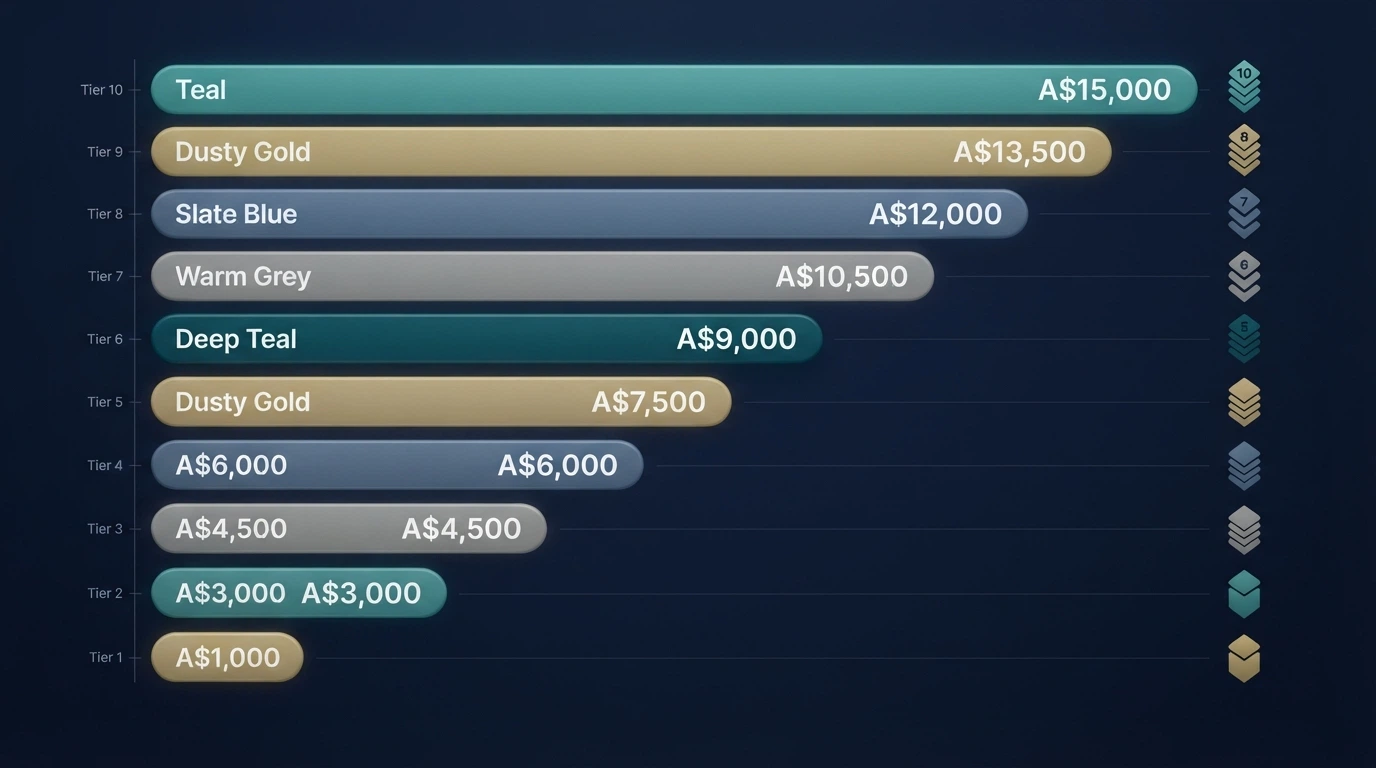
The table ranks every operator featured on this page by bonus structure and VIP depth. The welcome bonus column shows what is confirmed in the operator’s published terms; cells the source does not back are marked with an em dash. The licence column names the jurisdiction the operator actually holds — none of these operators is licensed in Australia, and that is a uniform fact across the table rather than a per-row value.
| Operator | Licence | Welcome Bonus | VIP Programme |
|---|---|---|---|
| Skycrown | — | 100% to A$500 + 50% to A$500 reload, 30x bonus | — |
| Rocket Play | — | 100 welcome spins (20/day), 40x bonus-only | — |
| Wild Tokyo | — | 110% to A$2,500 + 250 FS at A$500+ deposit, 50x cash and FS | — |
| Lucky Dreams | — | 150% to A$6,000 + 10% cashback for 7 days, 60-day VIP trial | Elite VIP club |
| Caswino | — | 600% to A$15,000 + 255 FS across 4 deposits, 20 FS on registration | 5 tiers, Bronze to Diamond |
| StoneVegas | Curaçao | — | 6 tiers, 10–25% weekly cashback, no wagering |
| SpinLine | MGA + Curaçao | — | 7 tiers, invite from Level 3 |
| LEON BET | — | Tiered high-roller welcome up to A$4,500 | — |
| Stake | Curaçao | — | Multi-tier rakeback and reloads |
| Royal Reels | — | — | — |
The empty cells carry as much information as the filled ones. Caswino’s four-deposit headline figure is the largest in the featured set, but no wagering multiple, max-bet cap or validity window was confirmed at the time of writing. StoneVegas and SpinLine have the strongest VIP programmes by published structure but did not publish a fixed welcome bonus figure. The reader who treats the largest number as the best offer is the reader the rest of this page is for.
Skycrown
Skycrown’s welcome is the most readable in the featured set because every term is published and every number is plain. The first deposit pays 100% up to A$500; the second pays 50% up to A$500. The wagering requirement is 30x on the bonus amount only — not on deposit plus bonus — and the maximum stake during wagering is A$5, with a fourteen-day validity. Free-spin winnings carry their own 30x wagering and are capped at 10x total spin winnings.
The 30x multiple is the lowest in the featured set among offers where it has been confirmed, and that is the line that does most of Skycrown’s work. A player taking the full A$1,000 across both deposits owes A$15,000 in bonus turnover at 30x — a figure that rises to A$22,500 at Rocket Play’s 40x and A$37,500 at Wild Tokyo’s 50x on the equivalent headline amount. Skycrown’s package is the cheapest clear in the confirmed set by turnover per dollar of bonus.
The verdict is straightforward: this is the entry-level offer for a player who wants to read the terms, clear them at a moderate multiple and walk away. The cap is low enough that a true high roller deposits more than the bonus ceiling and gets the same A$500 either way, which trims its appeal above the threshold.
Rocket Play
Rocket Play’s structure is meaningfully different from the rest of the set for one reason: the bonus is non-sticky. Real money plays first, and only winnings made from the bonus balance carry the 40x wagering requirement. A player who lands a win on a real-money spin can withdraw it before touching the bonus at all — a feature no sticky welcome package can match.
The terms around that structure are tight. The maximum bet during wagering is A$7.50, the default validity is five days, and free-spin winnings from the 100 welcome spins (released at 20 per day) carry a 40x wagering requirement of their own. The combination is a small welcome with an aggressive clearance window: a player who wants to clear A$1,000 of bonus needs to do A$40,000 in turnover across five days, an A$8,000-a-day pace that compresses the offer to the high-volume end of the market.
The verdict is for the player who prizes optionality. Rocket Play’s non-sticky structure is the right fit for a high roller who deposits to play real-money sessions anyway and treats the bonus as a useful fallback rather than a target. The five-day window is too short for casual play, and the welcome figure is too small for a player hunting the biggest headline.
Wild Tokyo
Wild Tokyo’s high-roller tier pays a 110% match up to A$2,500 plus 250 free spins for any deposit of A$500 or more. Deposits of A$500 or more pay 110% to A$2,500 plus 250 free spins, against the standard tier’s 100% to A$500 plus 200 free spins. The trade sits in the wagering: 50x applies to both the cash bonus and the free-spin winnings, with a five-day deadline. The library reported is more than 8,000 pokies.
That combination — the biggest match, the steepest multiple, the shortest window — is the structure a high-volume pokie player is built for and a casual one is not. The A$2,500 bonus at 50x means A$125,000 of turnover across five days, which is a workload that assumes the player can run thousands of spins a day at the table. The 250 free spins add a parallel clearance load at the same multiple.
The verdict is for the high-volume player. Wild Tokyo pays the highest confirmed headline and asks the most demanding clearance. A player who can move A$25,000 of turnover a day for five days will get value out of it; a player who cannot will watch the bonus expire mid-wagering and forfeit it. The standard tier is a cheaper alternative at the same operator, and the gap between the two is the clearest published example in the featured set.
Lucky Dreams
Lucky Dreams’s high-roller welcome is the highest single-deposit match ceiling in the featured set: 150% up to A$6,000 on a deposit of A$500 or more. The headline is paired with 10% cashback for the first seven days and a 60-day VIP trial that opens the Elite VIP club. Wagering, max-bet and validity figures were not confirmed at the time of writing.
The 60-day VIP trial is the unusual element. Most featured operators gate VIP access by deposit volume, gameplay history or an invitation; Lucky Dreams runs the trial as part of the high-roller welcome itself, which means a player who deposits A$500 on day one gets the Elite experience for the next two months regardless of how much they wager. Whether the trial converts into ongoing Elite status depends on the volume the operator sees during the trial, and that part of the structure was not published.
The verdict is for a player who values the VIP experience as much as the bonus number. A$6,000 on a single deposit is a meaningful ceiling, but the wagering terms behind it were not fixed at the time of writing, and any reader tempted by the headline needs to check the operator’s terms page for the current multiple, max bet and validity before committing funds.
Caswino
Caswino runs the largest headline welcome in the featured set, and the headline is spread across four deposits: 600% to A$15,000 plus 255 free spins, with auto-activation rather than opt-in. A separate 20 free spins is credited on registration with no deposit required. The VIP programme runs across five tiers from Bronze to Diamond.
The four-deposit structure is what makes the A$15,000 figure a different proposition from a single A$6,000 ceiling. A player who deposits once gets one quarter of the headline; the full A$15,000 requires four deposits, each carrying its own terms. The 20 free spins on registration are unusual — a no-deposit offer from an offshore casino, credited before the player commits any money. The catch is the same one every no-deposit offer carries: tight wagering on the winnings and a cap on what the player can cash out from them.
The verdict is for a player planning a multi-deposit commitment who has checked the per-deposit wagering terms directly. Caswino’s headline is the most generous on paper and the most dependent on the player reading past the headline — four separate deposits mean four separate clearances, and the no-deposit spins carry terms of their own.
StoneVegas
StoneVegas is the operator whose VIP programme is the offer, not the welcome. It runs on a Curaçao licence with a six-tier VIP structure, automatic enrolment from the first deposit, and weekly cashback from 10% to 25% paid with no wagering requirement — cashback that drops into a player’s balance as real money and can be withdrawn immediately. The monthly withdrawal ceiling is A$30,000, and live-dealer blackjack is offered up to A$2,500 a hand. Deposits are taken through PayID, Visa and crypto.
The wager-free cashback is the rare element. Most offshore operators apply a wagering multiple to bonus-derived funds, including cashback; StoneVegas’s published structure pays it clean. The implication is real: a player earning 15% weekly cashback on A$50,000 of monthly play gets A$1,875 of withdrawable cash every Monday, on top of any winnings. That changes what an offshore high-roller relationship is worth compared with a fixed welcome bonus, which has to be cleared before withdrawal.
The verdict is for a high-volume player who values ongoing returns over a single deposit match. The A$30,000 monthly ceiling is below SpinLine’s A$50,000 and the table limits are below SpinLine’s baccarat ceiling, but the cashback structure is the cleanest published example in the featured set.
SpinLine
SpinLine runs the strongest published licensing profile in the featured set — MGA and Curaçao together — and the highest published withdrawal ceiling at A$50,000 a month. The VIP programme runs across seven tiers, with invitations starting at Level 3. Live-dealer baccarat is offered up to A$5,000 a hand, the highest confirmed table ceiling at any featured operator. Deposits are taken through POLi, PayID and crypto.
The dual-licence structure is the substantive difference from the rest of the set. The Malta Gaming Authority enforces segregation of player funds, mandatory dispute resolution through approved alternative-dispute-resolution providers, and stricter responsible-gambling obligations than Curaçao. That does not make SpinLine an Australian-regulated operator — it is not — but it does mean a complaint has a route through an EU-recognised regulator, which Curaçao-only operators do not offer.
The verdict is for a high roller cashing out at scale. The A$50,000 monthly ceiling is the headline figure, the A$5,000-per-hand baccarat is the experience, and the MGA registration is the strongest consumer-protection floor in the featured set. The weakness is that the welcome bonus itself was not published at the time of writing, so a player treating this as a single-deposit match opportunity will find the page thinner than the casino itself.
LEON BET
LEON BET’s high-roller welcome is a tiered structure worth up to A$4,500 for Australian players. The tiered design — multiple deposit levels with different match percentages — is the operator’s distinguishing offer, and the A$4,500 ceiling sits between Skycrown’s A$1,000 across two deposits and Wild Tokyo’s A$2,500 plus spins on one.
The wagering multiple, max-bet cap and bonus validity were not fixed at the time of writing. The published figure is the headline, not the cleared value. A player tempted by a tiered welcome at this size needs to verify the per-tier match percentage, the aggregate ceiling, the wagering multiple, the max bet and the validity window on LEON’s own terms page before depositing.
The verdict is conditional: the headline is solid for a tiered welcome, the rest of the structure is opaque until the player checks it. LEON is a fit for a player willing to read the fine print before each deposit, not a fit for someone chasing the largest single figure without reading it.
Stake
Stake is the only crypto-primary operator in the featured set. The licence is Curaçao, the deposits are taken in BTC, ETH, LTC, USDT and a long list of additional tokens, and the VIP programme runs on rakeback and reload bonuses rather than a conventional deposit-match welcome. No conventional welcome bonus was confirmed at the time of writing.
The crypto-first design is what sets Stake apart and what makes it the most jurisdictionally distinctive brand in the featured set. Crypto has been banned as a payment method for licensed Australian online wagering since 11 June 2024, with penalties of up to A$247,500 for non-compliance. Stake sits outside that regime by holding a Curaçao licence and accepting Australian players under its own terms; the player using crypto at Stake is not in breach of the ban — the ban targets the licensed operator, not the consumer — but is paying through a method the Australian regulator has judged unsuitable for licensed play.
The verdict is for a crypto-native player who prefers rakeback to a traditional welcome match. The multi-tier VIP structure offers continuous, percentage-based rewards on the house edge rather than a one-time bonus—a design choice, not an omission. Players specifically hunting for a large, single-deposit headline match will likely find their needs better met by other options in the set.
Royal Reels
Royal Reels markets itself to Australian high rollers but the published bonus terms were not confirmed at the time of writing. Welcome offer size, match percentage, wagering multiple, max-bet cap, validity, VIP structure and payment methods all sit outside the verified set. The operator is offshore and holds no Australian licence, which is the only confirmed fact beyond the marketing positioning.
The verdict is straightforward: this is a brand that should be checked directly. Any reader considering Royal Reels needs to verify the current welcome terms, the licence the operator actually holds and the withdrawal conditions at the operator’s own terms page before committing funds, and should weight that uncertainty against brands where every figure above is published.
Why Your 2026 High-Roller Bonus Is Smaller Than It Looks
The headline number is the figure the operator and the affiliate page both lead with. It is also the last figure that matters. A A$2,500 bonus at 50x wagering requires A$125,000 of turnover before a dollar of bonus money converts to withdrawable cash; a A$500 bonus at 30x requires A$15,000. The clearance work between the headline and a withdrawal is where the offer is won or lost.

The arithmetic in plain prose: assuming only the bonus amount is wagered, a A$2,500 bonus at 50x carries A$125,000 in required turnover. At a pokie with a 97.66% return to player, the house edge is 2.34% and the expected loss on that turnover is roughly A$2,925 — more than the bonus itself. That figure is a statistical average over many spins and many players, not a guarantee for any single session; a player who wins ahead of the wagering requirement pays less, and a player who loses faster pays more. The “free” A$2,500 in headline terms costs A$2,925 in expected play before it converts.
The clearance work is governed by three levers. The wagering multiple is the first, and it ranges from 30x (Skycrown) to 50x (Wild Tokyo) across the confirmed set. The max-bet cap is the second: A$5 at Skycrown, A$7.50 at Rocket Play — small figures relative to the A$2,500-a-hand blackjack StoneVegas advertises, which is exactly the point. The validity window is the third: fourteen days at Skycrown, five days at Rocket Play and Wild Tokyo. A player who cannot run the volume needed to clear the offer inside the window forfeits it.
Welcome Bonuses and Match Offers Built for High Rollers
Match offers work on a single ratio: the operator matches a percentage of the player’s deposit up to a ceiling. Skycrown pays 100% to A$500 on the first deposit, Wild Tokyo pays 110% to A$2,500 at the high-roller threshold, and Lucky Dreams pays 150% to A$6,000. The percentages look different; the dollar values look different; the wagering multiples behind them are the deciding figure.
A useful comparison is the dollar cost of a single turnover unit. Skycrown’s 100% to A$500 at 30x gives a player A$500 of bonus for A$15,000 of turnover — three cents of bonus per dollar of turnover. Wild Tokyo’s 110% to A$2,500 at 50x gives a player A$2,500 of bonus for A$125,000 of turnover — two cents of bonus per dollar of turnover. The higher match percentage and the higher ceiling look more generous, but the wagering load makes them cheaper per unit of clearance work.
Caswino’s 600% to A$15,000 across four deposits is the figure most worth reading past. Spread across four deposits, the per-deposit ceiling is one quarter of the headline; the wagering terms behind each deposit and the order in which the deposits must be made are what determines what the headline actually delivers. The 20 free spins on registration are a separate, smaller offer with their own terms.
No-Deposit Bonuses and Free Spins for High Rollers
No-deposit offers exist in the offshore high-roller space but they are smaller, tighter and rarely the headline. Caswino credits 20 free spins on registration with no deposit, before the player commits any money; Wild Tokyo’s high-roller tier adds 250 free spins to the A$2,500 match; Rocket Play releases 100 welcome spins at 20 per day across the first five days. Each carries its own wagering requirement on the winnings and its own ceiling.
Skycrown’s free-spin terms are the cleanest published example of what free-spin offers look like once you read them: the winnings are capped at 10x the total spin winnings, and the cap applies on top of a 30x wagering requirement on those winnings. A player who turns 20 free spins into A$200 of gross winnings can withdraw at most A$2,000 after clearing the 30x wagering on the capped amount — the cap usually bites before the wagering does.
The verdict on free spins is that they are a sampler, not a strategy. The largest number on the page is rarely the one that delivers the most value to a high-volume player.
Wagering Requirements and the Terms That Shrink Your Bonus
The three terms that matter are the wagering multiple, the max-bet cap and the validity window. Together they decide whether a bonus is clearable at the volume a high roller can run.
The wagering multiple ranges from 30x (Skycrown) to 50x (Wild Tokyo) on the confirmed offers; Rocket Play’s 40x bonus-only is the middle of the set. Bonus-only means the wagering applies to the bonus balance alone; a “deposit + bonus” multiple applies to the sum of both and roughly doubles the work. Rocket Play’s 40x bonus-only at a A$500 bonus is A$20,000 of turnover; the same headline at a deposit+bonus structure would be roughly A$40,000.
The max-bet cap throttles the clearance rate. A$5 at Skycrown, A$7.50 at Rocket Play, A$5 across most operators during wagering — small figures relative to the live-dealer limits the same operators offer after the bonus is cleared. The cap is the mechanism by which the bonus is slowed down to a pace the operator can absorb.
The validity window is the deadline. Five days at Rocket Play and Wild Tokyo, fourteen days at Skycrown. These deadlines are hard stops, and failing to run the required turnover within that timeframe results in the forfeiture of the bonus and any associated winnings. The A$125,000 turnover on Wild Tokyo’s A$2,500 bonus at 50x needs roughly A$25,000 a day across five days to clear, which is a workload that compresses the offer into the highest-volume end of the market.
Online Casino Is Prohibited in Australia — Here Is What That Actually Means
The Interactive Gambling Act 2001 makes it an offence to provide online casino games, online pokies or in-play sports betting to a person physically in Australia. There is no Australian licence for online casino anywhere in the country — not federally, not in any state or territory. Every operator on this page is offshore, and the offshore status is not a loophole; it is the structural fact the entire page sits on.

The Act targets the provider, not the consumer. An Australian punter who signs up to an offshore casino is not prosecuted for doing so; the operator offering the service is the party in breach. That distinction is the basis on which the offshore market operates, and it is also the basis on which the consumer protections Australian players expect simply do not apply.
The Australian Communications and Media Authority enforces the prohibition. Since its first blocking request in November 2019, the ACMA has had 1,564 illegal gambling and affiliate websites blocked by Australian ISPs as of March 2026, and more than 225 illegal services have withdrawn from the Australian market since 2017. The site a punter is reading about today can be on the blocked list next month.
The Interactive Gambling Act and What It Prohibits
The IGA, in its current form, prohibits providing online casino games, online pokies and in-play sports betting to a person in Australia. Wagering on races and sport placed before the event begins, lotteries and keno are licensed products, with operator licences concentrated in the Northern Territory through Licensing NT and the NTRWC and licence terms running up to twenty years. Online casino is the gap, and it is not a small gap — it is the entire product this page is about.
The 2017 amendment to the IGA strengthened enforcement and gave the ACMA the blocking power that has produced the 1,564-site figure. The 2026 reform goes further. The Interactive Gambling Amendment (Gambling Reform) Bill 2026 passed Parliament on 19 August 2026, with substantive measures commencing on 1 January 2027.
The 2026 reform package bans online keno (“pocket pokies”) and foreign-matched lotteries, and bans wagering advertising from fifteen minutes before to five minutes after a live sporting event between 5:00 am and 8:30 pm. It restricts TV wagering ads to no more than three per hour in the same window. It bars athletes, celebrities and influencers from promoting wagering products. It establishes a Wagering Advertising Opt-out Register (AdStop) administered by the ACMA, funded by a cost-recovery levy on licensed operators. It prohibits direct marketing of inducements for fourteen days after a customer signs up, for three months after a person deregisters from BetStop, and indefinitely for customers identified as at risk of gambling-related harm. It also bans the broadcasting of sporting odds outright.
The combined effect is that the marketing surface around high-roller bonuses — the affiliate pages, the sponsored social posts, the live-sport tie-ins — narrows significantly from 1 January 2027. The bonus structures themselves, paid by offshore operators outside Australian jurisdiction, are not directly affected; the change is to how they are advertised and who can advertise them.
BetStop and the Protections You Have — and the Ones You Do Not
BetStop is the National Self-Exclusion Register, launched on 21 August 2023. A single registration excludes a person from every Australian-licensed online and phone wagering service, for a minimum period of three months up to a lifetime exclusion. As at 31 July 2026, 67,480 Australians had registered, with 41,290 exclusions still active. The register binds approximately 150 licensed wagering providers.
The protections BetStop offers do not extend to the offshore route. An offshore casino is not connected to BetStop, will not check the register, and will continue to accept deposits and wagers from a self-excluded person. That is the most concrete single harm of the offshore route: the strongest player-protection tool Australia operates does not reach a single operator on this page.
The awareness gap is the second harm. Only 33.5% of Australian wagerers know BetStop exists, and only 26.5% of Australian adults more broadly. A player who self-excludes at a licensed bookmaker and then opens an account at an offshore casino is effectively bypassing their own protection, as the register does not extend to the offshore route.
Offshore Casinos vs Licensed Wagering — What You Lose
The licensed wagering route gives an Australian player a regulator, a complaint path, a self-exclusion register, deposit limits set under state conditions and identity-verified AUD banking. The offshore route gives none of those. The product is the same in name — pokies, blackjack, baccarat — but the consumer frame around it is different in every way that matters when something goes wrong.
No ACMA protection means no regulator to complain to if a withdrawal is delayed or refused. No BetStop coverage means a self-excluded person can still play. No AUSTRAC-monitored banking means deposit and withdrawal routes sit outside Australian anti-money-laundering oversight. The site itself can be blocked by Australian ISPs at any time, and 1,564 have been blocked since November 2019.
The payment side sharpens the picture. Credit cards, credit-related products and digital currency (crypto) have been banned as payment for online wagering since 11 June 2024, with penalties of up to A$247,500 for non-compliance. Legal deposit routes for licensed Australian wagering are debit card, bank transfer, PayID/Osko and BPAY. The availability of credit card or crypto deposits at an offshore casino is not a feature — it is a signal that the operator sits outside the regime the Australian regulator considers appropriate for licensed play.
From 1 January 2027, banks and payment providers gain express authority to block transactions to illegal gambling operators, and ISPs must prevent their infrastructure from being used for illegal gambling services. A punter using an offshore casino after that date will find that the deposit routes the operator advertises may not actually settle in Australia.
The High-Limit Pokies Worth Every Spin in 2026
Seven pokies carry confirmed RTP, volatility and max-win figures from their providers — enough to compare them on the dimensions a high roller cares about. The table sorts by RTP descending. Cells that the source does not back are marked with an em dash.
| Pokie Title | RTP | Volatility | Max Win | Provider |
|---|---|---|---|---|
| Vegas High Roller | 97.66% | Medium-high | 2,000x | iSoftBet |
| Leprechaun Riches | 97.35% | Medium | 100,000x | PG Soft |
| Buffalo Rush HIGHROLLER | 97% | High | 15,120x | Advant Play |
| Trigger Happy | 96.58% | Very high | 50,000x | Big Time Gaming |
| Macau High Roller | 96.5% | — | — | iSoftBet |
| The Luxe High Volatility | 96.33% | High | 20,000x | Hacksaw Gaming |
| Cazino Zeppelin Reloaded | 96% | Super high | ~102,838x | Yggdrasil |
The volatility column is the one that matters most after RTP, because volatility is what determines whether a 100,000x max-win headline is a real opportunity or a marketing figure. The RTP figures are close together — a 1.66-point spread across the confirmed set — but the volatility classes are not, and that is where the actual playing experience diverges.
The Pokies With the Best RTP for High-Stakes Play
Vegas High Roller at 97.66% RTP leads the confirmed set, with Leprechaun Riches at 97.35% and Buffalo Rush HIGHROLLER at 97% in the second tier. Trigger Happy at 96.58%, The Luxe High Volatility at 96.33% and Cazino Zeppelin Reloaded at 96% sit in the third tier. Macau High Roller’s RTP of 96.5% is confirmed but its volatility and max-win figures are not.
The arithmetic in plain prose: a one-point RTP gap compounds at volume. A$125,000 of turnover on a 97.66% pokie costs roughly A$2,925 in expected loss; the same turnover on a 96% pokie costs A$5,000. The A$2,075 difference is the cost of playing a one-percent-lower pokie at a single bonus-clearance workload, and the gap scales with every additional bonus a player clears.
The high-roller implication is that the pokie a player chooses to clear a bonus on matters more than the bonus’s headline figure. A A$2,500 bonus cleared on Vegas High Roller at 97.66% RTP costs less in expected loss than a A$500 bonus cleared on Cazino Zeppelin Reloaded at 96% RTP, once the turnover figures are matched up. The marketed max-win headline is the figure the operator wants the player to think about; the RTP is the figure that determines the cost.
Jackpots, Max Wins and Volatility — What the Numbers Mean
Cazino Zeppelin Reloaded runs at super-high volatility with a max win of approximately 102,838x the bet — Yggdrasil’s published figure is roughly €1,028,380 at max bet. Leprechaun Riches advertises a 100,000x max win at medium volatility, which is a markedly different proposition: a player is more likely to see payouts but they will be smaller on average. Trigger Happy’s 50,000x max win runs at very high volatility, between the two.
The Luxe High Volatility carries a published High-Roller FeatureSpins buy — a 2,000x-bet stake for a roughly one-in-ten chance at the max prize of 20,000x. The buy is a side-bet structure that converts the bonus mechanic into a discrete wager; the player pays 2,000x their base bet for one shot at the headline figure. Whether that is good value depends on the player’s appetite for a single-spin, all-or-nothing outcome rather than the smoother distribution of straight spins.
Vegas High Roller, the highest-RTP title in the confirmed set, runs at medium-high volatility with a 2,000x max win — the smallest max win in the table. The trade is structural: a 97.66% RTP pays back more per spin on average, but the cap on a single spin is modest. A high-volume high roller running for steady turnover gets more out of Vegas High Roller; a player chasing the headline jackpot figure gets more out of Cazino Zeppelin Reloaded.
The honest read is that no pokie on the list is a “best” in any absolute sense. The best pokie for a bonus-clearance workload is the highest RTP pokie the operator offers in the game-weighting window the bonus allows. The best pokie for a max-win chase is the highest-volatility pokie the operator offers that the player’s bankroll can sustain.
Why Your Deposit Method Matters More Than You Think at Offshore Casinos
The deposit method at an offshore casino is not a checkout preference. It is a signal about where the operator sits relative to Australian regulation, and a determinant of whether the deposit will actually settle once the 2027 reforms commence.

Credit cards, credit-related products and digital currency (crypto) have been banned as payment for online wagering since 11 June 2024. The penalty for an Australian-licensed operator accepting them is up to A$247,500. The ban does not directly apply to offshore operators — they hold no Australian licence and accept no Australian regulatory constraint — but it does apply to the Australian banks and payment providers that would otherwise process the transactions. Legal deposit routes for licensed Australian wagering are debit card, bank transfer, PayID/Osko and BPAY.
Crypto and Bitcoin Deposits at High-Roller Casino Sites
Crypto deposits are widely available at the featured operators. Stake runs as a crypto-primary casino with BTC, ETH, LTC and USDT among its accepted tokens; StoneVegas and SpinLine accept crypto alongside fiat methods. The availability is the point: a licensed Australian operator cannot offer crypto, so the deposit option itself flags the operator as outside the regulatory perimeter.
The Australian regulator banned crypto as a payment method for online wagering because of the anonymity it affords and the absence of identity-verified transaction monitoring. An offshore casino that accepts crypto accepts the absence of those safeguards. The player using crypto at an offshore casino is not in breach of the ban — the ban targets the licensed operator, not the consumer — but is paying through a method the regulator has judged unsuitable for licensed play, and a withdrawal back into fiat AUD will ultimately depend on the same offshore operator paying what it owes.
PayID, POLi and Instant AUD Banking
PayID and POLi are familiar and legal deposit routes for licensed Australian wagering. StoneVegas lists PayID among its deposit methods; SpinLine lists both POLi and PayID. Both routes settle in AUD in seconds, which is why Australian players use them at licensed bookmakers — the deposit is fast, the currency is local, and the transaction sits inside the Australian banking system.
At an offshore casino the deposit still arrives in AUD and still settles quickly. The difference is who receives it: an entity licensed in Curaçao, Anjouan or Malta rather than an Australian-licensed operator. From 1 January 2027, banks and payment providers gain express authority to block transactions to illegal gambling operators, and the same PayID and POLi rails the operator advertises may not actually settle for an Australian customer if the bank applies that authority. A deposit route that works today may not work tomorrow.
Mobile High-Roller Play: Convenient, but the Fine Print Travels With You
Every featured operator works through a mobile browser. Several publish dedicated apps. The bonus terms, the bet caps, the wagering deadlines and the validity windows are the same on a 6-inch screen as they are on a desktop, because the bonus is bound to the account, not to the device.
A high roller playing on mobile faces the same clearance workload as on desktop — A$125,000 in turnover across five days at Wild Tokyo, A$15,000 across fourteen days at Skycrown — but the player is more likely to be playing in shorter sessions on a phone. The risk is the validity window: a five-day window that is workable on a desktop with long sessions is tighter on mobile with shorter ones. The bonus does not pause when the phone closes.
Apps, Downloads and Playing on the Phone
Most featured operators offer mobile-responsive browser play through HTML5, which means the full game library runs on a phone without a download. A subset publish dedicated apps for iOS and Android, which add push notifications, biometric login and a slightly faster launch but do not extend the bonus terms. No operator in the featured set publishes a mobile-exclusive bonus, and no operator shortens the wagering requirements for mobile play.
The practical implication is that the player who picks up a phone to play during a commute should plan the session against the same turnover workload they would plan on desktop. A player who treats mobile play as a separate, lighter product has not read the terms.
Staying in Control When the Stakes Are High
High-roller play multiplies the sums at risk, and the offshore route removes every Australian regulator from the player’s side of the table. The tools that exist — deposit limits, session caps, self-exclusion — are weaker offshore than they are at a licensed operator, and the strongest of them, BetStop, does not reach offshore casinos at all.

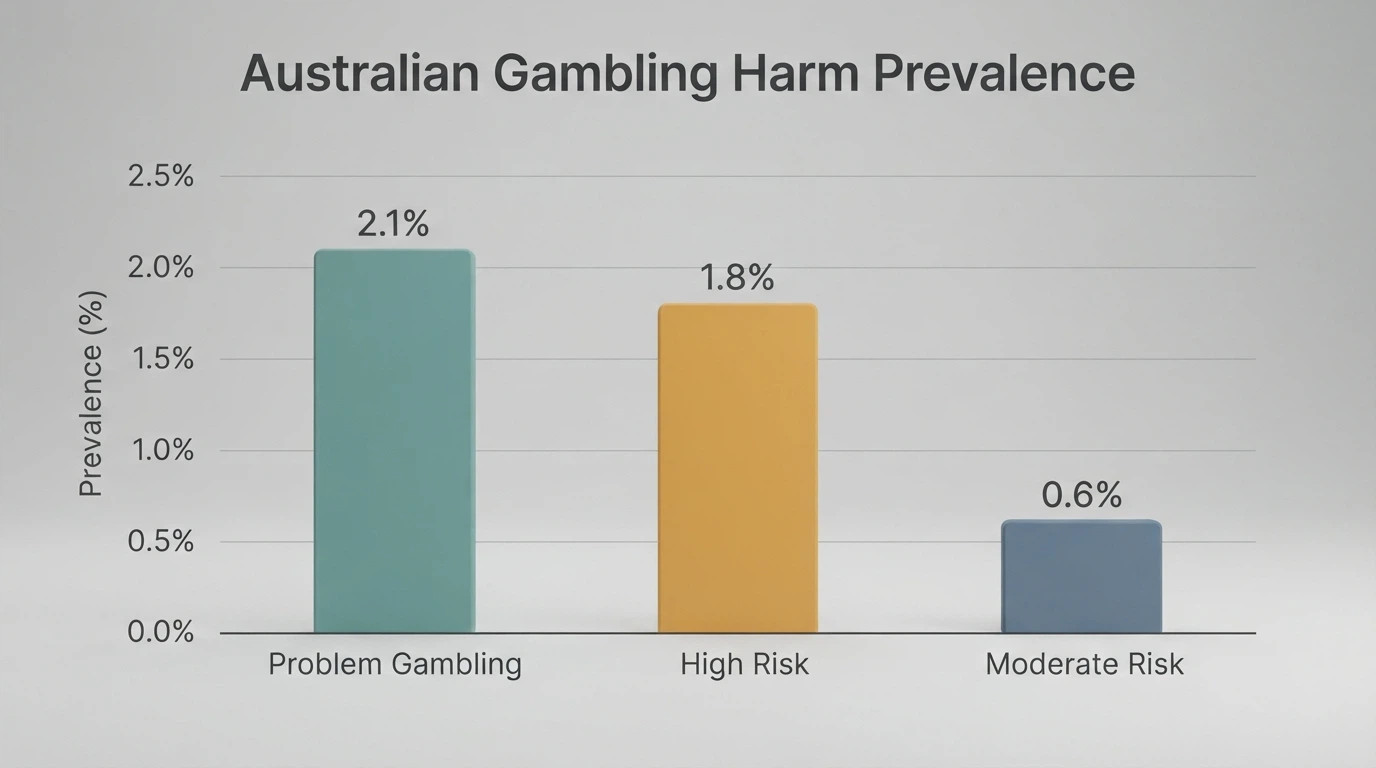
About 430,000 Australian adults experience problem gambling, roughly 2.1% of the adult population; the Australian Institute of Health and Welfare put high-risk gambling at 1.8% in 2022. The 1800 858 858 National Gambling Helpline is free, confidential and staffed twenty-four hours a day, with online chat and counselling through Gambling Help Online at gamblinghelponline.org.au. The numbers are not in the player’s interest to ignore.
Deposit Limits, Session Caps and Reality Checks
Customer-set deposit limits are available at most offshore operators, typically configured from the account dashboard. Session time reminders and reality checks are also offered, usually after an hour of continuous play. The tools are operator-provided rather than regulator-enforced, which means they sit inside the operator’s discretion — a player can usually raise or remove a deposit limit at the operator’s discretion, often after a short cooling-off period.
The practical use is to set the limits before the first deposit and to leave them in place longer than feels comfortable. A high roller who is going to clear a A$2,500 bonus at 50x wagering should set the daily deposit limit below the bonus ceiling, not above it — a limit set at A$500 a day makes the bonus-clearance workload explicit and prevents the deposit from being topped up when the session runs long. Licensed Australian wagering operators offer the same tools under state conditions, plus activity statements the player can request from the operator.
Self-Exclusion, BetStop and Where to Get Help
BetStop’s minimum exclusion period is three months; the maximum is lifetime. As at 31 July 2026, 67,480 Australians had registered, with 41,290 exclusions still active. Seventy-eight percent of registrants were under forty, and thirty-eight percent chose lifetime exclusion. The register binds approximately 150 licensed wagering providers. It binds zero offshore casinos.
The Australian Gambling Research Centre’s Dr Kei Sakata put the gap in plain terms: despite an estimated five million wagerers nationwide, including 400,000 high-risk gamblers, just 30,000 individuals currently have active exclusions through BetStop — about 7.5% of those experiencing severe gambling harms. The 67,480 total is higher than the 30,000 active figure because most registrations are time-limited and expire; the share of high-risk players with an active exclusion sits below one in ten.
The National Gambling Helpline at 1800 858 858 is the single number a reader in difficulty can call. It is free, confidential, staffed twenty-four hours a day and routed to counsellors who can also refer a caller to BetStop, Gambling Help Online, or face-to-face services in their state. Gambling Help Online at gamblinghelponline.org.au offers live chat, email and structured counselling programs. Both services are available regardless of whether the caller plays at a licensed operator or an offshore casino.
How We Evaluated and Ranked These High-Roller Casinos
The ranking in this page was produced by reviewing each operator’s published bonus terms against a fixed set of criteria. The criteria were the welcome bonus value and match percentage at the high-roller deposit threshold, the wagering multiple, the max-bet cap during wagering, the bonus validity, the VIP programme depth, the withdrawal ceiling, the live-dealer table limits and the licence jurisdiction.
Every operator was checked against the ACMA register for Australian licensing status — none was found, which the law itself predicts, because no online casino licence exists in Australia. Each operator’s licence claim was checked against the relevant public register where one existed: the Curaçao GCB public register for Curaçao-licensed operators and the Malta Gaming Authority public register for MGA-licensed operators. SpinLine’s MGA + Curaçao dual registration was confirmed in the MGA register; StoneVegas and Stake’s Curaçao licences were confirmed in the Curaçao GCB register.
Bonus terms were verified against each operator’s own terms page; terms that the operator did not publish were left as gaps in the table and called out in the operator write-up rather than estimated. Where the operator had multiple welcome tiers (Wild Tokyo, Lucky Dreams), the high-roller tier above the A$500 deposit threshold was preferred over the standard tier. The ranking within the table reflects the order of fit to the high-roller bonus subject, with the strongest published combination of bonus value, VIP depth and licensing profile placed first.
The ranking does not endorse any operator. Every brand listed is offshore and unlicensed in Australia; the criteria are about how each operator’s offer and VIP structure compare against the rest of the featured set, not about which one a reader should pick. The qualitative verdicts in each operator write-up are the writer’s read of the published terms; they are not a recommendation. A reader’s decision should weigh their own bankroll, their preferred pokie RTP, the wagering workload they can sustain inside the validity window and their appetite for the consumer-protection gap the offshore route carries.
What Australian High Rollers Should Actually Do Before They Deposit
The decision before any reader of this page is whether the offshore route is the trade they want to make. The product is real — pokies, blackjack, baccarat at the table limits high rollers want — and the bonuses are larger than anything a licensed Australian operator could offer, because no licensed Australian operator can offer the product at all. The cost is everything else: no ACMA protection, no BetStop coverage, no AUSTRAC oversight, no Australian complaint path, and a regulatory regime that will tighten further from 1 January 2027 when banks gain express authority to block transactions to illegal operators.
The numbers that should shape the decision are the ones this page has carried throughout. A A$2,500 bonus at 50x wagering requires A$125,000 in turnover — roughly A$25,000 a day across the five-day Wild Tokyo window. That same A$125,000 turnover on a 97.66%-RTP pokie like Vegas High Roller costs about A$2,925 in expected play; the same turnover on a 96% pokie costs A$5,000. The A$2,075 difference between the top and bottom of the confirmed RTP range is the cost of choosing the wrong pokie for the clearance workload. A 30x bonus (Skycrown) is half the wagering of a 50x bonus (Wild Tokyo) on the equivalent headline amount, and a non-sticky structure (Rocket Play) preserves the option to withdraw a real-money win before touching the bonus at all.
The harder numbers are the structural ones. BetStop has 41,290 active exclusions covering approximately 150 licensed operators, and zero coverage of every operator on this page. The ACMA has blocked 1,564 illegal gambling and affiliate sites since November 2019. The 2027 reforms will give banks and payment providers express authority to block deposits to illegal operators. A reader who chooses the offshore route is choosing a product the Australian regulator has judged unsuitable for licensed play, with a payment and protection environment that will tighten further from January 2027.
The reader who wants Australian consumer protection has one path: licensed wagering and land-based casinos. The reader who chooses the offshore route has the bonus figures on this page and the wagering arithmetic that deflates them. The 1800 858 858 helpline is free, confidential and staffed twenty-four hours a day for any reader who wants it.
Frequently Asked Questions
What happens if an offshore casino refuses to pay my winnings in Australia?
There is no Australian regulator to escalate to. The ACMA covers licensed providers, not offshore operators; BetStop does not bind them either. Recourse is the operator’s dispute process and, for Curaçao brands, the Curaçao GCB complaint route. SpinLine’s MGA registration adds a Malta-recognised ADR path. None are Australian and none are fast.
How do VIP programmes work at Australian high roller casinos?
They run on deposit volume, wagering volume, or both. StoneVegas enrols every player automatically across six tiers, paying 10–25% weekly cashback with no wagering requirement. SpinLine runs seven tiers with invitations from Level 3. Lucky Dreams opens its Elite VIP on a 60-day trial. Stake’s VIP pays rakeback rather than deposit-based rewards.
What is BetStop and does it cover offshore casino players?
BetStop is Australia’s National Self-Exclusion Register, launched 21 August 2023. A single registration excludes a person from every Australian-licensed online and phone wagering service for three months to lifetime. As at 31 July 2026, 67,480 Australians had registered, with 41,290 actively excluded. BetStop does not cover offshore casinos — a self-excluded person can still play here.
How do I claim a high roller welcome bonus at an Australian-facing casino?
The bonus is credited at the operator’s discretion after the qualifying deposit. Caswino’s package auto-activates once each deposit clears; Rocket Play’s spins release at 20 per day for five days; Wild Tokyo’s high-roller tier activates on deposits of A$500 or more. Check the operator’s terms page for the current per-deposit terms before depositing.
Do high roller casinos offer no deposit bonuses for Australian players?
Yes, but they are small and tightly capped. Caswino credits 20 free spins on registration with no deposit; the winnings carry their own wagering and a maximum-cashout cap. Other operators bundle spins into the deposit welcome — 250 at Wild Tokyo’s high-roller tier, 200 standard, 100 at Rocket Play. They are samplers, not strategy.