
Casino VIP Programs for Australian Players in 2026: What the Marketing Doesn’t Tell You
A casino VIP program is built to look like a reward. In practice, it is a retention engine: a way to keep a player depositing once the welcome bonus has been spent. Every figure on this page — every cashback percentage, every wagering multiple, every tier threshold — comes from public sources listed at the end of each section, and every operator reviewed here operates outside Australia. No online casino in this country holds an Australian licence, because no such licence can exist. That is the frame around the rest of this article, and it earns its place at the top rather than at the foot of the page.

Current as of 16 October 2026 against the ACMA public register and the operator VIP pages cited inline.
Table of Contents
- How Casino VIP Programs Work (and What They Don’t Tell You)
- The Offshore VIP Programs Australians Are Actually Using in 2026
- Why Your 2026 VIP Bonus Is Smaller Than It Looks
- The Pokies and Live Tables That Earn the Most VIP Points
- Crypto VIP Casinos: Faster Payouts, Fewer Protections
- The Legal Reality: Online Casino Is Prohibited in Australia
- Staying in Control: Responsible Gambling Tools That Actually Work
- How We Evaluated These VIP Casino Programs
- Your VIP Play Checklist: What to Verify Before You Deposit
- Frequently Asked Questions
How Casino VIP Programs Work (and What They Don’t Tell You)
The structure of a casino VIP program is the easy part. The hard part is the gap between what it offers and what it costs the player who uses it.
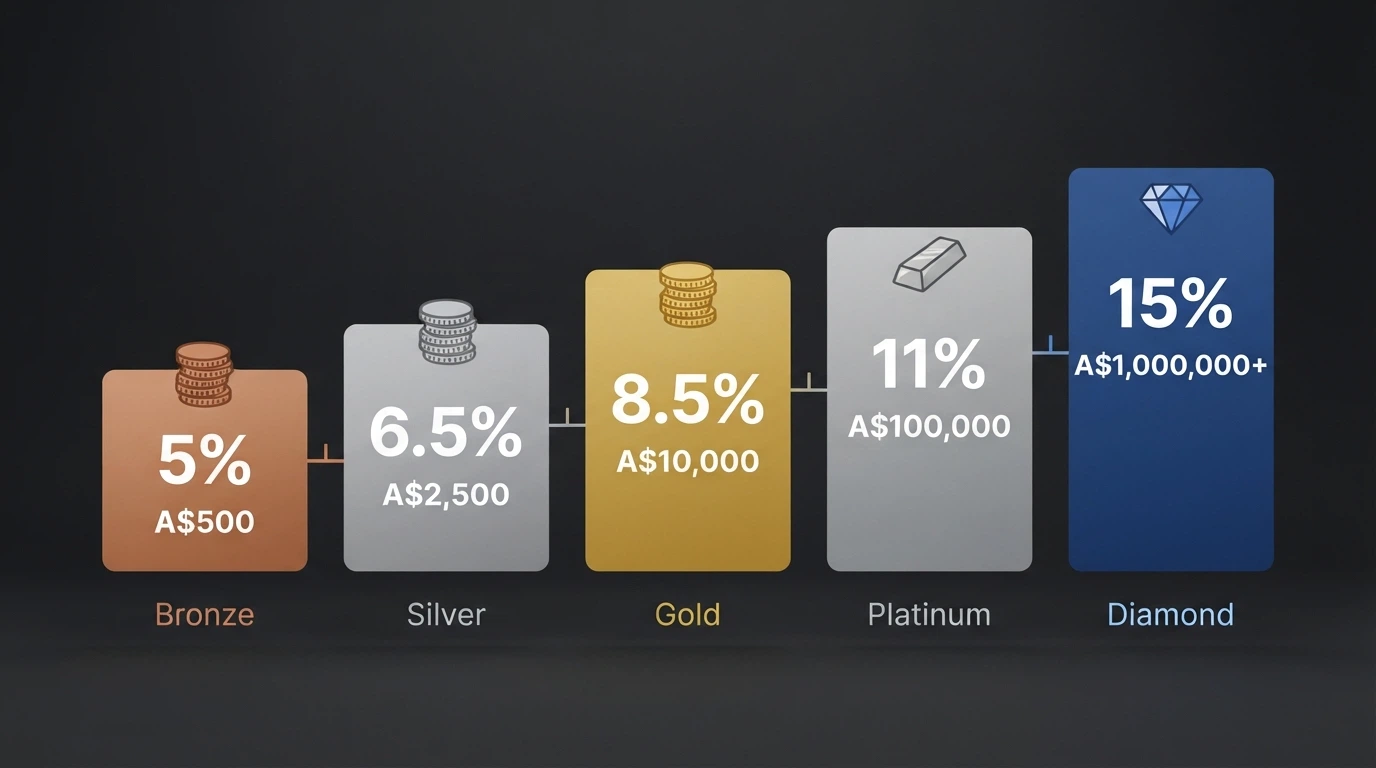
A typical program sorts players into tiers based on cumulative deposits or wagering. Higher tiers unlock higher cashback percentages, faster withdrawals, larger maximum cashouts, dedicated account managers, and personalised offers such as birthday bonuses. The promotion looks generous because, in dollar terms against standard play, it usually is. The cost sits in the volume of play the tier demands before any of it unlocks.
RocketPlay’s VIP program, for example, runs weekly cashback from 7% at the Iron tier up to 10% at Diamond, credited every Thursday with a three-day activation window. Its loss-back feature covers up to 25% of daily losses, with thresholds from A$1,000 at Bronze rising to A$2,000 at Gold and Diamond. The weekly withdrawal ceiling is A$9,000 and the monthly ceiling is A$35,000 — both higher than the floor most casual players ever reach. None of those numbers is the cost of the program; the cost is the volume of play required to stay inside a tier long enough to use them.
Programs like U88 illustrate the deposit scale. U88 sorts players into seven tiers — Bronze, Silver, Gold, Platinum, Diamond, Master and Legendary — where progression is automatic and tied to cumulative qualifying deposits across the account’s history. Bronze starts at AUD 500 in lifetime deposits. Legendary starts at AUD 9,999,999. That last figure is not a typo. The top of a serious offshore VIP ladder often requires seven-figure lifetime deposits, and the perks at the top exist precisely because almost no player reaches them.
Casiny takes a slightly different approach: ten levels of progression with weekly cashback up to 25%, free spins on premium pokies, and birthday gifts worth up to A$2,000. The headline percentage is more generous than RocketPlay’s top tier, but the weekly cadence means a player at the lower levels sees far less of it.
The mechanism is consistent across all of them. A player who deposits steadily sees a percentage of losses returned. A player who deposits heavily sees a higher percentage and higher limits. The “exclusivity” — the velvet rope, the personal account manager, the invitation — is a marketing surface over a deposit threshold. The maths underneath is the same maths the floor of the casino runs on.
Tiers, Points and How You Level Up
There are two ways to climb a VIP ladder: cumulative deposits and comp points earned through wagering.
Deposit-based tiers are the dominant model in offshore programs aimed at Australian players. U88 ties all seven of its tiers to lifetime qualifying deposits, with automatic upgrades based on the running total. RocketPlay splits the structure into two parallel tracks: Lifetime levels (Quark through Alloy) that never expire once earned, and Seasonal levels (Bronze through Diamond) that run on a three-month cycle and require reconfirmation each quarter. The Seasonal track exists because it forces regular activity; a player who deposits once and walks away keeps their Lifetime rank but loses their Seasonal one.
Comp-point programs work differently. Bizzo runs a thirty-level structure where one comp point is earned for every AU$20 wagered on slots. Level 1 unlocks 10 free spins. Level 30 unlocks a Porsche 911. The range is the point — the program is structured so a player can feel rewarded at almost any level of activity, with the headline prize always slightly out of reach. For the slots player who wagers AU$20 a spin, the difference between a 10-free-spin tier and a Porsche 911 tier is roughly six hundred thousand AU$20 spins. The prize is real. The path to it is not.
The gap between reaching a tier and keeping it is where most programs bleed players. Seasonal reconfirmation exists because operators know that a player who feels they have “made it” will play less. The structure keeps them playing.
The Real Value of Cashback, Insurance and Dedicated Support
Cashback is the perk closest to a real discount. A 10% weekly cashback on net losses means a player who loses A$1,000 in a week gets A$100 back. The amount is small relative to the loss, but it is a hard number and it costs the casino money.
RocketPlay’s 7%–10% band sits in the middle of the offshore market. Bizzo’s 5%–15% range is wider, with higher tiers pulling the top end up. Casiny advertises up to 25%, which is the most generous figure in this set. None of these is redeemable for cash without the cashback itself usually carrying a wagering multiple of its own — a point worth checking on the operator’s terms page before assuming the credit is withdrawable.
Loss-back is a different instrument. RocketPlay’s daily loss-back covers up to 25% of net daily losses above a threshold: A$1,000 at Bronze, rising to A$2,000 at Gold and Diamond. The mechanic is closer to a stop-loss than a discount — it kicks in once a player has already lost, not before. It is a real safety net for the day a player has already decided to stop, and nothing for the days before.
Higher withdrawal limits and faster processing are the perks that compound over time. Bizzo raises both at upper tiers. RocketPlay’s standard ceiling of A$9,000 weekly and A$35,000 monthly expands for VIPs. Dedicated account managers at the top of most programs are a relationship-management function: they handle withdrawals faster, resolve disputes, and provide tailored offers. They are also the operator’s first line of retention when a high-value player signals they may leave.
The honest read: cashback and insurance are real value, withdrawal limits are real value, account managers are real value at scale. None of them changes the underlying house edge. They change how much of that edge is returned.
Membership, Login and the Gated VIP Experience
Some offshore programs market themselves as invite-only. The reality is closer to “opt-in with a deposit floor.”
Cloud9AUS’s program is described by the operator as automatic on opt-in, with no manual point-redemption step — unusual in a market where players typically claim cashback manually. The contrast with manual systems is real: a player who has to claim cashback every Thursday is a player who notices how small it is.
Casiny layers in birthday gifts up to A$2,000, a perk that operators use as a relationship marker rather than a financial one. The dollar figure is large; the gesture is the product.
VIP login portals and dedicated dashboards are standard at the upper tiers of larger programs. They give a player a single view of tier progress, available bonuses, and pending cashback. They also collect data on play patterns, which the operator uses to set personalised offers — including loss-chasing offers that a player in a vulnerable frame of mind is poorly placed to evaluate.
The invite-only event — the physical tournament, the hospitality package — is rarer than the marketing suggests, and concentrated at the very top of programs that almost no retail-Australian player reaches. The everyday VIP experience is a dashboard, a weekly cashback email, and a faster withdrawal queue.
The Offshore VIP Programs Australians Are Actually Using in 2026
The table below covers ten offshore operators that Australian players use for VIP play. Every one is unlicensed in Australia because no Australian licence for online casino exists. “Licence Jurisdiction” names where the operator is regulated; “Key Perk” names the single feature that research confirmed for the brand this run. Where research did not confirm a detail, the cell carries an em dash rather than a guess.
| Operator | Licence Jurisdiction | VIP Program Model | Key Perk |
|---|---|---|---|
| Rocket Play | Curaçao (offshore) | 7 tiers; dual Lifetime + Seasonal tracks; automatic progression | 7%–10% weekly cashback; 25% daily loss-back |
| Skycrown | Curaçao (offshore) | Multi-tier program; details not confirmed this run | — |
| Royal Reels | Offshore | VIP program publicly listed; specifics not confirmed this run | — |
| Stake | Curaçao (offshore) | Tiered VIP club; rakeback and reload bonuses | Crypto-native; withdrawable bonuses at higher tiers |
| Bizzo Casino | Curaçao GCB 8048/JAZ2017-067 + Kahnawake | 30 levels; 1 CP per AU$20 on slots | 30-level ladder; 5%–15% cashback; reduced 30x wagering |
| WinSpirit | Offshore | Program publicly listed; specifics not confirmed this run | — |
| Rainbet | Offshore | Crypto-native; bonus-heavy welcome structure | 600% welcome bonus across reloads; 40x wagering |
| Fair Go Casino | Curaçao (offshore) | RTG-exclusive; no-deposit chips prominent | First site ACMA ordered blocked (19 November 2019) |
| Scream Casino | Offshore | Program publicly listed; specifics not confirmed this run | — |
| Rocket Casino | Offshore | Distinct from Rocket Play; specifics not confirmed this run | — |
The spread across this table is real. RocketPlay and Bizzo carry the deepest confirmed detail this round — cashback bands, wagering multiples, licence numbers. Rainbet and Fair Go carry strong but narrower detail: Rainbet on its bonus structure, Fair Go on its no-deposit terms and its ACMA history. Stake is the clearest crypto-native option on the list. The remaining five — Skycrown, Royal Reels, WinSpirit, Scream Casino, Rocket Casino — sit on the public-facing side of the operator’s site, with specifics this research pass did not confirm.
The structural point worth naming: seven of the ten run on Curaçao licences or unspecified offshore licences, none is connected to BetStop, and none offers Australian consumer recourse. The variety in the table is in the perk. The legal ground under every row is the same.
Rocket Play
RocketPlay’s VIP program is the most fully specified in this set, partly because its terms page carries the detail. The structure is dual-track: Lifetime levels (Quark to Alloy) that hold once earned, and Seasonal levels (Bronze to Diamond) that reset every three months and require reconfirmation. The Lifetime track rewards a player who has deposited across the account’s history; the Seasonal track rewards a player who has deposited recently. Most active players end up working both.
Weekly cashback sits between 7% at Iron and 10% at Diamond, credited every Thursday with a three-day activation window. Daily loss-back covers up to 25% of net losses, with thresholds from A$1,000 at Bronze rising to A$2,000 at Gold and Diamond. Standard withdrawal limits are A$9,000 weekly and A$35,000 monthly, with higher limits available to upper-tier VIPs.
For a high-volume slots player who would deposit anyway, the program pays back a real slice of the house edge. For a casual player who reaches Bronze on a single A$1,000 deposit and then stops, the program pays back nothing — the 25% insurance threshold sits above that deposit, and the cashback tracks losses the player didn’t have. The fit is for steady, large-volume play. The cost is the volume itself.
Skycrown
Skycrown operates on a Curaçao licence and reaches a meaningful Australian player base. The specifics of its VIP program this research run did not confirm: deposit thresholds, cashback bands, wagering multiples and bonus structures were not captured at the level the other operators carry.
What is publicly known is that Skycrown markets itself as a multi-tier program with VIP-style perks at the upper end and accepts Australian players through its offshore platform. The structure is consistent with the broader offshore norm — cumulative deposit thresholds, automatic progression, and a percentage of losses returned on a weekly cadence — but the specific percentages and tier names should be checked directly on the operator’s current VIP page before depositing. The verdict here is structural rather than numerical: a Curaçao-licensed operator with a publicly visible program, and the same offshore limitations as every other row on this table.
Royal Reels
Royal Reels is one of the more recognisable offshore brands in the Australian market. Like Skycrown, the specifics of its VIP program this research run did not confirm at the same depth as RocketPlay or Bizzo. The brand carries a publicly visible VIP offering and is widely cited in Australian-facing affiliate material.
The honest read: Royal Reels is an established name in a market where the legal ground under every operator is the same. A player choosing Royal Reels over another offshore brand is choosing on familiarity, bonus terms, and game library rather than on a structurally different protection regime. The site is offshore, the licence is offshore, and the same BetStop blind spot applies. Verify the terms before depositing.
Stake
Stake is the clearest crypto-native option in this set. Its VIP club runs on rakeback, reload bonuses and level-up rewards, with withdrawable bonuses available at higher tiers — a structural feature most offshore programs do not offer, where bonus funds convert to real withdrawable cash without further wagering once a player reaches the right tier.
The legal consequence sits underneath the perk. Crypto deposits to a wagering service have been banned under Australian law for licensed operators since 11 June 2024, with penalties up to $247,500 for non-compliance. A site accepting crypto from an Australian player is, by that fact, not a licensed Australian operator. Stake is not licensed in Australia because no such licence exists. The crypto-native model and the offshore status are the same thing seen from two angles.
There is no BetStop coverage at Stake. A player who has registered with BetStop to exclude themselves from Australian-licensed wagering can still deposit and play at Stake. The self-exclusion ends at the border. For a player using crypto who has registered with BetStop, that gap is the most important feature of Stake’s offering.
Bizzo Casino
Bizzo is the operator with the deepest published VIP structure in this set. Thirty levels, with comp points earned at one per AU$20 wagered on slots. Level 1 unlocks 10 free spins. Level 30 unlocks a Porsche 911 — a real prize, not a metaphor, with the operator running promotions where the top tier is a vehicle rather than cash.
The welcome package for Australian players is a four-deposit structure worth up to AU$7,750 plus 175 free spins, with a 40x wagering requirement on the bonus and a A$6.50 maximum bet during wagering. Higher VIP tiers reduce the wagering requirement from 40x to 30x, raise withdrawal limits, accelerate processing, and assign a dedicated account manager. Cashback runs from 5% to 15% depending on tier.
Bizzo holds a dual licence from the Curaçao Gaming Control Board (8048/JAZ2017-067) and the Kahnawake Gaming Commission, and operates under TechSolutions Group N.V. AUD is accepted alongside PayID and more than 22 cryptocurrencies. For a slots player who plans to deposit heavily and climb the ladder, the program’s tier-reduction in wagering is a meaningful concession. For a casual player, the welcome package is the headline and the rest is aspirational.
The verdict here is that Bizzo’s program rewards volume. The 30-level ladder exists because each level carries a small reward and the top carries a large one, and the operator is selling the climb.
WinSpirit
WinSpirit is an emerging offshore brand with a publicly visible VIP offering. Specifics this research run did not confirm: tier names, deposit thresholds, cashback percentages, wagering multiples, and bonus structures.
What is publicly known is that WinSpirit targets the Australian market from an offshore licence base and markets a multi-tier VIP program to Australian-facing traffic. The honest read is similar to Skycrown and Royal Reels: an offshore brand with a visible program and the same structural limitations as the rest of the table. Verify the current terms on the operator’s site before depositing, and check the licence jurisdiction explicitly — research did not pin a Curaçao or Kahnawake number for this operator this run.
Rainbet
Rainbet’s headline is its welcome structure: a 600% casino bonus distributed across multiple reloads, with a 40x wagering requirement on the bonus amount, and a separate 100% sports match up to A$500 with a 5x rollover. The crypto-native platform accepts Australian players without going through PayID or AUD banking rails.
The bonus arithmetic here is the same one that runs across the offshore market: a high percentage figure paired with a high turnover multiple. A 600% bonus on a A$500 first deposit is A$3,000 in bonus funds. At 40x wagering on the bonus, that’s A$120,000 in turnover before any of the bonus converts to withdrawable cash. The expected cost of that turnover, on a 96.5% RTP pokie, sits in the A$4,000–A$5,000 range before any winnings reach the player’s hands. The percentage is bait. The multiple is the price.
Rainbet has also been the subject of reporting on influencer marketing — specifically, payments reportedly exceeding $50,000 for three Instagram stories endorsing the brand, with campaigns targeting predominantly young male audiences. The marketing channel and the target demographic are themselves worth weighing before depositing anywhere similar. The offer is real. The cost of the offer is real. The audience the marketing aims at is named.
Fair Go Casino
Fair Go is the operator with the most documented Australian history in this set. It was the first illegal offshore gambling site ACMA ordered blocked, on 19 November 2019. The site is still accessible to Australian players through the offshore channel, and the ACMA blocking action has been followed by 1,563 more.
The bonus structure runs on RTG (RealTime Gaming) pokies exclusively. No-deposit free chips carry 60x wagering and a max cashout of around A$150–A$180; only RTG pokies clear the playthrough. The deposit-match welcome bonus carries a lower 30x multiplier. The high playthrough on the no-deposit offer is the structural feature: a free chip that requires sixty times its value in bets before the winnings can be withdrawn, with a hard cap on what can ever be withdrawn, is not free in any meaningful sense.
The verdict here is mixed. The brand has Australian name recognition, the games are RTG — a long-standing provider with a stable pokies catalogue — and the no-deposit chip exists. But the terms on that chip are the harshest in the table, and the ACMA history is on the public record. A player who reads the terms before claiming will know what they’re getting. A player who doesn’t will not.
Scream Casino
Scream Casino is a newer offshore brand targeting Australian players. Specifics this research run did not confirm: tier structure, deposit thresholds, cashback percentages, wagering multiples, and bonus validity windows.
What is publicly known is that Scream markets a VIP offering to Australian-facing traffic from an offshore licence base. The same honest read applies as to Skycrown, Royal Reels and WinSpirit: verify the current terms directly on the operator’s site, check the licence jurisdiction, and treat any “VIP” headline as a starting point for reading the small print rather than a description of the program. The legal ground under every row of the offshore table is the same; Scream sits on it like the rest.
Rocket Casino
Rocket Casino is a separate offshore brand from Rocket Play despite the similar name. The naming overlap is the main feature worth flagging — a player searching for “Rocket Play” VIP terms could land on Rocket Casino’s page and assume continuity that does not exist.
Specifics this research run did not confirm: tier structure, deposit thresholds, cashback bands, wagering multiples. What is publicly known is that Rocket Casino is an offshore-licensed operator marketing VIP-style perks to Australian-facing traffic under its own brand. The verdict is the same structural one: an offshore operator, a separate brand from Rocket Play, and the same limitations as every other row on this table. Verify the licence, verify the terms, and don’t confuse the two Rockets.
Why Your 2026 VIP Bonus Is Smaller Than It Looks
A welcome bonus is not a gift. It is a deposit-matching instrument with a turnover requirement attached, and the turnover is the cost.

The headline numbers across the offshore VIP market are large: AU$7,750 at Bizzo across four deposits with 175 free spins, 600% match at Rainbet across reloads, A$2,000 birthday gifts at Casiny at the top of the ladder. Every one of those numbers sits at the top of a wagering requirement that determines what actually reaches the player’s withdrawable balance.
The standard offshore wagering multiple is 40x on the bonus amount. At Bizzo, the full AU$7,750 welcome requires A$310,000 in turnover before any bonus-derived winnings can be withdrawn. The reduced 30x available at upper VIP tiers lowers that figure to A$232,500. The 60x multiple on Fair Go’s no-deposit chips applies to a much smaller starting amount but takes a much larger share of any winnings. The percentage on the front of the bonus is the marketing. The multiple on the back is the price.
There is also a maximum bet rule during wagering — A$6.50 per spin at Bizzo during the playthrough — that limits how fast a player can clear the requirement and protects the operator from bonus-abuse patterns. A player who exceeds the max bet on a single spin can void the bonus and the winnings tied to it. The rule is standard. The consequence of triggering it is severe.
Reload bonuses and recurring deposit-match offers extend the same logic across the player’s account lifetime, not just the welcome. The weekly cadence at most offshore VIP programs — a reload offer every Friday, a cashback email on Thursday, a birthday gift once a year — is structured to keep the bonus-to-turnover ratio running continuously. Cashback is the least bad of these because it returns a real percentage of net losses; deposit-match reloads carry the same multiple as the welcome.
No-deposit bonuses and free-spin offers carry the harshest terms. Fair Go’s no-deposit chips run at 60x with a A$150–A$180 max cashout — the player can win real money, but the cap means a single lucky outcome above the cap is wasted, and the playthrough means most small wins disappear into the requirement before reaching it. Free spins at Bizzo (50 immediately, 50 after 24 hours, then further batches across deposits) play on Pragmatic Play pokies with RTPs in the 96.0%–96.7% band, which is the standard offshore game library.
The math that matters: at 96.5% RTP, every A$100 wagered returns A$96.50 on average. A$310,000 in turnover at that RTP costs the player roughly A$10,850 in expected house edge before the bonus is cleared. The bonus was A$7,750. The net expected position of clearing it is negative.
The expected-loss calculation illustrates the point concretely. Take Bizzo’s AU$7,750 bonus at 40x wagering, played on a Pragmatic Play pokie at 96.5% RTP. Required turnover: A$7,750 × 40 = A$310,000. Expected loss on that turnover: A$310,000 × (1 − 0.965) = A$10,850. The bonus paid A$7,750. The expected cost of clearing it is A$10,850. The player ends the wagering period roughly A$3,100 below where they started, on average, before any winnings on top. The bonus is not free. The arithmetic is the cost.
This is a statistical average over many spins, not a prediction for any single session. A player can clear a bonus ahead, can clear it behind, can run out of balance before clearing it. The figure is the long-run cost under the stated assumptions, and the long-run cost is the truth the headline number hides.
Welcome Packages: The Headline Number vs the Real Cost
A welcome package is structured to look larger than it is.
Bizzo’s four-deposit structure tops out at AU$7,750 plus 175 free spins, with each deposit carrying a different match percentage (50%–125%) and a different free-spin batch. The first deposit usually carries the largest match; subsequent deposits carry smaller percentages but extend the runway. The total is a four-step ladder, not a one-shot bonus.
Rainbet’s 600% bonus distributes the same kind of structure across multiple reloads. A single 600% match on a small deposit produces a large headline number; the per-reload structure spreads it across the player’s first weeks of play, with a 40x multiplier on each component.
The turnover required to convert any of these bonus funds to withdrawable cash sits behind the headline. The 40x figure on Bizzo’s welcome is the standard offshore multiple. The 40x figure on Rainbet’s reloads is the same. The headline is large; the multiplier is the price; the gap between them is what the bonus actually costs.
Deposit-Match, Reload and Ongoing VIP Rewards
Recurring deposit-match offers and reload bonuses are the same instrument as the welcome bonus, applied to a player’s ongoing deposits.
Reload offers typically run weekly or tied to a specific deposit day. The match percentage is lower than the welcome — often 25%–50% rather than 100%–125% — but the wagering multiple stays at 30x–40x. The trade is identical to the welcome, scaled down. Cashback is the better deal in this category: RocketPlay’s 7%–10% weekly cashback, Bizzo’s 5%–15% by tier, Casiny’s up to 25%. The percentage is smaller but the wagering on cashback is usually lighter, and the amount is credited against real net losses rather than against a bonus figure that needs clearing.
Exclusive promotions and birthday gifts sit at the top of most VIP ladders. Casiny advertises birthday gifts worth up to A$2,000. The figure is real at the top tier; at lower tiers, the gift is usually a free-spin batch or a small cash credit. The marketing plays the A$2,000 figure; the actual gift most players receive is much smaller.
No-Deposit Bonuses and Free-Spin Offers
No-deposit bonuses are the bonus category with the harshest terms.
Fair Go’s no-deposit chips are the clearest example: 60x wagering on the chip amount, a max cashout of around A$150–A$180, and only RTG pokies eligible for the playthrough. A player who claims a A$20 no-deposit chip and wins A$500 on a spin has effectively won A$150–A$180 — the cap cuts the rest. A player who wins A$50 has to wager A$3,000 on RTG pokies at roughly 96% RTP to convert any of it, an expected loss of A$120 on the playthrough. The chip was free; clearing it is not.
Free-spin batches at Bizzo (50 immediately on first deposit, 50 after 24 hours, further batches across subsequent deposits) play on Pragmatic Play pokies with RTPs in the 96.0%–96.7% band. The wins on free spins typically carry the same 40x wagering as the matched deposit bonus. The headline number of free spins is the marketing; the wagering on the wins is the cost.
No-deposit and free-spin offers are not a recommended entry point. They are a way for a player to test the platform without funding it, with terms that reflect that purpose.
Wagering Requirements: The Fine Print That Eats Your Balance
A wagering requirement is the multiplier that determines how much must be turned over before bonus funds convert to withdrawable cash. It is the single most consequential number on a bonus page.
Bonus-only wagering (most offshore programs) applies the multiplier to the bonus amount. A A$1,000 bonus at 40x bonus-only requires A$40,000 in turnover. Bonus-plus-deposit wagering (some licensed programs) applies the multiplier to the sum. The same bonus at 40x bonus-plus-deposit on a A$1,000 deposit requires A$80,000 in turnover. The label matters.
The max-bet rule during wagering — A$6.50 at Bizzo — protects the operator from players running the bonus through large single spins. It also limits how fast the player can clear the requirement. A player spinning A$6.50 per spin needs roughly 47,700 spins to clear A$310,000 in turnover, which is several weeks of regular play at standard session lengths. The rule is enforced.
Reduced wagering at higher VIP tiers is a real concession. Bizzo’s drop from 40x to 30x at upper tiers lowers the required turnover on a A$1,000 bonus from A$40,000 to A$30,000. The percentage improvement is 25%. For a high-volume player, that is meaningful. For a casual player, the tier required to unlock it is not reachable.
The RTP gap: every spin on a 96.5% pokie returns A$96.50 per A$100 wagered on average. The A$3.50 per A$100 is the house edge. Over the turnover required to clear a 40x bonus, the cumulative cost is the expected loss described above. The wagering requirement and the RTP work together: the multiple drives the volume, the RTP drives the cost per unit of volume.
The Pokies and Live Tables That Earn the Most VIP Points
Not every game counts the same toward VIP progression. Slots earn fastest; table games and live dealer usually earn slower. The split is part of the program design.
Bizzo’s comp-point structure — 1 CP per AU$20 on slots — is the clearest published rate in this set. Table-game and live-dealer earn rates this research run did not confirm at the same numerical depth. Industry standard is for slots to contribute 100% to comp points, table games a fraction (often 10%–20%), and live dealer somewhere between depending on the operator’s policy. A player who wants to climb a comp-point ladder efficiently plays slots. A player who plays blackjack or roulette for the lower house edge earns points much more slowly.
Pragmatic Play is the dominant slots provider across the offshore VIP programs aimed at Australian players, with roughly 600 titles in active distribution by mid-2026, most of them in the 96.0%–96.7% RTP band. That band is slightly above the offshore industry average (typically 94%–96%) and represents the publisher’s standard configuration; operators can in some cases configure titles to lower RTP variants, so the figure on a specific site may differ from the publisher’s headline.
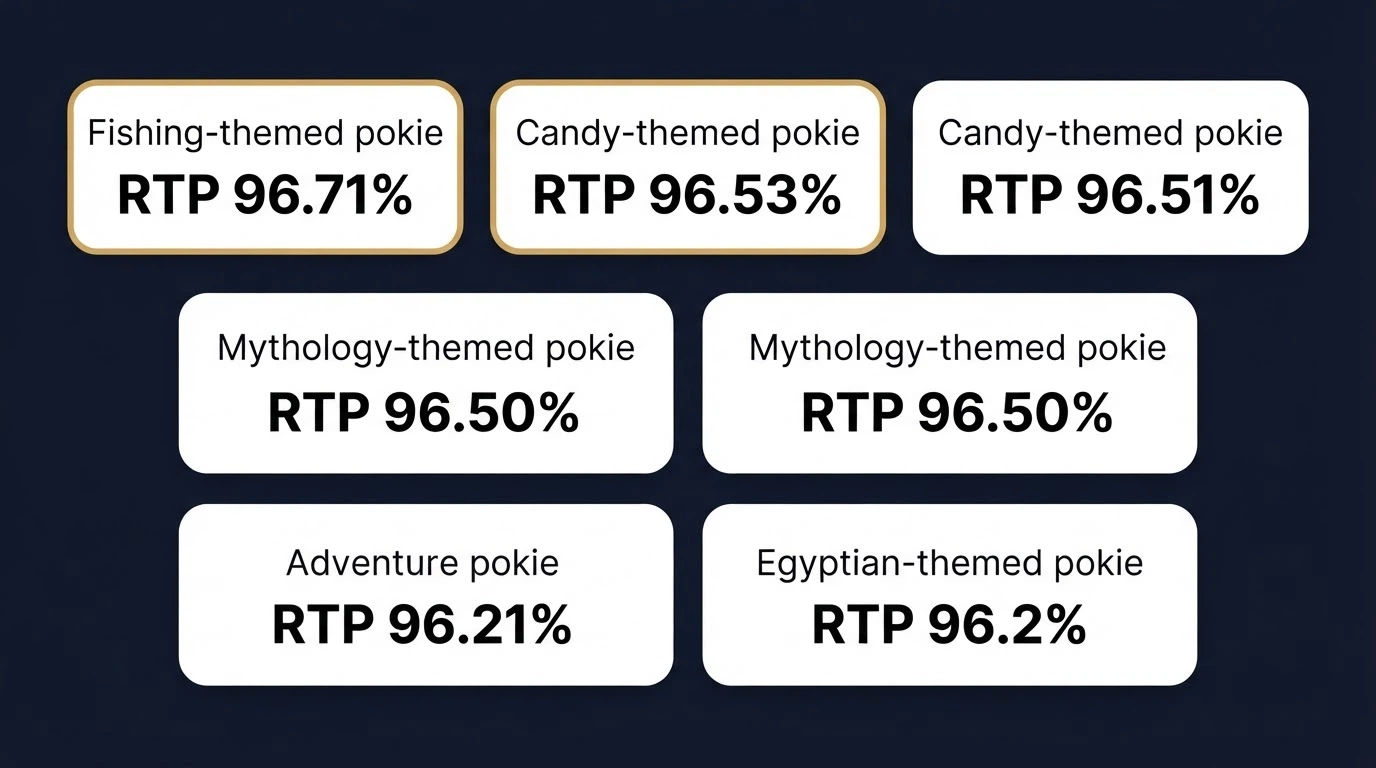
The seven titles below carry confirmed RTP and volatility from research. They are the highest-RTP pokies in the offshore-AU VIP space this research run identified. Where research did not confirm a volatility class or max win for a title, the cell carries an em dash rather than a guess.
| Slot Title | Provider | RTP | Volatility | Max Win |
|---|---|---|---|---|
| Big Bass Bonanza | Pragmatic Play / Reel Kingdom | 96.71% | Medium-high (4/5) | 2,100x |
| Sweet Bonanza 1000 | Pragmatic Play | 96.53% | High | 25,000x |
| Sweet Bonanza | Pragmatic Play | 96.51% | High | ~21,100x |
| Gates of Olympus | Pragmatic Play | 96.50% | Extreme | 5,000x |
| Gates of Olympus 1000 | Pragmatic Play | 96.50% | High | 15,000x |
| Book of Dead | Play’n GO | 96.21% (default; variants down to 84.18%) | High | 5,000x |
| Valley of the Gods | Yggdrasil | ~96.2% | Medium-high | 5,800x |
Big Bass Bonanza sits at the top of the table by RTP, at 96.71% — adjustable by casino, so the figure on a specific site may differ. The hit frequency sits around 13%, which is high for a medium-high volatility slot; the game pays out often but rarely in the largest brackets. Sweet Bonanza 1000, the 2026 release, carries the highest max win in the table at 25,000x. Gates of Olympus has extreme volatility and a 5,000x cap — a pokie that pays rarely and pays large when it does. Book of Dead has variants configured as low as 84.18%, well below the 96.21% default; the variant matters, and the RTP shown on a specific site is the one that applies.
The honest read: a 96.7% pokie returns A$96.70 per A$100 wagered. A 96.2% pokie returns A$96.20. The 0.5-point gap compounds across thousands of spins. For a player clearing a A$310,000 bonus turnover, the difference between Big Bass Bonanza at 96.71% and Book of Dead at 96.21% is roughly A$1,550 in expected loss. Same bonus, same turnover, different game, A$1,550 difference in cost.
How Game Choice Affects Your VIP Point Earnings
Comp-point earn rates are not uniform across game categories at most offshore programs.
Slots contribute 100% of wagering to comp points at most operators, which is why a slots-heavy player climbs a comp-point ladder faster than a table-game player with the same total wagered. Table games — blackjack, roulette, baccarat — typically contribute a fraction, often 10%–20%, because the house edge is lower and the operator makes less per unit wagered. Live dealer sits in between, sometimes at 100%, sometimes at a reduced rate depending on the operator’s policy.
This research run did not confirm per-category earn rates beyond slots at Bizzo’s 1 CP per AU$20. The industry-standard split — slots 100%, table games 10%–20%, live dealer variable — is the working assumption a player should verify on the specific operator’s terms page before depositing.
High-RTP Pokies Worth Your VIP Free Spins
The table above covers seven titles with confirmed RTP and volatility from research. The headline numbers are the published figures; the variants are operator-configurable.
Big Bass Bonanza’s 96.71% RTP and 13% hit frequency make it the most player-friendly pokie in the table for clearing bonus turnover — frequent small wins keep the balance alive long enough to grind through the wagering requirement. Sweet Bonanza 1000’s 25,000x max win and 96.53% RTP make it the highest-upside title. Gates of Olympus’s extreme volatility is the highest-risk title: it pays rarely and pays large when it does, and is better suited to a player with a balance that can absorb the dry spells.
Book of Dead’s RTP variants matter. The 96.21% default is a fair game; the 84.18% variants are not. A player who lands on a Book of Dead variant at the lower RTP is playing a substantially worse game than the publisher’s default, and the difference compounds across a bonus playthrough. The variant on the specific operator is the one that counts.
Live Dealer Tables and VIP Treatment
Live dealer VIP treatment is a real perk at the upper end of major offshore programs, though specifics this research run did not confirm at the operator level.
The standard VIP live-dealer experience includes higher table limits than the standard lobby, dedicated hosts who greet returning players by name, and faster table-change transitions. Some operators run VIP-only blackjack or roulette rooms with minimum bets above the public floor. Some run private tables for the highest-volume players.
For an Australian player, the live-dealer experience is also where the BetStop gap matters most. A self-excluded player who registers with BetStop cannot access Australian-licensed live-dealer tables. Offshore live-dealer tables remain accessible, with no integration to the self-exclusion register. The VIP treatment is the marketing. The accessibility is the consequence.
Crypto VIP Casinos: Faster Payouts, Fewer Protections
Crypto deposits at an offshore casino are a tell. They signal that the operator is not subject to Australian rules, because crypto has been banned for licensed wagering since 11 June 2024.
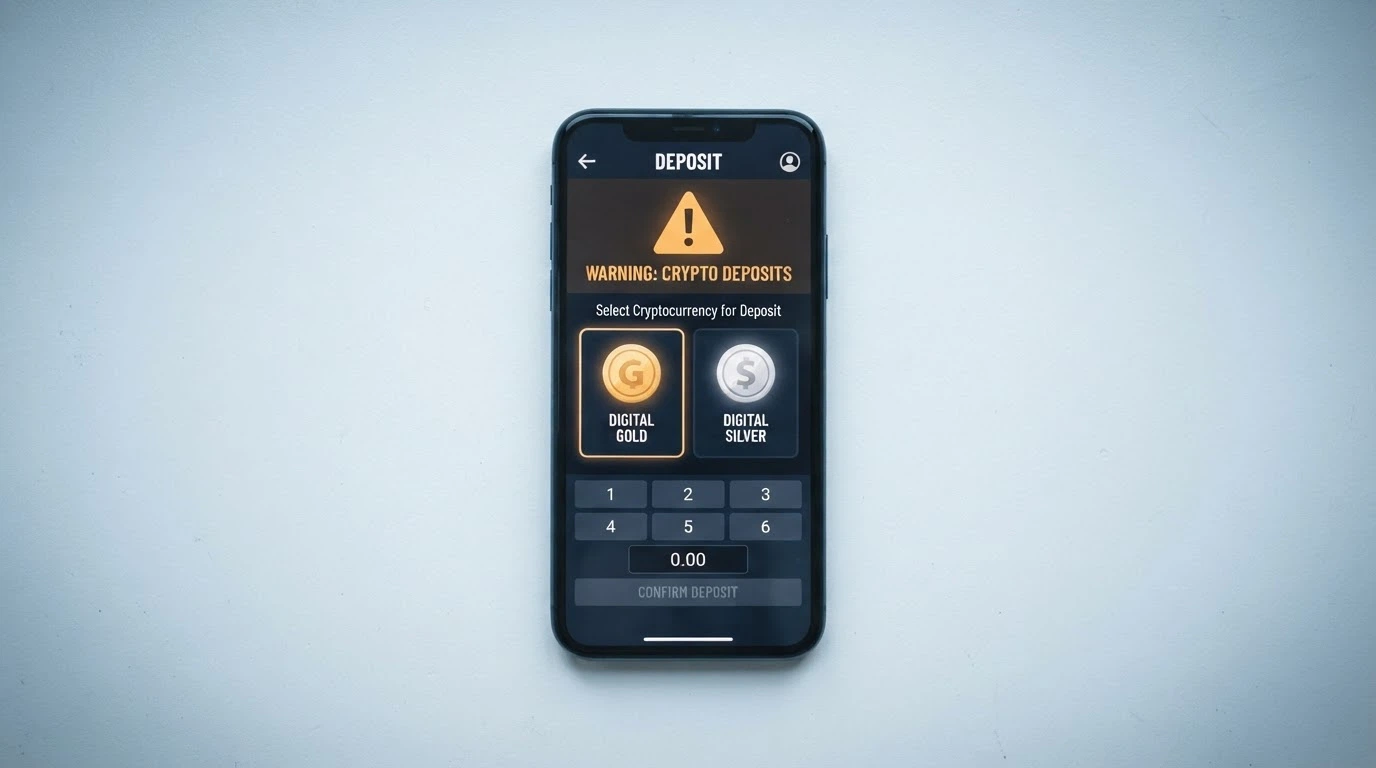
The Interactive Gambling Amendment (Credit and Other Measures) Act 2023, in force from 11 June 2024, makes it an offence for a licensed wagering provider to accept credit cards, credit-related products, or digital currency (crypto) from Australian customers. Penalties for non-compliance reach A$247,500. A licensed operator accepting Bitcoin from an Australian player would be in breach. An unlicensed offshore operator has no such constraint, because the rule does not bind it — and the rule is the very reason the operator sits offshore in the first place.
Bizzo and Stake are the clearest crypto-accepting VIP operators in this set. Bizzo accepts AUD alongside PayID and more than 22 cryptocurrencies; the crypto rails are an alternative to the AUD rails, not a replacement. Stake is crypto-native: its deposit and withdrawal infrastructure is built around crypto, with no fiat rails for Australian players.
For a player who wants fast withdrawals and a degree of payment privacy, crypto delivers on both. Crypto payouts typically settle in minutes to hours, compared to days for fiat rails. For a player who wants Australian consumer protection, crypto delivers the opposite: no Australian regulator has oversight of the transaction, no Australian complaints body has jurisdiction, and no Australian bank can reverse the payment once it has been sent.
The trade-off is the entire story. Crypto at an offshore casino buys speed and privacy. It costs every Australian safeguard that a licensed wagering provider is required to offer.
Crypto-Accessible VIP Programs
Bizzo’s crypto acceptance is the deepest in this set — 22+ cryptocurrencies alongside AUD and PayID. A player who wants to deposit in Bitcoin or Ethereum can do so at Bizzo without giving up the AUD option for players who prefer it. The VIP program runs identically regardless of the deposit rail.
Stake’s crypto-native structure means AUD is not on the menu. The VIP club runs on rakeback and reload bonuses in crypto, with withdrawal in the same crypto the player deposited. The crypto-native design is the product, not a feature added to a fiat base.
For other operators in this set, crypto acceptance this research run did not confirm at the same depth. Most major offshore programs aimed at Australian players accept Bitcoin and Ethereum as a baseline; specific altcoin lists and minimum deposit amounts vary by operator. A player should verify the crypto acceptance and the conversion rate on the operator’s deposit page before sending funds.
The Trade-Off: Anonymity vs Consumer Protection
The structural trade-off at a crypto offshore casino is between payment privacy and consumer recourse.
No Australian consumer protection applies. No Australian regulator has oversight of the operator. No Australian complaints body will hear a dispute. No Australian bank can reverse a payment once it has been sent on the blockchain. If the operator refuses a withdrawal, voids a win, or simply stops responding, the player has no domestic recourse.
BetStop does not apply. BetStop covers approximately 150 licensed wagering providers in Australia — the figure as at 31 July 2026 — and a BetStop registration excludes a person from every one of them. Offshore casinos are not licensed in Australia and are not connected to the register. A person registered with BetStop can still deposit and play at Stake, Bizzo, or any other crypto-accepting offshore site. The self-exclusion ends at the Australian border.
ACMA cannot hear complaints about offshore casinos. The ACMA’s enforcement role is to block illegal services at the ISP level, not to mediate disputes between players and operators. Since November 2019, ACMA has had 1,564 illegal gambling and affiliate websites blocked by Australian ISPs, and more than 225 illegal services have withdrawn from the Australian market since 2017. A player whose funds are held by one of the remaining sites has no Australian body to complain to.
The funds themselves can be stranded. An offshore site that ACMA orders blocked while a player has a balance on it leaves the player with funds held at an address the player can no longer reach. The site may continue to operate offshore; the player may not be able to log in. The risk is not theoretical — it has happened, and the ACMA blocking record is the public evidence.
The Legal Reality: Online Casino Is Prohibited in Australia
No Australian online casino licence exists. None can exist under current law.

The Interactive Gambling Act 2001 makes it an offence to provide an online casino, online pokies, or in-play sports betting to a person in Australia. The prohibition targets the provider, not the player — an individual gambling on an offshore site is not prosecuted under the IGA — but it leaves the player without any Australian-licensed product to play on.
Every operator reviewed on this page operates offshore because there is no Australian alternative. The legal ground under the entire offshore VIP market is the same: the product is prohibited domestically, and the offshore supply exists because the prohibition has not been lifted.
The Interactive Gambling Act and What It Actually Prohibits
The IGA 2001 prohibits three categories of online gambling service: online casino games, online pokies (slots), and in-play betting on a sporting event once it has started. The prohibition covers provision to persons physically in Australia, regardless of the provider’s location.
ACMA enforces the prohibition. The agency’s powers include requesting that Australian ISPs block illegal services, issuing formal warnings, and referring matters for civil penalty proceedings. The enforcement record is large: since November 2019, ACMA has had 1,564 illegal gambling and affiliate websites blocked, and more than 225 illegal services have withdrawn from the Australian market since 2017. The blocking record is the most visible enforcement tool, but it is not a comprehensive solution — new sites appear as old ones are blocked, and the offshore supply continues to reach Australian players through channels the ISP-level block does not cover.
The individual player is not the target. The IGA’s offence provisions apply to providers, not to persons who gamble. An Australian who deposits at an offshore casino commits no offence under the IGA. The operator commits the offence by offering the service to a person in Australia.
Licensed vs Offshore: What Protections You Forfeit
What is licensed in Australia is narrower than what is available offshore. The licensed market covers wagering on races and sport placed before the event begins, lotteries, and keno — through operators licensed by a state or territory. The Northern Territory Racing and Wagering Commission (NTRWC), administered through Licensing NT, is the de facto national licensor for online wagering, with Sportsbet, bet365, Ladbrokes and approximately 50 others holding NT licences for terms of up to 20 years.
The licensed wagering alternative does not include casino games. A bet365 or Sportsbet account cannot be used to play online pokies, blackjack, or roulette. The licensed market is sports and race wagering; the offshore market is everything the licensed market does not offer. The two are not substitutes.
The protections a licensed wagering provider offers are concrete. BetStop registration excludes a person from every one of approximately 150 licensed providers. Customer-set deposit limits are enforceable under state and territory conditions. Complaints can be raised with the operator and escalated to the relevant state or territory regulator. Funds are held in Australian accounts subject to Australian financial regulations.
An offshore casino offers none of these. There is no BetStop coverage. There is no Australian regulator to complain to. There is no Australian financial protection on deposits. A blocked site can strand a balance with no domestic recourse.
The payment tells are also clear. Credit cards, credit-related products, and crypto are banned for licensed wagering since 11 June 2024. A site that accepts credit cards or crypto from an Australian player is, by definition, not a licensed operator. The legal deposit routes for licensed wagering are debit card, bank transfer, PayID/Osko, and BPAY. An offshore casino will offer crypto and sometimes credit-card rails because it is not bound by the Australian prohibition.
The 2026 Gambling Reform and What Changes in 2027
The Interactive Gambling Amendment (Gambling Reform) Bill 2026 passed Parliament on 19 August 2026. Its measures commence on 1 January 2027. The reform is the most significant change to Australian gambling regulation since the original IGA.
Advertising restrictions are the most visible element. From 1 January 2027, wagering advertising during live sporting events is banned from 15 minutes before to 5 minutes after the event (between 5am and 8:30pm). The hourly cap on TV wagering ads is set at no more than three per hour between 6:00am and 8:30pm. Athletes, celebrities, and influencers are barred from promoting wagering products. Ads in sports venues and on uniforms are prohibited. Radio ads are barred during school drop-off and pick-up times. Broadcasting of sporting odds is banned outright. Online wagering ads are shown only to logged-in, over-18 users who have not opted out.
Inducement restrictions run alongside the advertising rules. Direct marketing of inducements is prohibited for 14 days after a customer signs up with a licensed wagering provider, for three months after a person deregisters from BetStop, and indefinitely for customers identified as being at risk of gambling-related harm. The 14-day rule kills the worst of the welcome-offer flood; the indefinite ban for at-risk customers gives the regulator a lever against operators targeting people in vulnerable states.
A new Wagering Advertising Opt-out Register, branded AdStop, is to be administered by ACMA and funded by a cost-recovery levy on licensed wagering companies. Online keno “pocket pokies” and foreign-matched lotteries are banned. Banks and payment providers gain express authority to block transactions to illegal gambling operators, which closes the payment-route gap that offshore crypto acceptance currently exploits.
The reform does not legalise online casino. The product remains prohibited. What the reform does is tighten the marketing and payment infrastructure around the licensed market, raise the cost of reaching Australian players through licensed channels, and give banks the explicit authority to block transactions to offshore operators. The offshore VIP market this page covers remains prohibited under the same law it was prohibited under in 2026.
Staying in Control: Responsible Gambling Tools That Actually Work
The responsible gambling infrastructure in Australia is real but it has a structural blind spot where offshore casinos are concerned.
About 2.1% of Australian adults — roughly 430,000 people — experience problem gambling, according to the Australian Institute of Health and Welfare’s 2022 figures. High-risk gambling sits at 1.8%. These are the population-level numbers; the individual-level experience of problem gambling is concentrated in the under-40 demographic, where 78% of BetStop registrants sit.
BetStop: What It Covers and Where It Stops
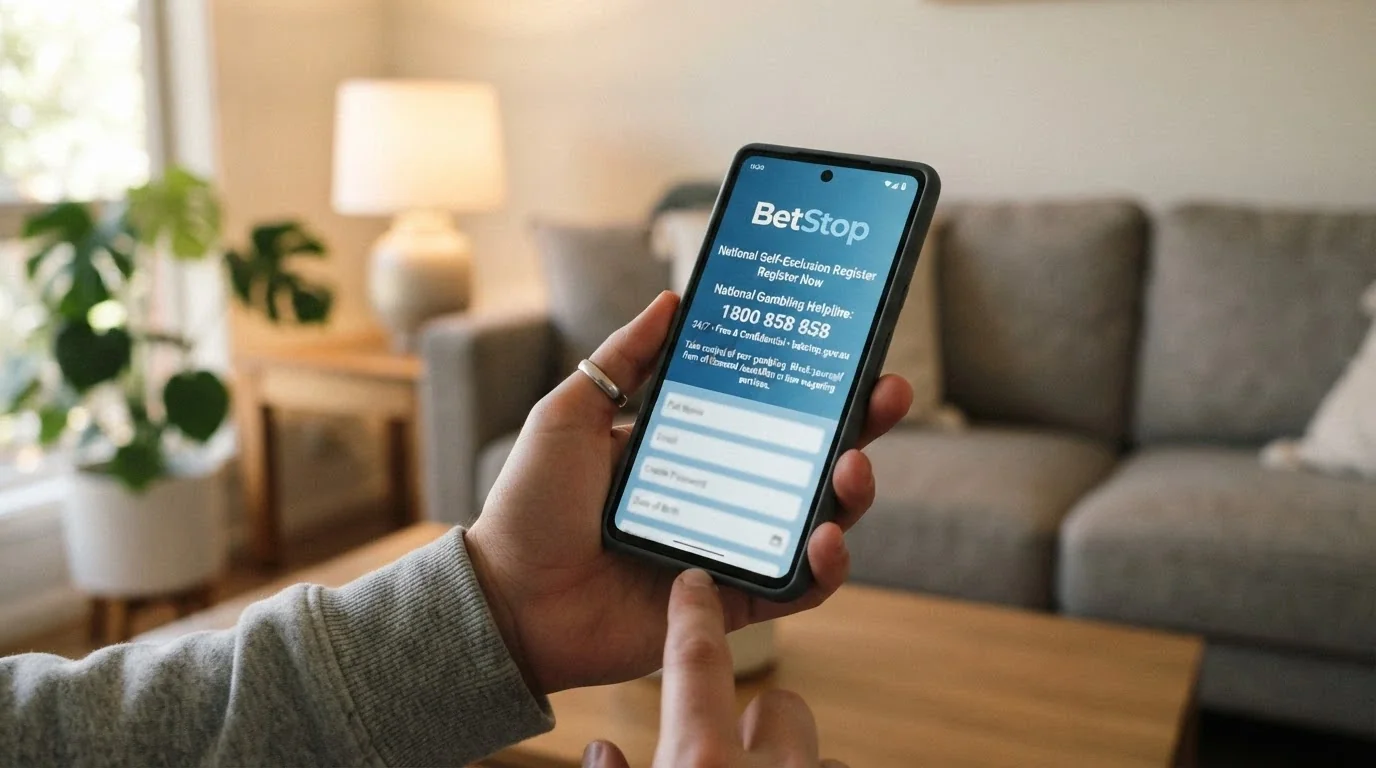
BetStop — the National Self-Exclusion Register — has recorded 67,480 registrations since its launch in August 2023, with 41,290 exclusions still active as at 31 July 2026. Of those registrants, 78% were under 40 and 38% chose lifetime exclusion. The minimum exclusion period is three months; the maximum is lifetime. Registration requires a driver’s licence or Medicare card.
BetStop covers approximately 150 licensed wagering providers in Australia. It does not cover offshore casinos. An offshore casino is not licensed here, is not connected to the register, and will keep taking a self-excluded person’s money. The ACMA has stated this plainly: the register binds Australian-licensed services, and offshore operators remain outside its scope.
The structural gap is the most important feature of BetStop for a reader of this page. A player who recognises they have a problem and registers with BetStop will be excluded from every Australian-licensed wagering site. They will not be excluded from Stake, Bizzo, RocketPlay, or any of the other operators on this page. The self-exclusion ends at the Australian border. For a player in the population the register is designed to help, that is the limit of what the register can do.
Deposit Limits, Time-Outs and Where to Get Help
Customer-set deposit limits are available on licensed wagering providers, with state and territory conditions governing how the limits are set and enforced. Time-out and cool-off periods allow a player to lock themselves out of an account for a defined window without the longer-term commitment of a BetStop registration. These tools are real, enforceable, and effective within the licensed market. They are not enforceable on offshore casinos, where the operator sets its own policies.
The National Gambling Helpline — 1800 858 858 — is free, confidential, and staffed 24 hours a day, 7 days a week. Online chat and email counselling are available through Gambling Help Online at gamblinghelponline.org.au. These services are domestic, free, and staffed by people who understand the Australian legal and support landscape.
Lifeline (13 11 14) is a crisis support line separate from the gambling-specific services. State-based services include Gambler’s Help in Victoria (gamblershelp.com.au) and GambleAware NSW (gambleaware.nsw.gov.au). For a player who has recognised they have a problem — with offshore play, with licensed wagering, or with gambling generally — the help is one phone call or one website away. The help is also free.
How We Evaluated These VIP Casino Programs
The operators and programs on this page were assessed against publicly available sources: ACMA’s public register and investigations page, the operator’s own VIP and terms pages, the AU gambling regulation skill, and third-party review databases that publish operator bonus terms and licence details.
The evaluation criteria were qualitative rather than scored. Programme depth — the number of tiers and the specificity of the perks — was assessed by reading the operator’s VIP page. Tier transparency — whether the deposit thresholds and earn rates are published — was assessed by checking whether the numbers are stated rather than hidden behind an “invitation”. Cashback rates and wagering multiples were taken from the published terms, where research confirmed them. Licence status was checked against the ACMA register and the IGA 2001 prohibition; every operator on this page is offshore because no Australian licence for online casino exists.
Every operator in the ranking is offshore. No operator was excluded for being offshore; the prohibition makes that a structural fact rather than a comparative criterion. The ranking reflects programme depth and the specificity of the published terms, not the legality of the operation.
The figures in this article come from the sources cited inline. No percentage scores or composite ratings have been invented — the assessment is qualitative, and the figures are the figures research confirmed. Where research did not confirm a detail, the article says so rather than filling the gap with an estimate.
Your VIP Play Checklist: What to Verify Before You Deposit
Five checks before funding any VIP casino account from Australia.

Verify the licence jurisdiction. The operator should name a regulator (Curaçao, Kahnawake, Tobique) and a licence number. The absence of either is a red flag. A licence number can be checked against the regulator’s own public register; “Curaçao-licensed” without a number is unverifiable. Australian players should expect every operator in this market to be offshore — that is the legal ground — but the specific jurisdiction matters for dispute resolution and consumer recourse.
Read the wagering fine print before claiming any bonus. Multiply the bonus by the playthrough multiple. A A$1,000 bonus at 40x requires A$40,000 in turnover. At 96.5% RTP, the expected loss on that turnover is A$1,400 — more than the bonus itself. The headline number is not the value of the bonus; the gap between the bonus and the expected cost is.
Check whether the deposit method is protected under Australian law. Crypto and credit cards are banned for licensed wagering. An offshore site accepting either is not licensed in Australia. PayID, BPAY, and direct debit are the legal deposit routes for licensed wagering; an offshore site may not offer them.
Confirm the operator has no BetStop integration. BetStop covers approximately 150 licensed wagering providers in Australia. Offshore casinos are not licensed here and are not connected to the register. A BetStop registration does not exclude from any operator on this page. A player who has registered with BetStop and is considering an offshore VIP program should know that the self-exclusion does not extend to it.
Decide a loss limit before depositing and stick to it. The deposit limit, the time-out, and the session length are all variables the player controls. The wagering requirement, the house edge, and the bonus terms are variables the operator sets. The first set is the only protection that works regardless of which offshore site the player is on.
Frequently Asked Questions
What is the difference between a casino loyalty program and a VIP program?
A loyalty program rewards play volume with points that convert to small perks — bonus credits, free spins, occasional cashback. A VIP program is the upper tier of that structure, with higher cashback percentages, dedicated account managers, faster withdrawals, and personalised offers like birthday gifts. In practice, offshore programs aimed at Australian players often combine both into a single tier ladder rather than running them as separate schemes.
What does BetStop cover and does it apply to offshore casino VIP programs?
BetStop is the National Self-Exclusion Register and covers approximately 150 licensed wagering providers in Australia — the figure as at 31 July 2026. It does not apply to offshore casinos because they are not licensed in Australia and have no integration with the register. A BetStop registration will exclude a person from every Australian-licensed wagering site but not from Stake, Bizzo, RocketPlay, or any other operator on this page.
How much do I need to deposit to reach the top VIP tier at Australian online casinos?
The top tier varies by operator. U88’s Legendary tier requires AUD 9,999,999 in cumulative qualifying deposits — a seven-figure lifetime deposit threshold. Bizzo’s Level 30 unlocks a Porsche 911 after roughly AU$600,000 in slot wagering at 1 comp point per AU$20. RocketPlay’s Diamond tier is reached through the Seasonal track after sustained recent activity rather than a single deposit figure. The honest answer is that the top tier is designed for sustained high-volume play, not a single large deposit.
What are the wagering requirements on VIP casino bonuses?
The standard offshore wagering multiple is 40x on the bonus amount. Bizzo’s welcome package carries 40x, reduced to 30x at upper VIP tiers. Fair Go’s no-deposit chips carry 60x with a A$150–A$180 max cashout. Rainbet’s casino bonus carries 40x. The lower figure at higher VIP tiers is a real concession for high-volume players; the standard 40x on a welcome package means a A$1,000 bonus requires A$40,000 in turnover before withdrawal.
Which Australian online casino has the best cashback VIP program?
Casiny advertises the highest cashback ceiling at up to 25% weekly, though specific tier-by-tier rates this research run did not confirm. Bizzo’s published range is 5%–15% by tier. RocketPlay’s range is 7%–10% by tier, credited weekly on Thursdays. The “best” program depends on the player’s volume — the 25% ceiling at Casiny applies at the top tier after substantial cumulative play, while RocketPlay’s 7%–10% is reachable earlier. All three carry the same offshore structural limitations.