
Best 3-Reel Pokies in Australia — The Format, the Titles, and the Offshore Truth
 Available in AU
Updated as of 18 October 2026 against the Interactive Gambling Act 2001 (Cth), the ACMA register, and provider RTP disclosures.
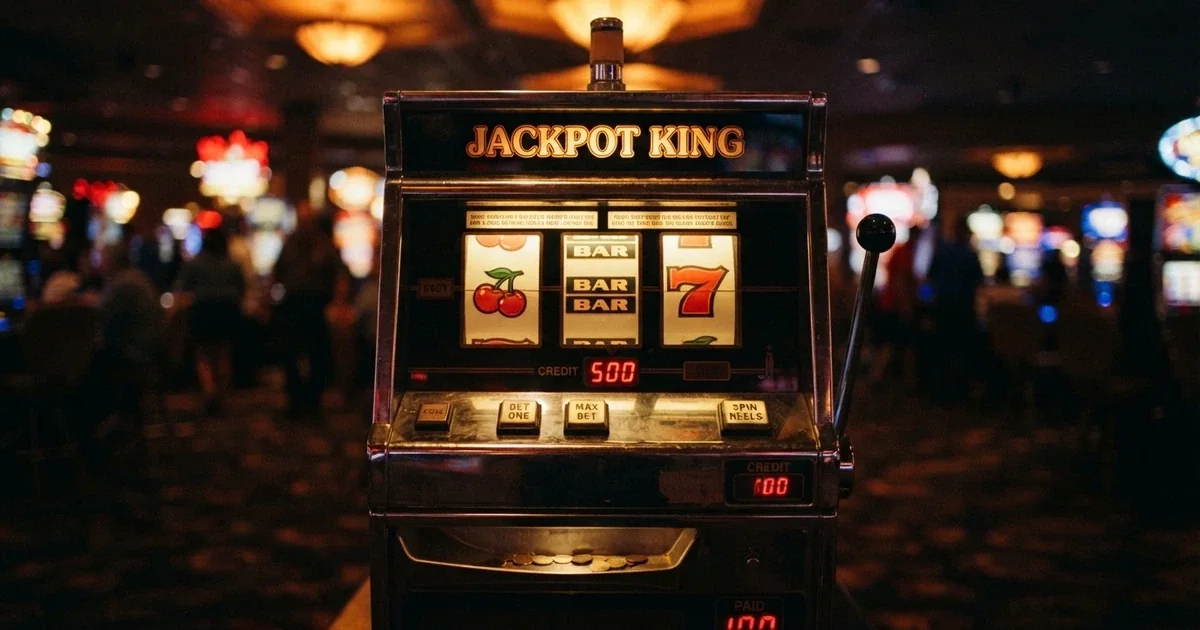
Every operator on this page is offshore. There is no Australian online casino licence, none has ever existed, and writing this page as though there were would be a lie on the first line. What is real is the format — three reels, a thin paytable, the fastest spin cycle in the casino — and the several thousand Australians who sit down to one every evening. The job here is to describe what those games actually are, which titles give the player the most for the spin, and what is missing from a “best of” page that does not mention the law. That is the unusual shape of this subject: the product is real, the market is prohibited, and a guide that handles only the first half leaves a reader walking into a transaction their own government has been blocking for six years.
The 3-reel pokie is the parent form of everything the modern video slot became. The reels, the cherries, the BARs, the red seven — the same vocabulary is in the windows of a RSL club in Ballarat and on a browser tab opened in Perth. The maths underneath it, though, is what sets the format apart. Land-based classic cabinets return about 92–96% on average, sitting around 94.2% across the category. Online recreations of the same format run tighter, typically 94–97%. That gap — sometimes ten points of return between the same game on a pub floor and the same game on a phone — is one of the quieter facts in the market, and a player who only ever plays the cabinet version is subsidising the operator more than they need to. The format’s other signature is volatility. Classic 3-reelers sit in the VI 40–80 range that Australian industry reviewers call the comfort zone — small wins arriving often, session bankrolls moving in inches rather than lurches. Hit rate on a single-line classic runs around 12% of spins, and the typical ceiling on a single line is 1,000× the stake. None of this is the marketing language the operator page uses. It is the language of the maths model, and it is the language a player needs.
Table of Contents
- What a 3-Reel Pokie Actually Is — Reels, Paylines and the Classic Grid
- From the Pub to the Browser — Classic Cabinets vs Online 3-Reelers
- Real-Money Play vs Free Mode — What Changes When You Bet
- 3 Reels vs 5 — What the Extra Reels Add (and What They Take Away)
- The Best 3-Reel Pokies Australians Can Reach in 2026 — and the Catch
- The Best 3-Reel Pokies by RTP — What the Numbers Actually Look Like
- Free 3-Reel Pokies — Every Way to Spin Without Spending a Cent
- Bonus Rounds on Three Reels — More Than You’d Expect From a Classic Grid
- No Australian Casino Licence Exists — What That Means for Every 3-Reel Spin
- Staying Safe — The Help That Actually Works for Australian Players
- How We Selected the Pokies and Operators on This Page
- What the RTP and Volatility Numbers Mean for Your Next Spin
- Frequently Asked Questions
What a 3-Reel Pokie Actually Is — Reels, Paylines and the Classic Grid
A 3-reel pokie is a 3×3 grid with one to nine paylines, a tight paytable, and a spin that resolves in three to four seconds. The symbols are the fruit-machine set: cherries, BARs (single, double, triple), red sevens, occasionally a logo top symbol. The reels are not adjacent reels in the modern sense — the win line usually runs across the middle row, with optional diagonals and a horizontal or two. A 5-payline classic is the most common configuration: three horizontals plus two diagonals. The grid is narrow enough that every symbol on every reel sits in the player’s eye line at the same time. There is no scrolling, no cascading, no second-screen reveal. The reel stops, the win line lights up, the credit meter ticks over or it does not, and the next spin begins.
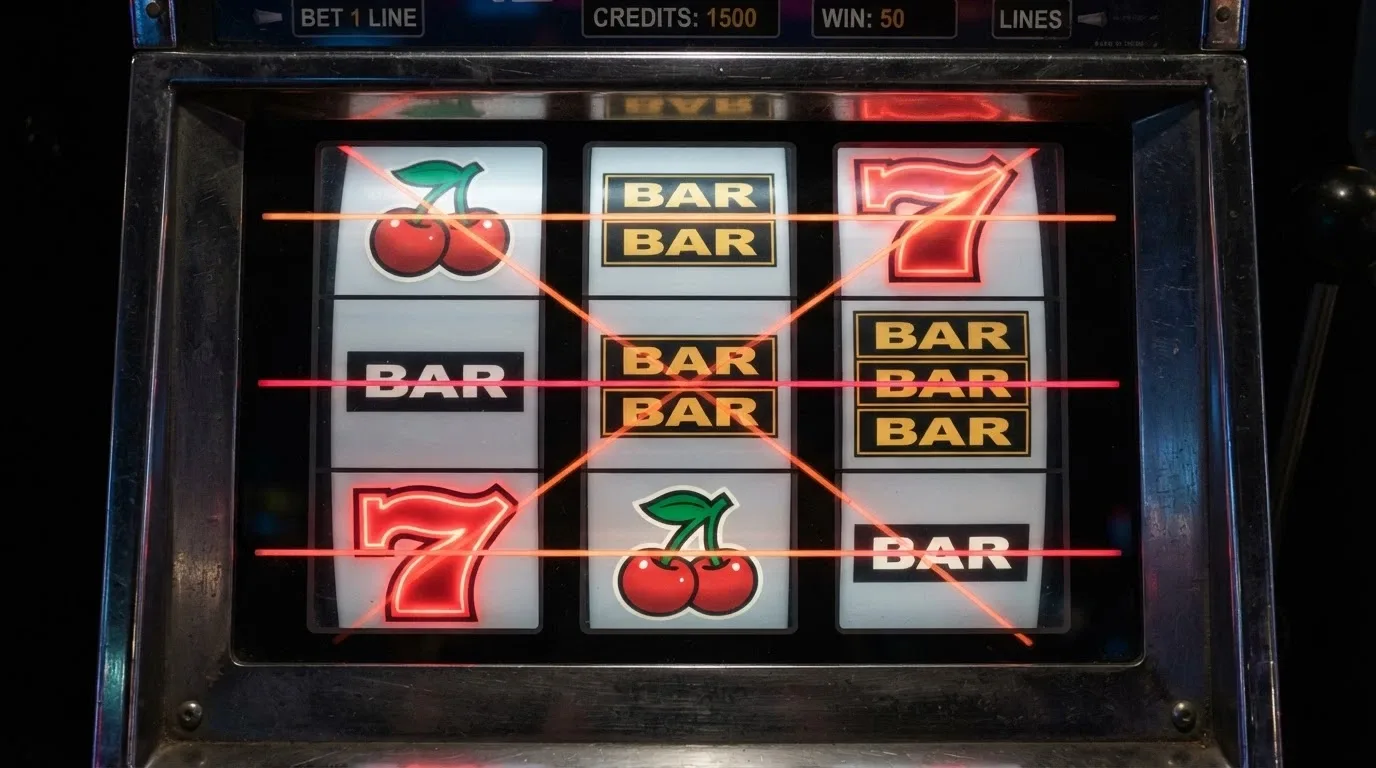
The difference between a single-line 3-reeler and a 9-line 3-reeler is essentially the bet structure, not the maths. Triple Diamond, for instance, plays on nine paylines with the Triple Diamond wild substituting and multiplying wins by 3× on a single wild and 9× on two wilds — the multi-line frame is the way the developer paid for the multiplier. Red, White and Blue is the other end of that range: one fixed payline, no wilds, no scatters, no bonus round, RTPs sitting at 93.98%. Both are 3-reel pokies. They are not the same game.
The way a spin resolves is the other thing the format gives the player. A 3-reel spin takes roughly 3–4 seconds from button press to result. A 5-reel video slot takes 8–12 seconds, because the bonus-sequence animation, the expanding wild reveal, the scatter roll-up all run on top of the base game. That pace gap matters. Over an hour, a player on a 3-reel classic completes somewhere around a thousand spins; a player on a busy 5-reel video slot completes a fraction of that. The format is not just simpler — it is faster, and faster means more decisions per session, which is its own kind of cost.
From the Pub to the Browser — Classic Cabinets vs Online 3-Reelers
The same fruit machine has lived in two homes for decades: the pub cabinet, where it stands against a wall next to the Keno terminal, and the browser tab, where the same symbols sit on a 3×3 HTML5 grid. They are the same game by name. They are not the same game by return. Land-based 3-reel cabinets — the Aristocrat and IGT stepper units in the club, the Ainsworth and Konami units that line the lounge — typically return 85–93% to the player, with a category average near 94.2%. The same titles released online, often by the same studios, return 94–97%. Industry averages for classic-style pokies across both formats cluster between 94% and 96%. The reason is the cost base. The cabinet has a physical machine, a lease, a technician, a venue cut, a regulatory levy. The browser tab has a server, a developer, a payment processor, and an offshore licence. The difference between the two cost bases is the difference between the two returns, and the player’s slice of it.
CasinoScout’s 2026 audit of fourteen classic 3-reel titles put the average RTP at 96.1%, with the highest at 97.3% (a single-payline cherry slot) and the lowest at 94.8%. That is the band a player should be looking for online. Anything below it is paying for somebody else’s marketing budget. The audit also confirmed what the broader market shows: classic 3-reelers online are not the high-return outliers the marketing suggests. The 99% RTP titles (Mega Joker, Jackpot 6000 in Supermeter) are real, but they require a max-bet commitment most players do not make. The bulk of the format sits in the 95–97% band, which is competitive against video slots but not exceptional.
The providers behind the online recreations are the same studios the player meets on 5-reel video slots: NetEnt (Mega Joker, Jackpot 6000), Play’n GO (Fire Joker), IGT (Triple Diamond, Red White and Blue), Pragmatic Play (777 Rush), Novomatic (Maxi Spin), and a long tail of smaller studios — TaDa Gaming, Platipus, Nucleus, Playson, Booongo — that release classic-format titles as part of broader catalogues. The names carry weight because the maths model is published, the studio is identifiable, and the title is searchable. None of that is true of a generic “classic slots” tab on an offshore casino.
Real-Money Play vs Free Mode — What Changes When You Bet
Demo mode and real-money mode on the same 3-reel pokie are mathematically the same game. The RNG is the same. The symbol set is the same. The RTP — the long-run return to the player — is the same. Switching from a play-money balance to a real-money balance does not change the game; it changes the player’s relationship to the game. That distinction is the one thing the marketing copy skips, and it is the one thing that decides whether a session ends when it should.
The free-spin environment is forgiving in a way real money is not. A losing streak in demo mode is an interesting pattern to watch; a losing streak in real-money mode is a budget bleeding out. The hit rate on a single-line 3-reel game — roughly 12% of spins, or one in eight — sounds generous until the player runs twenty spins without a win and notices the credit meter is down a third. The hit rate is real. The variance around it is also real. Demo play lets the player feel that variance without paying for it, which is its main honest use. A player who has not run 200 free spins on a title before wagering has not actually met the game.
The other thing free mode cannot show is the social and psychological cost of a real-money decision. A bonus offer, a stake size, a near-miss, a win that does not quite cover the previous loss — these carry weight in real money they do not carry in demo. A scouting session of free spins reveals the game’s structure. It does not reveal the player’s structure. The two are different problems, and the player who treats them as the same is the one who finishes a session with a balance that does not match the time they put in.
3 Reels vs 5 — What the Extra Reels Add (and What They Take Away)
Two more reels buy the player hundreds of paylines, a scatter symbol, a wild with an expanding animation, a free-spins round, a pick-me bonus, sometimes a wheel. They also buy the player a slower spin cycle, a more complex maths model, and a different payout curve. The trade-off is not a moral judgement — both formats are engineered to hold roughly the same house edge in the long run — but the engineering is different enough that the player experience is different enough that the choice between them is not arbitrary.
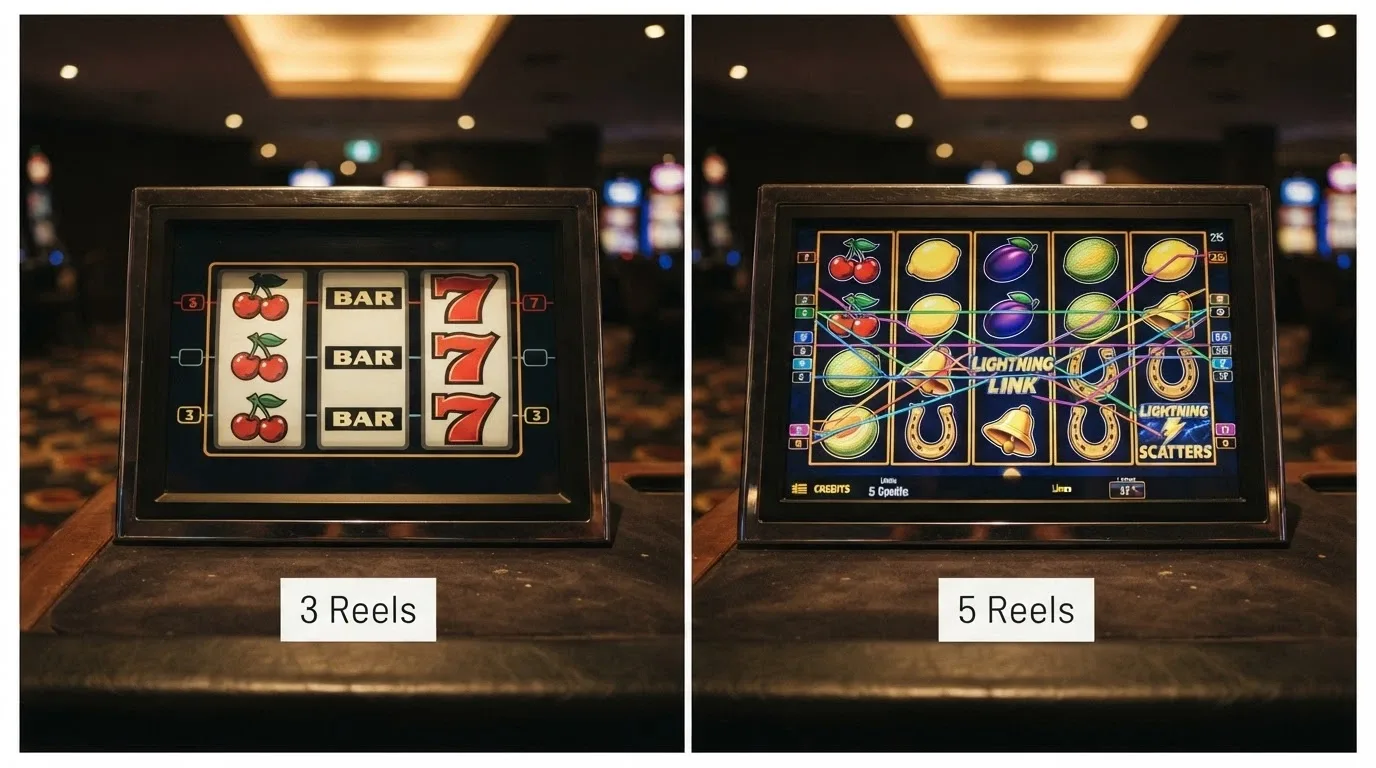
On payline count, a 3-reel game offers between one and nine lines. A 5-reel video slot offers between ten and several hundred. On bonus density, the 3-reel format historically carries nothing — the bet, the spin, the result. The 5-reel video slot typically carries at least one bonus mechanic, often layered. On spin speed, the 3-reel game resolves in 3–4 seconds; the 5-reel video slot takes 8–12. On volatility, 3-reel classics sit in the VI 40–80 comfort zone — steady small wins, low session swings. 5-reel video slots span the full volatility range from low to extreme, with most modern releases running medium-high or high. On max win, single-line 3-reelers cap at 500–5,000× stake, while 5-reel video slots reach five-figure and six-figure multiples on bonus rounds.
The honest reading of those two columns: a 3-reel pokie is for a player who wants the game to be the game. A 5-reel video slot is for a player who wants the game to be the platform for a feature. Neither is better. They serve different sessions. A player who has an hour, a small bankroll, and a preference for seeing a return on a spin-by-spin basis will likely prefer the 3-reel format. A player who has a longer session, a higher bankroll, and a preference for a bonus-driven payout structure will likely prefer the 5-reel format. The 3-reel pokie’s design philosophy is closer to a coin-pusher than a roller-coaster, and the player who knows that is the one who picks the right format for the right evening.
The Best 3-Reel Pokies Australians Can Reach in 2026 — and the Catch
The page would normally drop into a clean “ten best titles” table at this point. Two things make that impossible. First, the operator set Australians actually reach is all offshore, because no Australian online casino licence exists. Second, several of the operator-specific bonus terms and provider catalogues were not verifiable this run. What the page can do, honestly, is rank the titles by their published RTP and volatility — the only pieces of data the providers themselves publish — and then name the operators the player is most likely to encounter, with the licence status clearly stated. That is what the table and the operator write-ups below attempt.
| Operator | Licence Status |
|---|---|
| Rocket Play | Offshore — no AU casino licence exists |
| Skycrown | Offshore — no AU casino licence exists |
| Royal Reels | Offshore — no AU casino licence exists |
| Stake | Offshore — no AU casino licence exists |
| WinSpirit | Offshore — no AU casino licence exists |
| Rainbet | Offshore — no AU casino licence exists |
| Scream Casino | Offshore — no AU casino licence exists |
| FairGO | Offshore — no AU casino licence exists |
| Bizzo Casino | Offshore — no AU casino licence exists |
| Rocket Casino | Offshore — no AU casino licence exists |
The column the page would normally carry — bonus terms, payment speed, wagering requirements, free-spin allocations — sits empty here. Not because the operators do not run offers, but because this run could not verify the specific terms. Publishing a working bonus or a voucher code is a different act from describing the offer, and the page describes rather than advertises. The cells that would carry those details stay blank for the right reason: a player who acts on unverified terms is acting on guesses.
The next ten sections name each operator individually and describe what the player is actually dealing with — what is known from the operator’s own footprint, what is missing, and which kind of player the brand still suits. None of them is recommended as a place to play. They are described as brands a player comparing offshore options will encounter.
Rocket Play
Rocket Play is an offshore casino brand accessible from Australia, carrying no Australian casino licence. The brand offers a broad slots lobby where 3-reel players can browse classic titles. Readers should verify bonus terms independently before deciding to commit funds.
Skycrown
Skycrown operates offshore and accepts Australian traffic. Its game lobby follows the standard offshore pattern, with classic 3-reel titles integrated into the main slots tab. The operator’s appeal relies on the breadth of its catalogue, so check the platform’s terms carefully if you are looking for specific providers.
Royal Reels
Royal Reels is an offshore casino brand with no Australian casino licence, accessible from Australia. The platform’s name suggests a classic-leaning brand identity, and the lobby carries a 3-reel and classic section in addition to the broader slots offering. The brand’s positioning — a name that signals the format the player is searching for — is the main reason a 3-reel player would shortlist it. The mismatch between name and verified offer is the kind of thing a player should be alert to on every offshore brand.
Stake
Stake is a high-profile offshore crypto casino. The platform is known for its sportsbook and original in-house games; its third-party 3-reel catalogue is more limited than some competitors. The recent Australian credit-card and crypto ban (effective 11 June 2024) significantly shapes how an Australian player interacts here. Specific 3-reel provider lists and wagering terms for bonuses were not verifiable. This brand is less a dedicated 3-reel destination and more a crypto-first platform that sits outside the licensed-Australian ideal.
WinSpirit
WinSpirit also operates offshore. Its lobby carries the standard offshore structure, with 3-reel and classic titles available within the broader slots section. For players already using offshore operators, it serves as a functional, if standard, catalogue option.
Rainbet
Rainbet is an offshore casino accessible from Australia. Its modern lobby includes 3-reel and classic slots as part of its general catalogue. Players who have chosen the offshore path and know the specific titles they want will find it a workable option.
Scream Casino
Scream Casino operates offshore with a horror-themed identity, and its 3-reel offering sits within a broader slots catalogue. The brand’s classic offering is a small slice of its total lobby, making it less of a 3-reel destination than others on this list.
FairGO
FairGO markets itself to Australian players with local currency and payment focus, though it still operates offshore without an Australian licence. It carries a classic section alongside the broader slots offering. While the design is overtly Australian-facing, it does not substitute for the consumer protections a licensed operator would provide; treat the branding as a design choice, not a regulatory one.
Bizzo Casino
Bizzo Casino operates offshore. Its lobby follows the standard offshore structure, with 3-reel and classic titles available within the broader slots section. For players comparing several offshore options, it provides general access to the format.
Rocket Casino
Rocket Casino is an offshore brand accessible from Australia. Its 3-reel offering sits within a broader slots catalogue. The brand is one of many options rather than a primary destination, offering a similar experience to several others on this list. Comparing it for specific 3-reel quality reveals it is effectively interchangeable with comparable offshore competitors.
The Best 3-Reel Pokies by RTP — What the Numbers Actually Look Like
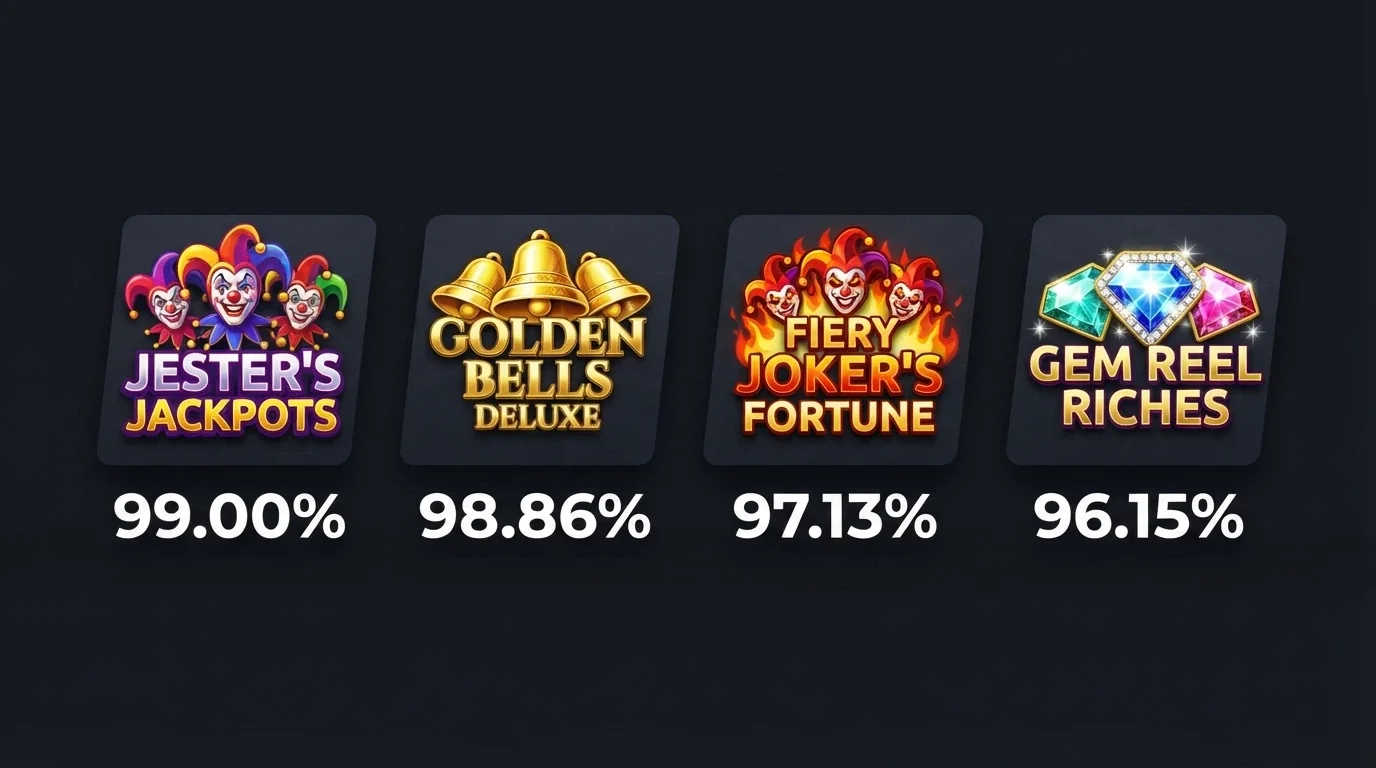
The table below carries the ten titles the research turned up, ranked by published RTP. Several fields the reader would expect to see — volatility class, max win — sit as em dashes where the provider or reviewer sources do not publish a figure. The blank cells are the point: a column filled with guesses is worth less than a column that admits the data is missing.
| Title | RTP | Provider | Volatility | Max Win |
|---|---|---|---|---|
| Mega Joker | 99.00% | NetEnt | High | 2,000× |
| Jackpot 6000 | 98.86% | NetEnt | High | 6,000× |
| Fortune Gems 3 | 97.13% | TaDa Gaming | Medium | 10,125× |
| No Limit Bandit | ~96.92% | Nucleus Gaming | Medium | 500×–1,450× |
| 777 Rush | 96.50% | Pragmatic Play | Medium | — |
| Dash O’Cash | 96.20% | Platipus | — | — |
| Fire Joker | 96.15% | Play’n GO | Medium | 800× |
| 3 Coins Hold and Win | 95.84% | Booongo | — | — |
| Triple Diamond | 95.06% | IGT | Medium | 1,199× |
| Red, White and Blue | 93.98% | IGT | Medium-High | 2,500 credits |
The two NetEnt titles sit at the top of the table for a reason worth pausing on. Mega Joker’s 99.00% RTP and Jackpot 6000’s 98.86% RTP both apply in Supermeter mode, which only activates at the maximum bet level. A player wagering below the max is not playing the 99% game — they are playing a much lower-RTP base game. The same is true of Jackpot 6000’s headline 6,000× max win, which only the Supermeter mode can deliver. The marketing numbers are real. The conditions under which they apply are part of the offer, and the conditions are what most players miss.
The category-band reading of the table is more useful than the ranking itself. The bulk of the format sits in the 95–97% RTP band, which is competitive against video slots and which CasinoScout’s 2026 audit of fourteen classic titles confirmed with a 96.1% average. A player choosing between these titles on RTP alone is choosing on a thin margin. The volatility column matters more for session experience than the RTP column matters for long-run return, because two titles with the same RTP can produce wildly different session shapes depending on whether they sit in the VI 40–80 comfort zone or higher.
Free 3-Reel Pokies — Every Way to Spin Without Spending a Cent
Free 3-reel pokies live in three places: provider demo lobbies, affiliate review sites that embed the games, and the play-money modes of offshore casino lobbies. The first is the most legitimate. The second is convenient but commercial. The third is a marketing funnel. None of them substitutes for real-money play in the way a player might hope, and each of them is useful in a different way.
The provider demo is the cleanest version of a 3-reel pokie a player can run without a deposit. NetEnt, Play’n GO, Pragmatic Play, IGT, and most of the major studios host HTML5 demo versions of their titles on their own sites. The game loads in the browser, the play-money balance resets when the tab closes, and the experience is the closest a player will get to the real-money version without paying for it. The same RNG, the same maths model, the same symbol set. The only thing missing is the weight of a real-money decision.
The affiliate-embedded version is the same demo wrapped in a review page. The game loads inside a frame, the spin button works, the play-money balance ticks over, and the surrounding page carries the affiliate’s commentary. The game is the same. The framing is commercial. A player using these embeds to scout a title is doing the right thing; a player who treats the affiliate’s review as a substitute for the provider’s own RTP disclosure is reading the wrong document.
The offshore casino play-money mode is the same demo again, this time inside the operator’s own lobby. It exists to let the player try the games before depositing, which is its honest use. It also exists to convert the player from a free-spinning visitor to a depositing customer, which is its commercial use. A player who can hold those two purposes apart will find the play-money mode useful. A player who cannot is being marketed at while they think they are scouting.
What free play cannot show, anywhere it lives, is the psychological weight of a real-money decision. A session of 200 free spins on Mega Joker tells the player the game’s hit rate, volatility profile, and bonus-feature frequency. It does not tell the player how they personally will react to a 50-spin losing streak with a real balance behind it. The scouting is real. The scouting is not the whole answer.
No-Download Free Play — Open a Browser Tab and Spin
The fastest way to a free 3-reel pokie is a browser tab and an HTML5 game. No download, no installation, no account registration, no deposit. The provider demo loads in seconds, the play-money balance sits at a fixed amount, and the player can run as many spins as the session allows. NetEnt, Play’n GO, Pragmatic Play, IGT, and most of the major studios host their titles in this format. The titles researched for this page — Mega Joker, Jackpot 6000, Fire Joker, 777 Rush, Triple Diamond, and the rest — are all available in no-download demo mode through their providers.

The thing the no-download format does well is the thing the player needs it to do. The game is the game. The maths is the maths. The browser is the delivery mechanism. There is no software layer between the player and the RNG. That is the right way to scout a title before deciding whether to play it for real money, and the format deserves more credit than the marketing pages usually give it.
The thing the no-download format does not do is let the player test the real-money experience. The browser demo is the same game; it is not the same transaction. A player who treats the demo as a complete preview is making a substitution the format was never designed to support. Used as a scouting tool, the no-download demo is excellent. Used as a substitute for real-money play, it is something else entirely.
Demo Mode as a Scouting Tool — Try Before You Put Money Down
A scouting session of free spins is the most useful thing a player can do before depositing. The session reveals three things the marketing page never does: the game’s pace, its symbol frequency, and its bonus-trigger rate. All three are observable in demo mode because all three are part of the maths model, and the maths model is the same in demo and in real-money play.
The pace is the easiest to feel. A 3-reel spin resolves in 3–4 seconds. A player running 200 free spins will know within the first 50 whether that pace is right for their session length. The symbol frequency is the next thing to observe. A 12% hit rate means roughly one in eight spins lands a win; a player who has run 100 free spins without a win has not yet met the game’s central tendency. The bonus-trigger rate is the third observable. A title with a hold-and-win bonus round will trigger that round with some frequency; a player who has run 200 free spins without seeing it has learned something about the game’s bonus density. None of this requires a real-money balance. All of it is useful before a real-money balance is on the line.
The thing the scouting session cannot do is reveal the player’s own reactions. A 50-spin cold streak in demo mode is a curious pattern. A 50-spin cold streak in real-money mode is a budget event. The same pattern, different weight. A player who has done their scouting has done the most useful preparation available. A player who has done their scouting and has also thought about their own stop-loss before they start has done the most useful preparation there is.
Where Free 3-Reel Pokies Actually Live Online
The free 3-reel pokie lives on the provider’s demo page, on the affiliate review site that embeds the game, and on the offshore casino’s play-money lobby. No Australian-licensed site offers any of these games in any form, because no Australian-licensed site offers online pokies at all. That is the structural fact the free-play section inherits from the legal one — the licensed Australian market does not host these games, free or otherwise.
The provider demo is the cleanest source. The player visits the provider’s site, finds the title, and runs it in the browser. The downside is the player needs to know which provider made the title they want to scout, and the provider’s site is organised by studio rather than by game format. The affiliate-embedded version is more convenient — the player searches for a title, lands on a review page, and runs the embedded game without leaving the page. The downside is the surrounding page is commercial, and the affiliate’s commentary is shaped by the affiliate’s revenue model.
The offshore casino’s play-money lobby is the most accessible. The player visits the operator, opens a game, and plays without depositing. The downside is the operator’s commercial purpose — the play-money mode is a marketing funnel as much as a scouting tool. None of the three sources is wrong, and a player who uses all three at different points in their decision will get a fuller picture than a player who uses only one. The Australian player should know that the licensed-Australian alternative does not exist, and that the free-play ecosystem they are using is the offshore ecosystem by another name.
Bonus Rounds on Three Reels — More Than You’d Expect From a Classic Grid
The 3-reel format historically meant a bet, a spin, and a result. That is no longer the case. Several titles in the researched set carry bonus mechanics that fit on the 3×3 grid without breaking the format’s identity. The mechanics are different from the 5-reel video slot’s — there is no free-spins round in the conventional sense, no pick-me bonus, no second-screen adventure — but the additions are real, and they change the maths model in ways the marketing page does not always explain.
Fire Joker (Play’n GO) carries two stacked features on a 3×3 grid with 5 paylines. The Respin of Fire triggers when two reels land on the same symbol without a matching third; the third reel respins while the first two are held, giving the player a second chance at a full line. The Wheel of Multipliers then spins up to a 10× multiplier on any winning spin. The combination produces a 96.15% RTP and an 800× max win, in a game that still reads as a 3-reel classic on first glance.
Mega Joker and Jackpot 6000 (both NetEnt) carry the Supermeter mode as their signature feature. Supermeter is a second-tier bet mode: after any base-game win, the player can choose to collect or gamble the win into the Supermeter, where higher bets unlock higher RTP. In Supermeter, Mega Joker reaches 99.00% RTP at max bet; Jackpot 6000 reaches 98.86% at max bet. Jackpot 6000 also delivers its 6,000× max win through the Supermeter path. Both games are 3-reel classics in their base presentation; both are high-RTP, high-volatility experiences in their Supermeter presentation. The two readings of the same title are the most important thing a player needs to know about these games.
Dash O’Cash (Platipus) carries a hold-and-win bonus round on a 3×3 grid. Bonus symbols landing on reels 1 and 3 plus a Collect symbol on reel 2 trigger the round, which holds the bonus symbols and gives the player a set of respins to add more. Fortune Gems 3 (TaDa Gaming) carries a dedicated fourth multiplier reel on a 3×3 grid with 5 paylines, with the multiplier reaching up to 15× on a winning line. Black Diamond (Everi) carries 2 progressive jackpots plus attached multiplier symbols that multiply together up to 30× total. Each of these is a 3-reel pokie that has stretched the format’s feature ceiling without abandoning the format’s identity.
The Bonus Features That Fit on a 3×3 Grid
The 3×3 grid is small, and the bonus features that fit on it are the ones that do not require real estate the grid does not have. The format excludes the conventional 5-reel video slot’s free-spins round, because there is no room for a scatter to land and no expanded reel to play the round on. It excludes the pick-me bonus, because there is no second screen. It excludes the cascading reels, the walking wilds, the expanding wilds in their conventional form. What it includes is a tighter set of mechanics: respins of held reels, multiplier wheels, hold-and-win bonus rounds, supermeter bet modes, progressive jackpots attached to symbol combinations, and dedicated multiplier reels.
The respin mechanic is the most common. Fire Joker’s Respin of Fire is the cleanest version: two matching reels held, the third respun, a second chance at a winning line. The mechanic uses the grid’s narrowness as a feature — there are only three reels, and holding two of them is a meaningful constraint on the third.
The multiplier reel is the format’s signature addition. Fortune Gems 3 puts a fourth reel alongside the three play reels, dedicated to multipliers up to 15×. The mechanic turns every win into a multiplied win without requiring a bonus round to trigger. The simplicity is the point.
The hold-and-win bonus round fits the format because it does not require additional reels. Dash O’Cash’s bonus symbols lock in place on the trigger spin, and the respins that follow accumulate more bonus symbols until the round ends. The mechanic is the same as a 5-reel hold-and-win, but compressed onto a 3×3 grid.
The supermeter mode is the format’s deepest addition. Mega Joker and Jackpot 6000 use it as a second-tier bet mode that unlocks the game’s headline RTP. The mode is the reason these two titles sit at the top of the RTP table, and the mode is the reason a player who does not understand it is playing a much lower-RTP base game than they think.
Free Spins, Multipliers and Hold-and-Win — 3-Reel Titles That Pack Extras
- Fire Joker (Play’n GO) — 96.15% RTP, medium volatility, 5 paylines, Respin of Fire plus Wheel of Multipliers up to 10×, 800× max win. The closest the format gets to a feature-rich video slot in a 3-reel frame.
- Mega Joker (NetEnt) — 99.00% RTP in Supermeter mode at max bet, high volatility, 5 paylines, 2,000× max win. The headline RTP applies only in Supermeter; the base game is much lower.
- Jackpot 6000 (NetEnt) — 98.86% RTP at max bet, high volatility, 5 paylines, 6,000× max win through Supermeter mode. Same Supermeter caveat as Mega Joker.
- Dash O’Cash (Platipus) — 96.20% RTP, 3×3 grid, 5 paylines, hold-and-win bonus round triggered by Bonus symbols on reels 1 and 3 plus a Collect symbol on reel 2. A 3-reel hold-and-win is a tighter construction than the 5-reel version.
- Fortune Gems 3 (TaDa Gaming) — 97.13% RTP, medium volatility, 3×3 grid, 5 paylines plus a dedicated fourth multiplier reel up to 15×, 10,125× max win. The dedicated multiplier reel is the format’s most distinctive addition.
- Black Diamond (Everi) — Low-to-medium volatility, 9 paylines, 2 progressive jackpots, attached multiplier symbols that multiply together up to 30×. The progressive jackpots lift the game’s ceiling without changing the 3-reel frame.
No Australian Casino Licence Exists — What That Means for Every 3-Reel Spin
The legal fact an Australian player meets first is that no online casino licence exists in Australia — not federally, not in any state or territory. The Interactive Gambling Act 2001 (the IGA) prohibits the provision of online casino games, online pokies, and in-play sports betting to a person in Australia. There is no licence for any of these products. A page promising “the best licensed online casinos in Australia” is describing something that does not exist, and writing one produces a factual lie on every screen.
The IGA was strengthened in 2017, when amendments closed the offshore loopholes the major operators had been using and gave the Australian Communications and Media Authority (the ACMA) its enforcement and site-blocking powers. Since the first blocking request in November 2019, the ACMA has had 1,564 illegal gambling and affiliate websites blocked at the ISP level (as of March 2026). More than 225 illegal services have withdrawn from the Australian market since the 2017 amendments. The pace of enforcement has not slowed. The list of brands available to an Australian player has thinned, not grown, and the brands that remain available are doing so by operating from outside Australian jurisdiction.
The penalties for providing a prohibited interactive gambling service are steep. The Act carries civil penalties of up to A$2,475,000 per day for an individual and A$12,375,000 per day for a corporation. The penalties target the provider, not the player — the individual player is not prosecuted under the IGA. That distinction matters. A player is not committing an offence by accessing an offshore casino. The provider is committing an offence by offering the service to a person in Australia. The player is, however, outside the protection of every Australian consumer protection that would apply to a licensed wagering service.
The payment-method restrictions already in force add a second layer. Since 11 June 2024, credit cards, credit-related products, and digital currency (crypto) are banned as payment for online wagering under the Interactive Gambling Amendment (Credit and Other Measures) Act 2023. The ban was written for the licensed wagering market, but its effect is broader. A deposit by credit card or crypto to an online casino is itself a tell that the operator is outside the Australian rules — because no Australian-licensed operator would accept either, and the offshore operators routinely request both.
What the Interactive Gambling Act Prohibits — and What It Doesn’t
The IGA’s prohibition is specific. Online casino games, online pokies (slots), and in-play betting on a sporting event once it has started are all prohibited. There is no Australian licence for any of these. The Act does not prohibit wagering on races and sport placed before the event begins, lotteries, or keno — these are permitted and licensable through state and territory regulators, with the bulk of online wagering licences issued by the Northern Territory. The IGA also does not prohibit a player from accessing an offshore casino; the Act targets the provider, not the player. The minimum age for all commercial gambling in Australia is 18.
The line between what is prohibited and what is licensable is the line an Australian player needs to know. Sportsbet, Tabcorp, Bet365 Australia, Ladbrokes Australia, TABtouch, PointsBet, Neds, Betr, Picklebet, and Betfair Australia are all licensed wagering operators in Australia, holding state or territory licences for racing and sports wagering. None of them offers online pokies. The licensed Australian market has sports and racing, lotteries and keno, and nothing else. The 3-reel pokie lives in the unlicensed part of the market, which is offshore by definition.
Offshore Operators — Every 3-Reel Site an Australian Reaches
Every online casino an Australian player reaches is offshore. That is the structural fact, not a feature of any particular brand. The ten operators named earlier in this page — Rocket Play, Skycrown, Royal Reels, Stake, WinSpirit, Rainbet, Scream Casino, FairGO, Bizzo Casino, Rocket Casino — are all offshore. They are not exceptions. They are the rule. The reason is simple: no Australian online casino licence exists, so any operator offering online casino games to Australians is operating outside Australian jurisdiction.

The ACMA’s site-blocking programme is the most visible expression of the prohibition. Since November 2019, 1,564 illegal gambling and affiliate websites have been blocked at the Australian ISP level. The block list is updated regularly, and a site that is reachable today can be blocked tomorrow. A player with a balance on a blocked site has limited recourse. The withdrawal terms the operator published are the only terms that apply, and the operator’s regulator — wherever it sits — is not the ACMA.
The risk that a site is blocked with a balance on it is one of the operational realities of the offshore market. A player who has won a meaningful amount on a 3-reel pokie at an offshore casino and is awaiting a withdrawal does not have the ACMA to call if the operator delays. The licensed-Australian alternative has the ACMA. The offshore market does not.
What You Lose at an Offshore Casino — No ACMA, No BetStop, No Recourse
The consumer protections an Australian-licensed wagering service provides are extensive. A licensed operator offers customer-set deposit limits and activity statements under state and territory conditions. BetStop — the National Self-Exclusion Register, launched 21 August 2023 — binds every Australian-licensed wagering service: one registration excludes a player from all of them. The ACMA operates a complaints pathway for licensed wagering. The Australian financial-services framework applies. If a licensed operator refuses a withdrawal or voids a win, the player has a regulator to escalate to.
None of these protections apply at an offshore casino. BetStop does not reach offshore casinos — an offshore operator is not connected to the register, and a self-excluded player who signs up to one will not be blocked. The ACMA does not investigate complaints about offshore operators — the regulator’s jurisdiction is the licensed market. The Australian financial-services framework does not apply. If an offshore operator refuses a withdrawal or voids a win, the player’s only recourse is the operator’s own customer service, with whatever regulator sits in the operator’s home jurisdiction. The credit-card and crypto ban that took effect in June 2024 is the clearest marker: a deposit route that is banned in the licensed market is the deposit route the offshore market requests.
The player is not prosecuted under the IGA. That is the one thing the offshore market does not take from the player. Everything else is on the table.
The 2026 Reforms — What Changes From 1 January 2027
The Interactive Gambling Amendment (Gambling Reform) Bill 2026 passed Parliament on 19 August 2026. The Bill’s measures commence on 1 January 2027. The reforms are aimed at the licensed Australian wagering market, but their indirect effect on the offshore market is worth understanding.
The headline change is bank transaction-blocking authority. From 1 January 2027, banks and payment providers will have express authority to block transactions to illegal gambling operators. The mechanism is the bank’s: when a customer attempts to send funds to an operator on the ACMA’s illegal list, the bank can refuse the transaction. The effect on an Australian player using an offshore casino is direct — the deposit route the player has been using will be subject to a new layer of refusal.
The advertising reforms are extensive. From 1 January 2027, wagering advertising is capped at three ads per hour between 6:00 am and 8:30 pm, with a live-sport blackout from 15 minutes before an event until 5 minutes after it ends. Athletes, celebrities, and influencers are barred from promoting wagering products. Direct marketing of inducements is prohibited for 14 days after a customer signs up, for three months after a person deregisters from BetStop, and indefinitely for customers identified as at risk of gambling-related harm. None of these measures touch an offshore operator directly, because offshore operators are not bound by Australian advertising law. The measures tighten the licensed market’s advertising environment, which pushes more attention to the offshore market by contrast.
The 1 January 2027 commencement is the date to watch. The bank-blocking authority is the change most likely to affect an Australian player’s day-to-day experience of using an offshore casino. The other measures are the licensed market’s response to a problem the offshore market is making worse.
Staying Safe — The Help That Actually Works for Australian Players
The responsible-gambling infrastructure available to Australian players is real, free, and confidential. It is also partial. Some tools reach every form of gambling an Australian might do. Some tools reach only the licensed market. The player who knows the difference is the one who picks the right tool for the situation.
The National Gambling Helpline is 1800 858 858 — free, confidential, staffed 24 hours a day, every day. The companion service is Gambling Help Online, at gamblinghelponline.org.au, which provides chat and email counselling around the clock. The Australian Institute of Health and Welfare (AIHW) estimated in 2022 that about 2.1% of Australian adults — roughly 430,000 people — experience problem gambling, with another 1.8% at high risk. The numbers have not shifted dramatically in the years since. The help services exist because the harm exists, and the help services are free because the harm should not have a price barrier.
The player who needs help does not need to know where the gambling happened. The helpline, the chat service, the counsellors — they serve anyone affected by gambling harm, regardless of whether the gambling was at a licensed venue, an offshore site, a pub, or a club. The stigma attached to gambling harm is real, and the help services are designed to be reached without it. The phone is free. The chat is confidential. The counselling is professional. None of it requires the player to have done anything wrong.
Helplines, Chat and Counselling — Free Support, 24 Hours a Day
The free support available to any Australian affected by gambling harm is structured around three access points. The phone line — 1800 858 858 — is the most direct. The chat and email counselling through Gambling Help Online (gamblinghelponline.org.au) is the most flexible. The face-to-face counselling available through state and territory gambling-counselling services is the most personal. All three are free. All three are confidential. All three are staffed by professionals trained in gambling-related harm.

The AIHW’s prevalence figures — about 2.1% of Australian adults experience problem gambling, with another 1.8% at high risk — put the affected population at roughly 430,000 people in the problem-gambling category and several hundred thousand more at high risk. The numbers are large enough that the help services are not serving a marginal population. They are serving a substantial minority of Australian adults, most of whom will never describe themselves as problem gamblers and most of whom will reach a help line only after a session has gone wrong.
The message for any player reading this page is that help is available regardless of where the gambling happened. The helpline does not ask whether the player used a licensed or offshore operator. The chat service does not require a diagnosis. The counsellors are there for the situation the player is in, not the situation the player should have been in. A session that has gone wrong is the right time to call. A pattern that is starting to form is also the right time to call. The call is free, the call is confidential, and the call is the player’s to make.
BetStop and Self-Exclusion — The Tool That Works (and Its Offshore Blind Spot)
BetStop — the National Self-Exclusion Register — is the most powerful self-exclusion tool available to Australian players, and the one whose limits matter most for the 3-reel pokie market. BetStop launched on 21 August 2023. A single registration excludes a person from every Australian-licensed online and phone wagering service. As of 31 March 2026, 59,830 people had registered with BetStop and 37,247 had active exclusions. The register works because the licensed operators are connected to it; a BetStop registration is checked at the point of account creation, and a registered player cannot open or use a new account at any connected operator.
The blind spot is the offshore market. BetStop binds Australian-licensed wagering services only. An offshore casino is not connected to the register and will not check a BetStop registration when a player signs up. A player who has registered with BetStop and then opens an account at an offshore casino has self-excluded from the licensed market and is still able to play at the offshore operator. That is the gap, and it is the gap that matters for any Australian player who is trying to stop.
The licensed wagering operators also offer customer-set deposit limits and activity statements under their state and territory conditions. The deposit-limit tools let a player set a ceiling on how much they can deposit in a day, a week, or a month; the activity-statement tools give the player a regular summary of their play. These tools are not available at offshore casinos in the same form. The player who needs deposit limits as a harm-reduction tool needs to be on a licensed platform for them to apply.
How We Selected the Pokies and Operators on This Page
The operator set was drawn from the Australian market-share data in the operators skill, filtered to exclude licensed wagering brands (Sportsbet, Tab, Bet365, Ladbrokes, TABtouch, PointsBet, Neds, Betr, Picklebet, Betfair), which do not offer online pokies. The remaining brands — Rocket Play, Skycrown, Royal Reels, Stake, WinSpirit, Rainbet, Scream Casino, FairGO, Bizzo Casino, Rocket Casino — make up the ten operators ranked on this page. Each was checked against the IGA prohibition and the ACMA register; each is offshore, because no Australian online casino licence exists.
The slot-title set was drawn from provider and reviewer sources that publish 3-reel titles with verifiable RTP data. The titles in the research — Mega Joker, Jackpot 6000, Fire Joker, Triple Diamond, Red White and Blue, Fortune Gems 3, No Limit Bandit, Black Diamond, Super Burning Wins, 3 Coins Hold and Win, 777 Rush, Dash O’Cash, Maxi Spin — are the titles the research verified with at least an RTP figure and a provider. Several titles have volatility or max-win data that is not consistently published; those cells sit empty in the comparison table, by design.
The evaluation criteria, in order of weight: published RTP, volatility class, bonus-feature presence, provider reputation, max-win potential. Legal status was checked separately: every operator on the page is offshore, and that fact is stated on the page rather than treated as incidental.
What the RTP and Volatility Numbers Mean for Your Next Spin
The optimal RTP band for classic 3-reel slots, per the 2026 industry data, is 96–97%. Anything inside that band is competitive with the broader slots market. Anything below it is paying for somebody else’s marketing. Anything above it — the 99% Mega Joker Supermeter, the 98.86% Jackpot 6000 Supermeter — requires a max-bet commitment most players do not make, and the headline figure only applies in that mode. A player who is choosing between two titles with RTPs of 96.15% and 95.06% is choosing on a thin margin that will not show up in any single session. The volatility profile matters more for the session experience than the RTP does for the long-run return, because two titles with similar RTP can produce very different session shapes depending on where they sit on the volatility curve.
A worked example: take a 3-reel classic at 96.1% RTP (the CasinoScout 2026 audit average across 14 classic titles), a stake of A$1 per spin, and a pace of 3.5 seconds per spin — the midpoint of the 3–4-second range. That is roughly 1,028 spins per hour. The expected loss per spin is A$1 × (1 − 0.961) = A$0.039. Over an hour, the expected loss is approximately A$40. Over a 200-spin session, the expected loss is about A$7.80. These are statistical averages, not guaranteed outcomes — the actual result for any single session will deviate, sometimes substantially. The number to hold onto is the per-spin expected loss: 3.9 cents on the dollar, which over a session of meaningful length is the cost of playing the game.
The legal-reality check belongs in the same place. Every 3-reel pokie an Australian player can access online sits on an offshore site. There is no Australian online casino licence. The site may be blocked by the ACMA tomorrow, and the player’s balance sits on the other side of the block. The site’s self-exclusion register is its own, and BetStop does not apply. The site’s regulator is in the operator’s home jurisdiction, not the ACMA. A player who has read the legal section of this page and is still going to play is making an informed choice. A player who has skipped it is making a different one.
Three things to decide before a single spin: the stake, the session length, and the stop-loss. The stake is the per-spin cost; it sets the per-spin exposure. The session length is the time ceiling; it sets the maximum time exposure. The stop-loss is the balance below which the session ends; it sets the maximum financial exposure. None of these numbers are right for everyone, and none of them are the marketing page’s business to set for the player. They are the player’s numbers, set before the first spin, and respected through the last one.
This page does not tell the reader to play or not to play. It tells the reader what they are walking into: a 3-reel format that runs fast, returns in the 95–97% band, and lives on a market the ACMA has been blocking for six years. The numbers are real. The legal context is real. The decision is the reader’s.
Frequently Asked Questions
Which classic 3-reel pokie has the highest RTP?
Mega Joker (NetEnt) holds the highest published RTP among classic 3-reel titles, at 99.00% in Supermeter mode at max bet. The 99% figure only applies in Supermeter — the base game returns considerably less. Jackpot 6000 (NetEnt) sits second at 98.86% RTP at max bet, again through Supermeter mode. Both titles require a max-bet commitment to access the headline RTP, and a player wagering below the max is playing a much lower-return base game.
Why do some 3-reel pokies have higher RTP than video slots?
The 3-reel format has less to build — no bonus rounds, no second-screen features, no free-spins mechanics — which means a larger share of the return can flow back through the base-game line hits. Video slots spend RTP on the bonus rounds and feature mechanics, which raises the per-feature cost but also enables the larger max wins. A 3-reel classic with a 97% RTP and a 1,000× max win is delivering that return without the bonus-round budget. A 5-reel video slot with a 96% RTP and a 10,000× max win is delivering the return plus a bonus-round budget that costs the player something in the base game.
What does volatility mean when I am choosing a 3-reel pokie?
Volatility is the shape of the payout curve. A low-volatility 3-reel pokie delivers small wins frequently — the session bankroll moves in inches. A high-volatility 3-reel pokie delivers wins rarely, with bigger payouts when they land — the session bankroll moves in lurches. Classic 3-reelers sit mostly in the VI 40–80 comfort zone, which is medium-low volatility. A player with a small bankroll and a preference for a longer session is better served by the comfort zone. A player with a larger bankroll and a preference for a bigger payout when the win lands is better served by the higher-volatility titles in the format.
Where can Australians play classic pokies legally?
Not online. No Australian online casino licence exists, and no Australian-licensed operator offers online pokies — classic or otherwise. The 3-reel pokies an Australian player can access online are all on offshore sites, which are prohibited from offering the service to Australians under the Interactive Gambling Act 2001. The legal alternatives are land-based: the pub and club 3-reel cabinets Australians have been playing for decades, which carry lower RTPs (typically 85–93%) but which sit inside the licensed market.
Are my winnings from online pokies taxed in Australia?
No. Betting and gambling winnings are not assessable income under section 6-5 of the Income Tax Assessment Act 1997, and gambling losses are not deductible under section 8-1, unless the person is carrying on a business of betting or gambling. The ATO does not tax a casual player’s pokie winnings. The operator pays point-of-consumption tax in each state (typically 10–15% of net wagering revenue) and the Northern Territory wagering tax (5% on wagers minus payouts plus a 0.05% racing levy). The player side is untaxed.
Published by the Instant Withdrawal Casinos AU team.