
The Fastest-Paying Online Casinos for Australian Players in 2026
Every “instant payout” banner on an offshore casino lands on the same promise: the money reaches your bank in minutes. The reality is messier, and the gap between marketing and what arrives in your account is the thing worth measuring before you deposit. This page lays out what tested withdrawal times actually look like at Australian-facing operators in 2026, why PayID and crypto behave so differently from one another, and what you give up by playing at a site the ACMA could block tomorrow.

The figures below are current as of 3 November 2026 and were checked against operator terms pages, ACMA registers and tested withdrawal data from published casino reviewers. They are not lab conditions. They are what players saw, on real accounts, in real sessions, at the operators named.
Table of Contents
- Why Your 2026 Payout Speed Depends on More Than the Casino
- The Fastest-Paying Online Casinos for Australian Players in 2026
- Why a No-Deposit Bonus Rarely Pays Out Instantly
- Crypto Payouts at Offshore Casinos: Speed, Safety and Trade-Offs
- The Pokies and Casino Games That Let You Cash Out Fastest
- What Australian Law Actually Says About Offshore Online Casinos
- Staying in Control: Responsible Gambling at Offshore Casinos
- How We Selected and Ranked the Fastest-Paying Casinos for Australians
- Playing It Smart: Your Fast-Payout Game Plan for Australian Online Casinos
- Frequently Asked Questions
Why Your 2026 Payout Speed Depends on More Than the Casino
“Instant payout” is a marketing term, and the marketing almost always stops at the casino’s internal processing. Once a withdrawal is approved, the speed is the payment rail’s, not the casino’s. Two players on the same site, using the same bonus, withdrawing on the same Tuesday, can see wildly different cashout times because the difference is the rail and the verification stage.
Four distinct stages sit between the request and the money in your account. The casino’s internal review, which checks for fraud, bonus abuse and wagering compliance. The handoff from pending to processed. The method’s settlement window, which varies enormously. And the bank’s receipt, which can be instant on PayID and several days on a card. The casino controls the first two; you control the third by your choice of method; the bank controls the fourth.
The single biggest delay sits where the player has the most leverage: KYC. Incomplete identity verification is the number one cause of withdrawal delays at offshore casinos serving Australians. Submitting your documents before your first deposit — not at first cashout — removes the bottleneck entirely. Casinos that have a copy of your ID on file can approve a withdrawal in minutes rather than days.
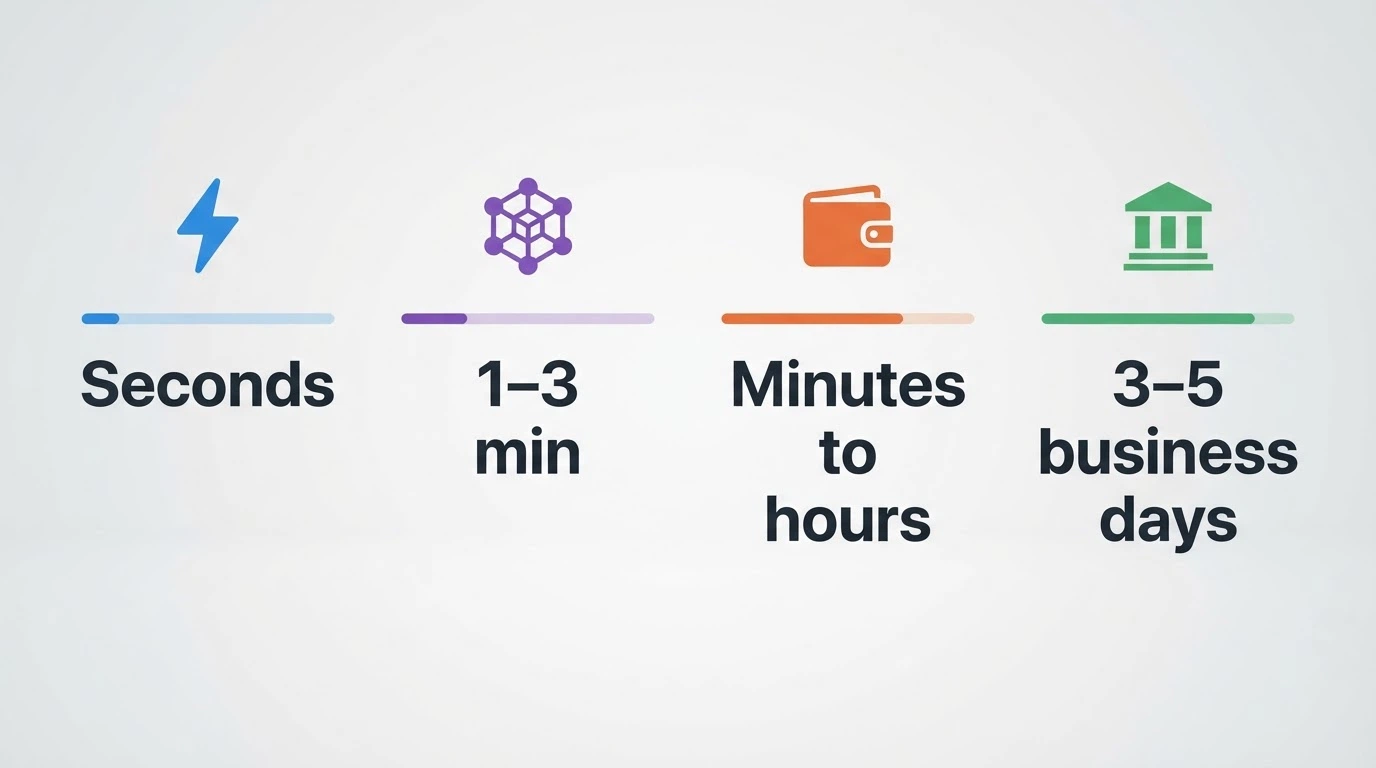
Method choice is the second-biggest lever. PayID, which runs on Australia’s New Payments Platform, processes in real time 24/7, 365 days a year. Once a casino approves, the money reaches your bank within seconds. Crypto on Tron settles on the network in one to three minutes with fees under A$2. Bank transfer takes three to five business days. Card withdrawals take three to five business days and are the slowest rail of the standard set. The method is the player’s choice, and it matters more than the casino.
No casino can guarantee an instant first withdrawal, because no casino can verify your identity before you’ve given them something to verify against. After the first cleared cashout, subsequent withdrawals at the same operator are often genuinely faster — the verification step is over.
How “Instant Payout” Actually Works at an Online Casino
The four stages, in order: internal review, pending-to-processed handoff, method settlement, bank receipt. “Instant” describes the moment after approval, when PayID or crypto fires. It does not describe the moment you click withdraw.
The casino’s internal review window covers fraud checks and wagering verification. If you’ve claimed a bonus, the review confirms the playthrough has been completed before any money moves. For a no-bonus player with clean KYC, this window can be minutes. For a first-time player with a bonus still in play, it can be days — the casino is not stalling, it’s checking.
The pending-to-processed handoff is where most player complaints sit. Some operators hold withdrawals in pending for 12 to 48 hours, during which the player can cancel and play with the balance again. The pending period is part of responsible-gambling policy and anti-fraud policy at most operators. A “pending-free” operator exists but is rarer.
Method settlement is the rail’s speed. PayID: seconds. USDT TRC-20: one to three minutes on the network. E-wallet: minutes to hours. Bank transfer: three to five business days. Card: three to five business days. The casino does not control this stage once the money is in transit.
Bank receipt is the receiving bank’s processing. For PayID on the New Payments Platform, the receipt is genuinely instant — the funds are available immediately, even at midnight on a Sunday. For a card refund, the bank takes the full processing window regardless.
KYC is the single biggest delay — not the casino’s processing speed. A player who has not submitted proof of identity, proof of address and proof of payment method waits for all of these to be checked before any withdrawal moves. The check itself can be hours, but the queue is days.
PayID: Australia’s Own Instant-Payout Rail
PayID runs on the New Payments Platform, the Australian real-time gross settlement system that processed its first payment in February 2018. Once a casino approves a PayID withdrawal, the funds reach the bank account within seconds — at 2am on a Sunday, at 11pm on Christmas Eve, on any day of the year. PayID is the fastest AUD-denominated rail for Australian players by a wide margin.
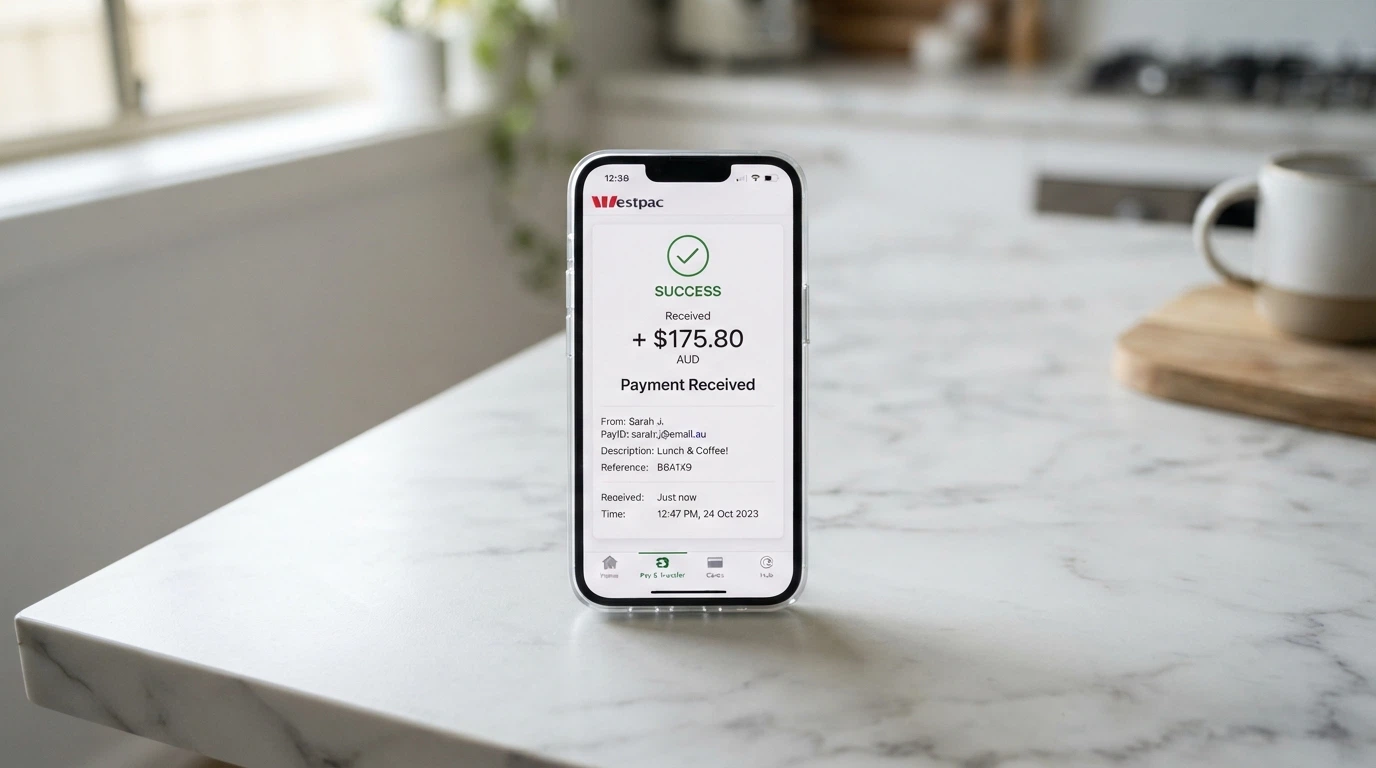
Tested PayID times at Australian-facing offshore casinos show the rail’s speed once the casino approves. SkyCrown recorded an eleven-minute cashout on a weekday for A$920 and eighteen minutes on a weekend for A$450 — measured from the player’s click to funds in the bank account, not just network settlement. The casino’s internal review ate most of that eleven minutes. The PayID leg itself was seconds.
Across a wider tested set, PayID averaged 24 to 48 hours from request to receipt. That figure includes the casino’s internal review at operators with longer pending windows. The rail is not the bottleneck — the casino is.
PayID beats bank transfer and cards by days. Where PayID lands in seconds, a bank transfer takes three to five business days and a card withdrawal takes three to five business days. Card is the slowest standard rail because it runs through the international card network rather than a domestic real-time system. PayID’s edge is structural, not promotional.
Setting up PayID for a casino withdrawal means linking your bank account to a PayID identifier — usually a mobile number or email address — through your bank’s app. Most major Australian banks support PayID natively, and the registration is one-time. Once linked, withdrawals are entered as a PayID transfer rather than a BSB and account number, and the settlement is real-time.
Real Withdrawal Timelines by Method in 2026
| Method | Typical Casino Processing Time | Network Settlement Time | Fees | Availability at AU-Facing Casinos |
|---|---|---|---|---|
| PayID | 10 minutes to 48 hours | Seconds (NPP real-time) | None | Most major offshore operators serving AU |
| USDT TRC-20 | 30 minutes to 8 hours | 1–3 minutes on Tron | Under A$2 | Widely supported |
| Bitcoin (mainnet) | 1–6 hours | 30–60 minutes | Variable, often A$5–A$15 | Supported, but slower network |
| Bitcoin Lightning | 30 minutes to 4 hours | Near-instant | Sub-A$1 | Limited operator support |
| E-wallet (Skrill, Neteller, MiFinity) | 1–12 hours | Minutes | Operator-set, often free | Common at multi-method operators |
| Bank transfer | 1–3 business days | 3–5 business days | Possible intermediary fees | Widely supported but slow |
| Card (Visa/Mastercard) | 1–3 business days | 3–5 business days | None from operator | Widely supported but slowest |
Crypto network speed does not equal casino speed. USDT TRC-20 settles in one to three minutes once it leaves the casino’s wallet, but the casino’s internal approval window still applies. The fastest tested casino-side crypto payout in the set sits at roughly 12 minutes total (Moonbet, where a sub-A$2,000 withdrawal was settled on-chain in approximately four minutes with no ID check required). The slowest spans hours. Wild Fortune averaged five hours twenty-four minutes on USDT TRC-20 across five real tests, with a range of three hours fifty minutes to seven hours fifty-eight minutes — a useful honest number rather than a marketing one.
The KYC Bottleneck: Why Your First Withdrawal Always Takes Longer
KYC — know your customer — is the identity verification every licensed and offshore casino runs before releasing funds. It is the single biggest cause of withdrawal delays at offshore casinos serving Australians, and the player controls almost all of it.
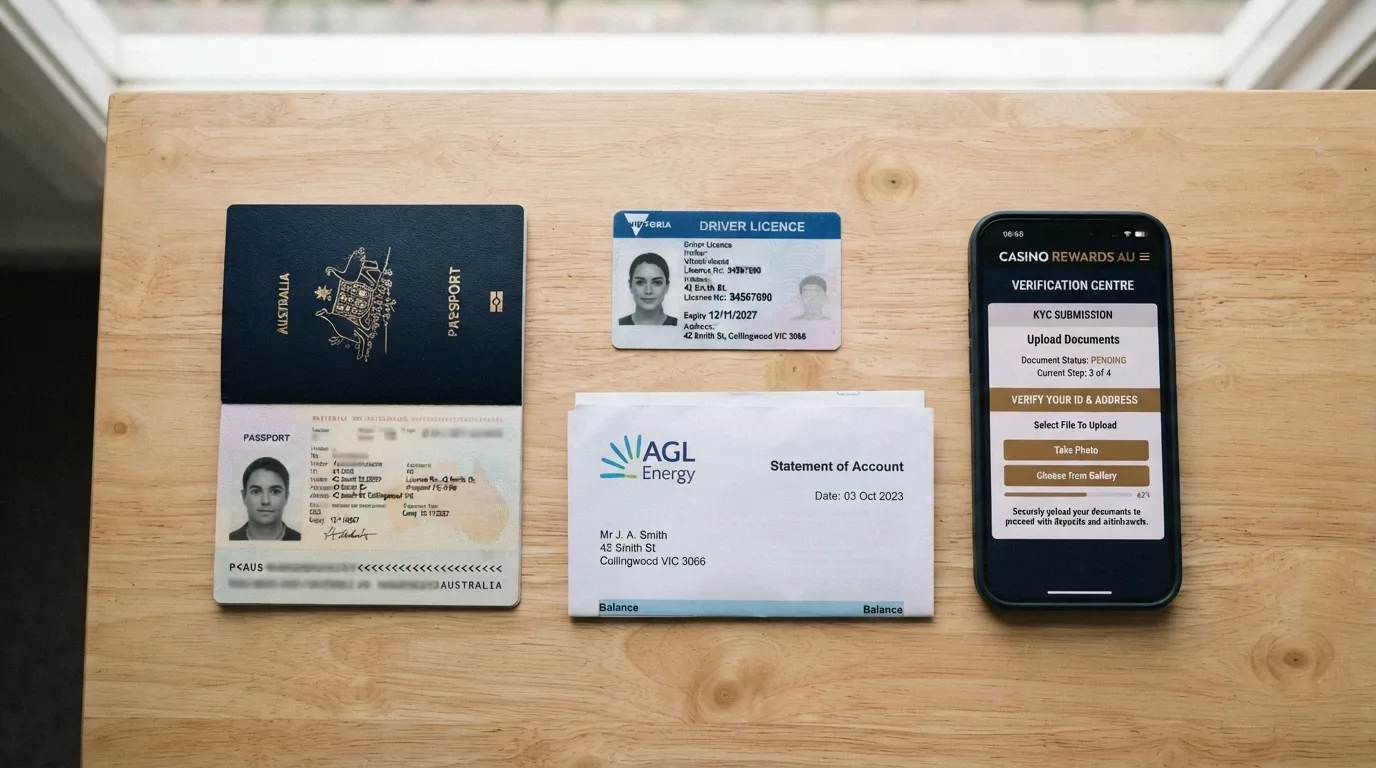
Casinos require three documents at minimum. Proof of identity: passport, driver licence or government-issued photo ID. Proof of address: utility bill, bank statement or council rates notice dated within the last three to six months. Proof of payment method: a photo of the card used (with middle digits obscured) or a screenshot of the crypto wallet or PayID account in your name.
Casinos flag first withdrawals for manual review. The logic is anti-fraud: a brand-new account requesting a payout before any deposit history is built is the highest-risk scenario the operator sees. The review is a person, not an algorithm, and the queue is days at busy operators. Submitting KYC documents at sign-up rather than at first cashout moves the queue out of the withdrawal path.
Verification typically takes hours once documents are submitted — but the queue to be checked is what stretches a withdrawal into days. A clean submission with all three document types, matching the name on the account, is the difference between an overnight review and a multi-day back-and-forth.
The practical step: complete KYC before depositing. Most operators allow document upload at the account dashboard before any deposit is made. The verification runs in the background while you play, and by the time you want to withdraw, the queue is empty. The single biggest lever in your control is here.
The Fastest-Paying Online Casinos for Australian Players in 2026
No Australian-licensed online casino exists. The Interactive Gambling Act 2001 prohibits online casino games, online pokies and in-play betting, and there is no licence for online casino anywhere in the country. Every operator in the table below is offshore, unlicensed in Australia, and operating in a legal grey zone where the provider — not the player — is the target of enforcement.
| # | Operator | Licence | Welcome Bonus | Wagering | Free Spins | PayID | Payment Methods |
|---|---|---|---|---|---|---|---|
| 1 | Royal Reels | Curacao (offshore, AU-prohibited) | 100% up to A$500 + 50 FS (1st dep); 3-deposit pack to A$2,500 + 50 FS | 30×–35× on bonus | 50 FS | Yes | PayID, crypto, cards |
| 2 | Rocket Play | Curacao (offshore, AU-prohibited) | 100% up to A$1,000 + 100 FS (1st dep); 2nd dep 200% to A$1,000 | 40× on bonus | 100 FS (20/day × 5) | Yes | PayID, crypto, cards |
| 3 | Skycrown | Curacao (offshore, AU-prohibited) | 100% up to A$500 (1st); 50% up to A$500 (2nd) | 30× on bonus | — | Yes | PayID, crypto |
| 4 | FairGO | Curacao (offshore, AU-prohibited) | 300% up to A$3,000 + 50 FS | 30× on deposit + bonus | 50 FS | Yes | PayID, crypto, Neosurf |
| 5 | Stake | Curacao (offshore, AU-prohibited) | No traditional welcome bonus — rakeback model | None (rakeback) | None | No | Crypto only |
| 6 | Bizzo Casino | Curacao (365/JAZ) + Kahnawake (00867) | Up to €/$400 + 150 FS (1st: 100% to $100 + 100 FS; 2nd: 50% to $300 + 50 FS) | 40× | 150 FS | No | Crypto, Skrill, Neteller, Jeton, MiFinity, cards |
| 7 | WinSpirit | Curacao Antillephone N.V. (offshore, AU-prohibited) | 100% up to CAD300 + 100 FS (1st); 200% up to CAD300 (2nd) | 40× on bonus | 100 FS | No | Crypto, bank transfer |
| 8 | Rainbet | Curacao (offshore, AU-prohibited; AU listed as restricted) | Wager Lock: 40× wagering, $700 cap; or No Wager Lock (gradual release) | 40× (Wager Lock) | Via welcome promo | No | Crypto |
| 9 | Scream Casino | Curacao (offshore, AU-prohibited) | Not confirmed this run | Not confirmed this run | Not confirmed this run | — | Crypto, e-wallets |
| 10 | Wild Fortune | Tobique Gaming Commission #0000064 | 225% up to CA$7,500 + 250 FS | 0× on FS; 40× on bonus funds | 250 FS | Yes (2-way) | PayID, crypto |
PayID support is the key differentiator for AUD players. Operators one through four, plus Wild Fortune, support PayID in at least one direction. Stake, Bizzo, WinSpirit and Rainbet do not, and an Australian player there is converting AUD to crypto or USD to deposit and converting back on withdrawal — adding exchange spread, exchange fees and currency risk on top of the cashout time.
Crypto-only operators deliver faster network settlement but cost the player Australian consumer protections entirely. The trade-off is real and worth measuring, not assuming.
Royal Reels: PayID Payouts and a A$2,500 Welcome Pack
Royal Reels operates under a Curacao licence and supports PayID alongside crypto and cards. The welcome offer is a three-deposit pack totalling A$2,500 plus fifty free spins: first deposit 100% match to A$500 plus fifty spins at thirty times wagering on the bonus amount; second deposit 75% to A$750; third deposit 100% to A$1,250 — the latter two stages run at thirty-five times wagering with a A$5 per-spin cap. Minimum deposit across the package is A$30.
Game weighting is the kind players miss until they try to clear a bonus on the wrong title. Pokies contribute 100% toward wagering. Table games and live dealer contribute 3% — meaning a A$15,000 playthrough on pokies requires A$500,000 of table-game action to clear the same amount. If you intend to play blackjack with your bonus, read this number twice.
No-deposit bonuses at Royal Reels carry a A$100 maximum cashout cap, which is on the low end of the AU$50–A$200 range typical at Australian-facing operators. A free-chips winner above A$100 sees the excess voided at withdrawal. The cap is structural, not negotiable.
For an AUD player who wants PayID in both directions and a multi-deposit welcome structure to spread the bonus across sessions, Royal Reels fits. The package is more attractive in headline number than in cleared-cash terms, and the 35× wagering on the second and third deposits is steeper than the 30× on the first.
Rocket Play: A$1,000 Match With a 5-Day Bonus Window
Rocket Play operates under a Curacao licence and offers a 100% first-deposit match up to A$1,000 plus one hundred free spins, with a second-deposit 200% match up to A$1,000. Minimum deposit is A$30. Wagering runs at 40× the bonus amount. Maximum bet during wagering is A$7.50, and bonus validity is five days.
Five days is short. A typical 30× wagering on a A$1,000 bonus at A$1 a spin needs 30,000 spins — at five seconds per spin, roughly forty-two hours of continuous play. In a five-day window that allows for sleep, the player needs to average more than eight hours a day at the reels. The validity window is the operator telling the player the bonus is for fast play, not leisurely sessions.
The 200% second-deposit match is unusually large and worth measuring against the wagering. A$1,000 deposit plus A$2,000 bonus at 40× wagering on the bonus requires A$80,000 of slot action to clear — double the first-deposit requirement at the same stake.
For players who can put in the hours and want a large bonus to chase, Rocket Play delivers. For players who play casually, the five-day validity makes the bonus terms effectively a penalty for slow play.
Skycrown: PayID Withdrawals Tested at Under 20 Minutes
Skycrown operates under a Curacao licence and holds the fastest independently tested PayID cashout in the set: eleven minutes on a weekday for A$920 and eighteen minutes on a weekend for A$450. That is request-to-receipt, not just network settlement, and it is the figure to beat across the tested set.
The welcome offer is a 100% first-deposit match up to A$500, with a 50% reload up to A$500 on the second deposit. Wagering is thirty times the bonus amount. Minimum deposit is A$20 — the lowest threshold in the set.
For an AUD player who values PayID speed above all else, Skycrown is the standout. The bonus is modest rather than spectacular, and the wagering terms are reasonable. If your priority is the eleven minutes, the rest of the offer is conventional.
FairGO: 300% Match and RTG Pokies for Australian Players
FairGO operates under a Curacao licence and runs a Realtime Gaming pokies library — a provider that has supplied Australian-facing offshore casinos for years and is widely understood by local players. The welcome offer is a 300% match up to A$3,000 plus fifty free spins, the largest headline percentage in the set.
The catch is the wagering basis. Wagering at FairGO applies to deposit plus bonus, not bonus only. The mathematics on a A$1,000 deposit at 300% match: bonus amount A$3,000, total to wager A$4,000 at thirty times. A$120,000 of slot action to clear. The same bonus at bonus-only 30× wagering would require A$90,000 — the deposit-plus-bonus structure adds A$30,000 to the required stake on a identical-value bonus.
No-deposit free bonuses at FairGO are capped at A$180 maximum cashout — on the lower end of the AU$50–A$200 range. Free bonus wagering is sixty times. Maximum bet while a bonus is active is A$10. Players have 150 days from deposit to start a withdrawal, which is unusually long.
For an RTG loyalist with a large bankroll and patience for the playthrough, FairGO delivers a large match on a familiar library. For a player who reads the wagering terms as bonus-only, the actual cost is significantly higher than the headline implies.
Stake: Crypto-Only Rakeback With No Wagering Hoops
Stake operates under a Curacao licence and runs a fundamentally different model from every deposit-match casino in the set. There is no traditional welcome bonus — no deposit match, no free spins, no wagering requirement. The product is rakeback: a percentage of the house edge returned to the player, calculated per bet, paid out automatically. Withdrawals are not gated by playthrough because there is no playthrough.
The trade-off is method and currency. Stake is crypto-only — no PayID, no AUD account, no fiat rails. An Australian player deposits in Bitcoin, Ethereum, USDT or Litecoin, plays in that currency, and withdraws in the same currency. Crypto-to-AUD conversion happens on the player’s side, on whatever exchange they use, and the player wears the spread and any network fee.
Reported crypto payout times at Stake run from one to four hours end-to-end. The internal review at Stake is fast — the model doesn’t require wagering verification because there is no bonus to abuse — and the on-chain leg is minutes once approved. A clean session can see a payout in under two hours.
For a crypto-native player who wants no wagering conditions and is comfortable managing their own AUD conversion, Stake is the cleanest offer in the set. For a player who wants PayID and AUD accounts, it is the wrong product.
Bizzo Casino: Dual Licence With 150 Free Spins
Bizzo Casino is operated by Dama N.V. and holds dual licensing — Curacao (365/JAZ) and Kahnawake (00867). The welcome package runs up to €/$400 plus 150 free spins: first deposit 100% to $100 plus 100 free spins, second deposit 50% to $300 plus 50 free spins. Wagering is forty times on bonus amount.
Payment methods run through crypto, Skrill, Neteller, Jeton, MiFinity and cards. PayID is not supported, so an AUD player is converting to USD or crypto on deposit and back on withdrawal. The e-wallet options are faster than cards for cashout but slower than PayID.
The free-spin-heavy structure suits a player who values spin volume over a large match. 150 free spins at the operator’s per-spin value is a known quantity; the deposit match is moderate. The dual licence is unusual among the set and offers a marginally broader regulatory footprint, though neither jurisdiction is Australia.
For an e-wallet or crypto player who wants a regulated multi-provider casino with a strong free-spin offer, Bizzo fits. The wagering at 40× is on the steeper side, and the AUD conversion cost is a real per-transaction expense.
WinSpirit: 200% Second-Deposit Match and Live Dealer
WinSpirit operates under a Curacao Antillephone N.V. licence and is operated by Complete Technologies N.V. The welcome package runs 100% up to CAD300 plus 100 free spins on the first deposit, with a 200% match up to CAD300 on the second deposit — the largest second-deposit percentage in the set. Wagering is forty times on both deposits. Minimum deposit is CAD60.
The product mix is casino plus sports plus live dealer, which gives a multi-product player a single account across verticals. Payment methods are crypto and bank transfer — no PayID, no e-wallets listed. An AUD player converts at deposit and again at withdrawal.
The 200% second-deposit match at 40× wagering requires A$24,000 of slot action to clear on a CAD300 bonus, which is moderate for a 200% match. The CAD currency throughout the offer is a conversion-cost factor for Australian players.
For a player who values a live-dealer and sports product alongside slots and is comfortable with bank transfer or crypto rails, WinSpirit offers an unusually large second-deposit match. The currency conversion is the cost.
Rainbet: Dual Bonus Structures With a Restricted-Site Warning
Rainbet operates under a Curacao licence and offers players a structural choice at the welcome stage: a Wager Lock bonus at forty times wagering with a $700 deposit cap, or a No Wager Lock alternative with a gradual fund-release mechanic. The two structures target different player types — bonus chasers versus players who would rather have unfrozen cash.
The T&Cs explicitly list Australia as a restricted territory. Rainbet appears in AU player discussions and has real Australian traffic, which is why it is included here, but the restriction is unambiguous: an Australian player signing up is operating against the operator’s stated terms, and any dispute resolution starts from that position.
Payment methods are crypto only. There is no PayID, no fiat rails, no AUD account. A player depositing in Bitcoin or USDT is also wagering in that currency.
For a crypto player who has read the T&Cs and accepts the restricted-territory position, Rainbet’s dual bonus structure is genuinely flexible. For most Australian players, the restricted status makes this an operator to approach with clear eyes on the dispute-resolution risk.
Scream Casino: Crypto and E-Wallet Payouts
Scream Casino operates under a Curacao licence and accepts crypto and e-wallet payments. Its specific welcome-bonus terms did not surface in the available sources this round, and this review does not state unconfirmed figures.
What can be said: the payment-method mix positions Scream Casino as a crypto-friendly operator with e-wallet support for players who prefer not to hold crypto at an exchange. For a player considering Scream Casino, the practical step is to check the operator’s current welcome offer and wagering terms directly on-site before signing up — bonus structures at offshore casinos change frequently, and the live terms page is the only authoritative source.
For a crypto or e-wallet player who wants to see the live terms before committing, Scream Casino is a reasonable candidate once those terms are reviewed.
Wild Fortune: Tobique-Licenced With Zero-Wagering Free Spins
Wild Fortune operates under a Tobique Gaming Commission licence (#0000064) — the only Tobique-licensed operator in the set, and a jurisdiction that appears at fewer offshore casinos than Curacao. The welcome offer is a 225% match up to CA$7,500 plus 250 free spins, with zero times wagering on the free spins and forty times on the bonus funds.
The zero-wagering free spins are the standout feature. Winnings from the 250 spins withdraw as cash, with no playthrough requirement — meaning the player is not clearing a bonus before cashing out. The bonus funds portion is a separate balance, subject to its own 40× wagering, but the spins themselves pay real money.
Payment methods include PayID in both directions — deposit and withdrawal — alongside crypto. USDT TRC-20 at Wild Fortune averaged five hours twenty-four minutes across five real tests, with a range of three hours fifty minutes to seven hours fifty-eight minutes. That is casino-side processing, not network speed: the on-chain leg is one to three minutes; the casino’s internal review took the rest.
For a PayID player who wants zero-wagering free spins on top of a large match, Wild Fortune delivers a structurally rare offer. The bonus funds playthrough is steep, but the spins are clean cash.
Why a No-Deposit Bonus Rarely Pays Out Instantly
A no-deposit bonus sounds like free money, and the marketing sells it that way. The terms are the part the marketing does not print. The wagering requirements, the maximum cashout caps and the short validity windows make an “instant” payout from a no-deposit bonus nearly impossible in practice.
The structure is straightforward. The casino gives you a small bonus — typically A$10 to A$50 in cash, or twenty to one hundred free spins — with wagering applied to your winnings from that bonus. The wagering multiple is the barrier: at thirty to sixty times your winnings, a A$50 bonus that wins A$100 requires A$3,000 to A$6,000 of slot action before any of it withdraws.
Typical no-deposit bonus structures at Australian-facing offshore casinos in 2026 include maximum cashouts of AU$50 to A$200, wagering requirements of 30 to 60 times on winnings, free spin counts of 20 to 100, and validity windows ranging from three to fourteen days, with some as short as twenty-four hours.
Reasonable no-deposit wagering sits at thirty to thirty-five times on winnings. Above fifty times, the offer is practically unclearable for most players — the volume of slot action required exceeds what the validity window allows at any reasonable stake.
The free-spin validity window is the second trap. Twenty-four-hour validity means the player must use and clear the spins within a day. Three-day windows allow a weekend session. Fourteen days is the upper end and gives the player time to read terms, plan play and clear the wagering at a sustainable pace. Short windows are an operator’s tool for converting bonus play into rapid slot action.
Wagering on winnings — versus wagering on bonus plus deposit — is the difference between a clearable offer and one that is not. A no-deposit free spin that wins A$100 with 30× wagering on winnings requires A$3,000 of slot action. The same spin with 30× wagering on deposit plus bonus is irrelevant because there is no deposit — but if the player subsequently deposits and claims a deposit bonus, the basis changes.
No-Deposit Offers at Australian-Facing Casinos in 2026
The no-deposit landscape at Australian-facing operators in 2026 divides into three categories. Free-chip no-deposit bonuses: a small cash amount (typically A$10–A$50) credited to the account with wagering on winnings. No-deposit free spins: twenty to one hundred spins on a named pokie at a fixed per-spin value (often A$0.10–A$0.20), with winnings treated as bonus money subject to wagering. Cashback no-deposit offers: less common, structured as a percentage of losses returned as bonus funds.
Maximum cashout caps are the ceiling on what any no-deposit offer actually pays. FairGO caps free-bonus withdrawals at A$180. Royal Reels caps no-deposit withdrawals at A$100. Both are within the typical AU$50–A$200 range and both are the structural limit on what the player can walk away with from the bonus.
Free-spin validity windows vary widely. Some operators offer three-day windows, which allow a weekend session. Others offer twenty-four-hour windows for the same spin count, which means the player must complete the wagering inside a day. The shorter the window, the more pressure on rapid play and the higher the chance the wagering is not completed in time.
The wager-free free-spin offer at Wild Fortune is a rare exception: zero times wagering on the 250 free spins means winnings withdraw as cash. Most no-deposit spins at other operators in the set run at thirty to sixty times wagering, and the difference is what makes Wild Fortune’s offer structurally cleaner than the rest.
Wagering Requirements: The Real Barrier to Your Cashout
Wagering is the multiplier applied to your bonus — or your deposit plus bonus, depending on the operator — that determines how much slot action you must complete before any of it is withdrawable. It is the hidden clock on every bonus offer, and it is the reason a “fast payout” casino can keep your money for weeks.
Wagering multiples function by applying a set multiplier to the bonus: a 30× requirement on a A$500 bonus requires A$15,000 in slot action, a 40× requirement requires A$20,000, and a 50× requirement requires A$25,000.
Game contribution rates determine which games move the wagering forward. Standard video pokies contribute 100% — every A$1 wagered counts as A$1 toward the requirement. Table games (blackjack, roulette) typically contribute 10% — every A$1 wagered counts as A$0.10. Live dealer is almost always excluded — every A$1 wagered counts as A$0.
The practical maths of clearing A$15,000 in turnover at A$1 a spin on a pokie is 15,000 spins. At five seconds per spin, that is 75,000 seconds, or roughly 21 hours of continuous play. Spread over a week, that is three hours a day. The player is committing a working week of evenings to clear the bonus.
When wagering applies to deposit plus bonus rather than bonus only, the required stake quadruples on identical spin value. A A$700 bonus at 30× wagering on bonus alone is A$21,000. The same bonus with wagering on deposit plus bonus at the same 30× multiple is A$2,800 × 30 = A$84,000 — quadruple the stake on a single bonus. The headline multiple looks identical; the actual cost is radically different.
High-wagering bonuses contradict the “instant payout” promise. A 50× wagering bonus takes weeks to clear at a sustainable pace; the player cannot cash out for the duration. The marketing promise of fast payout collides with the bonus terms at the wagering requirement.
Crypto Payouts at Offshore Casinos: Speed, Safety and Trade-Offs
Crypto delivers the fastest network settlement of any payout method available to Australian players at offshore casinos — USDT on Tron settles in one to three minutes with fees under A$2 — but it also strips away every Australian consumer protection the player would otherwise have. No chargeback. No Australian financial ombudsman. No recourse if the operator refuses the withdrawal. Exposure to coin-price volatility between deposit and withdrawal.
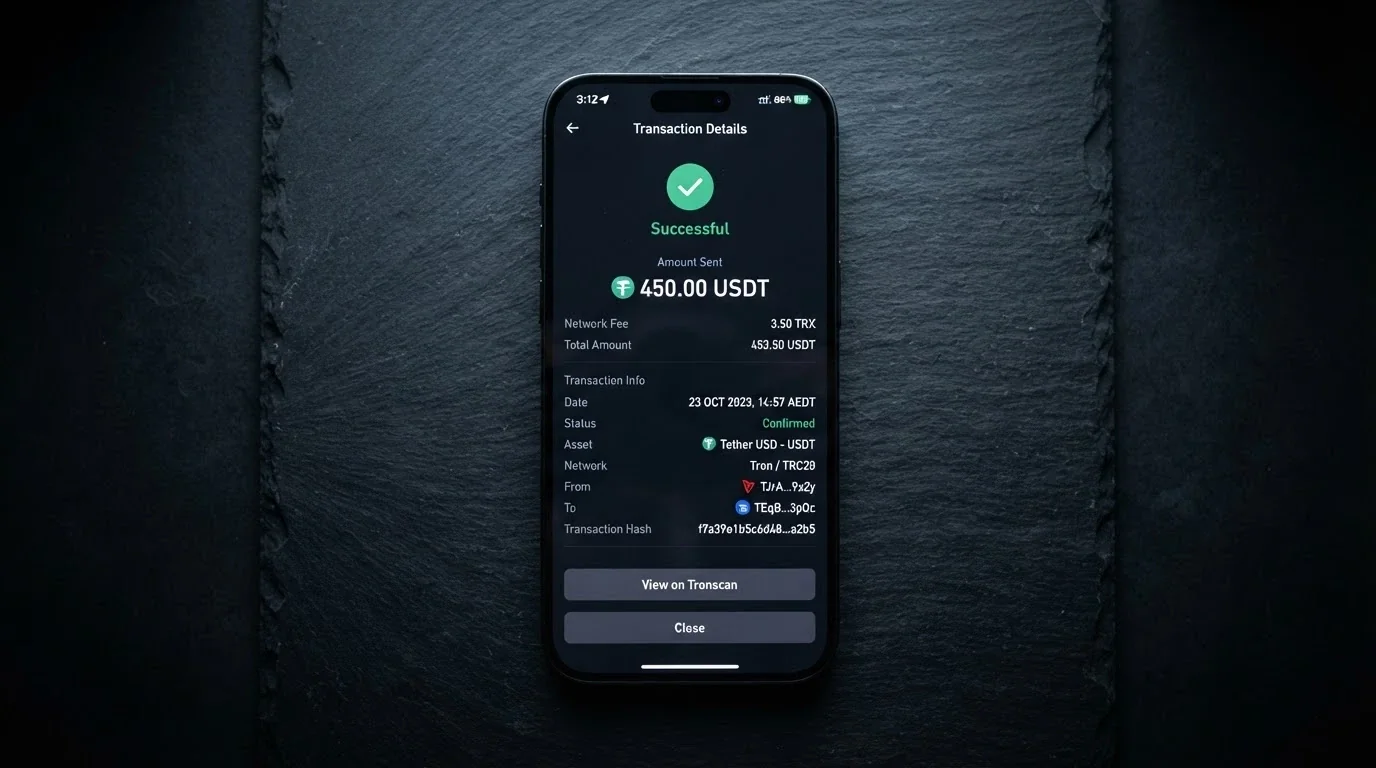
The speed gains are real. Crypto bypasses the banking system entirely: there is no intermediary institution, no Australian payment-blocking risk, no weekend or public-holiday delay. The casino approves, the on-chain transfer starts, and the funds arrive at the player’s wallet within minutes — day or night, weekday or weekend.
The safety trade-off is equally real. A bank transfer can be disputed. A card payment can be charged back. A crypto transaction cannot be reversed — once the funds leave the casino’s wallet, they are in the player’s custody and the player bears the full risk of loss, theft or operator failure. There is no Australian financial ombudsman for a crypto dispute with an offshore casino. There is no equivalent of the ePayments Code.
Crypto is banned as a payment method for licensed Australian wagering since 11 June 2024 under the Interactive Gambling Amendment (Credit and Other Measures) Act 2023. The ban applies to licensed operators only — offshore casinos are not bound by it. A player using crypto at an offshore casino is operating outside the licensed system by definition; the ban is the signal that Australian regulators consider crypto-on-wagering risky enough to prohibit at the licensed end.
From 1 January 2027, banks and payment providers gain express authority to block transactions to illegal gambling operators. Crypto runs outside the banking system, so a crypto withdrawal from an offshore casino is unlikely to be blocked by this measure — but the measure signals the regulatory direction. The crypto-on-offshore-casino path is becoming narrower, not wider.
How Crypto Withdrawals Work at Australian-Facing Casinos
A crypto cashout follows a defined sequence. The player requests a withdrawal from the casino’s cashier, selects the cryptocurrency (USDT, BTC, ETH or another supported coin), and provides a receiving wallet address. The casino’s internal approval step runs its checks — KYC verification, wagering compliance, anti-fraud review — and approves or rejects the withdrawal. On approval, the casino broadcasts the transaction to the blockchain. The on-chain settlement runs to confirmation — one to three minutes on USDT TRC-20, thirty to sixty minutes on Bitcoin mainnet. The player receives the funds at their wallet after the required number of network confirmations.
The casino’s internal approval step is where the speed variance lives. BitStarz has reported crypto payouts at 0.2 to 2 hours end-to-end. Stake’s crypto payouts run one to four hours. Wild Fortune’s USDT TRC-20 averaged five hours twenty-four minutes across five real tests, with a range of three hours fifty minutes to seven hours fifty-eight minutes. Moonbet’s test recorded a sub-A$2,000 crypto withdrawal settled on-chain in approximately four minutes with no ID check required — the fastest figure in the set, and a small-balance exception rather than a typical outcome.
Setting up a wallet is the first practical step. A non-custodial wallet — a software wallet where the player controls the private keys, or a hardware wallet for larger balances — is the standard choice. The wallet generates a receiving address for each transaction. The player pastes that address into the casino’s withdrawal form, double-checks the coin type and network (USDT on Tron is not the same as USDT on Ethereum), and submits.
Converting crypto back to AUD is the final step and happens on the player’s side. A player withdrawing USDT or BTC sells it on a cryptocurrency exchange, withdraws AUD to their bank account via PayID or OSKO, and the funds arrive in seconds. The exchange takes a spread (typically 0.1% to 1% depending on the platform and payment method) and a withdrawal fee. The conversion cost is small but real, and it is the player’s cost — not the casino’s.
USDT, Bitcoin and Lightning: Which Crypto Rail Is Fastest
Not all crypto networks settle at the same speed or cost, and the differences matter for casino withdrawals.
USDT TRC-20 (Tether on the Tron network) is the practical best for casino withdrawals. On-chain settlement runs one to three minutes, with fees under A$2 per transaction. Tron processes high throughput and the network is rarely congested. Most major offshore casinos serving Australian players support USDT TRC-20 specifically, and the per-transaction cost is low enough that small withdrawals are economical.
Bitcoin mainnet is slower and more expensive. On-chain settlement runs thirty to sixty minutes depending on network congestion, and fees vary from a few dollars to A$15 or more during peak periods. Bitcoin is supported at most major offshore casinos but is rarely the cheapest or fastest option for routine cashouts.
Bitcoin Lightning is near-instant and low-fee at the network level — sub-A$1 fees and settlement in seconds — but adoption at Australian-facing offshore casinos is limited. Most featured operators do not support Lightning withdrawals. Where it is supported, it is the fastest rail available, but the player should check operator support before assuming Lightning is on the menu.
TRC-20 dominates Australian-facing offshore casinos because the speed-to-cost ratio suits the typical cashout size — A$100 to A$5,000 — and the network’s reliability means players do not get stuck waiting for confirmations during congestion. For a player who wants speed and low cost and is comfortable with Tether specifically, USDT TRC-20 is the rail to use.
The Pokies and Casino Games That Let You Cash Out Fastest
The game you play affects how fast you can cash out — at least when you have a bonus to clear. Pokies contribute 100% toward wagering at most offshore casinos. Table games contribute 10% or are excluded. Live dealer is almost always excluded. A player who wants to clear a bonus and reach a withdrawable balance plays pokies, not blackjack.
This is the structure every bonus term in this set relies on. The wagering requirement is set on the assumption the player is spinning reels at a 96% RTP pokie at a standard contribution rate. A player who switches to blackjack mid-bonus sees their wagering progress slow by a factor of ten — or stop entirely if live dealer is excluded.
Game choice also determines whether your balance survives the playthrough. A 96% RTP pokie returns A$960 per A$1,000 wagered on average. A 99.5% RTP blackjack game returns A$995 per A$1,000 wagered on average — better odds, but at 10% wagering contribution, the same A$1,000 wagered counts as A$100 toward the requirement. The player is converting ten times the bankroll into a tenth of the wagering progress.
Online Pokies and RTP at Instant-Payout Casinos
A 96% RTP pokie returns A$960 per A$1,000 wagered on average. That A$40 difference is the house edge — the casino’s built-in margin on every spin. Over a A$15,000 wagering requirement at 96% RTP, the expected loss is A$600. That is the statistical cost of clearing the bonus, and it sits on top of any deposit the player has made.

Pokies dominate Australian-facing offshore casinos because of contribution rules and because of cultural familiarity. Australians lost A$16.3 billion on poker machines in 2023–24, the largest single gambling-loss category in the country. The local term is “pokies,” not “slots,” and the offshore casinos serving the market have built their libraries around the games Australian players want.
The provider studios powering featured operators vary. FairGO runs Realtime Gaming (RTG) — a long-established provider with a library Australian players recognise from years of offshore play. Royal Reels, Skycrown, Bizzo and WinSpirit run multi-provider libraries that include BGaming, Pragmatic Play, Betsoft and other studios common at offshore casinos. Wild Fortune’s library covers providers typical of the Tobique-licensed set.
For a player clearing a bonus, the pokie choice matters less than the contribution rate — all standard video pokies count 100%. The RTP matters for how much of the bankroll survives the playthrough. A 96% RTP pokie is the industry standard; a 97%+ pokie is high-RTP and returns more per A$1,000 wagered. The difference compounds over a A$15,000 playthrough.
Table Games, Live Dealer and Wagering Contribution
Standard contribution rates at offshore casinos serving Australians typically allocate 100% for video pokies, 10% or zero for table games like blackjack and roulette, and 0% for live dealer games.
Casinos discount skill games because the house edge is lower. A blackjack player using basic strategy faces a house edge under 1%; a roulette player faces a 2.7% edge on the European wheel. A pokie player faces a 4% edge on a 96% RTP game. The casino protects its bonus margin by weighting skill games low — a bonus that cleared at 100% on blackjack would be a guaranteed long-term loss for the operator.
Royal Reels’ terms are illustrative: pokies contribute 100%, table games and live dealer contribute 3%. A A$1,000 wagered on pokies at Royal Reels counts as A$1,000 toward wagering. The same A$1,000 on blackjack counts as A$30. The 3% figure is on the low end of the contribution scale — most operators run table games at 10%, but Royal Reels is closer to the exclusion end.
Live dealer is almost always excluded from wagering contribution because the house edge on live games is too low to support bonus play at 100% contribution. A live-dealer player with a bonus cannot meaningfully progress the playthrough while playing live.
When does it make sense to play table games despite the contribution penalty? After the bonus is cleared, on a clean cash balance. At that point, the player is gambling their own money with no wagering requirement and can choose any game. Blackjack at a 0.5% house edge is more bankroll-efficient than a 4% pokie. But during a bonus, the contribution rules mean pokies are the only practical choice.
Australian Online Pokies: What Local Players Need to Know
The term “pokies” is uniquely Australian. New Zealand uses “pokies” too; the rest of the English-speaking gambling world uses “slots.” Australian-facing offshore casinos build their libraries around the games locals want, and the terminology carries through. The page you’re reading uses “pokies” because that’s what an Australian player calls them.
The RTG (Realtime Gaming) pokies library is a staple of Australian-facing offshore casinos. RTG has supplied games to offshore operators serving Australian players for years, and titles like Achilles, Cash Bandits and Bubble Bubble are widely recognised by the local market. FairGO’s library is RTG-heavy, which is part of why FairGO fits players who came up on RTG games.
How to check a pokie’s RTP before playing: most reputable providers publish the RTP in the game’s information panel. A 96% RTP pokie shows “RTP: 96%” in the paytable or help screen. A player who wants to maximise bankroll survival over a wagering requirement picks the highest-RTP game available — the difference between 94% and 97% RTP over a A$15,000 playthrough is A$450 in expected return.
Why Australian players gravitate toward pokies over table games is partly cultural and partly structural. Pokies are the dominant gambling product in Australian land-based venues, and the player base carries that preference online. Structurally, the 100% wagering contribution at offshore casinos means pokies are the only game that moves a bonus playthrough forward at full pace.
What Australian Law Actually Says About Offshore Online Casinos
Online casino is prohibited in Australia. The Interactive Gambling Act 2001 — strengthened by the Interactive Gambling Amendment Act 2017 — makes it an offence to provide online casino games, online pokies or in-play betting to a person in Australia. There is no licence for online casino anywhere in the country — not federally, not in any state or territory. The Interactive Gambling Amendment (Gambling Reform) Bill 2026 passed Parliament on 19 August 2026; its measures commence 1 January 2027.
The ACMA — the Australian Communications and Media Authority — is the federal regulator enforcing the prohibition. It investigates complaints, issues formal warnings and civil penalty proceedings, refers operators for enforcement, and directs ISPs to block illegal sites. Since the first blocking request in November 2019, the ACMA has directed Australian ISPs to block 1,564 illegal gambling and affiliate websites (as at March 2026), and more than 225 illegal services have withdrawn from the Australian market since enforcement strengthened in 2017.
What IS licensed in Australia: wagering on races and sport placed before the event begins, lotteries and keno, through operators licensed by a state or territory. Licensing for online wagering concentrates in the Northern Territory under the Northern Territory Racing and Wagering Commission. Sportsbet, bet365, Ladbrokes and roughly fifty other wagering operators hold NT licences. Minimum age: 18.
The individual player is not prosecuted under the IGA — the Act targets the provider. An Australian player using an offshore casino is not personally at risk of criminal penalty. The risk is the loss of Australian consumer protection, the loss of BetStop coverage, and the loss of any recourse if the operator refuses a withdrawal.
Offshore vs. Australian-Licensed: What Protections You Forfeit
Playing at an offshore casino means leaving every Australian consumer protection at the door. There is no BetStop coverage, no financial ombudsman, no Australian-licensed dispute resolution, no guaranteed payout, and no recourse if the operator refuses a withdrawal or voids a win. The site can also be DNS-blocked overnight — with player balances still on deposit.
Australian-licensed wagering provides several protections, including BetStop self-exclusion, a national register that binds every licensed operator; consumer recourse via state and territory gambling regulators; mandatory AML oversight under Australian law; and guaranteed payouts backed by regulatory action. Conversely, offshore casinos do not provide BetStop coverage, as the register only binds licensed services; offer no Australian ombudsman to compel payment; rely solely on the casino’s own AML policy; and provide no payout guarantee, as the operator sets the rules and the player has no independent recourse.
The DNS-blocking risk is the structural threat. An offshore casino blocked by the ACMA becomes inaccessible to Australian ISPs, but any player balance on deposit at the time of the block is trapped. There is no Australian compensation or recovery mechanism for offshore casino balances.
The payment method itself is a tell. Credit cards and crypto are banned as payment for licensed Australian wagering since 11 June 2024, with operator penalties of up to A$247,500. If a site asks for a credit card or crypto deposit from an Australian, the site is operating outside Australian rules. The deposit method is a signal of the operator’s regulatory position.
The 2026 Reform: Payment Blocking, Ad Bans and What Changes
The Interactive Gambling Amendment (Gambling Reform) Bill 2026 passed Parliament on 19 August 2026. Its measures commence 1 January 2027. The reform’s key provisions reshape the regulatory landscape for offshore casino access from Australian players.
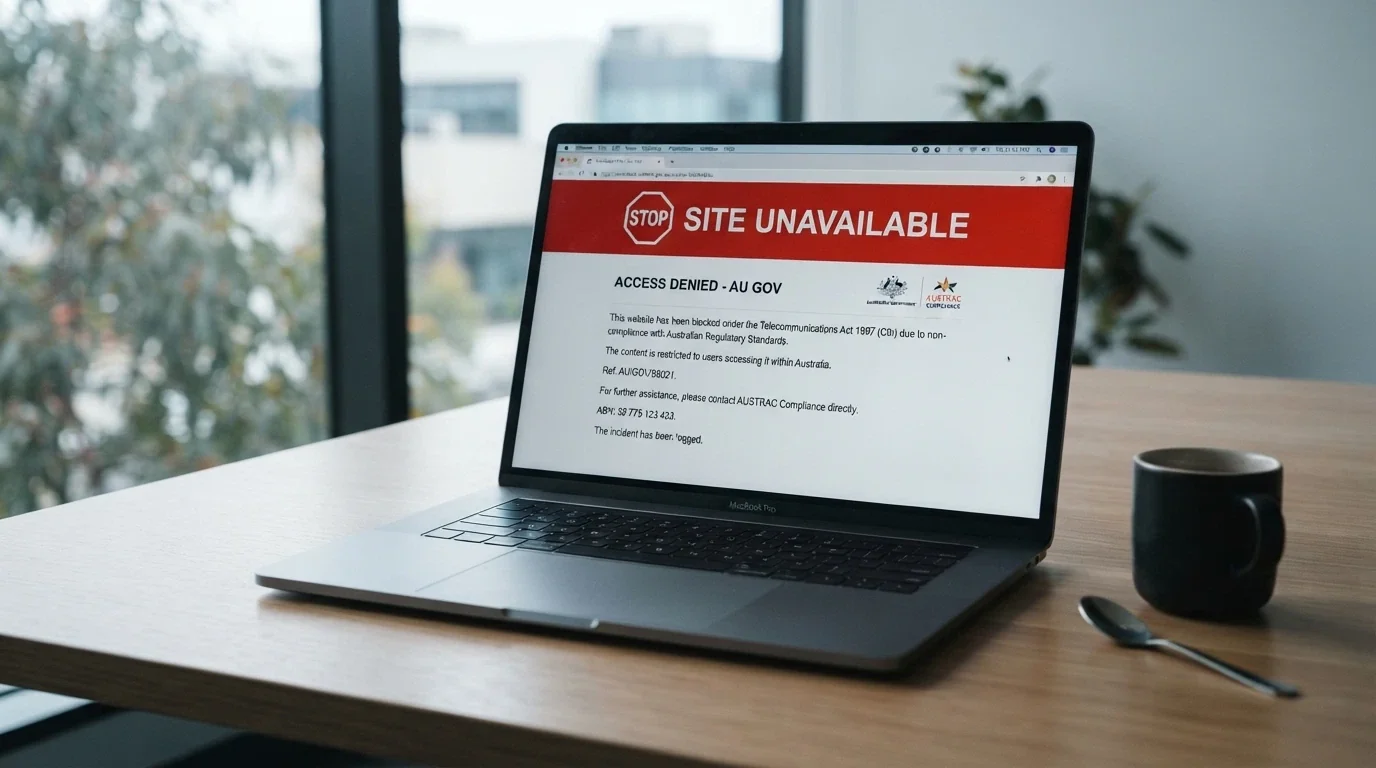
Payment-blocking powers: from 1 January 2027, banks and payment providers gain express authority to block transactions to illegal gambling operators. A PayID or bank transfer from an Australian account to an offshore casino can be refused by the bank. Crypto runs outside the banking system and is not directly affected — but the reform signals the regulatory direction of travel.
Advertising caps: wagering advertising on broadcast television is capped at three ads per hour between 6am and 8:30pm, with a complete blackout during live sport broadcasts within those hours. Broadcasting sporting odds is banned outright. Celebrities, athletes and influencers are barred from promoting wagering products. Wagering advertising inside sports venues and on player or official uniforms is banned.
Inducement marketing: direct marketing of inducements is prohibited for fourteen days after a customer signs up, for three months after a person deregisters from BetStop, and indefinitely for customers identified as at risk of gambling-related harm. The cooling-off windows make bonus offers at sign-up — the typical offshore casino entry point — harder to deliver to Australian customers.
What these changes mean for offshore casino access: the path is narrower. Banks can refuse payments. Advertising is restricted. Inducement offers face cooling-off windows. The reform does not directly legalise online casino — the IGA prohibition remains — but it sharpens the enforcement tools available to regulators and the banking system.
ACMA Blocking Powers and What They Mean for Your Money
The ACMA has blocked over 1,500 illegal gambling sites since November 2019. The blocking is DNS-level and ISP-directed: when the ACMA issues a blocking request, Australian ISPs are required to prevent their customers from resolving the domain. The site effectively disappears from Australian internet connections.
The scale: 1,564 illegal gambling and affiliate websites blocked, and more than 225 illegal services withdrawn from the Australian market since 2017. The pace has accelerated. The mechanism is administrative — the ACMA does not need a court order for each individual site, though operators can seek judicial review.
What happens to player funds when a site is blocked: nothing automatic. The operator’s servers remain online for the rest of the world. Australian players cannot reach the site, cannot log in to request a withdrawal, and cannot access support. The balance sits where it sat. There is no Australian compensation or recovery mechanism for offshore casino balances — a player whose balance was trapped at the moment of an ACMA block has no path to recover it through Australian regulators.
BetStop does not cover offshore casinos. The national self-exclusion register binds Australian-licensed wagering services only. An offshore casino is not connected and will keep accepting a self-excluded person’s money. A player registered with BetStop can still deposit at every operator in this ranking.
Staying in Control: Responsible Gambling at Offshore Casinos
Offshore casinos sit outside Australia’s player-protection infrastructure. The BetStop register does not cover them. The financial ombudsman does not cover them. ACMA blocking can trap balances without compensation. The tools that apply are the ones you set yourself, at the operator level, proactively.
The Australian gambling-harm data is large enough to warrant attention regardless of where a player plays. Australians lost A$36.0 billion to gambling in the twelve months to March 2026, up from A$34.3 billion a year earlier — an increase of A$1.3 billion. Per adult, the average loss is A$1,635 a year, the highest per-capita gambling losses of any country in the world. Pokies losses totalled A$16.3 billion in 2023–24, the largest single category.
Prevalence of harm is rising. Roy Morgan’s August 2025 research found 2.9% of Australian adults — an estimated 622,000 people — classified as problem gamblers on the PGSI, up from 1.9% in 2022–23 and 2.4% in 2023–24. By July 2026, 15.1% of adults (3.32 million people) were experiencing some form of gambling harm, from their own gambling or someone else’s. Risky gambling increased from 13.7% in 2024 to 19.4% in 2025.
Free, confidential 24/7 help is available regardless of where a person plays. The National Gambling Helpline is 1800 858 858. Gambling Help Online (gamblinghelponline.org.au) provides chat and email counselling. Both services are free and staffed around the clock.
Deposit Limits, Session Caps and the Tools You Can Set Yourself
Offshore casinos typically offer deposit limits, session timers and self-exclusion at the operator level. These are the practical safeguards when Australian-mandated systems do not apply.
Deposit-limit settings come in three windows: daily, weekly and monthly. A daily cap of A$50 prevents a high-loss session. A weekly cap of A$200 sets a budget across the week. A monthly cap of A$500 caps total deposits. Setting limits before depositing matters more at an offshore casino than at a licensed Australian operator — because the limits you set are the only limits that apply.
Session-time reminders and reality checks are pop-up notifications that appear after a defined play period. A thirty-minute reality check is standard. The pop-up shows session time and net position. Acknowledging the reminder is a forced pause, even if the player continues.
Take-a-break and cool-off periods are operator-level timeouts. A 24-hour cool-off prevents login for a day. A seven-day break prevents login for a week. A thirty-day exclusion prevents login for a month. These are not BetStop — they apply only at the operator where they are set, and the player can still deposit at other offshore casinos. They are a single-operator pause, not a cross-operator block.
Setting these limits at sign-up, before depositing, is the structural step. Limits set after a losing session are easier to raise. Limits set before any money is at stake are harder to remove.
Self-Exclusion, BetStop and Why Offshore Casinos Are Not Covered
BetStop is Australia’s national self-exclusion register, launched 21 August 2023. As of 31 March 2026, 59,830 people had registered, with 37,247 active exclusions. The remaining 22,583 completed their exclusion period or cancelled early. 78% of registrants were under 40, and 38% chose lifetime exclusion.
How BetStop works: registration is online at betstop.gov.au. The player chooses an exclusion period — three months, six months, one year, five years or lifetime. Once registered, every Australian-licensed wagering operator is required to refuse the person’s bets and close their accounts. BetStop is the only national cross-operator exclusion system in Australia.
The explicit limitation: BetStop binds Australian-licensed wagering services only. An offshore casino is not connected to the register and will keep accepting a self-excluded person’s money. A player registered with BetStop can still deposit at every operator in this ranking. The register’s coverage stops at the Australian licence.
What self-exclusion looks like at an offshore casino: operator-level only. A player can request self-exclusion at an individual casino, and the casino will close the account — but the exclusion applies only at that casino. There is no cross-operator blocking at offshore sites. A player excluded from one offshore casino can open an account at the next.
For a player who wants to stop gambling, the offshore-casino gap is the structural problem. BetStop covers the licensed wagering market. Offshore casinos sit outside it. The combination of BetStop registration and a personal commitment to avoid offshore sites is the most complete protection available.
Recognising Problem Gambling and Where to Get Help
Gambling harm in Australia is rising. The prevalence numbers tell the story: 2.9% of adults classified as problem gamblers in 2025, up from 1.9% in 2022–23; 15.1% of adults experiencing some form of harm by mid-2026; risky gambling rates almost doubling between 2024 and 2025.

Warning signs include chasing losses by depositing again to recover previous losses, gambling with money meant for essentials like rent or food, lying about the time or money spent, gambling to escape stress or mood issues rather than for entertainment, and repeated failed attempts to cut back or stop.
If any of these apply — to a player or to someone close to them — the next step is the National Gambling Helpline: 1800 858 858. The line is free, confidential and staffed 24 hours a day, seven days a week. Gambling Help Online (gamblinghelponline.org.au) provides free 24/7 chat and email counselling. Both services are available regardless of whether the gambling is at a licensed Australian operator or an offshore casino.
Of the 37,247 active BetStop exclusions as at March 2026, 38% chose lifetime exclusion — the strongest commitment the register offers. The number reflects how many Australians have decided that the only certain protection is the one that cannot be undone. For anyone considering that step, the helpline is the place to start the conversation.
How We Selected and Ranked the Fastest-Paying Casinos for Australians
The ranking on this page is built on three evaluation streams. Real-money tested payout speeds from published casino-review data — the figures cited above for SkyCrown, Wild Fortune, BitStarz and Stake come from testers who deposited, played and withdrew at the named operators and recorded timestamps and amounts. Operator licence verification against the stated regulator’s public register — each licence number was checked against the regulator it claims. Bonus-term analysis across the set — wagering multiples, max-cashout caps, game contribution rates, validity windows, all read from the operators’ own terms pages.
The ranking criteria, in qualitative order, include payout speed by method (PayID first, then crypto, then e-wallets, then bank transfer and cards); PayID support (operators offering PayID in at least one direction are positioned ahead); wagering fairness (30× on bonus-only is the baseline; anything steeper, or any bonus-plus-deposit basis, counts against the operator); and licence transparency (a named licence with a verifiable number counts for more than an unverified claim).
The sources consulted were published casino-testing sites (Payoutverdict.com, Wildfish.com, Stageandcinema.com, and Gambling Insider), the ACMA’s public registers for blocking actions and BetStop data, and operator terms pages directly. Where a figure could not be verified, the slot reads as “not confirmed this run” rather than as an estimate.
The limitation that shapes the entire page: all ten operators are offshore. None hold an Australian casino licence, because no Australian online casino licence exists. The Interactive Gambling Act 2001 prohibits online casino, and no jurisdiction in Australia offers a licence for it. The ranking compares offshore operators against each other, not against a licensed Australian alternative — because there is no licensed Australian alternative to compare against.
Playing It Smart: Your Fast-Payout Game Plan for Australian Online Casinos
The findings above reduce to a short course of action for an Australian player who wants the fastest payout, the smallest legal exposure and the strongest personal safeguards. Six steps, in order of leverage.
First, prioritise PayID or crypto for withdrawals. PayID settles in seconds once the casino approves, and crypto on Tron settles in one to three minutes on the network. Bank transfer and cards are days slower. The rail is the player’s choice and the biggest single determinant of cashout time.
Second, complete KYC before depositing. Submit proof of identity, proof of address and proof of payment method at sign-up, not at first cashout. The verification runs in the background while you play, and by the time you want to withdraw, the queue is empty. Incomplete KYC is the number one cause of withdrawal delays at offshore casinos.
Third, read the wagering terms — not the headline bonus. A 30× wagering on bonus only is manageable. A 30× wagering on deposit plus bonus quadruples the required stake. A 50× wagering on winnings is practically unclearable. The headline number tells you what you can claim; the wagering terms tell you what you can keep.
Fourth, understand that every operator on this page is offshore and unlicensed in Australia. No BetStop coverage. No financial ombudsman. No Australian-licensed dispute resolution. The site can be DNS-blocked at any time, with player balances still on deposit. The ACMA has blocked 1,564 illegal gambling sites since November 2019.
Fifth, set deposit and session limits at sign-up because Australian-mandated tools do not apply at offshore casinos. Daily, weekly and monthly deposit caps. Session-time reminders. Take-a-break and cool-off periods. Limits set before money is at stake are the limits that hold.
Sixth, know the National Gambling Helpline: 1800 858 858. The line is free, confidential and staffed 24/7. Gambling Help Online is at gamblinghelponline.org.au. Both services are available regardless of where a person plays.
The page’s findings do not point to a single “best” operator. They point to a set of operators with different strengths — SkyCrown on PayID speed, Wild Fortune on zero-wagering free spins, Stake on no-wagering rakeback, Bizzo on dual licensing and free-spin volume — and a set of trade-offs every player needs to weigh for themselves. The “instant payout” promise is real at the network level once the casino approves. The “instant” gap sits at the casino’s internal review, and the player’s biggest lever is KYC submitted in advance.
Frequently Asked Questions
What is the fastest payout method at online casinos in Australia — PayID or crypto?
PayID and crypto settle at different speeds once the casino approves. PayID, running on Australia’s New Payments Platform, settles in seconds to the player’s bank account — 24/7, 365 days a year. USDT TRC-20 crypto settles on the Tron network in one to three minutes, with the casino-side review still applying. In tested cashouts, PayID at SkyCrown cleared in eleven minutes (A$920, weekday) and eighteen minutes (A$450, weekend), while crypto at Moonbet cleared on-chain in approximately four minutes for a sub-A$2,000 withdrawal. Both are fast; the practical difference is whether the player wants AUD in their bank account (PayID) or crypto in their wallet (USDT).
Are instant payout casinos legal for Australian players?
No online casino is licensed in Australia. The Interactive Gambling Act 2001 prohibits online casino games, online pokies and in-play betting, and no Australian licence for online casino exists. Every operator on this page is offshore and unlicensed in Australia. The IGA targets the provider — the individual player is not prosecuted — but Australian consumer protections, BetStop coverage and dispute resolution do not apply at offshore sites. The ACMA has blocked 1,564 illegal gambling sites since November 2019.
Why do some casino withdrawals take days even if the casino advertises instant payouts?
Because “instant” describes the moment after the casino approves, not the moment the player clicks withdraw. The casino’s internal review checks wagering compliance, KYC documents and fraud flags before approving. A player who has not submitted KYC documents waits for verification before the review starts. Some operators hold withdrawals in pending for 12 to 48 hours, during which the player can cancel. The full timeline from request to receipt can stretch to days even when the rail (PayID or crypto) is genuinely fast.
Is crypto a safe withdrawal method at offshore casinos serving Australia?
Crypto is the fastest network rail available — USDT TRC-20 settles in one to three minutes — but it is not the safest in Australian consumer-protection terms. Crypto transactions cannot be reversed, and there is no Australian financial ombudsman for a dispute with an offshore casino. Crypto is banned as a payment method for licensed Australian wagering since 11 June 2024, which signals the regulatory view of the risk. A player using crypto at an offshore casino is operating outside the licensed system by definition, and the speed gain comes with full loss of chargeback and dispute recourse.
What happens to my money if an offshore casino gets blocked by the ACMA?
Nothing automatic. The ACMA’s DNS-level block prevents Australian ISPs from resolving the domain, so Australian players cannot log in to the site or request withdrawals. The balance sits where it sat at the moment of the block. There is no Australian compensation or recovery mechanism for offshore casino balances, and no Australian regulator can compel an offshore operator to pay. The ACMA has blocked 1,564 illegal gambling and affiliate websites since November 2019 — the mechanism is administrative, the recovery path is not.
What wagering requirements should I expect on a no-deposit bonus in Australia in 2026?
At Australian-facing offshore casinos in 2026, no-deposit bonuses typically carry wagering of 30× to 60× on winnings, with maximum cashout caps of AU$50 to A$200 and free-spin validity of three to fourteen days (some as short as twenty-four hours). Reasonable no-deposit wagering sits at 30× to 35× on winnings. Anything above 50× is practically unclearable for most players, because the volume of slot action required exceeds the validity window at any reasonable stake. The wager-free free-spin offer at Wild Fortune (0× on the 250 spins) is a structural exception rather than the typical pattern.