
Solana casino comparison Australia: ten offshore sites, one open prohibition
The pitch for a Solana casino is the speed. A 400-millisecond block, deposits settling in one to two seconds, withdrawals in minutes rather than days. The pitch against it sits in a different file — the Interactive Gambling Act 2001, which has prohibited online casino games, online pokies and in-play betting to people in Australia since 2001 and was sharpened in 2017. No licence for online casino exists anywhere in this country, federally or in any state or territory. Every operator on this page runs offshore, and offshore is the only place this product can run from.
The page does ten things with that contradiction. It ranks the ten Solana-accessible offshore casinos Australians in fact reach. It prices what the welcome bonus really costs once the wagering and the house edge are added together. It prints the per-title RTP numbers the comparison pages usually omit. It states, in plain language, what an Australian gives up by playing offshore instead of walking away — no BetStop, no Australian consumer body, no recourse if a balance disappears behind an ACMA block. And it ends on the help line that does reach an Australian player, whether or not the casino does.
Current as of 29 October 2026 against the ACMA blocked-sites register and the BetStop statistics published by ACMA for Q3 of FY 2025–2026.
Table of Contents
- Solana casinos are fast and transparent — the licence is the fine print
- Paying in SOL: an anonymity layer that is not really anonymous
- The ten operators Australians play at, ranked without the hype
- Slots, dice and coin flips — what the libraries actually hold
- Online casino is prohibited here — this is not a grey area
- BetStop does not reach these sites — here is the help that does
- How we checked: sources, the whitelist, and the criteria
- Before you deposit a single SOL, read this
- Frequently asked questions
Solana casinos are fast and transparent — the licence is the fine print
A Solana casino is an online casino that runs deposits, wagers and withdrawals through the Solana blockchain rather than a conventional card processor. The defining mechanic is the wallet: a player connects a Web3 wallet (Phantom, Solflare or any SPL-compatible client), holds SOL or another supported token, and bets straight from that balance. No card, no bank rail, no email-style account by default.
Solcasino.io launched in December 2021 and was the first casino platform built on the Solana blockchain; it let players gamble directly from Web3 wallets from day one. Two years later, this format has a category of its own, not because the games are different (a Pragmatic Play slot on a Solana casino plays the same as a Pragmatic Play slot anywhere else) but because the rails are.
The speed pitch is real. Solana’s average block time is 400 milliseconds, and casino deposits confirm in one to two seconds. Withdrawals typically process in five to ten minutes after internal security checks, which is what makes the withdrawal figure on a comparison table look so different from a card-paying casino. The transparency pitch is also real, and it cuts both ways: every transaction is permanently and publicly recorded on-chain, which is the basis of the provably-fair claim for dice and coin flips, and it is also the reason “anonymous play” is a softer phrase than it looks.
The licence is the fine print. Offshore. None of the ten operators reviewed here holds an Australian licence. They hold licences in Anjouan, Costa Rica, Curaçao or nowhere verifiable. Some are ranked highly by review sites; none of them is regulated by an Australian body. The first part of the comparison, then, is what the offshore route costs the reader — and that cost is real, even if it never shows up in a deposit screen.
What an on-chain casino is — beyond the buzzword
“On-chain” in this context means the wallet, the wager and the payout move through the same blockchain rather than through an internal ledger hidden inside a casino back office. The player signs a transaction, the transaction settles on the Solana ledger, the balance updates. The casino’s house balance sits in a smart contract or an associated wallet whose contents can in principle be inspected, and the bet-and-payout cycle leaves a public trace.
The category carries a wide spread. There are generalist casinos running nine thousand or more titles from dozens of providers; there are slot-focused libraries with a few hundred games tuned to a single vertical; and there are single-game apps like Slotana, which is a 50/50 coin flip whose entire game history is stored on the Solana blockchain. The Web3 wallet connection is the thread. Drop the wallet, drop the category.
The point matters because the term gets used loosely. A casino that accepts SOL as a deposit but still requires an email, a password and a KYC upload before the first bet is a card casino with a Solana button — fast on deposits, but otherwise the same product. The genuinely on-chain operators look different on inspection: no account creation, no deposit form, just a wallet, a token list and a game.
From wallet to wager: how a SOL bet settles
A first session with a Solana casino typically follows four steps.
- Connect a Web3 wallet — Phantom or Solflare being the most common — to the casino’s site. The wallet signs a message proving address ownership; no email, no password.
- Confirm a deposit. Send SOL (or another supported token) from the wallet to the casino’s deposit address. The transaction confirms in one to two seconds because Solana’s block time is around 400 milliseconds.
- Place the bet. The casino debits the in-platform balance and the bet settles against a provably-fair seed for dice and coin flips, or against a server-side random number generator for slots.
- Request a withdrawal. After the operator’s internal security check, the payout goes back to the player’s wallet in five to ten minutes. The blockchain side is fast; the operator’s check is what produces the five-to-ten-minute window rather than the near-instant figure some affiliate pages advertise.
The thing the four-step sequence hides is the security check. It is the same check the casino would run on a card-paying player — anti-fraud, anti-money-laundering, source-of-funds at high amounts. The speed of the blockchain makes the wait look longer than it would against a card processor, even though the wait is shorter.
General crypto casinos versus slot-focused sites
A generalist Solana casino runs thousands of games. BC.Game carries 9,000+ titles under one roof, from Pragmatic Play and Hacksaw Gaming slots to Evolution live dealer rooms. The slot-focused operators trim the library to a few hundred games around one vertical. The single-game apps — Slotana, the dice and Plinko products — run one game per site and rely on the 1% house edge and the provably-fair verification for their draw.
Which format suits a player depends on what they want from the session. A generalist offers breadth and live dealer rooms at the cost of a heavier interface and a longer time-to-first-spin. A slot-focused site is faster and tighter. A single-game app is the most transparent of the three — the entire bankroll sits in a smart contract whose address is public — but it is also the narrowest. Luck.io, an on-chain no-KYC Solana casino in that third format, closed on 29 April 2026 with a cumulative player bankroll of $12.125 million still on the books, which is what the single-game format looks like when it goes wrong.
Why these platforms keep surfacing for Australian players
Every page on the first page of Google for this search topic is a ranked operator list. Affiliate comparison sites. The Australian Communications and Media Authority (ACMA) is not on the first page. Neither is BetStop. Neither is the National Gambling Helpline. The search result is one operator list after another, with a “best of” intro and a comparison table.
The reason is structural. The pages target the search, and the search comes from Australia. The operators target the same audience, sometimes through affiliate channels that ACMA has separately moved against. The regulator has had 1,564 illegal gambling and affiliate websites blocked by Australian ISPs since its first blocking request in November 2019, with more than 225 illegal services withdrawn from the Australian market since 2017. The block list is long; the affiliate listicle market is longer, and keeps rebuilding.
This page does what the comparison listicles do not. It names the prohibition. It separates the offshore route from the licensed route. It prices the welcome bonus honestly. And it puts the help line — 1800 858 858 — on the page in a place the affiliate listicle does not.
Paying in SOL: an anonymity layer that is not really anonymous
SOL is the rail and the unit. Deposits confirm in one to two seconds because Solana’s block time is around 400 milliseconds; the same transaction on Ethereum would take fifteen seconds to minutes and cost several dollars in gas. The fee on a Solana transaction is usually a fraction of a cent, which makes small bets — the kind of dice rolls and coin flips the on-chain category is built around — economically possible.
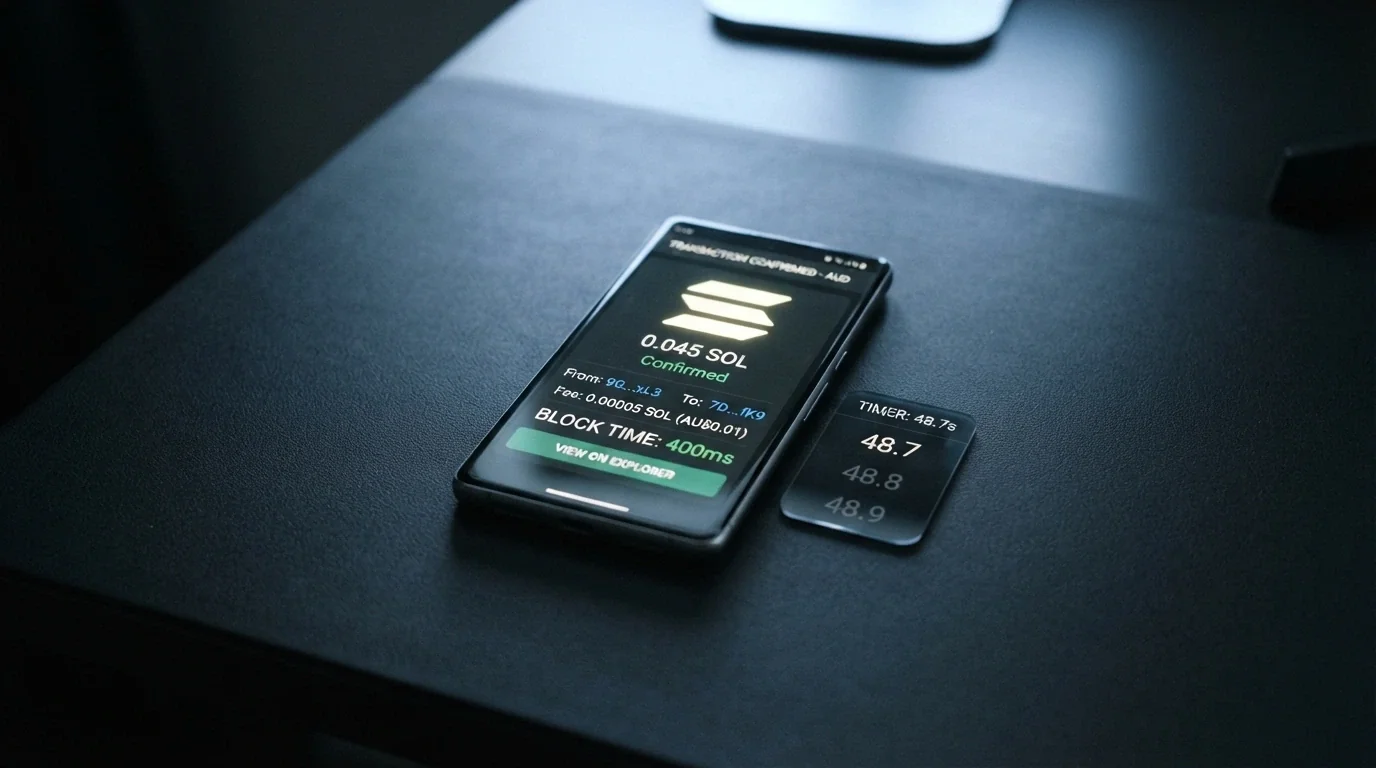
The on-chain format suggests anonymity. It does not deliver it. Solana is built for speed and low fees, not for privacy; every transaction is permanently and publicly recorded on-chain. A wallet address is a pseudonym, not an identity, but the transaction history attached to that address is permanent. Once an address has been linked to a person — through a KYC event, a deposit from a named exchange account or a withdrawal to a card-bearing bank — the full history opens up.
The no-KYC casinos in this category know that, and they handle it with a threshold. Many no-KYC casinos set withdrawal thresholds of $2,000–$10,000, above which identity verification is required. Below the threshold, no name is asked for. Above it, a player runs the same KYC process they would have run at a card-paying casino. The privacy benefit is the small-withdrawal window, not anonymity for the session.
The Australian tell sits on top. Crypto is banned as a payment for online wagering since 11 June 2024 under the Interactive Gambling Amendment (Credit and Other Measures) Act 2023. Any Australian-facing operator asking for SOL is, by definition, an operator outside the Australian rules — because an Australian-licensed operator could not legally take it.
SOL and its casino tokens — what you are actually staking
SOL is the headline currency, but most Solana casinos support a wider basket. Solcasino.io supports 25+ cryptocurrencies including SOL, BTC, ETH, USDC, USDT, BNB, DOGE, XRP, AVAX, MATIC and a list of Solana memecoins. The memecoin angle is the loud one in the marketing — a casino that takes a $200 million-cap dog-themed token is, in fact, taking a $200 million-cap dog-themed token, and the price volatility that comes with it. Bets priced in dollar terms are bets at the prevailing rate; a win paid in the memecoin is a win whose dollar value depends on what the token is worth at withdrawal.
For SOL itself, the dollar reference is straightforward. At $150 per SOL, 0.007 SOL is about a $1.00 roll, and minimum bets start near one cent of value. The stake size is small enough that a bankroll is set in fractions of a coin rather than in dollar amounts the player counts. That is convenient at the table and inconvenient in a tax calculation, where the cost basis of every fraction has to be tracked if the Australian Taxation Office ever asks.
Deposits in seconds, withdrawals after the security check
The deposit figure is genuinely fast. BC.Game’s measured average SOL deposit is 31 seconds end-to-end (wallet-to-platform balance), which includes the player’s confirmation step. Withdrawals average 28 seconds for the on-chain settlement, with the operator’s largest test withdrawal of 8.2 SOL processed in 28 seconds. That is the part of the speed pitch the blockchain delivers.
What it does not deliver is the operator’s internal security check. Five to ten minutes after the withdrawal request is the published window. Some operators do it in seconds; some take longer. The five-to-ten-minute figure is what the comparison pages cite, and it is the figure that reflects the operator’s review process rather than the network’s settlement time. Read the window as the operator’s response time, not as a guarantee.
No-KYC play and where the anonymity ends
The draw of a no-KYC Solana casino is that the player does not submit identity documents to play. The constraint is that the operator still has the address the SOL came from, and that the address is permanently linked to the wager history on a public ledger. The KYC threshold ($2,000–$10,000 across the typical range) is where the operator decides the balance has grown enough that a name is required.
The picture is sharper than the marketing. A player who keeps withdrawals below the threshold and never deposits from a KYC’d exchange keeps the no-KYC promise. A player who deposits from a card-funded exchange account, plays for a few weeks, and tries to withdraw $5,000 has just linked their exchange identity to their wager history on a public blockchain. The marketing term for this is “anonymous play”. The technical term is “pseudonymous until KYC triggers”.
For Australians, the constraint is one layer tighter. Credit cards, credit-related products and digital currency (crypto) have been banned as payment for online wagering since 11 June 2024, with penalties of up to $247,500 for operators that fail to enforce it. Any Australian-facing operator asking for SOL is, by definition, asking for a payment method the licensed market cannot use. The crypto payment ban is the tell that an operator sits outside Australian consumer protection, because a licensed operator could not legally accept the deposit in the first place.
The ten operators Australians play at, ranked without the hype
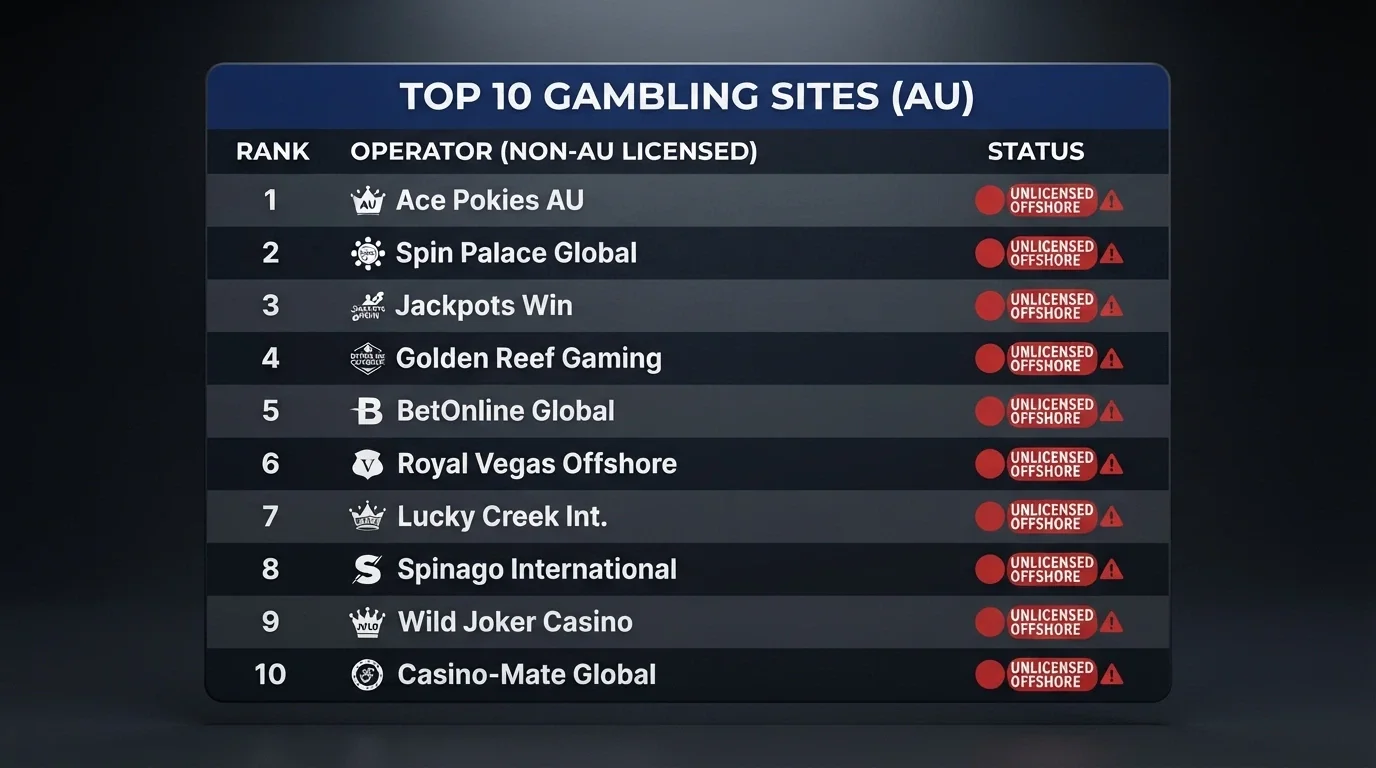
The table below lists the ten featured operators against their status in Australia and, where the inputs carry a date, their founding year. Licence details, bonus sizes and game counts are deliberately not in the table — research carries no per-operator specifics beyond the five it lists, and a column repeating one value across most rows fails the comparison. Each operator’s write-up covers the rest.
| # | Casino | Status in Australia | Founded |
|---|---|---|---|
| 1 | BC.Game | Unlicensed offshore | 2017 |
| 2 | Stake | Unlicensed offshore | — |
| 3 | Rocket Play | Unlicensed offshore | — |
| 4 | Skycrown | Unlicensed offshore | — |
| 5 | Cloudbet | Unlicensed offshore | 2013 |
| 6 | BitStarz | Unlicensed offshore | 2014 |
| 7 | FortuneJack | Unlicensed offshore | 2014 |
| 8 | Royal Reels | Unlicensed offshore | — |
| 9 | FairGO | Unlicensed offshore | — |
| 10 | Solcasino.io | Unlicensed offshore | 2021 |
The founding-year column carries five entries. The other five operators either did not surface a verifiable founding date in the inputs or sit in a category (offshore generalist, RTG-focused library) where the date is not load-bearing. A blank in that column is honest; a guessed 2010 is not.
Every row above says the same thing in the second column: unlicensed offshore. That is the legal status, not a placeholder. There is no row where the status is anything else, because there is no licence available for online casino in Australia. A casino cannot earn that row by adding a feature or passing a check; the row reflects the statute, not the operator.
What the welcome bonus actually costs you
Welcome bonuses across Solana-accessible casinos typically range from a 100% match up to a 335% match, with caps between €2,000 and €2,750 and wagering requirements of 30x to 45x on the bonus (or on deposit plus bonus). One operator, Winshark, publishes a 335% welcome bonus up to €2,750 with 30x wagering on the bonus only across 125 providers. Another offers a 240% package across three deposits up to €650 plus 250 free spins with 45x wagering on the bonus.
A worked example. A player takes a 100% match up to €1,000 with 40x wagering on the bonus. The bonus is €1,000. The required turnover is €1,000 × 40 = €40,000. At a typical slot stake of €1 per spin, that is 40,000 spins. At five seconds per spin, that is 200,000 seconds of play — roughly 55 hours of continuous wagering to clear the bonus.
The cost of clearing it, on average, is the expected loss across those 40,000 spins. At a 96.5% return-to-player (a reasonable midpoint across the Pragmatic Play portfolio, which averages 96.47%), the house keeps 3.5% of turnover. Expected loss on €40,000 of wagering is €40,000 × 0.035 = €1,400. The bonus was €1,000. The expected cost of clearing it is more than the bonus itself. Cloudbet’s zero-rollover welcome up to USD $2,500 is the structural exception — no wagering requirement, because the offer is a rakeback and cash-drop model rather than a deposit match. The cost there is paid in lower headline size, not in turnover.
The marketing line — “100% match up to €1,000” — is the headline. The arithmetic is “you wager €40,000 to clear a €1,000 bonus, and the house keeps €1,400 of that €40,000 on average”. Read both.
BC.Game
BC.Game was founded in 2017 and operates under an Island of Anjouan licence. Its library is the largest in the comparison: 9,000+ titles, with an average RTP of 96.7% across the catalogue. The casino supports SPL tokens alongside the standard SOL/ETH/BTC stack, and the verified speed figures are the cleanest in the table: average SOL deposit 31 seconds, average SOL withdrawal 28 seconds, with the operator’s largest test withdrawal of 8.2 SOL processed in 28 seconds.
The licence is offshore, not Australian, which puts it in the same legal position as every other operator on this page. For an Australian player, what BC.Game offers is scale — 9,000 games is a meaningful ceiling for the comparison — and measured SOL settlement that the blockchain side can actually deliver. What it does not offer is recourse through any Australian body if the balance goes missing or the account closes.
For a player prioritizing the largest game catalogue available, BC.Game is the default choice.
Stake
Stake is ranked #1 as “Best Overall SOL Casino” in one 2026 Solana-casino roundup. The ranking is a third-party editorial call, not a regulatory one, and it reflects Stake’s brand position in the crypto-casino market rather than any Australian-side qualification. Research carries no per-operator specifics for Stake’s licence or welcome terms, so the write-up stops at what the inputs support.
Like every row on this page, Stake is unlicensed in Australia. The roundup ranking does not change the legal status. For a player who weights third-party rankings heavily and has accepted the offshore status, Stake sits at the top of one list; for everyone else, it is one of ten offshore casinos to compare on the same axes.
Rocket Play
Rocket Play is an offshore generalist casino. Research does not carry per-operator specifics for its licence, welcome terms or game count, and the write-up covers those qualitatively: a multi-deposit welcome package with terms in the standard range for this market, and a wide game library across the major crypto-casino providers.
The legal position is identical to every other row: unlicensed offshore, no Australian recourse, no BetStop coverage. Rocket Play functions as a generalist option similar to Skycrown; if it is one of the ten operators under consideration, verify the licence terms independently.
Skycrown
Skycrown is an offshore generalist casino with a multi-deposit welcome package and a wide game library. Research carries no per-operator specifics for Skycrown’s licence or bonus terms, so the write-up stays qualitative. The operator sits in the same generalist tier as Rocket Play and the other offshore brands without a verified licence in the inputs.
For an Australian player, the choice between Skycrown and the other offshore generalists on this page is a choice between welcome packages and library depth — not a choice between licensed and unlicensed, because every operator on the page is unlicensed. Pick on terms.
Cloudbet
Cloudbet was founded in 2013 and operates under a Curaçao Gaming Control Board licence — OGL/2024/328/0599, held by Halcyon Super Holdings B.V. (company number 148526). It carries a Casino.Guru Safety Index of 9.2 (Very High), supports 30+ cryptocurrencies, and publishes a zero-rollover welcome offer up to USD $2,500 structured as rakeback and cash drops rather than a deposit match. KYC triggers at around USD $2,200 cumulative withdrawals.
The licence is verifiable through the Curaçao GCB register. The zero-rollover welcome is the structural exception in the comparison: no wagering requirement means the bonus does not carry the €40,000-turnover cost a standard 40x match demands. The trade-off is the headline size — USD $2,500 is the cap, paid through ongoing rakeback rather than as a single deposit match.
For a player who wants the most transparent licence and the cleanest bonus structure on the page, Cloudbet is the structural pick. It is still unlicensed in Australia, still offshore, still outside BetStop. The comparison it offers is among offshore operators, not against any licensed Australian product.
BitStarz
BitStarz was founded in 2014 and is one of the longest-running hybrid crypto-and-fiat casinos in the comparison. Casino.Guru scores it 9.8 (Very High), AskGamblers’ editorial team gives it a 10/10, and the player score sits at 8.8 across 628 reviews. It supports 11 cryptocurrencies alongside 10 fiat currencies, which makes it the most flexible on payment rails among the ten.
Research does not carry BitStarz’s specific welcome terms, so the write-up covers them qualitatively: a multi-deposit welcome package in the standard range for this market. The licence is offshore, the status in Australia is unlicensed, and the write-up reads as a hybrid veteran that bridges the crypto-only and fiat-friendly ends of the offshore market.
For a player who wants the longest-tenured hybrid operator on the page, BitStarz is the safe pick in the review-site sense. The “safe” here is a third-party editorial score, not an Australian regulatory standing.
FortuneJack
FortuneJack was founded in 2014 and operates under a Costa Rica licence. Its library runs 3,000+ games with an average RTP of 96.5%. The catalogue sits between BC.Game’s 9,000+ and the smaller libraries of the offshore generalists, and the licence is verifiable through the Costa Rican framework.
The status in Australia is unlicensed offshore. The library sits at a medium-large tier for the comparison, and FortuneJack stands as a long-tenured choice for players seeking a verified licence outside the Anjouan/Curaçao cluster.
Royal Reels
Royal Reels is an offshore casino from the Australian operators market. Research does not carry per-operator specifics for its licence, welcome offer or game count, and the write-up covers those qualitatively: a standard offshore casino library with a standard welcome offer.
For an Australian player, Royal Reels is one option in the offshore generalist tier. The status is unlicensed, the coverage is qualitative, and the comparison to the other operators is on terms — not on a different legal footing.
FairGO
FairGO is an offshore casino with a RealTime Gaming (RTG)-focused library. RTG is a long-running casino software provider with a smaller and more consistent catalogue than the Pragmatic/Hacksaw/Evolution stack the generalists use. Research does not carry per-operator specifics for FairGO’s licence or welcome terms.
For a player who knows the RTG catalogue and wants that specific library, FairGO is the focused option. The status is unlicensed offshore, the welcome is qualitative, and the comparison is on library taste rather than licence status.
Solcasino.io
Solcasino.io launched in December 2021 and was the first casino platform built on the Solana blockchain. It accepts 25+ cryptocurrencies — SOL, BTC, ETH, USDC, USDT, BNB, DOGE, XRP, AVAX, MATIC and a list of Solana memecoins — and the wagering is wallet-native, with no account creation required for the Web3 flow.
It is the Solana-native original on this page. The library is narrower than BC.Game’s, the licence is offshore, and the draw is the wallet-connected play rather than a 9,000-game catalogue. For a player who wants the on-chain format specifically — the wallet connection, the SPL tokens, the Solana memecoins — Solcasino.io is the category-defining option.
Slots, dice and coin flips — what the libraries actually hold
A slot machine at a Solana casino plays the same as a slot machine anywhere else. The reels spin, the symbols land, the return-to-player (RTP) percentage is the long-run average of what the machine pays back. The fact that the bet settled on a blockchain does not change the math on the reels. The Solana-side distinction is in the table game and the dice game — the provably-fair games whose seeds can be verified after the roll.
Slot RTPs across this market typically fall between 94% and 98%, with house edge percentages of 1% to 5% depending on the title. The 96%–97% band is where most modern slots sit; the higher-RTP end (97%–98%) is rarer and usually reserved for specific titles. The lower-RTP end (94%–95%) shows up in older titles and in some branded content. The house edge is the inverse of the RTP — a 96.5% RTP is a 3.5% house edge, which is the casino’s long-run take per dollar wagered.
Dice and Plinko products at Solana casinos typically publish a 99% RTP or 1% house edge. The Solana dice format uses a hashed server seed, client seed and nonce to derive the roll, and the hash is published before the bet so the player can verify after. The 1% edge is the published margin; verification proves the roll was not manipulated, not that the house edge is zero. Verification is for honesty, not for advantage.
Slots — the RTP numbers, title by title
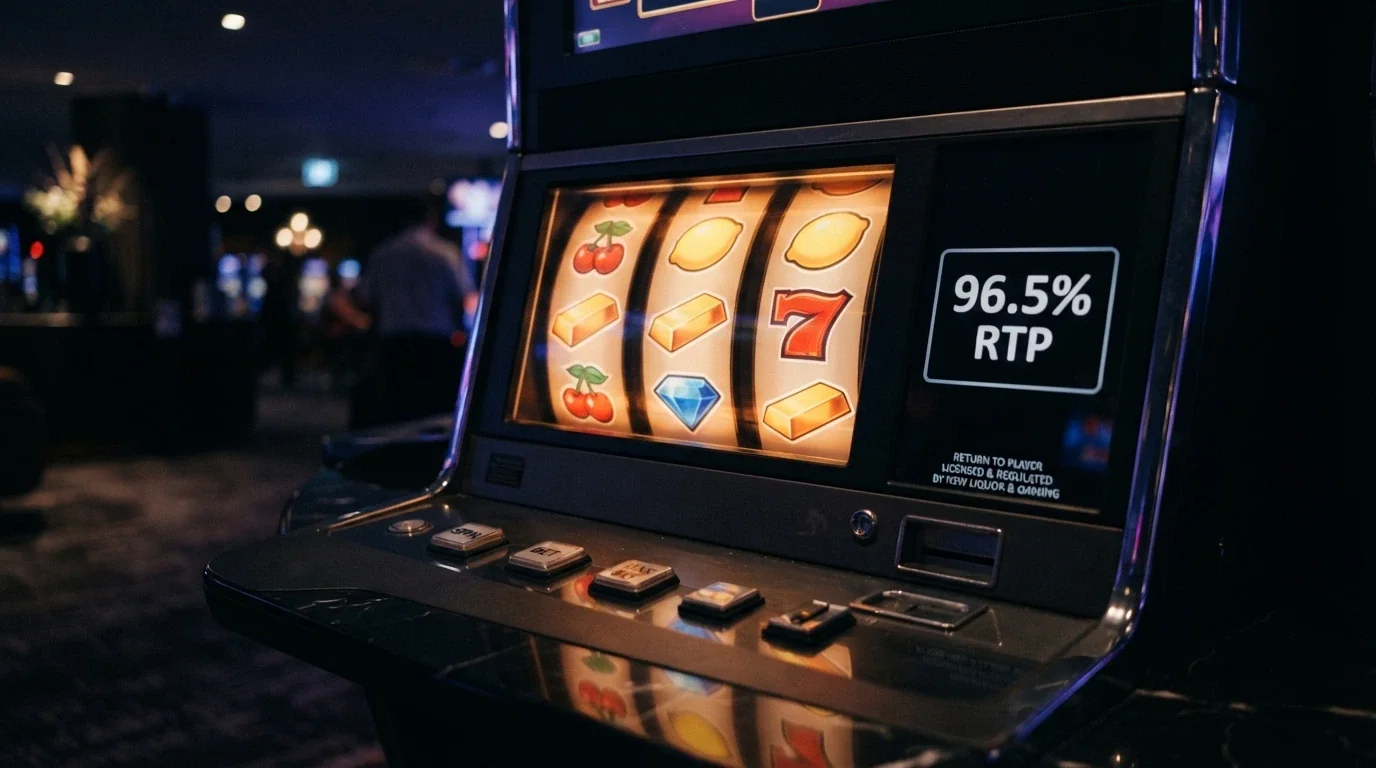
The table below lists the titles the inputs carry an RTP and volatility figure for, against their provider and the published return-to-player. Titles without a verified RTP in the inputs are not in this table — research names RTPs for a handful of titles, and most slots the comparison pages mention take the no-data marker or stay out of this column.
| Slot title | Provider | RTP | Volatility |
|---|---|---|---|
| Gates of Olympus | Pragmatic Play | 96.5% | 6 (high) |
| Sweet Bonanza 1000 | Pragmatic Play | 96.53% | 6 (high) |
| Wanted Dead or a Wild | Hacksaw Gaming | 96.38% | High |
| Big Bass Bonanza | Pragmatic Play | 96.71% | — |
Wanted Dead or a Wild carries a maximum win of 12,500x the bet. The other three titles do not have a max-win figure in the inputs.
Provider averages fill the rest of the picture. The average standard RTP across the Pragmatic Play portfolio is approximately 96.47%. The Hacksaw Gaming portfolio averages approximately 96.27%, with nearly every title sitting above 96.00%. Those averages are the baseline; individual titles deviate, and the deviation is what the per-title table is for.
A 96.5% return still hands the house 3.5 cents in every dollar. The RTP sets the cost; the volatility sets the variance. A high-volatility slot at 96.5% pays back the same in the long run but produces longer losing runs between wins, which is what the volatility 6 / high classification on these titles means. Picking on theme is one thing; picking on the RTP is the more honest move.
Dice and Plinko: a 1% house edge you can verify
The dice format on a Solana casino is the provably-fair category’s purest expression. The casino publishes a hashed server seed before the bet. The player provides or accepts a client seed. The two seeds, plus a nonce that increments per bet, generate the roll. After the bet, the server seed is revealed and the player can hash it to confirm it matches the pre-bet hash.
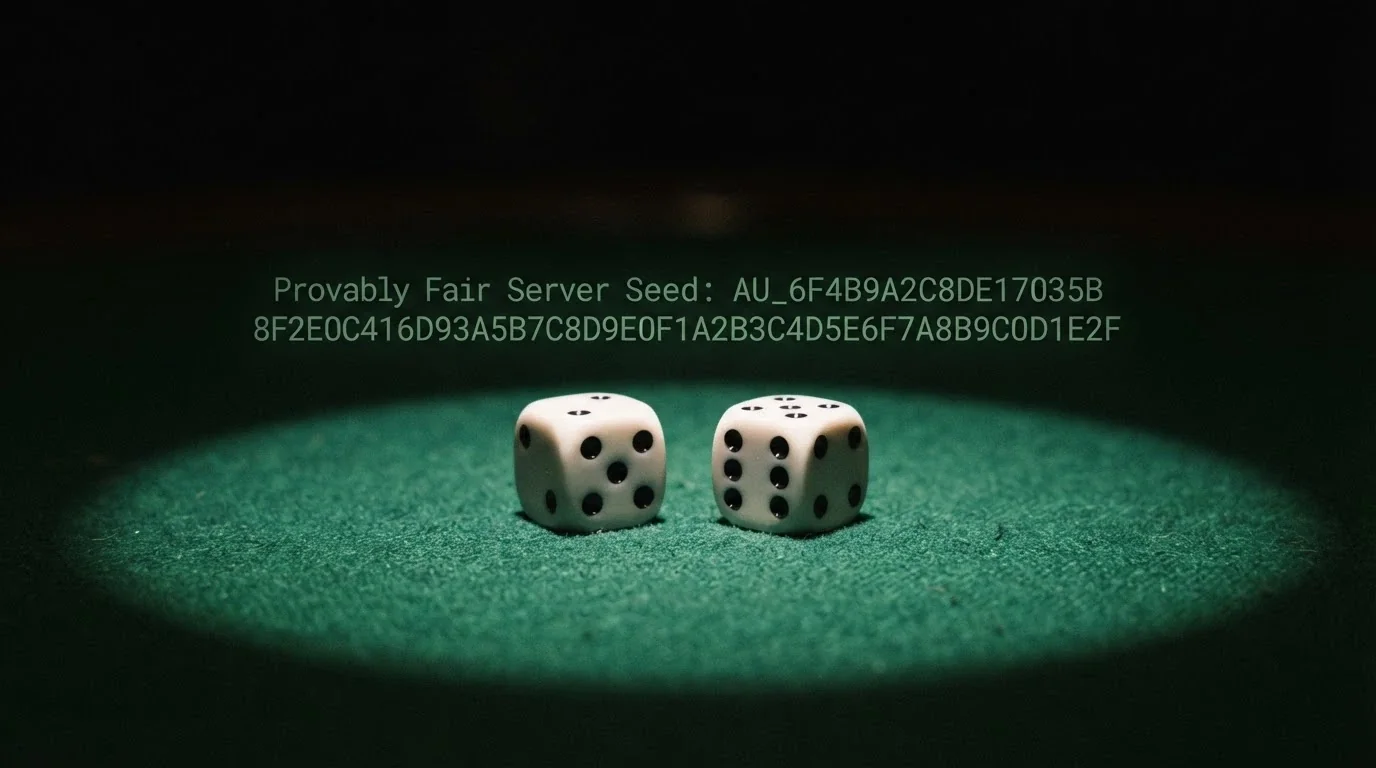
The verification proves the roll was not altered. It does not prove the roll was favourable. The published house edge on Solana dice is 1%, derived from the roll mechanic; that is the casino’s margin and it sits in the price of every bet the same way the slot’s 3.5% house edge sits in the price of every spin.
The per-roll value is small. At $150 per SOL, 0.007 SOL is about a $1.00 roll, and minimum bets start near one cent of value. The scale is what makes the on-chain dice format economically viable — a bet that costs a fraction of a cent in network fees can settle in seconds, which a $5 Ethereum gas fee would make impractical. The blockchain side is the enabler; the 1% edge is the cost.
The providers behind the reels: Pragmatic versus Hacksaw
Two studios dominate the libraries on the comparison list. Pragmatic Play was founded in 2015 in Malta and carries 350+ games with an average RTP of 96.5% and a top win of 5,000x on most titles. Hacksaw Gaming was founded in 2018 in Malta and carries 120+ games with an average RTP of 96.4% and a top win of 50,000x on Chaos Crew 2 and a handful of other titles.
Hacksaw’s broader reach is wider than its title count suggests: the studio distributes 250+ games across 3,000+ operator brands in 35+ regulated markets. The smaller library, the higher volatility ceiling and the same RTP band as Pragmatic define the Hacksaw position. Pragmatic’s larger library and lower top win cap define its position. The choice between them is a choice between catalogue depth and upside ceiling, with similar long-run returns either way.
The named game: Slotana’s 50/50 coin flip
Slotana is a Web3 coin flip game on Solana with 50/50 odds and a transparent game history stored on the Solana blockchain. It is the most focused expression of the on-chain format — one game, public history, no library to navigate.
The 50/50 odds mean a 50% chance of winning and a 50% chance of losing. The house edge sits in the payout structure rather than in a published margin — a “true” 50/50 would return 2x the bet, but a typical Slotana-style coin flip pays 1.95x or 1.9x. The difference is the house edge, and the smaller the multiplier the larger the edge. Verify the payout ratio before the first bet; that is the term that matters.
Online casino is prohibited here — this is not a grey area
The Interactive Gambling Act 2001 (IGA) prohibits online casino games, online pokies (slots) and in-play betting on a sporting event once it has started. The Interactive Gambling Amendment Act 2017 closed the loopholes offshore operators had been using and gave the ACMA its enforcement and blocking powers. There is no licence for online casino anywhere in Australia — not federally, not in any state or territory. The product is banned; the licence that would govern it does not exist.
“This is not a regulatory gray area.” The line is worth keeping. The reason is the comparison pages that frame online casino as “grey” — that framing is wrong, and it is the framing most affiliate listicles use. The grey framing creates the impression that an Australian can play online casino and hope the regulator looks elsewhere. The regulator is not looking elsewhere; the regulator is blocking sites, fining operators and referring cases.
The IGA ban: no licence exists anywhere in the country
The IGA prohibits three things to people in Australia: online casino games (table games and slots delivered over the internet), online pokies (slots specifically, including any virtual pokie product), and in-play betting on a sporting event once it has started. The 2017 amendment extended the prohibition to overseas-based providers and gave the ACMA formal enforcement powers.
What is permitted and licensable: wagering on races and sport placed before the event begins, lotteries and keno. The wagering licences are issued at state and territory level — the Northern Territory Racing and Wagering Commission (NTRWC), administered through Licensing NT, is the de facto national licensor for the major online bookmakers. The licensed product is pre-event sports and race wagering; it is not casino.
There is no federal deposit, loss or stake ceiling for online gambling in Australia, because the product those ceilings would govern is banned outright. The minimum age for all commercial gambling is 18. The absence of a federal ceiling is sometimes cited as evidence the offshore market is unregulated — and it is, but the absence reflects the ban on the product rather than a permissive approach to it.
ACMA enforcement: blocks, penalties and 1,564 sites
The ACMA is the federal regulator that enforces the online prohibition. It investigates complaints, issues formal warnings, runs civil penalty proceedings, refers operators for enforcement, and directs Australian ISPs to block illegal sites by DNS-level block.
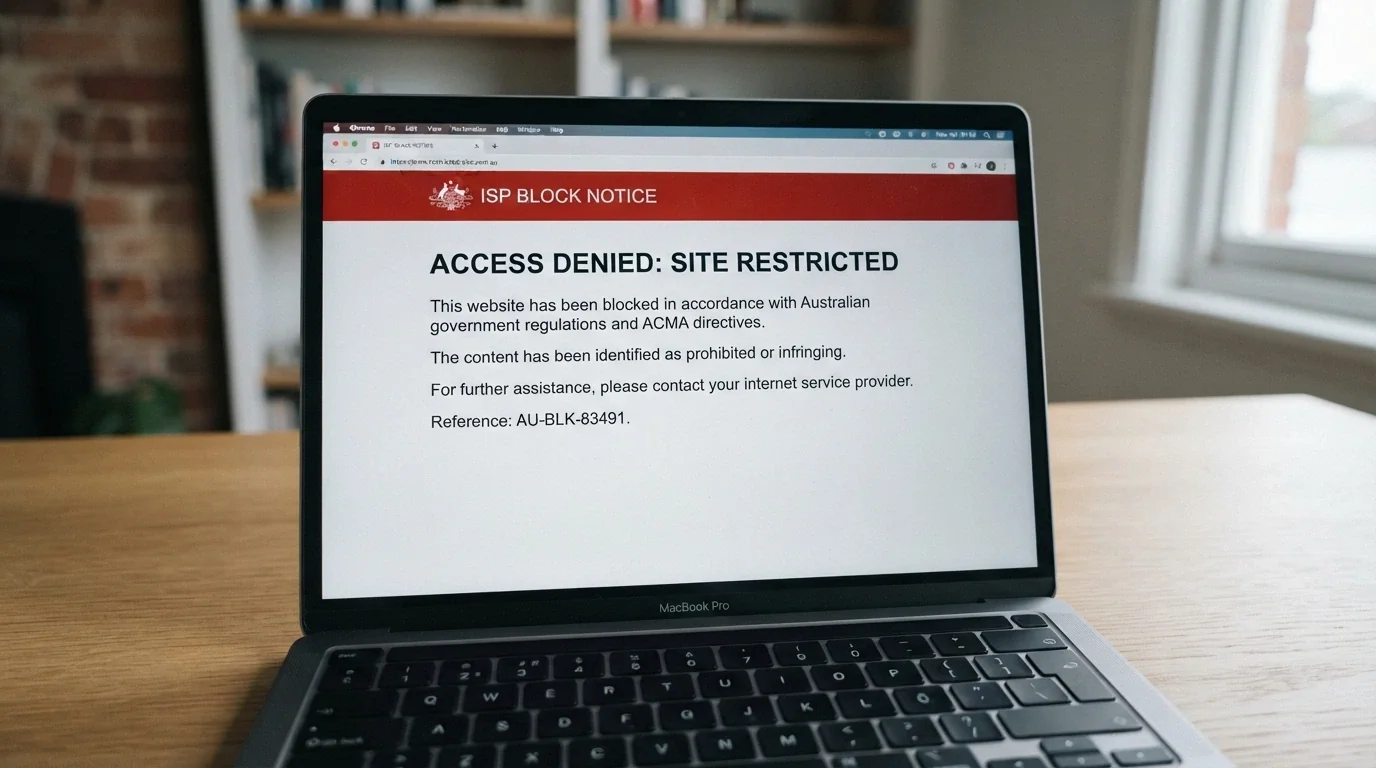
The block count is the headline figure. Since its first blocking request in November 2019, the ACMA has had 1,564 illegal gambling and affiliate websites blocked by Australian ISPs, as of March 2026. More than 225 illegal services have withdrawn from the Australian market since enforcement was strengthened in 2017. The number is not a one-off; it is a running total of an enforcement programme that has been active for over six years.
Penalties sit alongside the blocks. An operator that fails to enforce the credit/crypto payment ban faces penalties of up to $247,500 under the Interactive Gambling Amendment (Credit and Other Measures) Act 2023. The penalty is per breach, and the operator is the party that pays — the individual player is not prosecuted. The IGA targets the provider of the prohibited service, not the person accessing it.
The consequence of the enforcement is what matters for an Australian player. A site can be blocked at any time, with a balance still on it. The 1,564 block figure includes affiliate sites as well as gambling sites — the marketing infrastructure is on the blocklist, not only the operators. A balance left on a blocked site is, in practice, gone; the ACMA cannot recover it because the ACMA’s job is the block and the penalty, not the refund.
The crypto payment ban and what changes on 1 January 2027
Credit cards, credit-related products and digital currency (crypto) are banned as payment for online wagering since 11 June 2024 under the Interactive Gambling Amendment (Credit and Other Measures) Act 2023. The licensed market enforces this; the offshore market does not. An Australian-facing operator asking for a SOL deposit is, by definition, an operator outside the Australian rules — the payment method is itself the tell.
The Interactive Gambling Amendment (Gambling Reform) Bill 2026 passed Parliament on 19 August 2026; its measures commence 1 January 2027. From that date, banks and payment providers gain express authority to block transactions to illegal gambling operators. Direct marketing of inducements is prohibited for 14 days after a customer signs up, for three months after a person deregisters from BetStop, and indefinitely for customers identified as at risk of gambling-related harm.
The bank-blocking authority is the structural change. Today, an offshore casino sits at the end of a payment chain the bank cannot see. From 1 January 2027, the bank can block the transaction before it leaves the account. The change does not bring the offshore casino into the Australian regulatory framework; it makes the offshore casino harder to fund. For a player using a card to buy SOL on an exchange and then sending SOL to the casino, the bank can intervene at the card step, the exchange step or the SOL transfer step.
The inducement marketing restriction is the other half. Welcome bonuses, referral bonuses, free bets — these are the inducements the licensed market already restricts and that the 2026 reform hardens. An offshore casino advertising a 335% welcome bonus to an Australian is breaking the prohibition itself, not merely an advertising rule.
Licensed wagering versus an offshore casino: what you give up
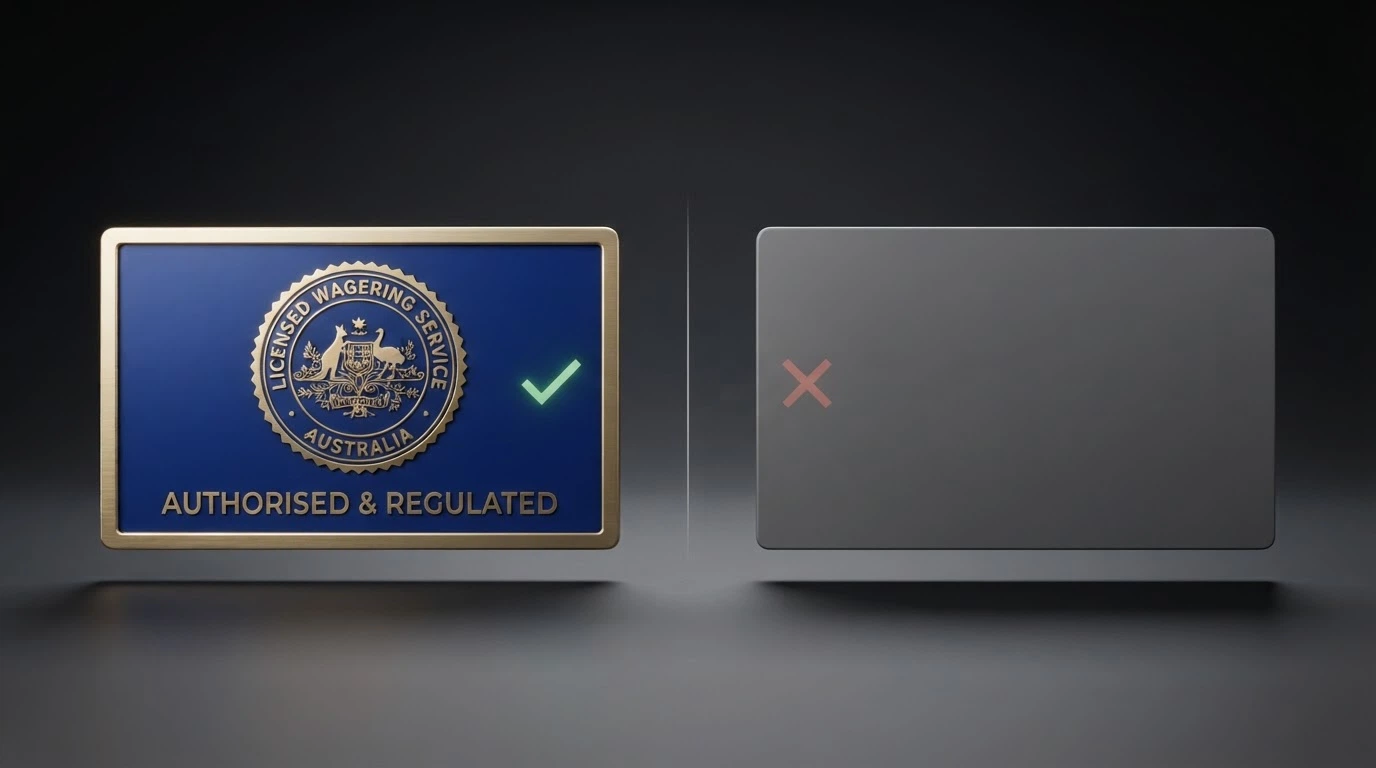
The contrast is between a licensed Australian wagering service and an offshore Solana casino. The two are different products under different licences, but the comparison is the one a player needs before a deposit.
| What you can play | Licence | BetStop coverage | Crypto deposits | Consumer recourse |
|---|---|---|---|---|
| Pre-event sports and race wagering, lotteries, keno | State/territory licence (e.g. NTRWC) | Yes — one registration excludes from every licensed service | Not permitted since 11 June 2024 | Australian Consumer Law, state/territory regulator, ACMA complaint pathway |
| Online casino, slots, dice, live dealer | Offshore (Anjouan, Curaçao, Costa Rica, or unverified) | No — offshore casinos are not connected to BetStop | Yes — SOL and other cryptos accepted | None in Australia — no ACMA recovery, no AU complaints body |
The licensed side offers no online casino at all. The offshore side offers everything the licensed side does not, and offers it without the consumer protection the licensed side carries. The legal deposit routes on the licensed side are debit card, bank transfer, PayID/Osko and BPAY; verification of identity is required to open an account. The offshore side asks for a wallet signature and a SOL transfer.
The choice is between a regulated product the player cannot use for casino and an unregulated product the player can use for casino. The “what you give up” is the answer: every row on the right side of the table is what an offshore route costs. BetStop coverage, the consumer law pathway, the crypto ban enforcement, the recourse. None of it transfers.
BetStop does not reach these sites — here is the help that does
BetStop is the National Self-Exclusion Register. One registration excludes a person from every Australian-licensed online and phone wagering service in a single step, and licensed operators must not accept them or send them marketing. BetStop launched on 21 August 2023; to the end of Q3 FY 2025–2026 (31 March 2026), 59,830 people had registered to self-exclude from all licensed online and phone wagering providers in Australia. As of the same date, 37,247 exclusions were still active.
BetStop binds Australian-licensed wagering services only. An offshore casino is not licensed here, is not connected to the register, and will keep accepting a self-excluded person’s money. This is the single most concrete harm of the offshore route. A self-excluded Australian can keep depositing at an offshore casino with no register to stop them, because the register was never built to reach offshore sites.
The harm numbers sit alongside the register. Approximately 3.29 million Australians aged 5 and over are affected annually by their own or another person’s gambling. The model estimates approximately 9.2 in every 100 Australian adults are classified as having at-risk or problem gambling, and 6.4 are affected others requiring support. The annual health loss associated with gambling-related harm in Australian adults is estimated at over 400,000 Years Lived with Disability.
The controls an offshore casino does not carry
A licensed Australian wagering operator carries deposit limits, loss limits, take-a-break functionality and BetStop binding. The offshore casino does not carry any of these as a regulatory minimum. Some offshore operators offer session timers or voluntary limits inside their own interface; none of them is bound by an Australian standard, none of them is checked by an Australian regulator, and a self-excluded person remains welcome at the cashier.
The federal deposit, loss or stake ceiling does not exist for offshore sites because there is no federal ceiling for any online gambling in Australia — the product the ceiling would govern is banned. The offshore casino runs on its own house rules, and the house rules do not include the protections a licensed wagering operator carries by statute.
Where Australians actually get help: the helpline and counselling
- National Gambling Helpline — 1800 858 858. Free, confidential, staffed 24 hours a day, 7 days a week, with online chat and counselling through Gambling Help Online (gamblinghelponline.org.au). Operated by the Department of Social Services.
- Self-exclusion via BetStop — from a minimum of 3 months up to a lifetime. Covers ~150 licensed wagering providers. Does not cover offshore casinos.
- Gambling Help Online — online counselling and self-help resources. Reached through the helpline number above.
- State-based services — each state runs its own gambling support service, accessible through the national helpline.
The helpline reaches any Australian, whether the casino does or not. That is the point of the block above, and it is the point of the page.
BetStop’s reach and the awareness gap in the numbers
The numbers carry a gap. Only 33.5% of wagerers and 26.5% of Australian adults know BetStop exists. The 59,830 registrations against an estimated five million wagerers nationwide is the gap Dr Kei Sakata, Executive Manager at the Australian Gambling Research Centre (AGRC) at the Australian Institute of Family Studies, captured in one line: “Despite an estimated five million wagerers nationwide, including 400,000 high-risk gamblers, just 30,000 individuals have registered with BetStop.”
The gap is not uniform. 27.1% of Aboriginal and/or Torres Strait Islander people are at risk of gambling harm, compared to 14.6% of non-Indigenous Australians. The NSW Gambling Survey 2024 puts prevalence in NSW at 0.9% high-risk, 3.1% moderate-risk, 6.7% low-risk among adults. The awareness gap and the prevalence gap run in opposite directions — the groups with the highest harm exposure are the groups least likely to know the register exists.
The reach number — 37,247 active exclusions out of 59,830 lifetime registrations — shows the register is not collecting dust. One in three registrants has deregistered; two out of three are still bound. The register is working for the people who use it; the gap is the people who have not yet reached it.
How we checked: sources, the whitelist, and the criteria
The sources for the legality and enforcement claims are the Interactive Gambling Act 2001 (as amended), the ACMA’s published enforcement statistics and the BetStop statistics for Q3 FY 2025–2026. The sources for the per-operator figures are the operators’ own published terms and a handful of independent casino review sites (Casino.Guru, AskGamblers, ChainBankroll, CoinCodex, Casipto). The sources for the slot and provider figures are the providers’ own RTP publications (Pragmatic Play, Hacksaw Gaming) and the operator pages that publish per-title specifications.
The ACMA maintains a list of blocked sites, not a whitelist of offshore casinos. The whitelist problem is real: there is no authoritative Australian register of offshore operators serving Australian customers, because the activity is prohibited and there is no licensing framework to populate. The 10 operators on this page are the operators the inputs surface as serving Australian-facing traffic; they are not the full universe, and the absence of a brand from this list is not an endorsement of its legality.
The criteria that ordered the ranking are: a verifiable licence detail where the inputs carry one; the depth of the per-operator specifications the inputs support; and the Solana-specific settlement speed where measured. Weightings are not invented; the ranking is editorial and is stated as such. The legal status column is constant — every row is unlicensed offshore — and is not a ranking input.
Before you deposit a single SOL, read this
Every casino on this page is outside Australian law. The product is prohibited under the Interactive Gambling Act 2001. There is no licence for online casino anywhere in Australia. The ACMA has blocked 1,564 illegal gambling and affiliate websites since November 2019, and 225+ services have withdrawn from the Australian market since 2017. The offshore casino offering the welcome bonus is the offshore casino offering the welcome bonus to a market whose regulator is actively blocking sites in it.
The thing the offshore route costs the player is not on a deposit screen. It is the absence of BetStop binding — a self-excluded Australian can keep depositing at any of these ten operators because the register was never built to reach them. It is the absence of an Australian consumer body — if a balance disappears behind an ACMA block or a withdrawal is refused, there is no Australian complaints pathway. It is the absence of crypto ban enforcement — the licensed market cannot accept SOL, so the operator asking for it is by definition outside the rules. The welcome bonus is the surface; the offshore route is the substance.
The 1% dice edge and the 3.5% slot edge are honest edges; the marketing word “anonymous” is not; the marketing word “instant withdrawal” is not — the blockchain side is fast, the operator’s security check is not. The arithmetic on the bonus is the arithmetic on every bonus in this market: turnover multiplied by house edge, expected loss larger than the bonus. The page has not been written to send the reader to a casino. It has been written to send the reader to the page they need before they decide — and to the help line that reaches them whatever they decide.
For an Australian weighing the offshore route: 1800 858 858 is the number that works regardless of the casino’s status.
Frequently asked questions
Do I have to pay tax on gambling winnings from a Solana casino in Australia?
Gambling winnings from an ordinary punter are not assessable income under section 6-5 of the ITAA 1997, and losses are not deductible under section 8-1 — unless the activity is a business of betting. Converting AUD to SOL and back can trigger capital gains tax events on the disposal of a CGT asset, so keep records of the cost basis of every conversion and speak to a tax adviser for personal advice.
What happens if an offshore Solana casino blocks Australian users or gets blocked by the ACMA?
If the operator blocks Australian users, the account and any balance become inaccessible through normal channels. If the ACMA has the site blocked at the ISP level, Australian access is interrupted. In either case, the ACMA does not recover balances; the enforcement is the block and the penalty against the operator, not a refund pathway for the player. The 1,564 sites blocked since November 2019 include balances left on them.
Which Solana casino has the fastest withdrawal times for Australian players?
BC.Game’s measured average SOL withdrawal is 28 seconds on the blockchain side, with the operator’s largest test withdrawal of 8.2 SOL processed in 28 seconds. The 5–10 minute window cited across this market is the operator’s internal security check, not the network settlement — the check is what most operators quote, and it is what produces the difference between “fast” and “instant”.
What is the minimum deposit at a Solana casino?
The on-chain minimum is small. Solana dice products quote minimum bets starting near one cent of value, and a $1.00 roll is around 0.007 SOL at $150 per coin. Casino deposit minimums are typically set higher than the dice minimum — check the operator’s cashier page for the deposit floor in SOL or in dollar terms at the prevailing rate.
Is my crypto safe if a Solana casino shuts down?
Not necessarily. Luck.io, an on-chain no-KYC Solana casino, closed on 29 April 2026 with a cumulative player bankroll of $12.125 million visible on-chain. A bankroll sitting in a smart contract is recoverable only if the contract is designed to return it on closure; a bankroll sitting in an operator-controlled wallet is recoverable only if the operator chooses to return it. There is no Australian complaints body to escalate to. The “self-custody” framing of crypto wallets applies to funds the player holds, not to funds deposited with an operator.