
Australian Players and USDT Casinos: The Full Picture for 2026
Australia has a peculiar relationship with online gambling. The product a player wants is the one the law prohibits. Online casino games, online pokies and in-play sports betting cannot be provided to anyone physically in Australia under the Interactive Gambling Act 2001, strengthened by the Interactive Gambling Amendment Act 2017. There is no licence for it anywhere in the country: not federally, not in any state or territory. What IS licensed is wagering on races and sport before the event begins, plus lotteries and keno, through operators licensed by a state or territory, with the Northern Territory Racing and Wagering Commission serving as the de facto national licensor.

That gap is where USDT casinos live. Tether (USDT) is a stablecoin pegged to the US dollar, which removes the price-swing problem Bitcoin and Ethereum carry into a gambling session. A Bitcoin deposit of AU$500 can be worth AU$430 by the time you decide to cash out, regardless of whether you won or lost at the tables. A USDT deposit sits at AU$500 the whole way through. For Australian players looking at offshore casino sites, that stability is the headline feature, and TRC-20 confirmation typically lands in one to five minutes.
This guide covers ten operators that accept USDT from Australian players, ranked against bonus terms, withdrawal speed and game libraries. Every one of them is offshore. None holds an Australian casino licence because no such licence exists. Crypto is banned as a payment method for licensed wagering since 11 June 2024, so paying with USDT is itself a signal that the operator sits outside Australian rules. Players who choose these sites trade faster deposits and a different game lobby for the loss of BetStop coverage, ACMA recourse and any statutory dispute resolution. The sections below lay out the mechanics, the bonuses, the law and the help available when the balance gets uncomfortable.
Data current as of 29 October 2026. Licence claims verified against the Curaçao Gaming Control Board register and the Australian Communications and Media Authority public statements.
Table of Contents
- What a USDT Casino Actually Is — and What It Is Not
- The Offshore Reality Every Australian Player Needs to Know
- How We Structured This Guide
- How Tether Deposits Hit Your Casino Account in Under Five Minutes
- Funding Your Account: USDT Deposits Step by Step
- Getting Your Money Out: Why USDT Withdrawals Beat Bank Transfers
- TRC-20, BEP-20 or ERC-20 — Which Chain Costs You the Least
- What No-KYC Really Means When You Play with Tether
- How Much Personal Information These Casinos Actually Ask For
- Provably Fair Games — What the Term Means and When It Matters
- Why Your 2026 USDT Casino Bonus Is Smaller Than It Looks
- Welcome Bonuses Compared: What AU$1,500 Actually Costs to Clear
- No-Deposit Bonuses: The AU$10 Offer That Comes with Strings
- Free Spins: How 400 Spins Turn into Withdrawable Cash
- From Pokies to Live Blackjack — What You Can Actually Play with Tether
- Pokies: The Titles Worth Your Time in a 5,400-Game Lobby
- Table Games and Live Dealer: When RNG Is Not Enough
- Free-Play Mode: Trying Games Without Risking a Cent
- 10 USDT Casinos That Accept Australian Players in 2026
- RocketPlay
- SkyCrown
- Stake
- Bizzo Casino
- Royal Reels
- WinSpirit
- Rainbet
- Joe Fortune
- 5Gringos
- 21Bit
- The Australian Law That Makes Every Casino on This Page Offshore
- What the Interactive Gambling Act Actually Prohibits — and What It Does Not
- What Changes on 1 January 2027 — and What It Means for Players
- When the Reels Stop Being Fun — Help That Actually Works in Australia
- The Tools That Only Work on Licensed Sites — and What You Can Use Instead
- How We Checked and Ranked Every USDT Casino on This Page
- What You Actually Give Up Playing at an Offshore USDT Casino from Australia
- Frequently Asked Questions
What a USDT Casino Actually Is — and What It Is Not
A USDT casino is a crypto casino that accepts Tether as a deposit and withdrawal currency. It is not an Australian-licensed wagering site. It is not subject to the Interactive Gambling Act, because the IGA applies to operators providing licensed services to Australians, and offshore crypto casinos are not providing licensed services. They are providing unlicensed ones.
The practical difference shows up in three places. First, the game lobby: offshore USDT casinos carry slots, table games and live-dealer titles that no licensed Australian wagering site is permitted to offer. Pokies, blackjack, roulette and the rest of the casino suite sit behind a prohibition, and only an offshore operator can run them. Second, the payment method: licensed wagering accepts debit cards, bank transfer, PayID, Osko and BPAY. Credit cards and crypto are banned. A USDT casino accepts crypto because that is the only thing it can accept. Third, the regulatory layer: a licensed wagering site connects to BetStop, the National Self-Exclusion Register. An offshore USDT casino does not.
What that leaves is a product category defined by what it is not. It is not licensed in Australia. It is not connected to Australian self-exclusion. It is not subject to Australian consumer law or the ACMA enforcement apparatus in any practical sense for the player. What it is, is a fast-depositing, stablecoin-funded casino site operated from a jurisdiction that has its own licensor, Curaçao in every case on this page, and governed by that licensor’s rules rather than Australia’s.
The Offshore Reality Every Australian Player Needs to Know
Every operator ranked on this page is offshore. That word covers more than geography. It covers the protection gap an Australian player walks into on deposit.
BetStop, the National Self-Exclusion Register launched 21 August 2023, binds Australian-licensed wagering services only. As of 30 June 2025, 44,841 people had registered, with 30,032 holding active exclusions. None of those exclusions reach a USDT casino on this list. ACMA’s blocking power has taken 1,564 illegal gambling and affiliate websites off Australian ISPs since November 2019, with more than 225 illegal services withdrawing from the Australian market since enforcement was strengthened in 2017. The blocks work at the domain level, not at the wallet level, and they target providers rather than players. The individual player is not prosecuted under the IGA. The Act targets the provider.
What the player carries instead is the absence of Australian recourse. If the operator refuses a withdrawal, voids a win, or closes the account, there is no statutory dispute resolution path through ACMA, no consumer-law remedy under the Australian Consumer Law, and no BetStop exclusion to fall back on. The site’s terms apply. The site’s Curaçao licence applies. If the site gets blocked while a balance sits on deposit, that balance is stranded behind the block.
The 2026 reform makes this sharper. The Interactive Gambling Amendment (Gambling Reform) Bill 2026 passed Parliament on 19 August 2026; its measures commence 1 January 2027. From that date, banks and payment providers gain express authority to block transactions to illegal gambling operators. Crypto on-ramps in Australia are regulated by AUSTRAC, the Australian Transaction Reports and Analysis Centre, and AUSTRAC-registered exchanges have their own transaction monitoring obligations. The path from an Australian bank account to a USDT transfer to an offshore casino is not invisible to Australian authorities, and from January 2027 it is actively policed at the payment layer.
How We Structured This Guide
A reader comparing USDT casinos from Australia needs four things before a ranked list means anything: how the money moves, what “no KYC” really means, what a bonus headline costs to clear, and what the law says about the product. The order follows that sequence. Deposits and withdrawals come first, because an account has to be funded before any offer is claimed. No-KYC mechanics come next, because the sign-up-versus-cashout gap is where the marketing promise meets the practice. Bonuses come third, because the wagering maths is the part of the offer most players misread. The games section follows, then the ten-operator comparison, then the Australian law that frames the whole exercise, then the help available when gambling stops being fun, then the methodology, and finally the verdict.
The 10-operator table is the reference point. Every section above it builds toward it. Every section below it places it in context.
How Tether Deposits Hit Your Casino Account in Under Five Minutes
Speed is the headline. A USDT deposit on TRC-20 confirms in one to five minutes. On ERC-20 it takes five to fifteen minutes when the Ethereum network is busy. Withdrawals, once verified, typically clear in under two hours, seven days a week. The licensed Australian alternative is a debit card deposit that posts instantly and a withdrawal that takes one to five business days through bank transfer or PayID. USDT moves faster in both directions, and that speed is the reason players tolerate the offshore trade-off.
The mechanics are simple enough to walk through. An Australian player acquires USDT through an AUSTRAC-registered exchange (CoinSpot, Independent Reserve, Swyftx, and others). The exchange sends the USDT to the player’s personal wallet. The player copies the casino’s deposit address, picks a network, and sends the funds. One to five minutes later, the balance appears in the casino account, ready to play.
Funding Your Account: USDT Deposits Step by Step
The fastest path from an Australian bank account to a playable casino balance runs through five steps, and the choice of network decides what most of the cost looks like.
- Buy USDT on an AUSTRAC-registered Australian exchange. The exchange will require identity verification before the first AUD-to-USDT trade, so this step is where KYC starts, just not at the casino. AUSTRAC-registered exchanges monitor transactions and report suspicious activity to the regulator.
- Withdraw USDT to a personal wallet the player controls. This is the buffer that lets the player pick the network and review the amount before sending.
- At the casino cashier, pick Tether (USDT) and the deposit network. TRC-20 is the cheapest. ERC-20 is the most widely supported. BEP-20 sits in the middle on both cost and confirmation time.
- Copy the casino’s deposit address for the chosen network. Sending TRC-20 USDT to an ERC-20 address loses the funds. The address verification step is where most lost deposits happen.
- Send the deposit. TRC-20 confirms in one to five minutes, ERC-20 in five to fifteen, BEP-20 somewhere between. The balance appears in the casino account once the network confirms the transaction.
TRC-20 fees run under A$2 per transaction. ERC-20 fees run A$3 to A$15 when the Ethereum network is busy. For a player depositing AU$100 to play pokies, the network fee is the difference between losing AU$1.80 of that to the network and losing AU$12.
Getting Your Money Out: Why USDT Withdrawals Beat Bank Transfers
Withdrawal speed is the other half of the speed argument, and the practical picture is more mixed than the deposit side. Crypto withdrawals, once verified, typically clear in under two hours. That figure carries a qualifier: once verified. The first withdrawal at any offshore casino triggers a KYC review, and that review can take twenty-four to seventy-two hours. Subsequent withdrawals are faster.
Operator-specific caps cut into the upside. RocketPlay publishes a weekly withdrawal cap of A$15,000 and a monthly cap of A$30,000, with crypto withdrawals clearing in 10 to 30 minutes after approval. Joe Fortune’s withdrawal window runs one to twenty-four hours. 21Bit advertises instant withdrawal processing. The headline withdrawal speed on the comparison table is what the operator claims after verification is complete; the practical speed depends on the player’s verification status and the network’s congestion at the time of the request.
Network fees also cut into what arrives. A withdrawal of A$1,000 in USDT on TRC-20 costs the player under A$2 in network fees, leaving A$998 or so in the wallet. The same withdrawal on ERC-20 in a busy period can cost A$15, leaving A$985. The amount that arrives is the gross minus the network fee, and that amount is what an Australian exchange will convert back to AUD when the player cashes out.
TRC-20, BEP-20 or ERC-20 — Which Chain Costs You the Least
Network choice is the single decision that most affects how much of a deposit reaches the casino. TRC-20 (Tron) is the cheapest, with fees under A$2 and confirmation in one to five minutes. ERC-20 (Ethereum) is the most expensive and the slowest of the three, with fees of A$3 to A$15 and confirmation in five to fifteen minutes when the network is busy. BEP-20 (BNB Smart Chain) sits between the two, cheaper than ERC-20 and faster than TRC-20 in some periods, though the gap varies with chain congestion.
The trade-off is compatibility. Not every casino supports every network. The cashier screen lists the supported options, and players who hold USDT on a network the casino does not accept face a bridge transaction that costs both time and fees. The safest practice is to send on the network the casino recommends, even if a cheaper one is theoretically available, because a misrouted USDT transfer does not refund itself. TRC-20 is the default lowest-cost option for most players in this market.
What No-KYC Really Means When You Play with Tether
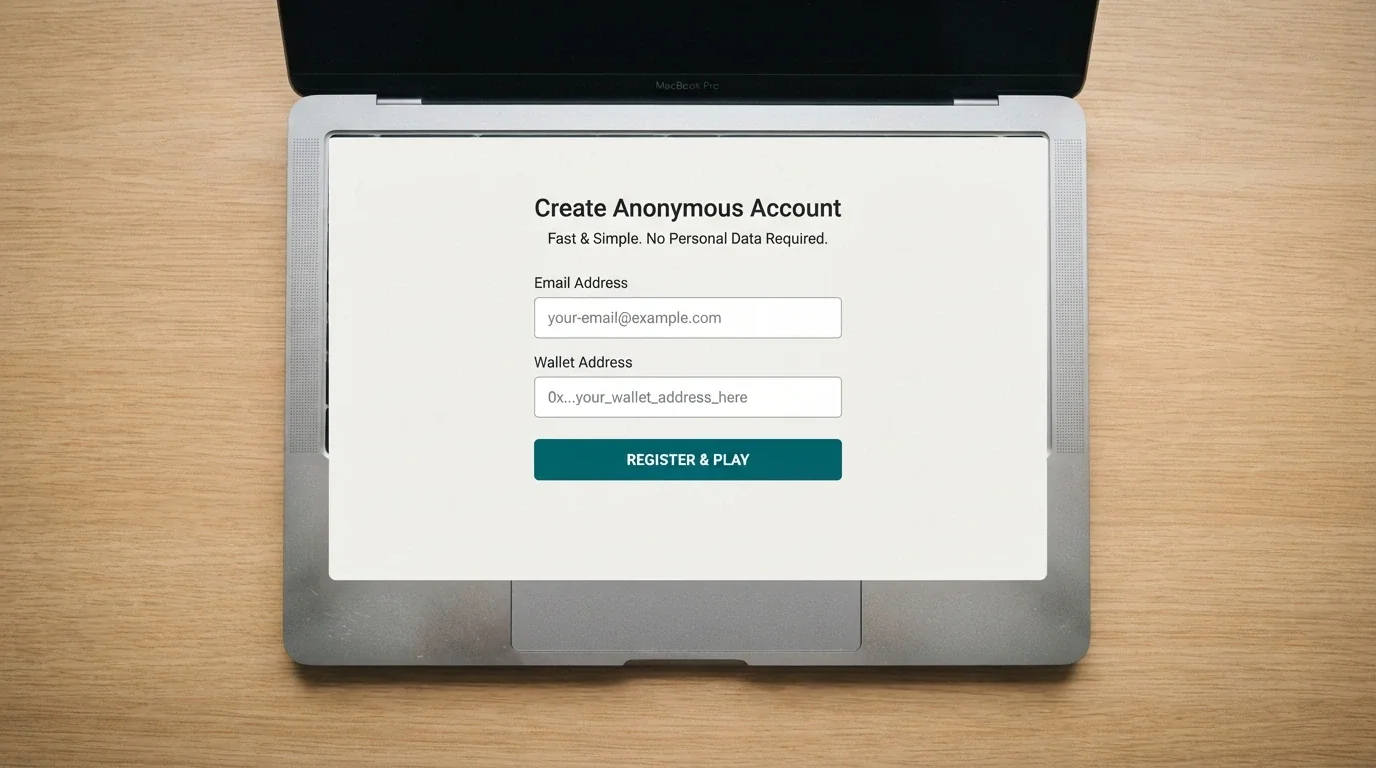
“No KYC” is the marketing promise. The reality is split into two phases: sign-up and cashout. Sign-up at a USDT casino typically asks for an email address, a username and a password. Some ask for a phone number. Royal Reels asks for phone verification before crediting the no-deposit bonus. None of the operators on this list asks for ID at registration.
The second phase opens at withdrawal. Once a player requests a meaningful withdrawal, the casino triggers KYC. The standard offshore pattern is full identity verification: government-issued ID, proof of address, and sometimes source-of-funds documentation. Stake.com requires KYC Level 2 (full verification) under its stated policy, which means a withdrawal at Stake will not clear until the player has submitted and the operator has reviewed identity documents. The other operators on this list follow the same offshore KYC pattern: light at sign-up, full at withdrawal.
What anonymity costs is dispute protection. If a player passes KYC and then has a withdrawal blocked, the dispute plays out under the operator’s terms and the Curaçao licensor’s complaint process. If a player refuses to complete KYC, the withdrawal does not clear. The “no KYC” promise holds for the deposit side and the play side; it does not hold for the cashout side once the casino decides verification is required. Players who cannot or will not pass KYC at withdrawal should not deposit funds they cannot afford to leave on the site.
How Much Personal Information These Casinos Actually Ask For
The registration screen asks for almost nothing. An email, a username, a password. Some operators add a date of birth field for age-gating purposes. None of the featured operators asks for proof of identity at sign-up, which is the difference from a licensed Australian wagering site, where full identity verification is required before the first deposit.
The withdrawal trigger changes the picture. A player who wins AU$500 on slots at a USDT casino and requests a withdrawal will, in most cases, be asked for a government-issued photo ID (passport or driver’s licence), proof of address (a recent utility bill or bank statement), and sometimes the source-of-funds documentation that traces the crypto deposit back to an originating exchange. The verification window is twenty-four to seventy-two hours at most offshore operators, and some operators run it faster. The submission is a one-time cost per account; subsequent withdrawals are typically lighter-touch, though large or unusual withdrawals can re-trigger the review.
The contrast with the licensed Australian alternative is sharp. A BetStop-registered exclusion on a licensed wagering site blocks the account across every connected Australian operator. An offshore USDT casino is not connected to that register, and a player who has self-excluded through BetStop can still deposit, play and request withdrawals at any of the ten operators on this list. BetStop is a tool that only works where the regulator reaches, and the regulator does not reach offshore crypto casinos.
Provably Fair Games — What the Term Means and When It Matters
Provably fair is a cryptographic mechanism that lets a player verify, after the fact, that a game’s outcome was not manipulated by the operator. It works through a three-part commitment: the player provides a client seed, the operator provides a server seed hashed before play begins, and a nonce increments per bet. After the round, the player can hash the revealed server seed against the pre-play commitment to confirm it was not changed mid-session.
The mechanism is real. The coverage is narrow. Provably fair applies mostly to in-house “originals” — dice, crash, plinko, simple games the operator develops and hosts itself. Third-party slots from Pragmatic Play, Evolution, BGaming and the rest of the major studios carry their own certification: independent testing labs (GLI, eCOGRA, iTech Labs) audit the RNG, and the studios publish RTP figures. The player does not need provably fair to verify a Pragmatic Play slot; the studio’s certification covers it. Where provably fair earns its place is on the operator’s own proprietary titles, where no external auditor is involved and the cryptographic commitment is the only check available.
The verification step itself is the part most players skip. Running the hash comparison after a session is a technical task. It is doable, and provably fair operators publish the verification tools. The gap between “provably fair” as a marketing word and “provably fair” as something the player has actually checked is the gap the term exploits.
Why Your 2026 USDT Casino Bonus Is Smaller Than It Looks
A 100% match bonus up to AU$1,500 with 40x wagering means turning over AU$60,000 before the bonus funds become withdrawable. The headline figure and the real cost are two different numbers, and the difference is the wagering multiplier.

The mechanics are consistent across the featured operators. A match bonus credits bonus funds to the account, separate from the cash deposit. Wagering requirements apply to the bonus amount (or, in Stake’s case, to deposit plus bonus combined). The player must place bets totalling the turnover figure before the bonus converts to withdrawable cash. A 40x multiplier on a AU$1,500 bonus is a AU$60,000 turnover obligation. On a AU$5,000 bonus, the same multiplier creates a AU$200,000 turnover. On SkyCrown’s AU$8,000 package, it is AU$320,000 across the four deposits.
The house edge eats into every spin of that turnover. At a typical slot RTP of 96.71% — Big Bass Bonanza, for instance — the house edge is 3.29%. On AU$60,000 of turnover, the expected loss to the player is approximately AU$1,974, before any winnings are netted. On AU$200,000, it is approximately AU$6,580. The bonus itself is the carrot; the turnover obligation is the cost; the house edge is what makes the cost real money rather than time.
Max-bet rules and validity windows throttle how fast a player can clear the obligation. SkyCrown enforces a A$1.50 maximum bet during wagering. Bizzo’s maximum is AU$6.50. WinSpirit’s rule is more unusual: the maximum bet per spin is 20% of the active bonus amount. Validity windows run from one day (SkyCrown free spins) to thirty days (Joe Fortune, 5Gringos, 21Bit). A player who cannot clear the turnover inside the window forfeits the bonus and any winnings tied to it.
Welcome Bonuses Compared: What AU$1,500 Actually Costs to Clear
The clearest illustration is RocketPlay’s 100% up to AU$1,500. A player depositing AU$1,500 receives AU$1,500 in bonus funds. The 40x wagering multiplier applies to the bonus, creating a AU$60,000 turnover obligation. The expected loss from clearing that turnover on a typical slot — Big Bass Bonanza at 96.71% RTP, for instance — is approximately AU$1,974.
That is the cost of the bonus before considering time. At an average slot spin rate of about five seconds per spin and an average bet size that respects the operator’s max-bet rule, clearing AU$60,000 in turnover means somewhere on the order of 40,000 spins, or roughly fifty-five hours of continuous play. Few players clear a welcome bonus in one sitting. Most split the session over several days, and the validity window is the constraint that decides whether the bonus clears at all.
The comparison operators have not published expected-loss figures in their bonus terms, and the math above is the player’s working estimate. The actual loss depends on the games played (table games with higher RTP reduce the loss; slots with lower RTP increase it), the bet sizing strategy, and whether any winnings are netted against the turnover before completion. The point of the calculation is not to predict a single player’s outcome. It is to put a number on what the bonus really costs in time and expected value, so a player can decide whether the headline is worth the obligation.
No-Deposit Bonuses: The AU$10 Offer That Comes with Strings
Royal Reels offers AU$10 no-deposit to a player who verifies a phone number. It is the only no-deposit bonus among the ten featured operators, and it illustrates why no-deposit offers rarely pay out as advertised.
The AU$10 credits as bonus funds. The wagering requirement is 31x on average across Royal Reels’ bonus terms, meaning the player must turn over AU$310 before any winnings convert to withdrawable cash. At 96.71% RTP, the expected loss from that turnover is approximately AU$10. The bonus is, in expected-value terms, close to a wash before any max-cashout cap applies. Most no-deposit bonuses carry a cashout ceiling — SkyCrown’s bonus terms cap bonus-related cashouts at A$300, which is on the higher end of what the market offers. Lower caps are common, and a player who wins AU$400 on a AU$10 no-deposit bonus with a A$100 cashout cap walks away with A$100, not AU$400.
The phone-verification requirement is light, but it is not zero. It ties the bonus to a verified phone number, which the casino can use for marketing follow-up and which connects the bonus to a specific account holder. The no-deposit bonus is best read as a trial, not a withdrawal. It is a way to test the platform, the games and the cashier. It is not a way to make money.
Free Spins: How 400 Spins Turn into Withdrawable Cash
Free-spin headlines vary wildly across the featured operators. SkyCrown offers 400 free spins across the four-deposit welcome. Stake offers none. Joe Fortune offers 450 free spins. WinSpirit drips 100 spins at 20 per day for five days. Bizzo bundles 175 spins into its tiered welcome. Rainbet offers 60 spins. The 100-spin mark is the median of the set.
The terms attached to free spins are where the value lives or dies. SkyCrown’s free spins expire in one day. A player who claims the welcome on a Tuesday and returns on Thursday has lost every spin. Free-spin winnings typically credit as bonus funds, subject to wagering. The cashout cap on SkyCrown’s bonus structure is A$300, which is the ceiling on what free-spin winnings can convert into. WinSpirit’s 20-spins-per-day drip ties the player to logging in daily for five days, and the 7-day validity on the bonus means a missed day costs the player the spins for that day and possibly the bonus window.
The honest read of a 400-free-spin headline is that most of the value evaporates before it is claimed. A 1-day validity window is an aggressive retention tool, not a generosity gesture. A player who is comparing welcome offers should weight free spins at a fraction of their headline number, because the gap between advertised and realised value is wider on free spins than on any other bonus format.
From Pokies to Live Blackjack — What You Can Actually Play with Tether
The game lobbies at USDT casinos are large. Royal Reels lists over 5,400 pokies from 40+ providers. Mafia Casino, used here as a benchmark rather than a featured operator, carries 11,000+ games. 21Bit lists 4,000+ titles. Joe Fortune’s library is the smallest of the set at 700+ games. Volume is the headline, but curation is what matters.

The standard provider mix across the featured operators covers Pragmatic Play and Evolution (slots and live dealer respectively) plus a rotation of BGaming, Yggdrasil, Playtech, NoLimit City, Push Gaming, Hacksaw Gaming and Relax Gaming. Live-dealer studios are dominated by Evolution, with Pragmatic Play Live appearing on most operator lists. Joe Fortune runs on RTG (Real Time Gaming) and iSoftBet, which is the outlier provider mix of the set.
Published RTP data is sparse. Research carries per-title RTP for only a handful of slots and table games, and that is the limit of what can be stated with confidence. Most operators do not publish per-title RTP in the lobby. The player who wants to check RTP before playing needs to consult the provider’s information page or an independent database.
Pokies: The Titles Worth Your Time in a 5,400-Game Lobby
Volume is not curation. Three slots carry published RTP figures that allow an honest comparison, and those are the titles to anchor a session around.
| Slot | Provider | RTP | Volatility |
|---|---|---|---|
| Big Bass Bonanza | Pragmatic Play | 96.71% | Medium |
| Gates of Olympus | Pragmatic Play | 96.50% | — |
| Money Train 3 | Relax Gaming | 96.4% | High |
The table covers what research carries with confidence. Most other titles in a 5,400-game lobby carry no published RTP in the casino’s own interface, and the operator does not surface the figure during gameplay. A player who wants RTP data for a specific title that is not in this table needs to consult the game provider’s official page or an independent testing-lab database. The three titles above are the ones the page can speak to without invention.
The volatility rating matters for bankroll management. Big Bass Bonanza’s medium volatility means smaller wins more frequently, which suits a longer session on a smaller bankroll. Money Train 3’s high volatility means larger wins less frequently, which suits a shorter session with a bankroll that can absorb dry spells. Gates of Olympus sits at a similar RTP to Big Bass Bonanza but with a different feature structure. A player picking between the three is choosing between session shape, not expected return.
Table Games and Live Dealer: When RNG Is Not Enough
Table games carry higher RTP than slots. The two reference titles research carries with confidence are European Roulette at 97.30% RTP and Live Blackjack at 99.28% RTP. The gap between a typical slot at 96.5% and live blackjack at 99.28% is 2.78 percentage points of return, which compounds across a session.
European Roulette at 97.30% RTP is the RNG version, typically supplied by Playtech. The 2.7% house edge is the single-zero wheel. American Roulette, with both zero and double-zero, runs closer to 94.7% RTP, and the difference is large enough that a player who picks the wrong variant loses an extra 2.6% of every wager to the house. The roulette choice is structural, not strategic.
Live Blackjack at 99.28% RTP is supplied by Evolution. The figure assumes optimal basic strategy. A player who deviates from basic strategy pushes the house edge up, and a player who plays hunch-driven blackjack can lose the RTP advantage entirely. Live dealer also carries bandwidth and device requirements that RNG games do not — a stable connection matters when a stream drops mid-hand, and most operators void bets placed on hands interrupted by connection loss.
The RNG-versus-live RTP gap is real for roulette (the RNG version often pays 97.30% while certain live variants pay 94.7% on American wheels) but not for blackjack, where live dealer and RNG versions both approach 99% under optimal play. The headline figure to remember is that table games, on average, return more to the player than slots do. The qualifier is that the player’s decisions drive a wider range of outcomes at the tables.
Free-Play Mode: Trying Games Without Risking a Cent
Demo mode is the standard crypto-casino tool for testing a game before committing real money. Slots offer it near-universally. Table games offer it inconsistently. Live dealer almost never does, because the studio cost of running an empty table for one player is not economical.
The gap between demo and real-money play is the RTP distribution. A slot at 96.71% RTP in demo mode behaves the same way statistically as it does in real-money mode, because the RNG does not know which mode it is running. The difference is in player behaviour: demo sessions tend to run longer with smaller, more frequent bet adjustments, while real-money sessions run shorter with larger bets. The volatility profile of the slot is the same; the player’s exposure to that volatility is different.
Free-play is a useful tool for assessing volatility, feature frequency and session pace. It is not a tool for predicting real-money outcomes. A player who likes a slot in demo mode will probably like it in real-money mode; a player who finds a slot boring in demo will likely find it boring in real-money play. The decision the demo answers is the engagement question, not the expected-value question.
10 USDT Casinos That Accept Australian Players in 2026
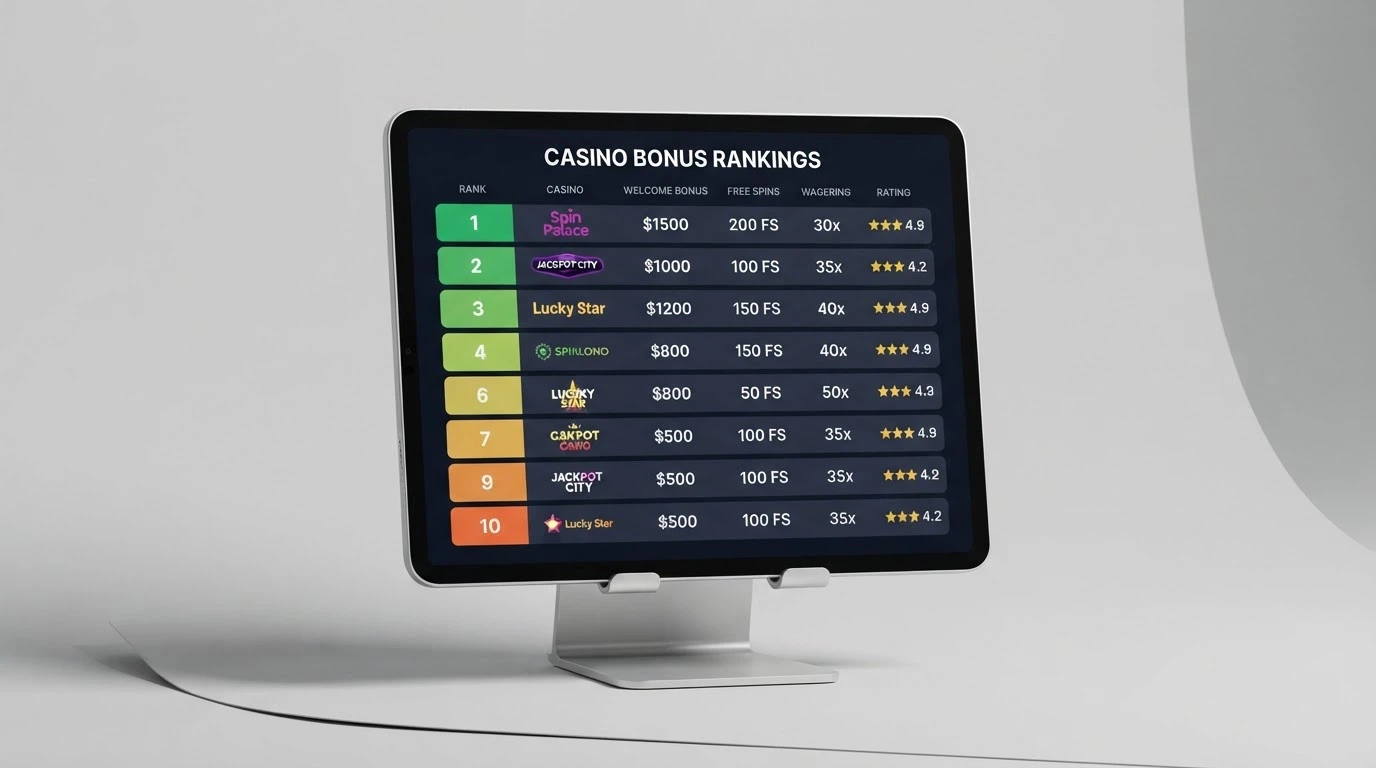
The table below ranks the ten featured operators on the dimensions research supports: licence status, welcome bonus, free spins and wagering. Every operator is offshore and holds no Australian casino licence, because no such licence exists. The table is the reference point for the operator write-ups that follow.
| Casino | AU Licence Status | Welcome Bonus | Free Spins | Wagering |
|---|---|---|---|---|
| RocketPlay | Offshore — Curaçao GCB (OGL/2024/1307/0748). No AU licence (unobtainable). | 100% up to AU$1,500 | 100 FS | 40x bonus |
| SkyCrown | Offshore — Curaçao. No AU licence. | Up to A$8,000 (4 deposits) | 400 FS | 40x bonus |
| Stake | Offshore — Curaçao. No AU licence. | 200% up to $2,000 | None | 40x (deposit + bonus) |
| Bizzo Casino | Offshore — Curaçao. No AU licence. | Up to AU$7,750 (4 deposits) | 175 FS | 40x bonus |
| Royal Reels | Offshore — Curaçao. No AU licence. | AU$10 no-deposit (phone verification) | — | 31x average |
| WinSpirit | Offshore — Curaçao. No AU licence. | 100% up to €200 | 100 FS (20/day for 5 days) | 40x bonus |
| Rainbet | Offshore — Curaçao. No AU licence. | $2,100 (3 deposits) | 60 FS | 40x bonus |
| Joe Fortune | Offshore — Curaçao. No AU licence. | A$5,000 | 450 FS | 30–35x |
| 5Gringos | Offshore — Curaçao. No AU licence. | A$750 | 100 FS | 30–35x |
| 21Bit | Offshore — Curaçao. No AU licence. | A$3,400 | 100 FS | 30–35x |
No operator in this table holds an Australian casino licence. The “No AU licence (unobtainable)” cell is not a unique failure of these ten brands; it is the structural answer to the question for every offshore operator targeting Australian players.
RocketPlay
RocketPlay is a Curaçao-licensed veteran with a straightforward 100% match and crypto withdrawals clearing in ten to thirty minutes after approval. The licence number is OGL/2024/1307/0748, issued by the Curaçao Gaming Control Board. The operator is Scores55 Tech B.V.
The welcome is 100% up to AU$1,500 on the first deposit plus 100 free spins. Wagering is 40x on the bonus amount, and the minimum crypto deposit is AU$25 equivalent. The bonus terms are uncomplicated compared to the rest of the set: no tiered structure, no staggered free-spin drip, no unusual max-bet cap beyond the standard.
The withdrawal side is where RocketPlay’s claims are strongest. Crypto withdrawals clear in 10 to 30 minutes once verification is complete. The weekly cap is A$15,000 and the monthly cap is A$30,000, which are the published ceilings for players who have completed KYC. The game library covers 60+ providers including Pragmatic Play, Evolution, NetEnt, BGaming, Playtech and Yggdrasil, which is the broadest provider mix of the ten featured operators.
For an Australian player prioritising withdrawal speed and provider breadth, RocketPlay is the most direct offering in the set. The 40x wagering multiplier is the market standard rather than a competitive advantage, and the AU$1,500 cap on the first-deposit match is mid-pack. The trade-off RocketPlay makes is consistency: the bonus is not the biggest, the free spins are not the most, and the library is not the largest, but nothing on the RocketPlay offer is unusually restrictive.
SkyCrown
SkyCrown’s headline is the largest in the set: up to A$8,000 plus 400 free spins across four deposits, with 40x wagering across the board. The minimum qualifying deposit is A$30.
The bonus structure also carries the tightest validity windows of the set. Free spins must be used within one day. Bonus funds expire after five days. The maximum bet during wagering is A$1.50, and the maximum cashout from the bonus is A$300. A player who wins AU$1,500 off the SkyCrown bonus walks away with A$300, not AU$1,500. The cashout cap is the single most restrictive feature of the SkyCrown welcome.
The provider list covers Pragmatic Play, Evolution, BGaming, Yggdrasil, Relax Gaming, NoLimit City and Push Gaming. The library is mid-pack in size. The 1-day free-spin validity makes SkyCrown a poor fit for a player who treats the welcome as a multi-day session: the spins expire before most casual players log in a second time.
For a player with the time to clear AU$320,000 of turnover across the four deposits within the 5-day window and the discipline to respect the A$1.50 max bet, SkyCrown’s A$300 cashout ceiling means the upside is capped no matter how well the session goes. The math favours a player who treats SkyCrown as a low-stakes, high-volume play rather than a high-stakes bonus hunt.
Stake
Stake.com offers the highest match percentage in the set: 200% up to $2,000 on the first deposit. The wagering is 40x on deposit plus bonus combined, which is a heavier effective requirement than a bonus-only 40x. A player depositing $1,000 receives $2,000 in bonus funds and faces a turnover obligation of 40 × ($1,000 + $2,000) = $120,000. The same $1,000 deposit at a bonus-only 40x operator creates a $80,000 turnover.
The minimum qualifying deposit is $100, which is the highest entry floor of the set. Stake does not include free spins in its welcome, which is the only operator in the ten to make that omission explicit rather than burying it in the fine print. The game provider list covers Pragmatic Play, Evolution, Hacksaw, NoLimit City and Push Gaming, and the provably fair originals (dice, crash, plinko) are a meaningful part of the Stake library.
The KYC policy is the most clearly stated of the set. Stake requires KYC Level 2 (full identity verification) before withdrawals clear. A player who cannot or will not complete verification should not deposit at Stake. The verification-first policy is a structural choice that cuts both ways: it reduces dispute risk on the player side (the operator knows who the player is) but eliminates the anonymity promise that draws some players to offshore crypto casinos in the first place.
For a player who wants a high-percentage match, can clear $120,000 of turnover, and is willing to pass full KYC at withdrawal, Stake’s offer is structurally competitive. For a player who joined the offshore market specifically to avoid KYC, Stake is the wrong operator.
Bizzo Casino
Bizzo runs a four-deposit welcome with tiered match rates. The first deposit matches 50% up to AU$100 plus 50 free spins for deposits of AU$25 to AU$100. Deposits of AU$100 to AU$500 match 75% plus 75 free spins. Deposits of AU$500 to AU$2,500 match 125% plus 125 free spins. Across all four deposits, the package totals up to AU$7,750 plus 175 free spins, with 40x wagering and a AU$6.50 maximum bet during wagering.
The default bonus validity is seven days. The tiered structure rewards larger deposits with a higher match rate, which is a structural choice that makes Bizzo more attractive to higher-stakes players and less attractive to a casual AU$30 deposit. The AU$6.50 max bet is one of the more permissive in the set, which speeds clearance for players who prefer higher-volatility sessions.
The provider list covers Pragmatic Play, Evolution, BGaming, Playtech, Yggdrasil and NoLimit City. The match-bonus cashout is uncapped, which is the more player-friendly structure compared to SkyCrown’s A$300 ceiling.
For a player depositing AU$500 or more who wants to maximise the match percentage and clear turnover at higher bet sizes, Bizzo’s tiered structure rewards the larger deposit. For a AU$30 deposit, the 50% match to AU$15 is a small bonus carrying the same 40x turnover, which is the worst per-dollar ratio in the Bizzo welcome.
Royal Reels
Royal Reels is the only no-deposit bonus in the set, offering AU$10 to players who verify a phone number. The bonus is credited as bonus funds subject to wagering, and the average wagering requirement across Royal Reels bonuses is 31x — the lowest of the set.
The library is the largest of the featured operators: over 5,400 pokies from 40+ providers. The phone-verification entry point is the lightest KYC in the set, but it is not no-KYC: the casino has a verified phone number tied to the account, which is a marketing channel and an identifier. Withdrawals are available instantly through crypto and PayID, which is the fastest withdrawal claim in the set alongside 21Bit.
The Curaçao licence detail is not stated at the licence-number level in the research record, but Royal Reels is confirmed as offshore and non-AU-licensed. No Australian casino licence exists to verify against.
For a player who wants to test an offshore USDT casino without an initial deposit, Royal Reels is the only option in the set that offers that path. The AU$10 bonus is a trial, not a withdrawal strategy — the expected loss from clearing the wagering is close to the bonus value itself. The library and the 31x average wagering are the structural advantages if the player decides to deposit after the trial.
WinSpirit
WinSpirt’s welcome is the smallest match in the set: 100% up to €200 plus 100 free spins. The wagering is 40x on the bonus, with a 7-day validity window after activation. The minimum deposit is A$20.
The unusual feature is the per-bet cap. The maximum bet per spin is 20% of the active bonus amount. A player with a €200 bonus active faces a maximum bet of €40 per spin, which is permissive enough to allow reasonable clearance speed. A player with a €50 bonus active faces a maximum bet of €10 per spin, which slows clearance considerably. The 20%-of-bonus cap is a softer version of a flat max-bet rule and scales with the bonus size.
The free-spin drip is 20 per day for five days, which ties the player to daily logins for the full week. The 7-day validity from activation means a missed day costs the player that day’s spins and may push the rest outside the window.
The provider list covers Pragmatic Play, Evolution, BGaming and others. For a player depositing around the A$20 minimum and willing to log in daily for five days, WinSpirit’s drip-fed structure is workable. For a player depositing €200 with a €40 max bet, the welcome is one of the more flexible in the set.
Rainbet
Rainbet offers $2,100 plus 60 free spins across three deposits, with 40x wagering. The minimum deposit is A$30. The withdrawal cap on balances tied to welcome codes is $50, which is the most restrictive cashout ceiling in the set.
The $50 cap is the headline feature and the headline risk. A player who wins $500 while playing with a welcome-code balance cannot withdraw the full $500; the cap applies. The cap releases once the welcome-code balance is fully converted or expires, but during the active bonus period the ceiling is $50. For a player whose session produces a modest win, the cap is a soft disappointment. For a player whose session produces a large win, the cap is the difference between a meaningful payout and a $50 withdrawal.
The provider list covers Pragmatic Play, Evolution, Hacksaw and others. For a player who plans to deposit small, play through the bonus, and withdraw early, the $50 cap is the structural ceiling to plan around. For a player depositing larger amounts, the cap is a less binding constraint because the bulk of the balance comes from cash deposits rather than bonus funds.
Joe Fortune
Joe Fortune’s welcome is A$5,000 plus 450 free spins with 30-day bonus validity and 30–35x wagering. The minimum deposit is 10 USDT, the lowest entry floor of the set. The withdrawal window runs one to twenty-four hours.
The 30-day validity is the longest in the set. A player who treats the welcome as a multi-week session rather than a single weekend has the time to clear the turnover without rushing. The 450 free spins are the most of the set, which is a real advantage for a player who values the spin format. The max cashout is 10x the bonus amount, which caps a A$5,000 bonus at A$50,000 in withdrawable winnings — a ceiling most sessions will not reach but which binds at the top end.
The game library is the smallest of the set at 700+ games, running on RTG and iSoftBet rather than the Pragmatic Play / Evolution mix of the other featured operators. The provider choice is a structural difference: RTG pokies have a different volatility profile and feature set than Pragmatic Play titles, and a player with a strong preference for one studio may want to test before depositing.
For a player who values bonus time, free-spin volume and a low minimum deposit, Joe Fortune’s 30-day window and 10 USDT floor make it the most accessible welcome in the set. The smaller library and the RTG-heavy provider mix are the trade-offs.
5Gringos
5Gringos offers A$750 plus 100 free spins with 30-day bonus validity and 30–35x wagering. The minimum deposit is $20. The game library covers 5,000+ titles from Pragmatic Play, Evolution, BGaming and others. The max cashout is 10x the bonus amount, which caps a A$750 bonus at A$7,500 in withdrawable winnings.
The headline figure is smaller than most of the set, but the 30-day validity and the lower wagering multiplier (30–35x rather than 40x) reduce the turnover obligation. A A$750 bonus at 30x wagering is a A$22,500 turnover; the same bonus at 40x would be A$30,000. The 7,500-point difference is meaningful for a player with limited session time.
For a player who wants a mid-sized bonus with a longer clearance window, 5Gringos is a structurally reasonable choice. The library is competitive with the larger operators in the set, and the wagering multiplier is on the lower end of the market range.
21Bit
21Bit offers A$3,400 plus 100 free spins with 30-day validity and 30–35x wagering. The minimum deposit is $20. The withdrawal processing is instant, which ties 21Bit with Royal Reels for the fastest withdrawal claim in the set. The game library covers 4,000+ titles from Pragmatic Play, Evolution, BGaming and others. The max cashout is 10x the bonus amount.
The instant withdrawal claim carries the same qualifier as every other “instant” or “10–30 minute” claim: once verification is complete. A player who has passed KYC at a previous withdrawal will see subsequent withdrawals clear faster. A first-time withdrawal triggers the KYC review window.
For a player prioritising withdrawal speed, 21Bit is one of two operators in the set (alongside Royal Reels) that advertise instant processing. The A$3,400 bonus is mid-pack, the 30–35x wagering is on the lower end, and the 30-day validity is the longest in the set. The structural combination is competitive without being the largest headline.
The Australian Law That Makes Every Casino on This Page Offshore
Online casino is prohibited in Australia under the Interactive Gambling Act 2001. The prohibition is enforced by the Australian Communications and Media Authority (ACMA). Penalties for providing an unlicensed interactive gambling service to Australians reach A$247,500 per offence. The Act targets providers, not players — the individual player is not prosecuted — but the structural answer for any Australian looking at an offshore USDT casino is that the product is illegal to provide, and the operator sits outside Australian jurisdiction.

The 2026 reform tightens the net. The Interactive Gambling Amendment (Gambling Reform) Bill 2026 passed Parliament on 19 August 2026; its measures commence 1 January 2027. From that date, banks and payment providers gain express authority to block transactions to illegal gambling operators. Crypto on-ramps in Australia are regulated by AUSTRAC, and the path from an Australian bank account to a USDT transfer to an offshore casino is not invisible. The payment layer is about to become an enforcement layer.
ACMA has directed ISPs to block 1,564 illegal gambling and affiliate websites since November 2019, and more than 225 illegal services have withdrawn from the Australian market since enforcement was strengthened in 2017. The blocks work at the domain level, not the wallet level, and they target providers rather than players. But a player whose casino is blocked while a balance sits on deposit has no Australian recourse to recover it.
What the Interactive Gambling Act Actually Prohibits — and What It Does Not
The IGA prohibits providing online casino games, online pokies and in-play sports betting to anyone physically in Australia. What IS licensed is wagering on races and sport before the event begins, plus lotteries and keno. The Northern Territory Racing and Wagering Commission, administered through Licensing NT, is the de facto national licensor for online wagering, with Sportsbet, bet365, Ladbrokes and approximately fifty others holding NT licences.
The licensed system offers no casino product. A player who wants to play slots or live blackjack from Australia has no licensed option. That gap is the market the offshore USDT casinos serve, and it is the reason the ten operators on this page have Australian-facing deposit pages despite the prohibition.
There is no federal deposit, loss or stake ceiling for online gambling, because the product those ceilings would govern is banned outright. Australia caps how you can pay: credit cards and crypto are banned for licensed wagering since 11 June 2024. Player winnings are not assessable income under section 6-5 of the ITAA 1997, unless the player is carrying on a business of gambling. The tax treatment is not a barrier to play, but it is also not a reason to play.
What Changes on 1 January 2027 — and What It Means for Players
The 2026 reform is law with a start date. From 1 January 2027, banks and payment providers gain express authority to block transactions to illegal gambling operators. The advertising layer changes too: no more than three wagering ads per hour between 6:00 am and 8:30 pm, with a live-sport blackout window of fifteen minutes before to five minutes after each event. Radio ads are barred during school commute hours. Broadcasting sporting odds is banned outright. Online ads require logged-in, age-confirmed users with opt-out.
Inducements face cooling-off periods: fourteen days after sign-up before any bonus can be claimed, three months after BetStop deregistration, and indefinitely for at-risk customers. Athletes, celebrities and influencers are barred from promoting wagering. None of this reaches an offshore USDT casino. The reform governs licensed Australian operators, and an offshore site is not one. What the reform does is raise the friction on the payment side and tighten the licensed alternative’s marketing, which pushes more Australian players toward the offshore option and simultaneously makes the offshore option harder to fund from an Australian bank account.
For a player who holds USDT in a self-custody wallet funded from a non-Australian source, the reform changes little. For a player who funds USDT through an Australian exchange linked to an Australian bank account, the path is about to get more friction. The AUSTRAC monitoring that already applies to crypto exchanges becomes more pointed when banks have express authority to block the underlying AUD-to-USDT transaction.
When the Reels Stop Being Fun — Help That Actually Works in Australia
Approximately 3.29 million Australians are affected annually by their own or another person’s gambling, including approximately 1.97 million adults classified as having at-risk or problem gambling. The annual health loss associated with gambling harm in Australian adults is estimated at over 400,000 Years Lived with Disability. The Australian Gambling Research Centre’s 2025 survey found 65% of Australian adults gambled at least once in the past 12 months (up from 57% in 2019), and 15% experienced gambling harm (up from 11% in 2019) — equivalent to around 3 million Australians. Among regular monthly gamblers, 7.7% were considered high risk, and young people aged 18–24 were nearly twice as likely to be at high risk compared to other age groups.
The tools that work on licensed Australian sites do not reach offshore USDT casinos. BetStop, the National Self-Exclusion Register, binds Australian-licensed wagering services only. An offshore USDT casino is not connected. A player who has self-excluded through BetStop can still deposit and play at any of the ten operators on this page.
What works regardless of where someone plays: the National Gambling Helpline on 1800 858 858, free, confidential, staffed 24/7. Gambling Help Online at gamblinghelponline.org.au offers online chat and counselling. Gambling Help Online received almost 13,000 counselling requests in 2023–24, a 67% increase on prior years. Online gambling now accounts for half of all calls, up from one-fifth a decade ago.
The Tools That Only Work on Licensed Sites — and What You Can Use Instead
BetStop exclusions do not reach offshore USDT casinos. A self-excluded player who wants to keep playing at an offshore site can, because the operator is not bound by the register. The structural answer is that an Australian player who wants to stop gambling needs tools that work everywhere, not just where the regulator reaches.
Deposit limits on licensed wagering apps are operator-enforced and effective within the licensed ecosystem. On offshore USDT casinos, the same limits are available if the player sets them, but the operator does not enforce them as a regulatory matter. A player who sets a AU$50 daily deposit limit at a USDT casino and then tries to deposit AU$100 the next day will find that the limit applies if the operator’s responsible-gambling tools are functioning. The player is the safety net.
The tools that work regardless of platform: the National Gambling Helpline at 1800 858 858, staffed 24/7, free and confidential. Gambling Help Online at gamblinghelponline.org.au, with online chat and counselling sessions. Wallet-level spending limits on the player’s own USDT wallet, which cap how much crypto can move per day regardless of the casino’s settings. Session timers on the device, which cut the session regardless of the casino’s interface. Self-barring from crypto on-ramps, which stops the AUD-to-USDT pathway at the exchange level. None of these is a regulator-enforced tool; all of them are player-controlled.
For a player who is gambling at an offshore USDT casino and feels the balance getting uncomfortable, the first call is 1800 858 858. The first website is gamblinghelponline.org.au. The first self-imposed rule is a daily deposit cap at the wallet level. The offshore setting does not change the help available, but it does change which tools can reach the casino.
How We Checked and Ranked Every USDT Casino on This Page
The evaluation basis is the operator records carried in the research record, sourced from various online affiliate review platforms. Each operator’s licence status was checked against the Curaçao Gaming Control Board’s public statements where available. The Australian regulatory baseline is the Interactive Gambling Act 2001 and its amendments; the absence of an AU online casino licence is confirmed at the regulator level.
Curaçao GCB licence numbers were verified where publicly available. RocketPlay’s licence number (OGL/2024/1307/0748) is stated on the operator’s terms page. The other operators’ licence details are not stated at the licence-number level in the research record, but all are confirmed as offshore and non-AU-licensed. No Australian casino licence exists to verify against.
Bonus terms were compared on wagering multiplier, validity window, maximum cashout and maximum bet. Withdrawal speed and caps were sourced from operator testing by cited affiliate sources. The ranking criteria applied qualitatively: wagering multiplier below 40x, longer validity windows, larger or uncapped cashouts, instant or fast withdrawals, broader provider mixes and lower minimum deposits were weighted positively. No fabricated weightings or scoring formulas were applied.
What You Actually Give Up Playing at an Offshore USDT Casino from Australia
The verdict sits in the trade-off. Faster deposits, no currency conversion friction, and a casino game lobby no licensed Australian site can offer. In exchange, no BetStop coverage, no ACMA recourse, no Australian Consumer Law protection, no statutory dispute resolution, and the risk that the operator’s domain gets blocked while a balance sits on deposit.
The bonus maths is the other side. A 100% match up to AU$1,500 at 40x wagering creates a AU$60,000 turnover obligation. The expected loss from clearing that turnover at a typical slot RTP of 96.71% is approximately AU$1,974. A AU$5,000 bonus at the same multiplier creates AU$200,000 of turnover and approximately AU$6,580 of expected loss. A AU$8,000 package creates AU$320,000 of turnover. The headline figure and the real cost are two different numbers, and the difference is the multiplier plus the house edge plus the validity window.
For a player who wants casino games and accepts the regulatory gap, the ten operators on this page are the market. The trade-off makes sense for a player who has set their own deposit and session limits, who understands that “no KYC” ends at withdrawal, who treats the welcome bonus as a time-and-money cost rather than a free opportunity, and who keeps the help-line number (1800 858 858) where it can be reached quickly. The trade-off does not make sense for a player who is using offshore casinos to bypass a BetStop exclusion, who cannot afford to leave a balance on a site that might get blocked, or who is chasing the bonus headline without reading the wagering terms.
The honest framing is that this is a product category that exists because Australian law prohibits the licensed version. Every casino on this page sits outside the system because the system does not offer what players want. From January 2027, the payment layer joins the ISP blocking layer in making the offshore path harder to fund. The product is not going away. The friction is going up.
Frequently Asked Questions
Are Tether (USDT) casinos legal in Australia?
No. Online casino is prohibited under the Interactive Gambling Act 2001, and no Australian licence for online casino exists — not federally, not in any state or territory. Every operator on this page is offshore and holds a Curaçao licence, not an Australian one. The individual player is not prosecuted under the IGA; the Act targets the provider. Crypto deposits are themselves banned at licensed Australian wagering operators since 11 June 2024, so paying with USDT is a structural signal that the operator sits outside Australian rules.
What is the minimum deposit at a Tether casino?
Minimum USDT deposits at offshore casinos range from 5 USDT to 20 USDT depending on the operator. Joe Fortune accepts deposits as low as 10 USDT. RocketPlay’s minimum is AU$25 crypto equivalent. Lucky Wins, used as a benchmark rather than a featured operator, accepts deposits from 0.01 USDT. The minimum is set by the operator, not by the network, and it varies across the featured set.
How long do Tether withdrawals take at online casinos?
Crypto withdrawals typically clear in under two hours once the player’s account has passed KYC verification. Operator-specific claims run from instant (21Bit, Royal Reels) to 10–30 minutes after approval (RocketPlay) to one to twenty-four hours (Joe Fortune). The first withdrawal triggers a KYC review window of twenty-four to seventy-two hours at most operators, and subsequent withdrawals are faster.
Which network should I use for USDT casino deposits — TRC-20 or ERC-20?
TRC-20 is cheaper and faster for most players. TRC-20 fees run under A$2 per transaction with confirmation in one to five minutes. ERC-20 fees run A$3 to A$15 when the Ethereum network is busy, with confirmation in five to fifteen minutes. BEP-20 sits between the two. The network choice also affects compatibility: send TRC-20 USDT to an ERC-20 deposit address and the funds are lost.
What wagering requirements do Tether casino bonuses have?
Typical wagering requirements for USDT casino welcome bonuses are 30x to 40x the bonus amount. Anything over 50x is considered unfavourable. Stake’s 40x applies to deposit plus bonus combined, which is a heavier effective requirement than a bonus-only 40x. Royal Reels’ average wagering is 31x, the lowest of the featured set. A 100% match to AU$1,500 at 40x wagering creates a AU$60,000 turnover obligation before the bonus converts to withdrawable cash.
What happens if an offshore casino blocks my withdrawal?
The withdrawal does not clear. The casino’s terms apply, and the operator’s Curaçao licence provides the dispute pathway — not the ACMA, not the Australian Consumer Law, not BetStop. A player who passes KYC and then has a withdrawal blocked can pursue a complaint through the Curaçao Gaming Control Board, but the practical outcome depends on the operator’s response. A player who cannot pass KYC at all cannot withdraw at all, which is why the KYC policy matters before the first deposit, not at withdrawal.