
What an Australian Player Actually Gets From an NDB Casino
A no-deposit bonus casino hands you bonus credit or free spins before you deposit a cent. The marketing language makes it sound like the casino is giving something away. The reality is closer to a product sample with conditions stapled to the back, and for an Australian reader the conditions start with the country itself: no online casino is licensed in Australia. Every NDB casino an Australian can reach sits offshore, runs on a Curaçao licence, and operates in contravention of the Interactive Gambling Act 2001. The product is real. The protection around it is not.

This page ranks the no-deposit offers an Australian player can actually claim in 2026, walks through the wagering arithmetic that converts a $20 chip into $800 of required bets, and lays out what offshore status costs in practice: no Australian consumer protection, no BetStop coverage, no recourse if a withdrawal is refused, and a site that can be DNS-blocked with a balance still on it. Where an operator’s NDB could not be confirmed during this review, that gap is stated plainly. Where an offer carries a cap the headline number does not hint at, the cap is named.
Current as of 16 October 2026 and verified against the Australian Communications and Media Authority (ACMA) public register for licensing and blocking status.
Table of Contents
- What Defines a No-Deposit Bonus Casino
- How a No-Deposit Bonus Works, Step by Step
- The Australian Reality — Offshore, Unlicensed and Unprotected
- Why Your 2026 No-Deposit Bonus Costs More Than It Looks
- The Five Shapes a No-Deposit Bonus Takes
- Bonus Codes — Do You Need One, and Where Do They Go?
- Free Chips vs Free Spins — What Each One is Worth
- Wagering Requirements — The Real Price of “Free” Money
- The Cashout Ceiling — Why You Can’t Withdraw the Full Win
- Top No-Deposit Casino Offers for Australian Players — 2026
- Skycrown — 100 Free Spins with Phone Verification
- RocketPlay — 50 Free Spins, But a 60× Wagering Wall
- Ozwin Casino — A Straightforward $20 No-Deposit Chip
- Fair Go Casino — A Modest $5 Entry, RTG-Only
- 7Bit Casino — 30 Free Spins, Crypto-Friendly
- Royal Reels — Free Spins with a Higher Cashout Cap
- FairCrown — 50 Free Spins at 40× Wagering
- WinSpirit — Curaçao-Licensed, NDB Unconfirmed This Review
- Stake — Crypto-Only Giant, But No Confirmed NDB
- Bizzo Casino — Offshore Operator, NDB Not Confirmed
- Crypto at NDB Casinos — Convenient, But a Legal Red Flag
- The Pokies Behind the Bonus — What You Can Actually Play
- Why Every NDB Casino Australians Use Is Offshore
- When Free Play Stops Being Free — Staying Safe
- How We Evaluated These No-Deposit Casinos
- Should You Claim an NDB Bonus? What the Numbers Say
- Frequently Asked Questions
What Defines a No-Deposit Bonus Casino
A no-deposit bonus casino is a casino that credits a player with bonus funds or free spins the moment they sign up and verify a contact channel — typically an email address, sometimes a phone number. Nothing leaves the player’s pocket before play begins. The casino’s pitch is that the player gets to test the lobby, the games and the cashier at zero financial risk. The operator’s actual goal is to convert the trial into a first deposit, because the no-deposit bonus is rarely the casino’s most profitable product; it is the most expensive way to acquire a customer it has.
The model exists in this shape for one reason: every NDB casino serving Australian players sits outside Australia. The Interactive Gambling Act 2001 prohibits the supply of online casino games, online pokies and in-play betting to a person physically in Australia. No Australian state or territory issues a casino licence for the online product. The Northern Territory Racing and Wagering Commission (NTRWC) licences bookmakers for pre-event wagering, lotteries and keno — never online casino. The land-based casino licences that exist for Crown Melbourne, The Star Sydney and the like do not extend to an online casino product.
What an Australian player reaches by clicking an “NDB casino” search result is therefore a Curaçao-licensed operator running from a Caribbean jurisdiction, accepting deposits in AUD, Bitcoin, USDT or euros, and marketing to players in a country where the activity it offers is illegal. The bonus size is small in market terms — AU$5 to AU$20 in bonus cash, or 20 to 100 free spins — because the operator’s risk on a single unverified customer is bounded. The real cost to the player sits in the wagering requirement, the cashout cap and the absence of any Australian complaint path if something goes wrong.
How a No-Deposit Bonus Works, Step by Step
Four stages take a player from a click on an affiliate link to a possible withdrawal, and each stage has a cost a marketing page tends to skip.
Stage one is registration. The casino asks for an email address, a username, a password and a date of birth. The form is short. The terms box is long, and the player who ticks it without reading has agreed to a wagering multiple, a max cashout cap, a game contribution table and a list of excluded countries — the player needs to be aware that their own country is one of them.
Stage two is verification. The casino needs to confirm the player is a real person and that the bonus can be tied to a single account. Email verification is the minimum. Some NDB offers — Skycrown’s 100 free spins is the clearest example — gate the bonus on a phone-number verification step, and the SMS code is what unlocks the spins.
Stage three is bonus activation. Some NDBs credit automatically on registration; others require the player to enter a bonus code at the cashier, select the offer from a drop-down, or contact live chat. A code-gated offer is not necessarily richer than an automatic one — the gate exists because the operator wants to track which affiliate sent the player, not because the deal is better. The activation window is short on some offers (RocketPlay’s 50 free spins must be activated within 24 hours of claim); longer on others (Royal Reels runs a 7–14 day validity window).
Stage four is the clearing path, and it is the part the marketing never explains. The player takes the bonus — say, AU$20 in cash credit — and now has to “wager” the bonus a fixed multiple of times before any withdrawal is permitted. A 40× wagering requirement on AU$20 means AU$800 in bets before a single dollar can come out. Game contribution rates limit where that AU$800 can be spent: pokies count 100%, table games and live casino titles count 0–20%, and a few game types are excluded entirely. If the player hits a cap on winnings — RocketPlay’s NDB caps withdrawals at $50 — anything above the cap is voided by the casino, even after the wagering is complete.
The Australian Reality — Offshore, Unlicensed and Unprotected
The structural fact that defines this entire market: there is no licensed Australian online casino. The IGA 2001 prohibits the supply of online casino games to Australians. The 2017 amendment closed offshore loopholes and gave the ACMA the power to direct Australian internet service providers to block illegal sites at the DNS level. Since November 2019, the ACMA has directed the blocking of 1,564 illegal gambling and affiliate websites, and more than 225 illegal services have withdrawn from the Australian market since 2017. The enforcement is not theoretical.
What that enforcement delivers, and what it does not, is worth separating. The ACMA can order a site blocked. The ACMA can issue infringement notices to operators — eight infringement notices to Tabcorp Holdings in January 2026, totalling $158,400, for prohibited in-play betting. The ACMA cannot recover money a player lost to an offshore operator that refused a withdrawal. The ACMA cannot stop an offshore casino from accepting the next deposit. The player who complains to the ACMA about an offshore NDB casino will get a regulator that confirms the casino is illegal and a list of helplines; the regulator has no complaints mechanism that produces a refund.
BetStop, the National Self-Exclusion Register, launched on 21 August 2023 and has 59,830 registrations with 37,247 active exclusions by 31 March 2026. It binds every Australian-licensed wagering service. It does not bind an offshore casino. A person who self-excluded through BetStop yesterday can deposit at a Curaçao NDB casino today, because the offshore casino is not connected to the register and is not licensed to be.
The framing the player needs is this: offshore NDB casinos are accessible, they pay out sometimes, they are illegal in Australia, and every consumer-protection mechanism the country has built for gambling does not apply to them. The rest of this page is about choosing among them with eyes open.
Why Your 2026 No-Deposit Bonus Costs More Than It Looks
A $20 bonus with a 40× wagering requirement is an $800 turnover job before any of it becomes withdrawable cash. The marketing word for this is “free”. The arithmetic calls it something else. What follows is what a no-deposit bonus actually costs the player who clears it.

The headline figure is the smallest number on the offer. A bonus chip in the AU$5 to AU$20 range or 20 to 100 free spins is the number the affiliate page prints in big type. The wagering multiple — 40× to 60× across the market — is the number that decides whether the offer is worth claiming. The max cashout cap — AU$50 to AU$200 for cash chips, AU$20 to AU$100 for free spins — is the number that decides what a win is actually worth in the player’s pocket.
The dense middle of the market sits at AU$10 to AU$25 in bonus cash or 20 to 50 free spins. AU$50 offers appear, but they tend to carry max cashouts in the AU$50 to AU$100 range, which means the operator’s exposure is bounded and the headline number is partly decorative. A AU$50 chip with a $50 cap is a capped $50 chip — the player cannot lose more than the operator’s risk budget, and the operator cannot pay out more than it has set aside.
A worked example using the maths the operator publishes: a AU$20 no-deposit chip at 40× wagering is AU$800 in required bets. At a representative $0.10 stake per spin on a pokie, that is 8,000 spins. At five seconds per spin, that is 40,000 seconds of play, or roughly 11 hours and 6 minutes of continuous spinning. The player who expects a “free” trial to be a quick look around the lobby is looking at the better part of a working day to clear it. That estimate assumes only the bonus amount is wagered — any deposit the player adds on top extends the run proportionally.
The estimate is statistical, not a guarantee. An average over many spins under the stated assumptions does not promise a payout. What it does promise is the order of magnitude of effort required to reach a withdrawal screen, and the order of magnitude is what the marketing copy leaves out.
The Five Shapes a No-Deposit Bonus Takes
A no-deposit bonus arrives in one of five basic shapes, and the shape determines both the clearing path and the cashout economics.
A free chip is a cash credit — Ozwin’s $20 chip and Fair Go’s $5 chip are the cleanest examples. The player picks a pokie, sets a stake, and plays the chip through the wagering requirement. The chip has full game flexibility within the contribution rules: pokies count 100%, table games count 0–20%, and a few titles are excluded entirely. Cashout caps apply to winnings derived from the chip, typically in the AU$100 range for these two brands.
A free-spin bundle is the most common shape in the market: 20 to 100 spins locked to a single pokie or a narrow provider set, at a fixed stake per spin. Skycrown’s 100 free spins, RocketPlay’s 50 spins on a Gamzix slot at $0.10 per spin, 7Bit’s 30 spins, FairCrown’s 50 spins — all of these are free-spin NDBs. The player cannot choose the stake. The player cannot usually choose the title. The player gets a fixed-stake trial of one game, and the winnings are subject to a wagering multiple and a cashout cap.
Free-play credit is a time-limited credit — the casino gives the player, say, AU$500 of bonus funds to spend over a one-hour window, with any winnings carried over as a smaller bonus subject to wagering. This shape is rarer at Australian-facing offshore casinos than in European-facing ones, and it is worth checking the terms page carefully because the time window and the carry-over mechanics vary widely.
A cashback-style NDB is a refund on net losses over a defined window — the player’s first day’s losses, say, returned as bonus credit with wagering. It functions as a no-deposit bonus because no prior deposit is required to receive it. The marketing tends to dress it as a “second chance” offer rather than an NDB, which is why it slips past the standard search results.
A crypto NDB is denominated in Bitcoin or another cryptocurrency rather than AUD. Bonus sizes run from 0.0001 BTC to 0.001 BTC (roughly A$5 to A$50 at typical exchange rates), with 35× to 60× wagering and withdrawal caps of 0.005 BTC to 0.01 BTC. The shape is identical to a fiat NDB in mechanics, and the offshore status is identical in legal terms. The crypto denomination is the only difference — and the crypto denomination is itself a tell that the operator sits outside Australian rules, because Australia banned digital currency as a payment method for online wagering from 11 June 2024.
Bonus Codes — Do You Need One, and Where Do They Go?
A bonus code is a short alphanumeric string — usually a brand name, a season or a holiday tied to it — that the player enters at the cashier or during registration to unlock an offer. The format is standard across the affiliate pages that aggregate NDBs: a column for the casino, a column for the bonus amount, and a column for the code.
The practical question for an Australian player is whether a code-gated offer is better than an automatic one. The honest answer is: usually no, sometimes yes. Most code-gated NDBs are identical in headline terms to the automatic version of the same offer — the gate exists because the operator wants to know which affiliate sent the player, and the affiliate wants to know its conversion rate. A code-gated offer that is materially richer than the automatic version is rare, and the difference tends to be in the free-spin count or the wagering multiple rather than the bonus size.
Where the code goes depends on the operator. Some casinos have a dedicated “bonus code” field in the registration form. Some require the player to enter the code at the cashier before making the first deposit (or, for NDBs, before activating the bonus). Some route the code through live chat — the player registers, opens chat, pastes the code, and the bonus is credited manually. The placement is operator-specific and the terms page is the only place that names it for the brand in question.
What the player should know is that the code is a tracking mechanism, not a discount mechanism. An offer with a code and an offer without a code, from the same operator, are usually the same offer with different accounting behind them. The exception is the affiliate-exclusive code — a code that unlocks a slightly higher spin count or a slightly lower wagering multiple, negotiated between the affiliate and the operator. These exist. They are not the norm. Treating the code column as a deal-quality signal is a mistake the affiliate layout encourages, and the layout is built that way because affiliate revenue depends on the click.
Free Chips vs Free Spins — What Each One is Worth
A free chip and a free-spin bundle deliver different experiences, and the cashout economics reflect that.
A free chip gives the player a credit balance to play across (most of) the casino’s pokie catalogue, at whatever stake the player chooses within the casino’s minimum and maximum. Ozwin’s $20 chip and Fair Go’s $5 chip are examples. The flexibility is real: the player can switch titles, vary the stake, and find a game whose volatility matches the clearing path. The downside is the chip’s wagering requirement applies to the chip value, not the winnings, which means the player is grinding through $20 of required bets before any win can be cashed out.
A free-spin bundle locks the player to one pokie at a fixed stake. RocketPlay’s 50 spins on a Gamzix slot at $0.10 per spin is the clearest example: the player gets 50 spins of a single game, with no stake choice and no title choice. The total bet value is fixed — 50 spins × $0.10 = $5 of total bets — and the wagering requirement applies to the winnings, not to the bet value. A 60× wagering on $10 of winnings is $600 of follow-up bets; a 60× wagering on $100 of winnings is $6,000.
The question of which is “worth more” depends on what the player values. A free chip is worth more in flexibility. A free-spin bundle is worth more in predictability — the player knows the exact stake, the exact title and the exact bet total before claiming, and the cashout math is easier to model in advance. The market tends to price free-spin bundles higher in headline count (100 spins vs a $20 chip) because spin count is a marketing-friendly integer, but the per-spin value is low and the cashout cap on free-spin wins is tighter than on chip wins.
For a player who wants to test a casino’s lobby at low effort, a free-spin bundle is the right shape — the player gets a fixed-stake trial of one game and a clear path to a cashout. For a player who wants to clear a bonus and treat it as a longer session, a free chip is the right shape — the player has the stake flexibility to grind through the wagering at a pace they choose.
Wagering Requirements — The Real Price of “Free” Money
The wagering requirement is the multiplier the casino applies to the bonus (or to the winnings from a free-spin bundle) before any of it becomes withdrawable. The market standard at Australian-facing offshore casinos is 40× to 60×.
The arithmetic is the part of the offer the marketing copy buries. A 40× wagering on a $20 chip is $800 in required bets. A 60× wagering on a $5 chip is $300 in required bets. A 50× wagering on free-spin winnings of $30 is $1,500 in follow-up bets. The number is mechanical and the player can compute it before claiming. The casino names the multiple in the terms page. The affiliate page usually names it in the comparison table.
Two qualifiers change the calculation. The first is the difference between wagering on the bonus and wagering on the winnings. A chip bonus carries wagering on the bonus value — $20 chip at 40× = $800 in bets. A free-spin bundle typically carries wagering on the winnings from the spins — $30 of winnings at 50× = $1,500 in bets. The two are not the same number, and a lower multiple on a bigger chip is not always a better deal than a higher multiple on a smaller spin-bundle win.
The second qualifier is the game contribution table. Pokies contribute 100% to wagering — every $1 bet on a pokie counts as $1 toward the $800 requirement. Table games contribute 0–20% — a $1 bet on blackjack might count as $0.10 toward the requirement, which means the player has to bet $10 to clear $1 of wagering. Live casino games are usually in the same 0–20% band. A few game types (some crash titles, some jackpot pokies) are excluded entirely. The player who tries to clear a wagering requirement at the blackjack table is grinding at one-tenth the speed of the player who runs it through a pokie.
A practical rule: a 40× chip bonus on pokies is the cheapest clearing path by hours played, because the contribution rate is full. A 60× free-spin bundle is the cheapest by total bet value, because the bet value is fixed and the wagering applies only to winnings. The player who picks the wrong shape for their preferred game is the player who spends 11 hours clearing what another player clears in three.
The Cashout Ceiling — Why You Can’t Withdraw the Full Win
The cashout cap is the second hidden cost, and it is the one that converts a big win into a small payout. Even after the player has cleared the wagering requirement, the casino voids anything above the cap. The cap is in the terms page. The affiliate page lists it in the comparison table. The marketing does not mention it.
The market standard at Australian-facing offshore casinos is AU$50 to AU$200 for cash chips and AU$20 to AU$100 for free spins. RocketPlay’s NDB caps at $50 — a 50-spin bundle at $0.10 with a 60× wagering requirement and a $50 cashout ceiling means the operator’s maximum exposure on the offer is bounded at $50 above the bonus. Royal Reels is the outlier in the featured set, with an AU$200 cashout cap that lets a player keep more of a win than the market norm.
The economics for the operator are straightforward. The bonus is a customer-acquisition cost, the wagering requirement limits how much of the bonus the player can convert into withdrawable cash, and the cashout cap limits the operator’s worst-case exposure on a single NDB claim. A player who runs a $20 chip up to $5,000 during clearing has cleared $800 in wagers and earned $5,000 — except the cashout cap turns $5,000 into $100 (or $200 at Royal Reels), and the operator voids the rest. The player walks away with the cap; the casino keeps the difference.
The framing for the player is this: a no-deposit bonus is a trial, not a lottery ticket. The cap exists because the casino is not running a lottery. The wagering requirement exists because the casino wants the player to play, not cash out. Both are the operator’s defence against treating the bonus as a withdrawal mechanism, and both are visible in the terms page before the player claims.
Top No-Deposit Casino Offers for Australian Players — 2026
The table below ranks the featured offshore NDB casinos an Australian player can reach. Where a brand’s NDB could not be confirmed during this review, the cell carries an em dash rather than an invented figure. Every brand listed is offshore and unlicensed in Australia — see the offshore-status section later in this page for what that means in practice.
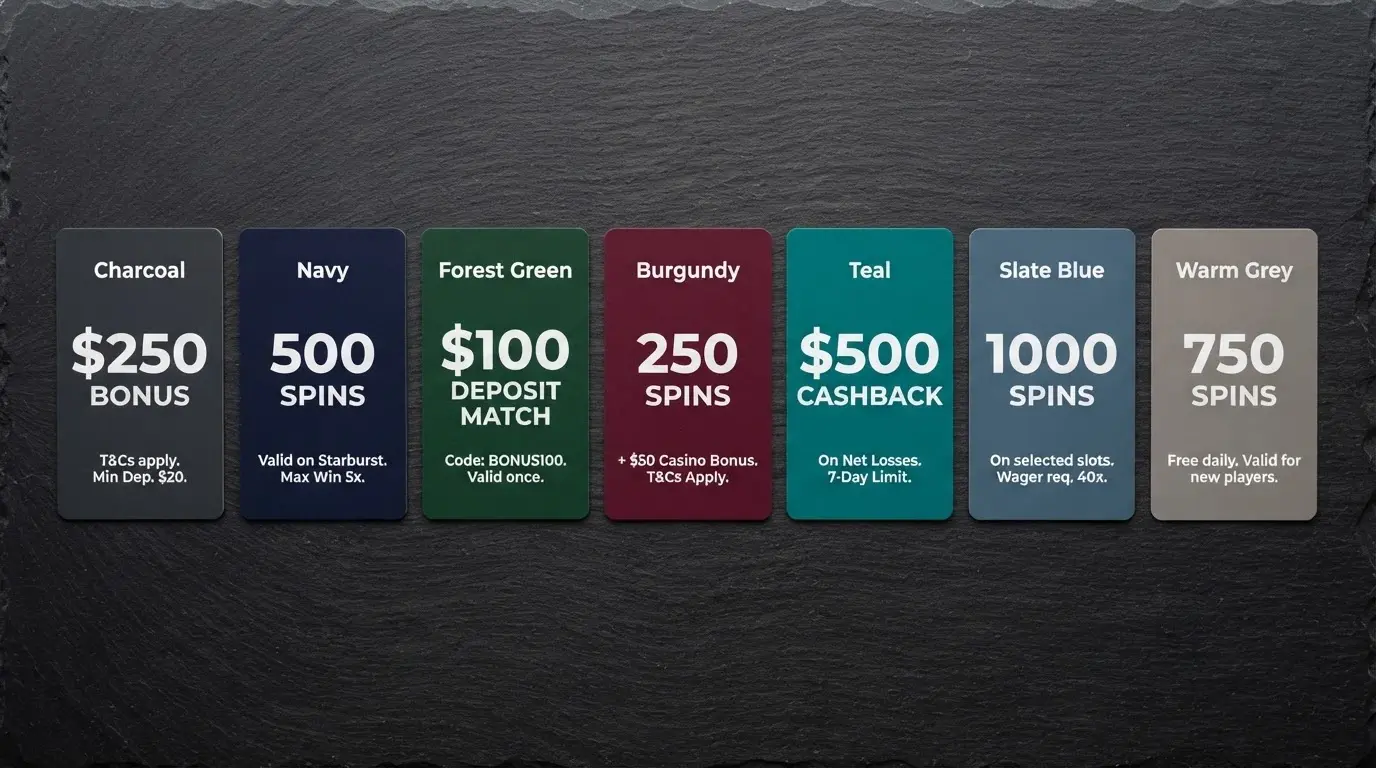
| Operator | NDB Offer | Bonus Type | Wagering | Max Cashout | Validity | Licence |
|---|---|---|---|---|---|---|
| Skycrown | 100 free spins | Free spins (phone-verified) | 25× on winnings | AU$100 | 7 days | Curaçao (offshore) |
| RocketPlay | 50 free spins | Free spins on Gamzix slot ($0.10/spin) | 60× on winnings | $50 | 24h to activate | Curaçao (offshore) |
| Ozwin Casino | $20 chip | No-deposit cash chip | 60× on bonus | AU$100 | 7–14 days | Curaçao (offshore) |
| Fair Go Casino | $5 chip | No-deposit cash chip | 60× on bonus | AU$100 | 7–14 days | Curaçao (offshore) |
| 7Bit Casino | 30 free spins | Free spins (crypto-friendly) | 45× on winnings | AU$100 | 7 days | Curaçao (offshore) |
| Royal Reels | Free spins | Free spins | 30×–40× on bonus | AU$200 | 7–14 days | Curaçao (offshore) |
| FairCrown | 50 free spins | Free spins | 40× on winnings | AU$100 | 7 days | Curaçao (offshore) |
| WinSpirit | — | — | — | — | — | Curaçao (offshore) |
| Stake | — | — | — | — | — | Curaçao (offshore) |
| Bizzo Casino | — | — | — | — | — | Curaçao (offshore) |
A note on the table. The cells marked with an em dash for WinSpirit, Stake and Bizzo Casino reflect what was confirmed during this review: a Curaçao licence and an Australian-facing presence, but no specific NDB offer, wagering multiple, cashout cap, validity window or bonus type surfaced in the sources consulted. Players interested in those brands should check the operator’s own promotions page before claiming anything.
A note on the licence column. Every entry is Curaçao. No operator in this table holds an Australian online casino licence because no such licence exists. The legal status of every brand on this page is the same: offshore, unlicensed in Australia, operating in contravention of the Interactive Gambling Act 2001.
Skycrown — 100 Free Spins with Phone Verification
Skycrown’s headline NDB is 100 free spins, and the headline is the largest free-spin count in the featured set. The bonus is gated by phone-number verification — the player registers, confirms the email address, then enters a one-time SMS code at the cashier to unlock the spins. That second verification step is the reason Skycrown’s NDB does not appear on every affiliate aggregator; some list a 20-free-spin version at 25× wagering instead, which appears to be a stripped-down promotion for a different traffic source.
The game catalogue behind the bonus is wide. Skycrown provides more than 10,400 games from over 50 providers — Pragmatic Play, NetEnt, Microgaming, Play’n GO, BGaming, Hacksaw Gaming and Nolimit City among them. The free-spin bundle itself is locked to a specific title or a narrow provider set, so the catalogue breadth matters less for the NDB than for what the player does if they convert to a depositing customer. The 50-provider count does mean the player has somewhere to go with a deposit, if they choose to make one.
A tested AU$180 PayID withdrawal from Skycrown reached a nominated Australian bank account in 2 hours and 29 minutes. PayID is unusual at offshore casinos — most Australian-facing brands route withdrawals through crypto or international bank transfer, both of which are slower and both of which carry friction. A 2h29m PayID turnaround is a real operational signal: the cashier is wired to Australian payment rails, the verification queue is short, and the casino is willing to pay out in AUD without forcing a crypto round-trip.
Skycrown suits the player who wants the largest spin count in the set and is comfortable completing a phone-verification step before play begins. The wagering multiple on the 100-spin version is the lowest in the featured set at 25× on winnings; the max cashout is the standard AU$100; the validity is 7 days. For a player who values spin count over chip flexibility, Skycrown is the right starting point.
RocketPlay — 50 Free Spins, But a 60× Wagering Wall
RocketPlay’s NDB is 50 free spins on a Gamzix slot at $0.10 per spin, with a 60× wagering requirement on the winnings, a $50 max cashout and a 24-hour activation window. The numbers are tight, and the activation window is the tightest in the set — the player has one day from claim to use the spins, or the bonus expires unplayed.
The 60× multiple is the wall. Sixty times the winnings in follow-up bets is a heavy grind against a $50 cashout ceiling — a player who runs the spins up to $50 in winnings has cleared nothing yet, and now faces $3,000 in follow-up wagers to convert that $50 into withdrawable cash. The expected-loss arithmetic on this offer is harsh: at a typical pokie RTP in the mid-90s, the player loses roughly $0.005 per $1 wagered, which means $3,000 in clearing bets costs around $15 of expected value against a $50 capped payout. The offer is playable but not generous.
RocketPlay’s catalogue is the second-largest in the set. The casino runs 91 providers — NetEnt, Pragmatic Play, Evolution Gaming, Nolimit City, Play’n GO, Yggdrasil among them — and the welcome package after the NDB is 100% up to €1,000 plus 100 free spins at 40× wagering. The contrast with the NDB terms is instructive: the same casino that gates its welcome bonus at 40× offers its no-deposit spins at 60×. The NDB is the harder product to clear, by design.
RocketPlay suits a player who wants a fixed-stake trial of one game, can clear the wagering inside the 24-hour activation plus a reasonable follow-on session, and is not counting on a major cashout. The $50 cap bounds the upside, and the 60× multiple bounds the time cost. A player who treats the offer as a quick look at the lobby rather than a cashout opportunity is treating it the way the operator intends.
Ozwin Casino — A Straightforward $20 No-Deposit Chip
Ozwin’s NDB is a $20 no-deposit chip with a 60× wagering requirement and a typical max cashout of AU$100. The shape is the simplest in the set: a cash credit, no free-spin title restriction, full pokie-library flexibility within the contribution rules.
The wagering requirement applies to the bonus value, not the winnings, which is the older style of NDB terms and the one the player can model in advance: $20 × 60 = $1,200 in required bets before the bonus and any winnings become withdrawable. At $0.10 per spin, that is 12,000 spins. At 5 seconds per spin, that is 60,000 seconds — roughly 16 hours and 40 minutes of continuous play to clear, assuming only the bonus amount is wagered. The estimate is statistical and assumes the player runs the bonus through pokies at full contribution. A player who tries to clear the requirement at the blackjack table is looking at a much longer session.
Ozwin’s catalogue is RTG-focused — RealTime Gaming is the dominant provider, which means a smaller game library than Skycrown or RocketPlay but a coherent one. The brand has a familiar Australian-facing identity in the affiliate listings, and the Curaçao licence is the standard offshore wrapper. AU-facing players who have used RTG casinos before will recognise the lobby structure and the bonus mechanics.
Ozwin suits a player who wants a cash chip over a free-spin bundle and is comfortable running a longer clearing session. The 60× multiple is heavy, but the chip flexibility means the player can vary the stake and the title to manage the session. For a player who plans to deposit after the NDB, the RTG catalogue is a coherent next step rather than a fresh lobby to learn.
Fair Go Casino — A Modest $5 Entry, RTG-Only
Fair Go’s NDB is a $5 no-deposit chip with a 60× wagering requirement. The shape mirrors Ozwin’s offer — a cash chip, no free-spin title restriction, full pokie-library access — at a quarter of the bonus size.
The smaller chip is the difference that changes the calculus. $5 × 60 = $300 in required bets, or 3,000 spins at $0.10 per spin. At 5 seconds per spin, that is roughly 4 hours and 10 minutes of continuous play to clear the wagering. The total session cost is a third of Ozwin’s, and the cashout cap is the same AU$100. The player is getting a shorter clearing path against the same ceiling, which makes the offer more efficient per minute of play even though the headline figure is smaller.
Fair Go’s catalogue is also RTG-focused, and the lobby is a familiar one for Australian-facing players who have used RTG casinos before. The Curaçao licence is the standard offshore wrapper; the AU-facing branding is consistent with Ozwin’s, and the two brands tend to appear together in affiliate listings because they share the same provider backbone.
Fair Go suits a player who wants the shortest clearing path in the cash-chip set and is content with a smaller bonus. The lower time cost means a player can run the offer inside a single session without committing to a multi-day grind. For a player who treats the NDB as a quick trial rather than a feature attraction, Fair Go is the more efficient of the two RTG-focused brands.
7Bit Casino — 30 Free Spins, Crypto-Friendly
7Bit’s NDB is 30 free spins with a 45× wagering requirement on the winnings, a max cashout of AU$100, and a 7-day validity. The library runs 3,700+ titles, the casino is crypto-friendly as well as fiat, and the Curaçao licence is the standard offshore wrapper.
The free-spin count is the smallest in the featured spin bundles — half of RocketPlay’s 50 and a third of Skycrown’s 100 — but the wagering multiple is also the second-lowest in the spin-bundle set at 45×, behind Skycrown’s 25×. The lower multiple partly compensates for the lower spin count: the player has fewer spins to clear, but the per-winning-dollar grinding cost is lower.
The crypto-friendliness is the structural difference from the RTG-focused brands in the set. A player who wants to deposit in Bitcoin or USDT can do so at 7Bit, which makes the casino a natural fit for a punter who already holds crypto. The same crypto acceptance is also the legal tell — Australia banned digital currency as a payment for online wagering from 11 June 2024, and a casino accepting Bitcoin from an Australian is operating outside Australian rules by definition.
7Bit suits a player who wants a crypto-friendly offshore casino with a mid-pack free-spin NDB and is comfortable with the legal framing that crypto acceptance implies. The library is large, the wagering multiple is manageable, and the validity is standard.
Royal Reels — Free Spins with a Higher Cashout Cap
Royal Reels runs a free-spin NDB with 30× to 40× wagering and a max cashout of AU$200 — the highest cashout ceiling in the featured set. The validity is 7 to 14 days, and the licence is Curaçao. Specifics of the current offer were harder to pin down than the other operators in the set, and the wagering range is broader than the single-number multiples elsewhere.
The cashout cap is the headline. AU$200 is double the AU$100 ceiling that dominates the rest of the featured set, and it changes the shape of a lucky run on the free spins — a player who converts a strong spin session into a $150 win at a 35× multiple has $5,250 in follow-up wagers and a $200 cashout ceiling, which is a far less punishing grind than the same scenario at RocketPlay’s 60× and $50 cap. The cap does not remove the wagering requirement, but it raises the ceiling for what survives it.
Royal Reels suits a player who wants the highest cashout ceiling in the featured set and is comfortable accepting a broader wagering range as the trade-off. The brand’s NDB is the right pick for a player who plans to chase a meaningful withdrawal rather than a quick trial, and the 7–14 day validity gives the player more breathing room than the 24-hour RocketPlay window.
FairCrown — 50 Free Spins at 40× Wagering
FairCrown’s NDB is 50 free spins at 40× wagering on winnings, with a typical max cashout of AU$100 and a 7-day validity. The numbers are the median of the featured set: a mid-pack spin count, a mid-pack multiple, a standard cashout ceiling, a standard validity. There is no extreme on either end.
The mid-pack positioning is the offer’s actual feature. A player who wants the largest spin count picks Skycrown. A player who wants the highest cashout ceiling picks Royal Reels. A player who wants the shortest clearing path picks Fair Go. A player who wants the median — the offer that is neither extreme nor weak, neither the longest grind nor the quickest trial — picks FairCrown.
FairCrown suits a player who values balance over peak figures. The 50 spins are enough to test the lobby. The 40× multiple is the market-standard upper-middle. The AU$100 cashout is standard. The 7-day validity is standard. For a player who is choosing on terms rather than on headline spin count, FairCrown is the cleanest mid-pack option in the featured set.
WinSpirit — Curaçao-Licensed, NDB Unconfirmed This Review
WinSpirit is a Curaçao-licensed offshore casino that serves Australian players. That much is confirmed. The specifics of any current no-deposit bonus — the bonus amount, the bonus type, the wagering multiple, the max cashout cap, the validity window — were not surfaced during this review, and this page does not invent them.
What a player should know is what to check before claiming any offer at a brand whose terms could not be verified. The promotions page on the operator’s own site is the first stop — affiliate listings can be weeks out of date, and the casino’s own page is where the live terms live. The bonus terms page (or “Promotions Terms” link inside the promotion) names the wagering multiple, the game contribution table, the max cashout cap, the validity window and any country restrictions. The player who reads these five elements before claiming avoids the most common complaint pattern: bonus credited, wagering completed, withdrawal refused because the player was in an excluded country.
WinSpirit suits a player who is willing to do the verification work themselves before claiming. The Curaçao licence and the Australian-facing presence make it a candidate brand, but the absence of confirmed NDB terms in this review means a player cannot model the clearing path in advance. For a player who wants the certainty of a pre-modelled offer, the seven brands above are better-documented starting points.
Stake — Crypto-Only Giant, But No Confirmed NDB
Stake is the highest-profile crypto casino in the featured set — a Curaçao-licensed operator running a crypto-only model with proprietary games alongside major third-party providers. The brand is known for high-volume promotions, sports-betting integration and a streamlined crypto cashier. No specific no-deposit bonus was surfaced for Australian players during this review.
The structural point about Stake is the same as for every other brand on this page: the casino is offshore and unlicensed in Australia, and the crypto-only model is itself the legal tell. Australia banned digital currency as a payment for online wagering from 11 June 2024, with penalties up to $247,500 for non-compliance. A site asking a customer for a Bitcoin deposit for online gambling is operating outside Australian rules by definition. Stake’s crypto-only model is not a workaround for the Australian market; it is a marker that the operator does not target the licensed Australian wagering channel at all.
AUSTRAC requires all Australian cryptocurrency exchanges to verify customer identity as a condition of their Digital Currency Exchange registration, which means the Australian end of a crypto deposit to an offshore casino is traceable to a verified identity. The casino end is not. The asymmetry is structural and worth understanding before a first deposit.
Stake suits a player who specifically wants a crypto-only offshore casino and is comfortable accepting that no Australian consumer protection applies. For a player who wants a pre-modelled NDB with confirmed terms, the other nine brands in the featured set are better-documented starting points.
Bizzo Casino — Offshore Operator, NDB Not Confirmed
Bizzo rounds out the featured set — a Curaçao-licensed offshore casino serving Australian players, with multiple providers in its catalogue and a standard offshore cashier. No specific no-deposit bonus was confirmed during this review, and this page does not invent one.
The honest framing for Bizzo is the same as for WinSpirit and Stake: the brand is featured for its Australian-facing presence and its offshore status, but the absence of confirmed NDB terms means the player cannot model the clearing path in advance. The promotions page on the operator’s own site is where any live offer would be listed, and the bonus terms page is where the wagering multiple, the cashout cap and the contribution table would be specified.
Bizzo suits a player who is comparing offshore operators on footprint and catalogue breadth rather than on a specific pre-modelled NDB offer. For a player who wants to claim a bonus today with terms they can read in this review, the seven brands with confirmed offers above are the right starting point.
Crypto at NDB Casinos — Convenient, But a Legal Red Flag
Crypto at an Australian-facing casino is convenient and anonymous by design. It is also a payment method subject to the 11 June 2024 ban on digital currency for licensed Australian wagering, which carries substantial penalties for non-compliance. A casino that asks an Australian for a Bitcoin or USDT deposit is operating outside Australian rules, and the crypto payment method is itself the tell.
The Interactive Gambling Amendment (Credit and Other Measures) Act 2023 commenced on 11 June 2024 and banned credit cards, credit-related products and digital currency as payment methods for online wagering. The penalty regime is meaningful: an Australian operator accepting crypto from an Australian customer for online wagering faces civil penalties up to $247,500. The offshore casino is not an Australian operator and is not bound by the regime, but the ban is the signal that crypto acceptance at a casino implies offshore status.
The practical consequences for the player are two-sided. Crypto deposits are instant, they bypass the Australian banking system, and they do not require the player to use a payment method the Australian banks have flagged. Crypto withdrawals are slower, they require the player to move funds through an Australian-registered cryptocurrency exchange (because AUSTRAC requires all Australian exchanges to verify customer identity), and they expose the player to conversion-rate risk between deposit and withdrawal. The asymmetry is real: the deposit leg is fast and anonymous; the withdrawal leg is slow and identified.
Bitcoin and Crypto NDB Bonuses — What’s on Offer
A crypto NDB is a no-deposit bonus denominated in Bitcoin or another cryptocurrency rather than AUD. The market range is 0.0001 BTC to 0.001 BTC, which at typical exchange rates converts to roughly A$5 to A$50 in fiat terms. The wagering requirements run 35× to 60× — comparable to the fiat NDB market — and the withdrawal caps run 0.005 BTC to 0.01 BTC.
The mechanics are identical to a fiat NDB. The player registers, verifies, claims the bonus, plays through the wagering requirement, and attempts a withdrawal subject to a cashout cap. The denomination is the only structural difference. A 0.0005 BTC bonus at 40× wagering is 0.02 BTC of required bets, or roughly A$1,000 in fiat terms — the same clearing path as a $25 fiat chip at the same multiple.
The featured crypto-friendly operator in the set is 7Bit Casino, which accepts both fiat and crypto and runs a 30-free-spin NDB with a 45× wagering requirement. Stake is the crypto-only brand in the set, with no confirmed NDB this review. A player who specifically wants a crypto-denominated NDB should check 7Bit’s promotions page and any Stake bonus that may be live at the time of claiming.
Deposits, Withdrawals and the Crypto Asymmetry
Crypto deposits at an offshore casino are instant. The player sends Bitcoin or USDT from a self-custody wallet to the casino’s deposit address, and the funds credit after the relevant number of network confirmations — typically minutes for Bitcoin, often faster for USDT on a low-fee chain. There is no Australian bank in the loop. There is no PayID or Osko rail. The deposit is a peer-to-peer transfer to a Curaçao-licensed operator, and the operator credits the balance on receipt.
Crypto withdrawals are slower and more friction-laden. The casino processes the withdrawal to a player-controlled wallet, and the player then needs to move the funds into the Australian banking system to spend them. The Australian end is an AUSTRAC-registered cryptocurrency exchange, and every Australian exchange is required to verify customer identity as a condition of its Digital Currency Exchange registration. The exchange will ask for the player’s ID, the source of the funds, and the destination bank account. The verification step is not optional. A player who tries to deposit at an offshore casino from an unverified Australian exchange account will find the exchange flagging the transaction.
The asymmetry shows up at the cashout moment. A AU$180 PayID withdrawal from Skycrown reached a nominated Australian bank account in 2 hours and 29 minutes — a fast fiat path that requires no crypto round-trip. A player who has been depositing in Bitcoin and withdrawing in Bitcoin will find the Bitcoin leg to the casino fast and the Australian exchange leg from the casino slower, with the exchange’s verification step sitting in between.
A player who wants the speed of PayID at an offshore casino is choosing an operator that supports PayID directly — Skycrown is the clearest example in the featured set. A player who wants the privacy of crypto is choosing an operator that accepts Bitcoin, accepting that the Australian-side cashout leg is slower than the deposit leg. The trade-off is real and worth pricing in before the first deposit.
The Pokies Behind the Bonus — What You Can Actually Play
A no-deposit bonus is only as good as the games it unlocks, and most NDB free spins are locked to a single pokie or a narrow provider set. The marketing line about “10,400+ games” or “91 providers” describes the operator’s full catalogue, not the slice the bonus actually covers.

Pokies are the dominant NDB-eligible game for a reason that lives in the contribution table: they count 100% toward wagering requirements, while table games and live casino titles count 0–20%. A player who tries to clear a wagering requirement at the blackjack table is grinding at one-tenth the speed of a player who runs it through a pokie. The bonus terms effectively steer the player toward pokies, and the bonus games are pokies.
Pokies and Free-Spin NDBs — What Titles Your Spins Actually Cover
Free spins are almost always title-locked. RocketPlay’s 50 free spins run on a single Gamzix slot at $0.10 per spin — the player gets 50 spins of one game, with no stake choice and no title choice. The total bet value is fixed at $5, and the wagering requirement applies to the winnings from those 50 spins, not to the $5 of bet value.
The title lock has two practical consequences. The first is volatility exposure: a player who runs 50 free spins on a high-volatility pokie has a wider outcome distribution than a player who runs 50 spins on a low-volatility game. A high-volatility spin session might produce zero wins or one big win; a low-volatility session produces a steady stream of small wins. The player’s preference matters, and the casino is choosing for them.
The second is clearing efficiency. A pokie with a higher return-to-player (RTP) percentage bleeds less of the wagering requirement to the house edge. The exact RTP is operator-specific and title-specific, and most operators do not publish per-title RTP in the bonus terms. The player who wants to optimise clearing efficiency is choosing from the casino’s general pokie library — and the free-spin lock prevents that choice entirely, limiting the player to a single title.
Slot Catalogues — How Many Titles You Actually Get
The operator’s catalogue number is a marketing figure. Skycrown’s “10,400+ games from 50+ providers” is true at the lobby level. The player’s NDB covers a fraction of that library.
Skycrown’s 100 free spins run on a specific title or a narrow provider set, not on the full 10,400-game catalogue. RocketPlay’s 50 spins run on a single Gamzix slot. Ozwin and Fair Go’s chip bonuses cover the RTG catalogue they carry, which is smaller and more coherent than Skycrown’s 50-provider spread. The NDB player is operating inside a subset of the lobby, and the catalogue number describes the deposit-time experience rather than the bonus-time one.
A player who values game variety inside the bonus is choosing a chip bonus over a free-spin bundle. A chip bonus gives the player access to the operator’s full pokie catalogue (within contribution rules), so the 10,400-game Skycrown library or the 91-provider RocketPlay library is reachable. A free-spin bundle narrows the catalogue to the locked title. The trade-off is wagering structure (chip = wagering on bonus; spins = wagering on winnings) versus game flexibility (chip = full catalogue; spins = locked title).
Free-Spin Availability — Which Operators Give You the Most Spins
Free-spin count is the headline figure on the affiliate page, but the spin value (stake per spin) and the cashout cap together determine what the offer is actually worth. The featured set’s spin counts run from 30 (7Bit) to 100 (Skycrown), with RocketPlay and FairCrown at 50 and Royal Reels unspecified.
Skycrown’s 100 spins are the largest count. The wagering multiple is the lowest in the set at 25× on winnings, and the max cashout is the standard AU$100. The combination — high count, low multiple, standard cap — is the most generous free-spin profile in the set on a per-offer basis.
RocketPlay’s 50 spins come with the tightest cap in the set at $50 and a 60× multiple. The headline count is mid-pack; the clearing economics are the harshest. The 24-hour activation window compounds the friction.
7Bit’s 30 spins come with a 45× multiple and a standard AU$100 cap. The lowest count in the set, with a mid-pack multiple and a standard cap. The clearing path is shorter than RocketPlay’s because there are fewer spins to clear, and the per-winning-dollar cost is lower than RocketPlay’s.
FairCrown’s 50 spins at 40× are the median. Standard count, standard multiple, standard cap, standard 7-day validity. The cleanest mid-pack option.
A player who values spin count picks Skycrown. A player who values per-spin economics picks FairCrown. A player who values a high cashout ceiling picks Royal Reels. A player who wants a short clearing path picks 7Bit. The right pick depends on what the player is optimising for, and the affiliate table sorts the operators on headline count rather than on clearing economics.
Why Every NDB Casino Australians Use Is Offshore
The legal architecture that defines this market is short and absolute. The Interactive Gambling Act 2001 prohibits the supply of online casino games, online pokies and in-play betting to a person in Australia. There is no licence for online casino anywhere in the country — not federally, not in any state or territory. The Northern Territory Racing and Wagering Commission licences bookmakers for pre-event wagering, lotteries and keno; no Australian regulator licences online casino.
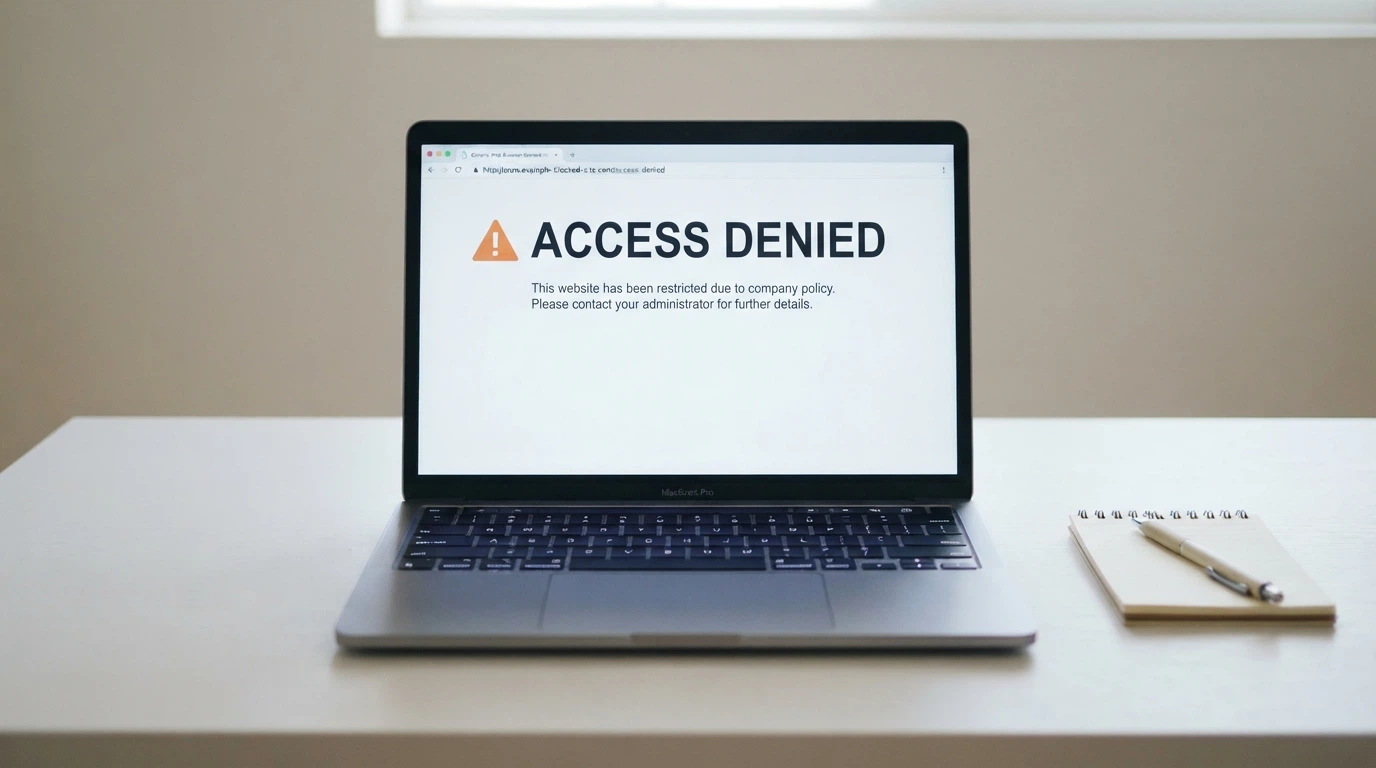
The 2017 amendment to the IGA closed offshore loopholes and gave the Australian Communications and Media Authority (ACMA) enforcement powers. The ACMA can direct Australian internet service providers to block illegal sites at the DNS level, issue formal warnings, bring civil penalty proceedings, and refer operators for enforcement. The ACMA cannot recover money a player lost to an offshore operator. The ACMA cannot compel an offshore casino to pay out a disputed withdrawal. The IGA targets the provider, not the player — Australian players are not prosecuted for using an offshore casino.
The Interactive Gambling Act — No Online Casino Licence Exists in Australia
The IGA 2001 is the foundational prohibition. It was amended in 2017 to close the offshore loophole that had allowed overseas operators to serve Australian customers without local enforcement, and it was amended again in 2024 to ban credit cards and crypto as payment methods for online wagering. The 2026 Gambling Reform Bill, passed by Parliament on 19 August 2026, adds further measures commencing 1 January 2027.
What the IGA prohibits is specific: online casino games (slots, table games, live casino), online pokies, and in-play betting on a sporting event once it has started. What the IGA permits is also specific: wagering on races and sport placed before the event begins, lotteries, and keno, through operators licensed by a state or territory. The Northern Territory Racing and Wagering Commission (NTRWC), administered through Licensing NT, is the de facto national licensor for online bookmakers — Sportsbet, bet365, Ladbrokes and similar brands hold NT wagering licences, not casino licences.
Minimum age for all commercial gambling in Australia is 18. There is no federal deposit, loss or stake ceiling for online gambling — because the product those ceilings would govern is banned outright. What Australia caps is how the player can pay. Credit cards, credit-related products and digital currency have been banned for online wagering since 11 June 2024.
ACMA Enforcement — Blocks, Fines and the Tabcorp Precedent
The ACMA is not a paper regulator. Since November 2019, the ACMA has directed Australian ISPs to block 1,564 illegal gambling and affiliate websites, and more than 225 illegal services have withdrawn from the Australian market since 2017. The blocking is DNS-level — Australian ISPs resolve the blocked domains to a sinkhole rather than the operator’s hosting — and the affiliate sites are blocked as well as the operator sites, which is why a Google search result for an offshore casino often leads to a blocked page when the player clicks through.
The enforcement extends to licensed operators who step outside their licence. On 16 January 2026, the ACMA issued eight infringement notices to Tabcorp Holdings Limited, each for $19,800, for a total of $158,400, for providing a prohibited in-play betting service. Tabcorp holds Australian wagering licences; the in-play product they offered was a prohibited interactive gambling service, and the ACMA’s response was eight infringement notices in a single action. The signal is that the ACMA enforces against Australian licensees as well as offshore operators, and the dollar amounts are not nominal.
The affiliate-site blocking is the part the player meets most often. A search for an offshore NDB casino surfaces aggregator pages that link to the casino’s bonus page; the aggregator is blocked, the casino’s domain is blocked, and the player lands on an ACMA notice instead of the bonus page. The blocking is a real obstacle to access and a real cost to the offshore operator’s customer-acquisition funnel.
Payment Bans, the 2026 Reform and What Changes in $$CY+1$$
Australia’s payment-method ban is the structural constraint on the offshore casino model. From 11 June 2024, credit cards, credit-related products and digital currency (crypto) have been banned as payment methods for online wagering, as noted previously. The ban applies to Australian-licensed operators. Offshore casinos are not bound by it, which is why every brand on this page accepts payment methods the Australian regime has banned.
The Interactive Gambling Amendment (Gambling Reform) Bill 2026 passed Parliament on 19 August 2026 and its measures commence on 1 January 2027. The reform adds several layers of constraint on the licensed Australian wagering market and gives new tools to the regulator. The headline measures are: a maximum of three wagering advertisements per hour on television between 6:00 am and 8:30 pm; a live-sport blackout that bans wagering advertising from 15 minutes before a live sporting event until 5 minutes after it ends; online wagering advertisements only to logged-in, age-verified users who have not opted out; no wagering advertising in sports venues or on player uniforms; and a bar on athletes, celebrities and influencers promoting wagering products.
The reform also tightens inducement marketing. From 1 January 2027, direct marketing of inducements is prohibited for 14 days after a customer signs up, for 90 days after a person deregisters from BetStop, and indefinitely for customers identified as at risk of gambling-related harm. Banks and payment providers gain express authority to block transactions to illegal gambling operators, which means an Australian bank’s fraud team can refuse to process a payment to a known offshore casino. AdStop — a national wagering advertising opt-out register — will be administered by the ACMA. Foreign matched lotteries and online keno are prohibited.
The reform targets the licensed market. The offshore NDB casino is not a licensed market participant, and the inducement restrictions do not bind it. What the reform does is tighten the licensed channel around the offshore one — which is the structural direction Australian policy has been moving since 2017.
What Offshore Status Means for Your Money
An offshore casino gives the Australian player zero domestic consumer protection. The table below sets out what a player gets from a licensed Australian wagering service and what they give up by using an offshore NDB casino.
| Protection | Licensed Australian Wagering | Offshore NDB Casino |
|---|---|---|
| ACMA complaint and recovery path | Yes — complaints investigated, action taken against licensee | No — ACMA confirms offshore status; no recovery mechanism |
| BetStop coverage | Yes — single registration excludes from every AU-licensed wagering service | No — offshore casinos not connected to the register |
| Responsible-gambling tools (deposit limits, reality checks, cooling-off, activity statements) | Mandatory under state/territory licensing | Optional or absent; operator’s discretion |
| Consumer guarantee on advertised bonus terms | Yes — licence conditions enforce accurate advertising | No — terms page is the only contract; disputes resolved in operator’s jurisdiction |
| Withdrawal certainty | Yes — consumer protection legislation applies | No — operator can refuse or delay; player has limited recourse |
| Site availability | Stable — licensed operator cannot be DNS-blocked in Australia | At risk — ACMA can direct blocking at any time, including with player funds on deposit |
| Tax clarity on winnings | Winnings not assessable income for ordinary punters (ITAA 1997 s 6-5) | Same ATO position applies; no casino-side reporting to ATO |
The “Site availability” row is the one players underestimate. The ACMA can direct Australian ISPs to block an offshore casino’s domain at any time, and the blocking is DNS-level — the player opens the site one day and finds an ACMA notice the next. If the player has a balance on deposit at that moment, the only path to the funds is through the casino’s own withdrawal process, which may or may not be reachable from the blocked IP. A player who keeps a meaningful balance at an offshore casino is one ACMA action away from losing access to it.
When Free Play Stops Being Free — Staying Safe
Gambling-harm prevalence in Australia is high and rising. The Roy Morgan Gambling Harm Index, published in July 2026, found that 15.1% of the Australian adult population — an estimated 3.32 million people — are experiencing some level of harm from their own gambling or from the gambling of someone close to them. The Problem Gambling Severity Index (PGSI) shows problem-gambling incidence rising from 1.9% in 2022–23 to 2.4% in 2023–24 and 2.9% in 2024–25. Risky gambling increased from 13.7% in 2024 to 19.4% in 2025, a jump of more than five percentage points in a single year.

The offshore NDB casino model sits wholly outside Australia’s harm-minimisation infrastructure. The licensed Australian wagering market has BetStop, deposit limits, reality checks, cooling-off periods and activity statements — the mandatory operator-level tools that the state and territory licensing regimes require. The offshore market has none of these as a regulatory baseline. Some offshore casinos offer deposit-limit tools voluntarily. Most do not. Opting out of the harm-minimisation infrastructure the country has built is the real consequence of signing up at an offshore casino — a reality most users overlook.
BetStop and the Offshore Gap — Why Self-Exclusion Doesn’t Reach an NDB Casino
BetStop is Australia’s strongest player-protection tool. It launched on 21 August 2023, and by 31 March 2026 it had 59,830 registrations with 37,247 active exclusions. Seventy-eight per cent of registrants were under 40, and 38% chose lifetime exclusion. A single BetStop registration excludes a person from every Australian-licensed online and phone wagering service simultaneously. The mechanism is comprehensive within its scope.
The scope is the limitation. BetStop binds Australian-licensed wagering services. An offshore casino is not licensed in Australia and is not connected to the register. A person who registered with BetStop yesterday and woke up today wanting to gamble can deposit at a Curaçao NDB casino, claim the bonus, play through the wagering requirement and attempt a withdrawal — and BetStop will not have stopped them, because the casino is outside the register’s reach.
The ACMA’s own framing of this gap is unambiguous: “BetStop binds Australian-licensed wagering services. An offshore casino is not licensed here, is not connected to the register, and will keep taking a self-excluded person’s money.” A player considering an offshore NDB casino who has previously self-excluded should understand that self-exclusion does not extend to the offshore channel, and the protection BetStop offered in the licensed market does not transfer.
What Offshore Casinos Skip — Deposit Limits, Reality Checks and Cooling-Off
Licensed Australian wagering operators carry mandatory responsible-gambling tools: deposit limits the player sets before play begins; session time-outs that lock the account after a defined play period; activity statements that summarise the player’s deposits, withdrawals and net position; reality checks that interrupt play at defined intervals; and operator-level self-exclusion that runs alongside the national BetStop register. These tools are not optional. They are conditions of holding an Australian wagering licence.
Offshore casinos are not required to offer any of them. Some offer voluntary deposit limits. Some offer session reminders. Most do not offer activity statements in the form an Australian player would recognise. The operator-level self-exclusion at an offshore casino is a request to the operator’s customer-service team, not a regulatory mechanism, and the operator can decline or limit the exclusion at its discretion.
The structural gap is the point. A player moving from a licensed Australian wagering service to an offshore casino is moving from a regulated environment with mandatory harm-minimisation tools to an unregulated environment where those tools are at the operator’s discretion. These mandatory safeguards simply do not carry over to an offshore operator, leaving the customer without recourse.
Where to Get Help — Helplines That Work Regardless
The help infrastructure in Australia is real, free and available around the clock. The National Gambling Helpline is 1800 858 858 — free, confidential, staffed 24 hours a day, 7 days a week. Online chat and counselling are available through Gambling Help Online. The Problem Gambling Severity Index (PGSI) is the standard self-screening tool, and a high score on the PGSI is the signal to contact the helpline.
These services work regardless of where the gambling happened. A player who is concerned about their own play at an offshore NDB casino can call the helpline, and the counsellors will help — the offshore status is not a barrier to support. State-based support services exist in every state and territory and can be reached through the national helpline. A player who has self-excluded through BetStop and is concerned about the offshore gap should raise that concern with the helpline, because the counsellors know the landscape.
How We Evaluated These No-Deposit Casinos
The featured set was selected on three criteria: relevance to the no-deposit bonus topic, an Australian-facing presence, and current licensing status. The legal-register check — confirming that no operator in the set holds an Australian online casino licence — was grounded in the Interactive Gambling Act 2001 and the ACMA register. Every brand in the set is offshore and Curaçao-licensed, because no Australian licence for the online casino product exists.
The evaluation drew on affiliate audit data, the operators’ own terms pages, the ACMA’s published blocking and infringement statistics, and the Roy Morgan and POLIS research on gambling-harm prevalence. Where the sources disagreed — Skycrown’s NDB is listed as 100 free spins with phone verification on one affiliate page and 20 free spins at 25× wagering on another — both listings were carried and the source named in the operator write-up. Where a brand’s NDB could not be confirmed during this review (WinSpirit, Stake, Bizzo), the gap was named rather than filled.
The methodology did not include weighting systems, scoring matrices or invented percentages. The ranking in the comparison table is editorial, and the ordering reflects the spread of the offers across the market rather than a composite score. A reader who weights spin count over cashout cap will reorder the table; a reader who weights clearing time over headline bonus will reorder differently. The table is the input. The reader’s preference is the ordering.
Should You Claim an NDB Bonus? What the Numbers Say
The arithmetic verdict on an NDB is mechanical. A AU$20 chip at 40× wagering is AU$800 in required bets. At $0.10 per spin, that is 8,000 spins — roughly 11 hours of continuous play at 5 seconds per spin, assuming only the bonus amount is wagered. The cashout cap on that offer is in the AU$100 range, which means a player who runs the bonus up to $5,000 during clearing walks away with $100. The expected loss over the clearing path is the operator’s edge multiplied by the turnover, and at a typical pokie RTP in the mid-90s the expected loss on $800 of turnover is in the $30 to $50 range against a $100 capped payout.

The legal verdict is structural. No online casino is licensed in Australia. Every NDB casino an Australian can reach is offshore. The IGA targets the provider, not the player, and Australian players are not prosecuted for using an offshore casino. The offshore status strips the player of every domestic protection — no ACMA complaint path, no BetStop coverage, no consumer guarantee on bonus terms, no recourse if the operator refuses a withdrawal. The site can be DNS-blocked with a balance still on it.
The trade-off the player is weighing is zero financial risk on the deposit side against structural risk on the protection side. A player who has not self-excluded, who is not chasing a win, who can read a terms page and who treats the bonus as a low-stakes trial of an offshore lobby will find the arithmetic acceptable. A player who is in recovery, who has previously self-excluded through BetStop, or who cannot afford to lose a meaningful balance to an offshore operator that disappears behind a DNS block should not claim.
The one thing to check before claiming any offer is the bonus terms page on the operator’s own site. The terms name the wagering multiple, the cashout cap, the game contribution table, the validity window and any country restrictions. The player who reads these five elements before claiming will not be surprised by a refused withdrawal or a voided win. The player who does not read them is gambling on the casino’s good faith, and the casino is offshore, unregulated in Australia and under no obligation to be reasonable when the terms are ambiguous and the player did not ask.
Frequently Asked Questions
Are no-deposit bonus casinos legal in Australia?
No. The Interactive Gambling Act 2001 prohibits the supply of online casino games to a person in Australia, and no Australian state or territory issues a casino licence for the online product. Every NDB casino an Australian player can reach is offshore and operates in contravention of the IGA. The IGA targets the provider, not the player — Australian players are not prosecuted — but the offshore status means no Australian consumer protection applies.
Can I withdraw real money from a no-deposit bonus at an online casino?
Yes, but only after clearing the wagering requirement and only up to the cashout cap. The wagering requirement is the multiple the casino applies to the bonus (or to free-spin winnings) before any of it becomes withdrawable. The cashout cap is the maximum the operator will pay out from a no-deposit bonus, regardless of how much the player wins during clearing. Caps in the featured set run from AU$50 (RocketPlay) to AU$200 (Royal Reels); anything above the cap is voided by the casino.
Are crypto and Bitcoin accepted at no-deposit casinos in Australia?
Yes at offshore casinos, no at Australian-licensed wagering services. These payment methods have been banned for licensed online wagering since 11 June 2024, under the same penalty regime. An offshore casino accepting Bitcoin from an Australian is operating outside Australian rules, and the crypto acceptance is itself the marker that the operator is unlicensed domestically. Crypto deposits are instant and anonymous by design; withdrawals require movement through an AUSTRAC-registered Australian exchange, which verifies customer identity.
What happens if I self-exclude through BetStop — does it cover offshore casinos?
No. BetStop binds Australian-licensed wagering services only. An offshore casino is not licensed in Australia and is not connected to the register. A person who self-excluded through BetStop can deposit at a Curaçao NDB casino, claim the bonus and play, because the offshore casino is outside BetStop’s reach. The ACMA’s framing is explicit: BetStop binds Australian-licensed wagering services, and an offshore casino will keep taking a self-excluded person’s money.
How does the Australian government block illegal online gambling sites?
The ACMA directs Australian internet service providers to block illegal sites at the DNS level. Since November 2019, the ACMA has directed the blocking of 1,564 illegal gambling and affiliate websites. The blocking is DNS-level, which means Australian ISPs resolve the blocked domain to a sinkhole rather than to the operator’s hosting. The ACMA can also issue infringement notices to operators — Tabcorp received eight infringement notices totalling $158,400 in January 2026 for prohibited in-play betting — and can refer operators for civil penalty proceedings. The player who tries to reach a blocked casino from an Australian IP will land on an ACMA notice rather than the casino’s homepage.