
The Real Story Behind the $300 No Deposit Bonus Casino Search in Australia
 Available in AU
The search result page for a “$300 no deposit bonus casino Australia” tells a particular story. It is full of affiliates promising the figure, full of bonuses branded “free,” and full of claims that the offer is “available now.” None of those pages are the casino. They are intermediaries selling the searcher’s click to whichever offshore operator paid for the lead. This page is built differently. It treats the searcher’s question on its merits: what is actually available, what it costs to chase, what the fine print does to the headline number, and what the legal environment in Australia does to the rest.

Data current as of 18 October 2026, checked against the Interactive Gambling Act 2001 and ACMA enforcement records.
The first thing to clear up is the honest frame. Across the operator set checked for this guide, no genuine $300 no-deposit bonus is currently active for Australian players. The figure is real as a search term; it is rare as a live offer. That gap is where the value of this page sits. Most competing listicles either invent the offer, recycle a defunct one, or redirect the reader to a deposit match and pretend it is the same thing. The honest guide explains why the gap exists, what the alternatives actually carry, and which terms determine whether any no-deposit offer — at any figure — is worth the time it takes to read.
Table of Contents
- What a $300 No Deposit Bonus Really Means for Australian Players
- How $300 No Deposit Offers Work — and Why Most Players Never Cash Out
- Online Casino Is Prohibited in Australia — Here Is What That Means for You
- PayID at Offshore Casinos: Fast Deposits, No Promises on Withdrawals
- Top Offshore Casinos Accepting Australians in 2026 — What We Can Verify
- Responsible Gambling: Help That Exists and the Gaps Offshore Operators Leave
- How We Selected and Ranked These Casinos
- Your $300 No Deposit Bonus Checklist — What to Check Before You Sign Up
- FAQ
What a $300 No Deposit Bonus Really Means for Australian Players
A no-deposit bonus is a casino credit the operator gives the player before the player has deposited anything. The marketing language wraps it in different names — “$300 free chip,” “$300 sign-up bonus,” “free $300 pokies bonus” — but the mechanism is the same: register an account, claim the offer, and play with house money rather than your own. The crucial difference from a welcome deposit match is that nothing comes out of the player’s pocket to unlock it.
A deposit match is the opposite. The player pays in, and the casino matches some percentage of that deposit with bonus funds. Bizzo’s tiered welcome, for example, runs from 50% up to 125% across deposit bands from $10 to $1,000, with free spins attached at each tier. The headline figure gets large, but the player has funded the deposit themselves to see any of it. A $300 bonus at a 100% match means the player deposited $300 of their own money first. That is not a no-deposit bonus by any honest reading.
The $300 figure itself sits oddly in the search landscape. Australian-facing affiliate sites repeat it because it is the figure players search for, not because it is the figure operators run. NoDepositKings, one of the more candid aggregator pages, states it plainly: “The bad news is that there are currently no $300 no deposit bonuses at any casinos in your jurisdiction. These are extremely rare.” That statement — extremely rare — is the working frame for everything that follows.
The marketing machinery is not idle, though. Operators run deposit matches that headline at $1,000 or higher, then rebrand them as “$300 bonus” pages through affiliate lists because the searcher is looking for that round number. A reader who lands on a $1,000 deposit match through a “$300 no deposit” search has not been lied to in the strict sense, but the page has been optimised to capture the click rather than to deliver the offer the searcher wanted. The difference matters because the deposit-gated version carries different terms, requires the player to fund the bonus themselves, and changes the financial arithmetic entirely.
The most useful thing a player can take from this section is a sharper definition of what they are actually searching for. A no-deposit bonus is house money, claimed without a deposit, with strings attached. A deposit match is a percentage top-up on the player’s own money, with different strings. Most “$300 bonus” results are deposit matches in disguise. Anyone holding out for the genuine article needs to be ready to find it rare, and ready to recognise a deposit-gated alternative when it appears.
The ‘$300 Free Chip’ Explained — What It Is and Why It’s So Rare
The phrase “free chip” is the language affiliates reach for when describing a no-deposit bonus. It is more evocative than “registration credit” and more flexible than “free play,” which is why it dominates the marketing copy. What it actually means, in operator terms, is a small balance of bonus funds — typically $10 to $100 at the higher end of the no-deposit range — credited to the player’s account in exchange for registration, with wagering requirements and a maximum cashout attached.
The $300 figure inflates that reality. A genuine $300 free chip, if it existed at any of the operators checked for this guide, would represent an extreme promotional outlay. The operator is giving away real money exposure of $300 per registration, with the player’s only commitment being the wagering playthrough. The economics work against it. At a 35x wagering multiple on a $300 chip, the operator is exposing $10,500 in turnover per registration — and the house edge means a meaningful slice of that turnover returns to the operator, but not all of it. Even on a tight house edge, a $300 no-deposit chip is the kind of offer that bleeds an operator’s margin if too many players convert. The figure is a marketing ceiling, not a working promotion.
The distinction between a real no-deposit bonus and a deposit-gated package rebadged is the place where readers get caught. A deposit-gated package, even one that looks like $300 in headline value, requires the player to fund the bonus themselves. The “free” disappears the moment money leaves the player’s bank account. The free chip framing — “we give you $300, no deposit needed” — collapses into “we match 100% of your $300 deposit” once the player reads the offer page. Both versions can legitimately appear in a search for “$300 bonus,” but only one is the offer the searcher was typing for.
The A$50–A$300 maximum cashout cap that most no-deposit offers carry is the other reason the $300 chip is rare. Even if the player beats the wagering and reaches withdrawal, the operator limits what they can take out to a fraction of the headline. A “$300 bonus” with a $100 cashout cap is functionally a $100 bonus, dressed up. The operator knows it; the affiliate knows it; the player, arriving from search, often does not.
No-Deposit Bonus vs Welcome Match: Two Promises, Two Very Different Outcomes
The mechanics diverge sharply once the player reads past the headline. A no-deposit bonus is a credit before deposit, with no player funding required. The wagering requirement runs against the bonus alone or against bonus winnings, depending on the operator’s structure. A welcome deposit match multiplies the player’s first deposit by a percentage, often with tiered structures and free spins layered on top.
The tiered structure is where the apparent generosity becomes real cost. Bizzo’s welcome package runs 50% plus 50 free spins on deposits between $10 and $25, climbs to 75% plus 75 free spins on deposits from $25 to $100, then 100% plus 100 free spins from $100 to $250, and tops out at 125% plus 125 free spins for deposits between $250 and $1,000. The percentage changes with the deposit size because the operator is pricing the risk of the bonus against the amount of player money committed. A $25 deposit at 75% triggers $18.75 in bonus funds plus 75 free spins; a $250 deposit at 125% triggers $312.50 plus 125 free spins. Same structure, very different player exposure.
The minimum deposit figures tell their own story. Fair Go sets its deposit bonus floor at $20. Rocket Spin sets its floor at 30 AUD. Bizzo’s lowest tier begins at $10. The floor matters because it is the smallest amount the player can commit to access any of the matched bonus at all. A reader typing “$300 no deposit” but prepared to fund a deposit match needs to know the floor before deciding whether the welcome package is worth pursuing.
The two promises diverge most sharply on the player’s net position. A no-deposit bonus, in the rare cases it exists, costs the player only time and attention — and, statistically, the wagering requirement means most players lose the bonus before converting it. A deposit match costs the player’s deposit plus the wagering playthrough, and the player has real money exposure before any bonus funds enter the equation. The player who confuses the two is taking on risk they did not intend to take.
How $300 No Deposit Offers Work — and Why Most Players Never Cash Out
The fine print is where the offer lives or dies. Five terms decide whether a no-deposit bonus converts to withdrawable cash, and every one of them runs against the player. Each is documented from primary sources where possible and from the published range across the Australian-facing market where it is not.
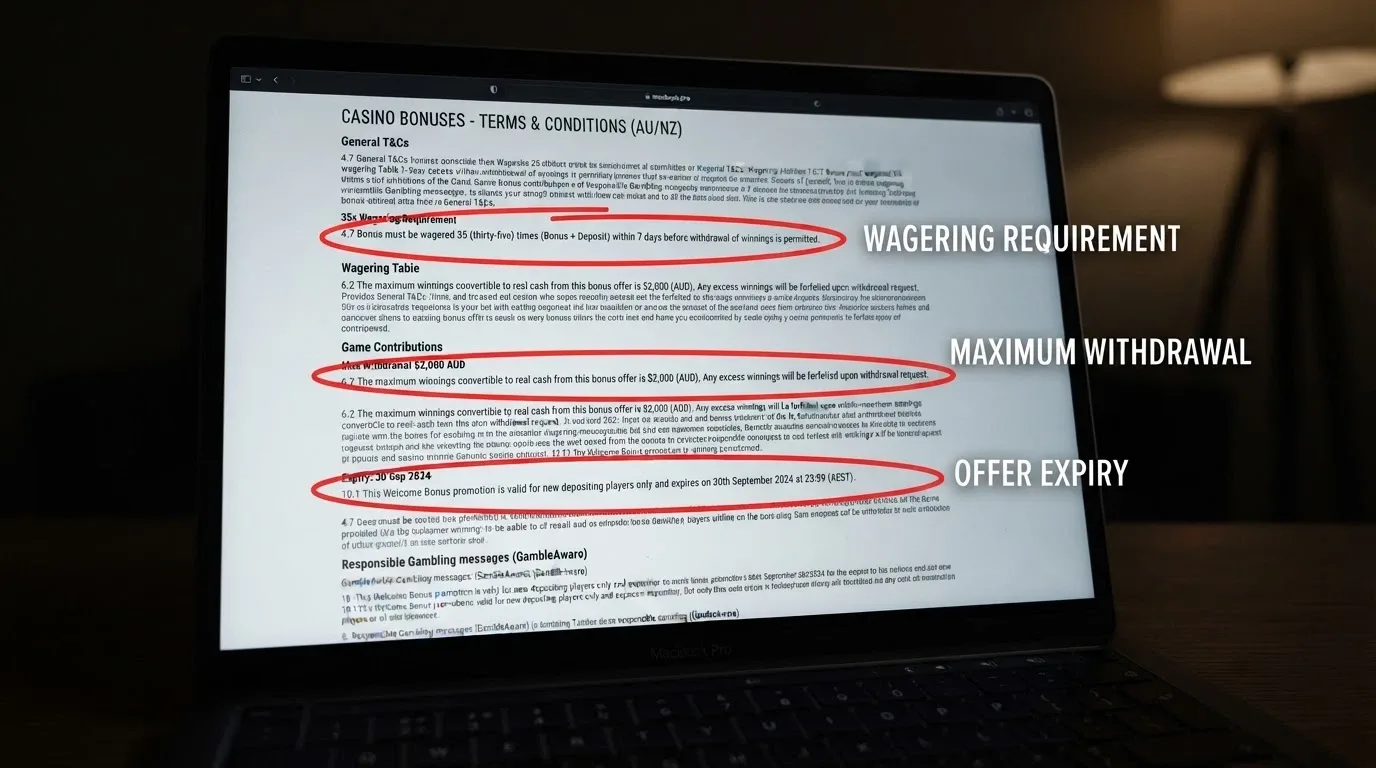
Wagering requirements are the multiplier that determines the total bet volume the player must generate before any withdrawal is possible. Across the market, the typical $300 no-deposit bonus carries wagering of 35x to 70x the bonus amount. At the low end of that range, a $300 bonus demands $10,500 in total bets before the player sees a dollar. At the high end, the same bonus demands $21,000. Rocket Spin specifies 40x on its bonuses. Fair Go sets 60x on its no-deposit play and 30x on its deposit bonuses. The spread is wide, and where a player lands on it changes the conversion arithmetic by a factor of two.
Maximum cashout caps shrink the headline figure. A “$300 bonus” with an A$50 withdrawal limit is functionally an A$50 offer; the same bonus with a $300 cap is functionally $300 if the player beats the wagering. The market sits between A$50 and A$300 on most offers, with most operators clustered around A$100. Fair Go caps free-money withdrawals at $180 AUD. Rocket Spin caps no-deposit withdrawals at 75 AUD. The headline figure is not the figure the player can take home.
Validity windows decide whether the wagering is even achievable. A 30-day window gives a casual player time to grind through $10,500 in bets at a sensible pace. A 24-hour window makes the same playthrough effectively impossible unless the player commits their full waking day to it. Most offers run 14 to 30 days; some compress to as little as three. Rocket Spin’s bonus duration is three days from claim, which is among the tightest in the set.
Max bet caps are the trap most players do not see coming. While the bonus is active, the operator limits individual bets — typically to A$5 or A$10 per spin. One oversized bet voids the bonus and any winnings attached to it. Fair Go sets its cap at $10. Rocket Spin sets its cap at 7.5 AUD. The cap is in place to prevent a player from placing one large bet that would, if it won, blow through the wagering requirement in a single spin. It also prevents the player from clearing the bonus quickly through volume.
Game contribution weightings are the final restriction. Online pokies contribute 100% of every bet toward the wagering requirement; table games like blackjack and roulette contribute only 10% to 20%; live dealer and most progressive jackpot games contribute nothing. A player who prefers blackjack and tries to clear a $10,500 wagering requirement is actually wagering $52,500 in bets to reach the same total. The bonus is a pokies product, not a casino-floor product, even when the casino floor is technically accessible.
Wagering Requirements: 35x–70x Turns a $300 Bonus Into $10,500–$21,000 in Required Bets
A wagering requirement is the multiplier the operator applies to the bonus amount before any withdrawal is possible. The arithmetic is straightforward: a $300 bonus at 35x means $300 multiplied by 35 equals $10,500 in bets the player must place before the bonus balance becomes withdrawable. A $300 bonus at 70x means the same $300 multiplied by 70 equals $21,000 in bets.
The range across the Australian-facing market runs from 35x to 70x. Fair Go sits at the high end with 60x on no-deposit play. Rocket Spin sits in the middle with 40x. The variance reflects different operator philosophies: tighter wagering means fewer players convert, but the converted players take larger amounts out; looser wagering means more players convert, but the operator absorbs more bonus loss. Either way, the player is being asked to generate meaningful turnover before any cash leaves the operator’s cage.
What $10,500 in turnover actually means depends on the stake per spin. At A$1 per spin — a standard pokies denomination — the player runs through 10,500 spins to clear the requirement. At five seconds per spin, that is 52,500 seconds of play, or roughly 14.6 hours of continuous spinning. The player who clears the bonus in a single sitting is committing the better part of a working day to it. The player who breaks it into sessions stretches the playthrough over a week or more.
The expected loss across that playthrough is what the house edge implies at each spin. Assuming only the bonus amount is being wagered, with a typical online pokies RTP around 96%, the player loses roughly 4% of turnover to the house edge — so $10,500 in playthrough carries an expected loss in the vicinity of $420. The bonus is, statistically, an expensive way to spend fourteen hours. The wagering requirement is not a gift; it is a throughput obligation dressed up as one.
A bonus-cost calculation, using the inputs the page is built around: a $300 bonus at 35x wagering requires $10,500 in total turnover. At A$1 per spin, that is 10,500 spins. At five seconds per spin, that is approximately 14.6 hours of continuous play. That is how long it takes to clear the bonus at the low end of the wagering range, before any consideration of whether the player actually wins enough to clear the playthrough at all.
Maximum Cashout Caps: Why a $300 Bonus Usually Lets You Withdraw $100 or Less
The maximum cashout cap is the second wall the player hits. The operator decides, in advance, the most the player can withdraw from a no-deposit bonus regardless of how much the player wins during playthrough. The cap exists because the bonus is a promotional outlay, not an open-ended credit line; the operator wants to limit its worst-case exposure per registration.
The market range sits between A$50 and A$300, with most operators clustered around A$100. Fair Go caps its no-deposit free-money withdrawals at $180 AUD, with a 5x bonus cap structure (a $100 no-deposit bonus has a $500 maximum cashout, even though $180 is the operator’s stated free-money ceiling). Rocket Spin caps its no-deposit withdrawals at 75 AUD. The cap is a fraction of the headline in nearly every case. A player who beats the wagering on a “$300 bonus” capped at $100 walks away with $100, not $300.
The practical effect is that the headline figure overstates the offer. A reader searching for “$300” and landing on an offer that pays out a maximum of $75 is not looking at a $300 bonus; they are looking at a $75 bonus with a marketing-friendly headline. The mismatch is not fraud in the technical sense — the operator does pay the cashout cap, and the player can reach it — but it is a deliberate inflation of the offer’s value to attract the searcher.
Bonus Validity, Max-Bet Caps and the Pokies-Only Restriction
Three further restrictions complete the picture. Validity windows run 24 hours to 30 days in the published range, with most offers between 14 and 30 days. The 24-hour window is the punishing case; a player who registers and walks away for a day loses the bonus. Rocket Spin compresses its window to three days, the tightest in the operator set. Fair Go’s window is not explicitly confirmed, but its terms imply a comparable range.
Max bet caps are the silent void. While the bonus is active, the operator restricts individual bets to a stated ceiling. Fair Go’s ceiling is $10. Rocket Spin’s ceiling is 7.5 AUD. The market range runs A$5 to A$10. One bet above the cap voids the bonus and any winnings attached. The cap is easy to miss because the casino’s interface does not always flag it; a player who raises their stake to chase a near-miss is one click away from losing everything.
Game contribution weightings are the last filter. Pokies count fully. Table games count partially or not at all. A player who prefers blackjack and tries to clear a $10,500 wagering requirement faces an effective playthrough of $52,500 or more, depending on the weighting. The bonus is a pokies-only product by design. Even operators that nominally accept table-game play for bonus clearance are pricing that play out of the practical range through the contribution rules.
Bonus Codes and the Free Spins That Sometimes Come With Them
Some offers require a bonus code at registration or deposit. The code is a short string the player enters to unlock the specific promotion rather than the casino’s default welcome. Where codes are used, they typically appear on the affiliate page, in the operator’s promotional email, or in the bonus terms section of the casino’s own site. The code does not change the underlying wagering requirements; it routes the player to the right offer within the same terms framework.
Free spins bundled with a deposit match carry their own wagering requirement, separate from the main bonus. Bizzo’s tiered welcome, for example, attaches 50 to 125 free spins to each deposit band; the winnings from those spins are subject to 40x wagering. The free spins are not free in the no-strings sense; they are a parallel bonus with their own playthrough. Cashback rewards run on different terms still. Rocket Spin’s cashback carries 10x wagering with a maximum win of 10x the amount received — a much lighter requirement than the main bonus but a much smaller headline figure.
The distinction matters because the player who reads only the headline sees “100% up to $1,000 plus 125 free spins” and does not realise the free spin winnings carry a 40x multiplier running against them separately. The code that unlocks the welcome package is also the code that activates the free spin wagering. Reading the terms before entering the code is what separates a player who understands the offer from one who discovers the strings after they have already played.
Online Casino Is Prohibited in Australia — Here Is What That Means for You
This is the section no competing listicle carries, and the one the searcher most needs. Online casino is prohibited in Australia under the Interactive Gambling Act 2001. No online casino licence exists anywhere in the country. Every operator on this page is offshore, accepting Australian players outside the Australian regulatory framework. None holds an Australian online casino licence; none is connected to BetStop; none is subject to ACMA consumer-protection enforcement. That is the legal environment the searcher is operating in, and it changes what every other number on this page means.
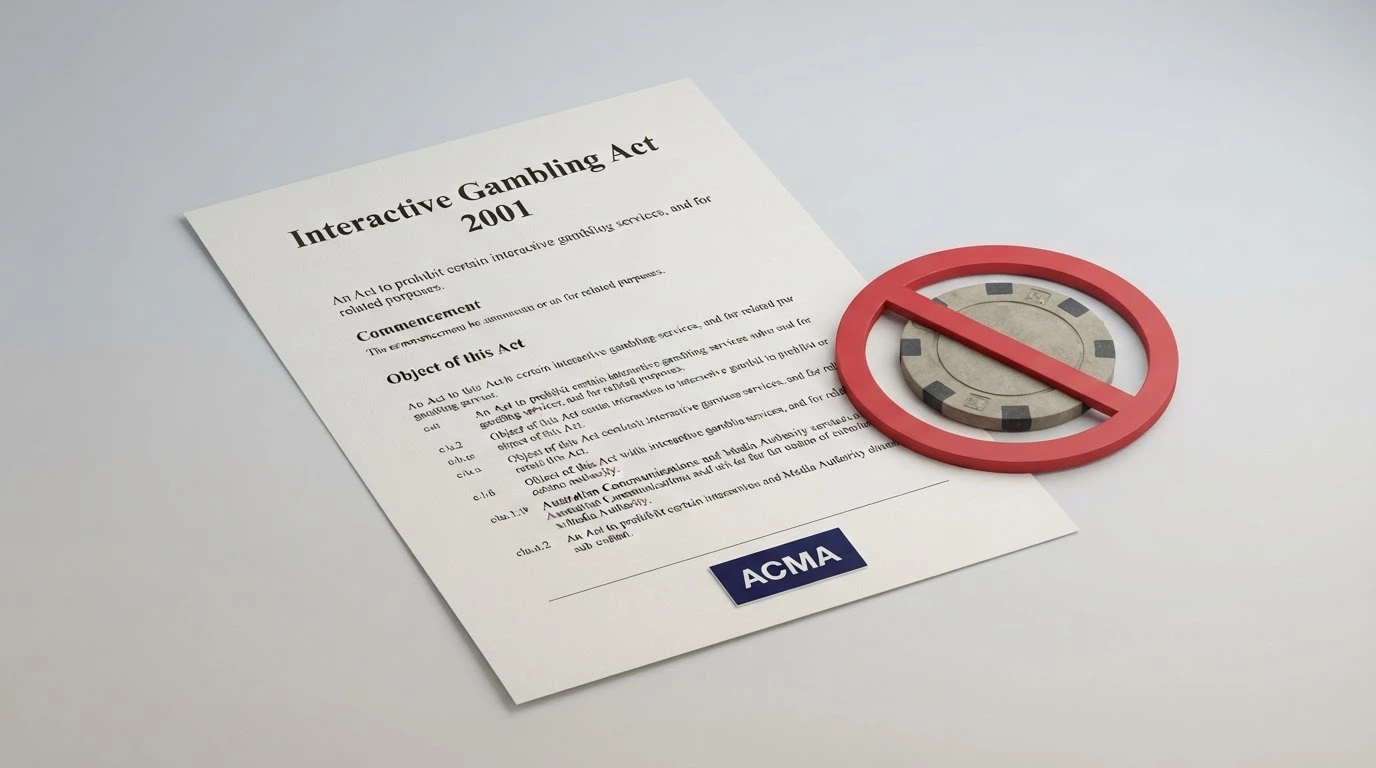
The Interactive Gambling Act 2001 makes it an offence to provide an online casino, online pokies or in-play sports betting to a person in Australia. Permitted and licensable products are wagering on races and sport placed before the event begins, lotteries and keno, through operators licensed by a state or territory. The Northern Territory Racing and Wagering Commission, administered through Licensing NT, is the de facto national licensor for online wagering, but its authority covers wagering only. Casino products are not in its remit. No state or territory body issues online casino licences. There is no licence to issue.
The ACMA — the Australian Communications and Media Authority — enforces the prohibition. Its powers include investigating complaints, issuing formal warnings, initiating civil penalty proceedings, and directing Australian ISPs to block illegal services. Since November 2019, the ACMA has had 1,564 illegal gambling and affiliate websites blocked by Australian ISPs, and more than 225 illegal services have withdrawn from the Australian market since enforcement was strengthened in 2017. The enforcement is real, ongoing, and expanding.
The individual player is not prosecuted. No Australian has ever been prosecuted for accessing and playing at an offshore online casino. The IGA targets the provider, not the player. That fact is well established across legal commentary and is not in serious dispute. But the absence of prosecution is not the same as the presence of protection. The offshore casino is not subject to Australian consumer law, not subject to Australian complaints processes, not subject to Australian data protection, and not subject to Australian financial-services rules. If the operator refuses a withdrawal, there is no Australian body the player can complain to. If the site is blocked, the player’s balance disappears with it.
Licensed Wagering vs. Offshore Casino: Regulatory Status
| Feature | Licensed Wagering Operator | Offshore Casino |
|---|---|---|
| Licence | State or Territory licensed | No Australian licence |
| Regulatory Body | NTRWC / Licensing NT | None (in Australia) |
| Consumer Protection | National Framework applies | None |
| BetStop Coverage | Included | Not included |
| Payment Channels | Regulated (no credit/crypto) | Unregulated |
The IGA is the statute. It prohibits the provision of online casino games, online pokies and in-play betting to persons in Australia. It permits pre-event wagering on sport and racing, lotteries and keno, through state and territory licensed operators. The 2017 amendments closed the loopholes offshore operators had used to argue their services were legally provided, and gave the ACMA its blocking and enforcement powers.
The legal architecture is deliberately asymmetrical. Australia does not ban the player; it bans the provider. The provider, if it wants to operate legally in the Australian market, must hold a state or territory licence for wagering — and wagering, in the Australian legal sense, does not include casino games. The provider that wants to offer online casino to Australians must do so from offshore, accept that it is breaking Australian law on the supply side, and accept that ACMA enforcement is a standing risk. The player, meanwhile, can reach the offshore site because no Australian law prevents the player from doing so — but the player also picks up no Australian protection by doing so.
The 2017 amendments made the prohibition enforceable. Before 2017, offshore operators operated in a grey zone; the ACMA could investigate but had limited power to act. The amendments gave the ACMA the power to direct ISPs to block illegal services, issue formal warnings, and pursue civil penalties. The 1,564 blocked sites since November 2019 is the operational record. The 225-plus withdrawn services is the deterrent effect.
Offshore Casinos Serving Australians: What the Operator Isn’t Telling You
The operators on this page are offshore. They hold no Australian licence. They are not connected to BetStop. If they refuse a withdrawal, the player has no Australian complaints body to turn to. If the site is blocked by an Australian ISP, the player’s balance is at the operator’s discretion. The casino’s own terms page is the only contract the player has, and the casino wrote the contract.
The consumer-protection gap is concrete. No Australian body can compel an offshore operator to pay a disputed withdrawal. No Australian data-protection law applies to the player’s account information. No Australian financial-services rule governs how the operator handles deposits. The ACMA can block the site, but blocking the site does not return the player’s money. The player is, in practical terms, in the same position as a customer of an unregulated offshore financial service: the contract is enforceable in the jurisdiction the operator chose, not the jurisdiction the player lives in.
BetStop does not reach offshore casinos. The National Self-Exclusion Register binds Australian-licensed wagering services. A person who has registered with BetStop is excluded from every Australian-licensed wagering operator; an offshore casino will keep accepting their deposits and letting them play. The exclusion is meaningless against the operators on this page. That is the most concrete harm of the offshore route and the gap no competitor page mentions.
A payment-method test reveals the operator’s status reliably. Credit cards, credit-related products and crypto are banned for licensed Australian wagering since 11 June 2024; an operator that asks for credit card details or cryptocurrency payment is operating outside Australian rules. Debit card, bank transfer, PayID, and BPAY are the legal routes for licensed wagering. An operator that accepts only the legal methods, while still offshore, is at least not asking the player to use a banned payment channel. An operator that pushes crypto or credit card is signalling its unregulated status.
The 2026 Reform: New Advertising Caps and Inducement Bans Start January 2027
The Interactive Gambling Amendment (Gambling Reform) Bill 2026 passed Parliament on 19 August 2026. Its measures commence 1 January 2027. The reform does not change the casino prohibition — online casino remains illegal to provide in Australia — but it tightens the environment around wagering advertising and inducement marketing.
From 1 January 2027, wagering advertising is capped at three ads per hour between 6:00 am and 8:30 pm, with a live-sport blackout running from 15 minutes before a live event until five minutes after it ends. Online wagering advertisements may be shown only to a user who is logged in, confirmed over 18, and offered an opt-out. Athletes, celebrities and influencers are barred from promoting wagering. Ads are not permitted in sports venues or on uniforms.
Inducement marketing is restricted more aggressively. Direct marketing of inducements is prohibited for 14 days after a customer signs up, for three months after a person deregisters from BetStop, and indefinitely for customers identified as at risk of gambling-related harm. The pre-welcome silence is the most concrete change: a player who registers with an Australian-licensed operator cannot be marketed to for two weeks.
Banks and payment providers gain express authority to block transactions to illegal gambling operators from 1 January 2027. The blocking power is a significant expansion of the existing framework; an Australian bank can refuse to process a PayID or direct debit transaction it identifies as heading to an illegal gambling operator. The practical effect is that some payment routes that work today may not work in 2026+1, even at the same offshore casino.
The reform matters to this page because it reshapes what the offshore casino can offer to an Australian player. A casino that advertises a “$300 no deposit bonus” through an Australian-facing affiliate is, from January 2027, operating in an environment where the affiliate itself faces inducement-marketing restrictions even before the operator does. The marketing infrastructure around these offers is tightening.
PayID at Offshore Casinos: Fast Deposits, No Promises on Withdrawals
PayID sits at the centre of how Australians actually move money to online gambling sites. It is the deposit method most players search for alongside this bonus — and it is the method the offshore casinos most readily accept, because it moves money fast and does not require the casino to hold credit card details. The mechanics are fast on the way in. The mechanics are not guaranteed on the way out.

PayID operates on the New Payments Platform (NPP), the Australian real-time payments infrastructure that enables bank-to-bank transfers around the clock. PayID itself is a simple identifier — typically a phone number, email address or ABN — linked to a bank account. When the player enters the casino’s PayID at their banking app, the transfer moves through the NPP and lands in the casino’s account via Osko, the NPP’s near-instant settlement service. The deposit arrives in seconds or minutes, with no card details exposed and no processing window.
The minimum deposit for PayID at most offshore casinos sits between AU$10 and AU$50. Fair Go’s deposit floor is $20. Rocket Spin’s floor is 30 AUD. Bizzo’s lowest tier begins at $10. A $300 deposit — the figure this page is built around — clears all of those floors comfortably and lands in the upper bands of any tiered welcome match. The deposit itself is fast and frictionless.
The withdrawal side is where the mechanism breaks. PayID withdrawals at offshore casinos are not regulated by any Australian body. The operator controls the timeline. Some offshore casinos process PayID withdrawals in hours; others hold the funds pending verification checks that can stretch into days. There is no Australian complaints process the player can invoke if the operator simply declines to pay. The deposit speed is a property of the NPP; the withdrawal speed is a property of the operator’s discretion.
Some Australian banks have started blocking gambling PayID transactions when the recipient is a known casino merchant. Others do not block anything. The variability is real, and it is bank-by-bank, transaction-by-transaction. A PayID deposit that worked last month may be blocked this month, with no notice to the player beyond the failed transaction. From 1 January 2027, banks gain express authority to block transactions to illegal gambling operators, which means the variability becomes a more uniform block across the banking system.
How PayID Works at Offshore Casinos — Seconds to Deposit, No Guarantees on Withdrawals
PayID deposits are instant by design. The player opens their banking app, enters the casino’s PayID (usually a phone number or email the casino has registered with its acquiring bank), confirms the amount, and the transfer settles through the NPP and Osko in seconds. No card details are exposed. No processing window delays the funds. The casino’s cashier registers the deposit almost immediately, and the bonus — if claimed — is usually credited within minutes.
The minimum deposit range is AU$10 to AU$50 across the operator set. A $300 deposit sits comfortably above every minimum and unlocks the upper tiers of any welcome match the operator runs. A player depositing $300 via PayID at an operator with a tiered welcome — Bizzo, for example — lands in the $250–$1,000 band at 125% plus 125 free spins. The deposit itself is the easiest part of the entire transaction.
The withdrawal side is unregulated. PayID withdrawals from offshore casinos are not governed by any Australian consumer protection rule. The operator sets the timeline. The operator sets the verification requirements. The operator decides whether the withdrawal proceeds at all. A player who deposits via PayID in seconds may wait days for the same PayID channel to return funds, and may receive nothing if the operator decides the account warrants further review. The speed asymmetry is not a technical limitation; it is a feature of the offshore operating model.
The $300 Deposit Threshold and What Funding Pokies via PayID Actually Requires
The $300 figure appears in search queries because it is a common deposit increment — large enough to clear most welcome match tiers, small enough to feel like a single sitting’s bankroll. A $300 deposit at a 100% match operator unlocks $300 in bonus funds. A $300 deposit at a 125% match operator — the upper tier of Bizzo’s structure — unlocks $375 in bonus funds plus 125 free spins. The deposit itself is the threshold at which most welcome packages reach their headline figures.
The minimum deposit figures tell a different story. Fair Go’s floor is $20. Rocket Spin’s floor is 30 AUD. Bizzo’s floor is $10. A player who wants to test the casino with a small PayID deposit can do so for as little as $10. A player who wants to access the upper welcome tiers needs to deposit at least $250 to hit Bizzo’s top band, and the same at any operator with comparable structure. The $300 figure is not a minimum; it is a comfortable position above every minimum in the set.
The deposit method interacts with the bonus structure. A $300 PayID deposit at Bizzo triggers 125% plus 125 free spins, with the free spin winnings subject to 40x wagering. The player has $675 in total playable funds ($300 deposit plus $375 bonus) and 125 free spins to use. The playthrough requirement on the bonus runs against the bonus alone or against deposit plus bonus, depending on the operator’s structure. The player needs to read the terms page to know which model applies.
Debit Cards, Bank Transfer and the Payment Methods That Signal an Offshore Operator
Credit cards, credit-related products and digital currency are banned as payment for online wagering in Australia, with the ban commencing 11 June 2024. Penalties of up to $247,500 apply to operators that fail to enforce the ban. The ban applies to Australian-licensed wagering operators; offshore casinos are not bound by it. The test is whether the offshore casino asks for a banned method.
A casino that asks for credit card details or cryptocurrency payment is operating outside Australian rules. The credit card ban is a clear signal: a regulated Australian operator cannot accept credit, so an operator that does accept it is unregulated. The crypto ban is the same signal from a different angle. A casino that pushes crypto deposits is not just offshore; it is asking the player to use a payment channel the Australian framework has explicitly closed.
Debit card, bank transfer, PayID and BPAY are the legal routes for licensed wagering. An operator that accepts only those methods is not necessarily licensed — but it is at least not asking the player to use a banned payment. The payment-method test is not a guarantee of legitimacy; it is a tell of illegitimacy. An operator that pushes crypto or credit card is not asking the player to use a legal channel, and that fact alone narrows what protection the player has.
Top Offshore Casinos Accepting Australians in 2026 — What We Can Verify
The operator set is ten offshore casinos that accept Australian players. None holds an Australian online casino licence, because no such licence exists. The table below presents what can be verified from primary sources and what cannot. Cells the published terms or a non-affiliate source confirm carry specific figures; cells research could not confirm from a primary source carry the em-dash marker, and the operator’s individual section below carries the qualitative detail the table cannot.

| Operator | Licence Status (AU) | Bonus Offer (actual, as stated in T&C) | Game Providers |
|---|---|---|---|
| Rocket Play | Offshore — no AU casino licence | — | — |
| Skycrown | Offshore — no AU casino licence | Welcome package + cashback | Multiple (7,000+) |
| Royal Reels | Offshore — no AU casino licence | — | — |
| Stake | Offshore — no AU casino licence | VIP-based weekly/monthly | Multiple (large library) |
| Fair Go | Offshore — no AU casino licence | Deposit match + free spins | RTG |
| Bizzo Casino | Offshore — no AU casino licence | Tiered deposit match up to $1,000 + FS | Pragmatic Play, BGaming |
| WinSpirit | Offshore — no AU casino licence | — | — |
| Scream Casino | Offshore — no AU casino licence | — | — |
| Rainbet | Offshore — no AU casino licence | — | — |
| Rocket Spin | Offshore — no AU casino licence | Deposit match bonuses | Multiple |
The honest reading of the table is that five of the ten operators carry enough confirmed bonus and provider detail to make a row meaningful, and the remaining five carry the marker because the primary-source terms were not verified this run. The markers are not a value judgement on the operators; they are a statement about what research could and could not confirm. The individual sections below carry the qualitative detail the table cannot.
Rocket Play
Rocket Play ranks first in market share among offshore casinos serving Australian players in 2026. It is offshore, holds no Australian casino licence (because none exists), and operates under a foreign licence regime. Rocket Play is the largest brand in the set by player volume, which is the reason it leads the ranking despite the ambiguity around its current terms.
The bonus terms Rocket Play publishes on its own site remain unverified. The qualitative picture is consistent with the offshore-casino norm: wagering requirements, a maximum cashout cap, a validity window, and a max-bet restriction, all of which would apply to any no-deposit or deposit-gated offer the operator runs. The specific figures — what the wagering multiple is, what the cap sits at, how long the bonus lasts — are not verified here, and a player should check the operator’s own terms page before claiming any offer.
The verdict on Rocket Play is that it is the largest brand in the AU-facing offshore market, and the largest brand by player volume tends to carry the most generous headline numbers and the most restrictive terms, in the operator set’s general pattern. A player looking for the brand-name option in offshore casino accepts that the terms have not been verified to the standard this page applies; the alternative is to pick an operator whose specific T&C are confirmed below.
Skycrown
Skycrown carries the largest confirmed game library in the set: more than 7,000 titles across multiple providers, per Dot Esports’ reporting. The library size is the operator’s clearest differentiation. A player whose priority is game selection — variety of pokies, table games, live dealer — has the deepest catalogue to choose from at Skycrown among the operators verified here.
The bonus structure is a welcome package plus cashback, which is a different offer type from the no-deposit bonus the searcher is typing for. A welcome package is deposit-gated; the player funds the bonus. The cashback layer softens the loss profile but does not convert the offer into a no-deposit deal. The specific terms on the welcome and the cashback — wagering, validity, cashout cap — were not confirmed from Skycrown’s primary terms page this run. The cashback component suggests Skycrown runs a softer offer than pure-deposit-match operators, which is consistent with a larger game library where the operator is monetising playtime rather than bonus conversion.
The no-deposit bonus structure, where Skycrown references one in its terms, was not confirmed in amount or terms this run. The qualitative reading is that the operator has the framework for a no-deposit offer in its published terms but the specifics are not verified. A player interested in Skycrown’s no-deposit path needs to check the operator’s own page directly.
The verdict on Skycrown is that it is the game-library choice in the AU-facing offshore market. A player who values selection over bonus generosity, and who is willing to fund a deposit to access the welcome package, gets the broadest catalogue in the set. The terms gap means the bonus economics need to be checked before claiming.
Royal Reels
Royal Reels is a recognised offshore brand among Australian players, with a presence in the affiliate rankings for this bonus type. It is offshore, holds no Australian casino licence. The brand recognition is the operator’s main asset; the specifics of its offer are not verified here.
The qualitative picture is consistent with the offshore-casino norm: a deposit-gated welcome, wagering requirements, a cashout cap, a validity window, and game contribution weightings that favour pokies over table games. Royal Reels’ specific position within that norm — whether it leans tighter or looser than competitors — is not something the verified record supports.
The verdict on Royal Reels is that it is a brand-name option in the offshore market, with a presence that puts it in the top-ten affiliate ranking for this bonus type, but with terms that have not been verified. This verification gap is the trade-off for a player choosing a brand-name offshore site.
Stake
Stake operates on a different model from the rest of the set. It is one of the largest global crypto-adjacent operators, with a VIP-based bonus structure rather than a standard welcome package. The bonus is not a fixed headline figure the player claims once; it is a weekly or monthly allocation based on the player’s VIP tier and recent activity. The 7-day birthday bonus coupon is the closest Stake comes to a fixed promotion.
The VIP model means there is no standard $300 no-deposit offer to claim. A player who types “$300 no deposit bonus casino Australia” and lands on Stake is in the wrong place. Stake’s bonuses are earned through play, not claimed at registration. The model suits a player who plays frequently and at volume; it does not suit a player who wants a one-off registration bonus.
The Curaçao licence reference is general knowledge, not confirmed from a non-affiliate primary source this run. Stake is widely identified as Curaçao-licensed in industry coverage, but the verification standard this page applies has not been met from a primary regulator source.
The verdict on Stake is that it is the wrong fit for the searcher typing “$300 no deposit.” The VIP model and the absence of a standard welcome make it a different product, not a different version of the same product. For those seeking a one-off registration bonus, other operators provide a clearer path; Stake’s system is strictly for users prioritizing long-term VIP progression over instant sign-up rewards.
Fair Go
Fair Go is the best-documented operator in the set for bonus terms. The casino runs on RealTime Gaming (RTG) software with an Australian-facing focus, and its terms page is explicit on the figures that matter. No-deposit bonuses carry 60x wagering on winnings. Deposit bonuses carry 30x wagering on deposit plus bonus. The maximum withdrawal from free-money promotions is $180 AUD. The minimum deposit is $20. The maximum bet during bonus playthrough is $10.
The 60x wagering on no-deposit is at the high end of the market range. A $300 no-deposit bonus at 60x requires $18,000 in turnover — at the upper bound of the 35x–70x market range and well above the 35x low end. The expected loss across that playthrough, assuming a 96% RTP, runs into the hundreds. The bonus is generous in headline but expensive in practice.
The 5x bonus cashout cap on no-deposit is an additional layer. A $100 no-deposit bonus has a $500 maximum cashout, which the operator states; the free-money $180 cap is the lower of the two ceilings. Either way, the player walks away with at most a fraction of the headline figure if they convert. The $180 figure is itself a fraction of $300, which means a “$300 no-deposit bonus” at Fair Go, if it existed, would not pay $300 in any scenario.
The minimum deposit of $20 is the lowest in the set alongside Bizzo’s $10. The low floor makes Fair Go accessible to a player who wants to test the casino with a small outlay before committing to a larger deposit. The 30x on deposit plus bonus is at the lower end of the deposit wagering range, which makes Fair Go’s deposit bonuses tighter than its no-deposit offers — unusual within the market, where most operators run the deposit bonuses more loosely than the no-deposit.
The verdict on Fair Go is that it is the operator with the most transparent terms in the set, and the transparency cuts both ways. A player who reads the terms knows exactly what the wagering, the cashout cap, the max bet and the minimum deposit are. The figures are not generous, but they are not hidden. Fair Go suits a player who values knowing what they are signing up for over chasing the largest headline figure.
Bizzo Casino
Bizzo is the clearest example of what a player typing “$300 bonus” actually finds at most offshore casinos. The operator does not run a no-deposit bonus. The offer is a tiered deposit match: 50% plus 50 free spins on deposits from $10 to $25, 75% plus 75 free spins from $25 to $100, 100% plus 100 free spins from $100 to $250, and 125% plus 125 free spins from $250 to $1,000. The free spin winnings are subject to 40x wagering.
The tiered structure is the point. A player depositing $300 lands in the $250–$1,000 band and triggers $375 in bonus funds plus 125 free spins. The headline value of the package — deposit plus bonus plus free spin value — is meaningful. The wagering on the free spin winnings is 40x, which is the standard for free spin terms in the market. The bonus funds themselves carry their own playthrough, the specifics of which depend on Bizzo’s terms on deposit plus bonus treatment.
The instant bonus round is in Big Bass Bonanza 1000, a Pragmatic Play title, and represents the kind of bundled promotion that deposit-match operators use to differentiate. Pragmatic Play and BGaming are the confirmed providers, which is a narrower provider set than Skycrown’s 7,000+ library but a more curated one. A player who values provider reputation over sheer volume gets the more transparent catalogue at Bizzo.
The deposit floor of $10 is the lowest in the set. A player who wants to test Bizzo with the minimum outlay can do so for the price of a takeaway coffee. The 125% top tier is among the highest match percentages in the offshore market. The combination of low floor and high ceiling is Bizzo’s structural advantage.
The verdict on Bizzo is that it is the clearest match for the searcher who typed “$300 bonus” and is prepared to fund a deposit. The tiered welcome means a $300 deposit unlocks the top tier at 125% plus 125 free spins. The 40x on free spin winnings is standard; the deposit bonus terms need to be checked on the operator’s site for the exact structure.
WinSpirit
WinSpirit appears in Australian-facing affiliate rankings for this bonus type, and it is offshore with no Australian casino licence. The bonus terms WinSpirit publishes on its own site were not confirmed from a primary source this run. The brand presence is the operator’s main asset; the specifics of the offer are not verified.
The qualitative picture is consistent with the offshore norm. A player interested in WinSpirit needs to check the operator’s own terms page for the wagering, the cashout cap, the validity window, and the max bet. The brand-recognition argument for WinSpirit rests on its affiliate-ranking position, which is real but is not the same as a terms verification.
The verdict on WinSpirit is that it is an affiliate-ranked offshore option with terms that have not been verified to the standard this page applies. A player who wants the brand-recognition option in this slot accepts the verification gap.
Scream Casino
Scream Casino is listed among offshore operators accepting Australian players, and it is offshore with no Australian casino licence. The current bonus terms Scream Casino publishes were not confirmed from a primary source this run. The presence in the AU-facing market is established; the specifics of the offer are not verified.
The qualitative picture is consistent with the offshore norm. The operator’s own terms page is the source a player should consult before claiming any offer. The verification gap here is the same as the gap for the other operators in this row of the table — research could not access or confirm the primary terms this run.
The verdict on Scream Casino is that it is an offshore option with terms that have not been verified. A player who wants to consider Scream Casino as one of the options in the top-ten needs to read the operator’s own terms page directly.
Rainbet
Rainbet is the least-documented operator in the featured set. It is offshore, holds no Australian casino licence, and the current bonus terms Rainbet publishes were not confirmed from a primary source this run. The presence in the AU-facing market is established through affiliate rankings; the specifics of the offer are not verified.
The qualitative picture is consistent with the offshore norm. A player who selects Rainbet as one of the options to investigate needs to read the operator’s own terms page directly. The verification gap is larger here than for some of the other operators in the set, because there is less third-party reporting to triangulate against.
The verdict on Rainbet is that it is the least-documented option in the top-ten, and a player who wants to include Rainbet in their consideration accepts the largest verification gap of any operator in the set.
Rocket Spin
Rocket Spin is the operator with the most specific published T&C in the set, alongside Fair Go. The casino requires 40x wagering on bonuses, with a minimum deposit of 30 AUD, a maximum bet of 7.5 AUD while wagering, and a no-deposit cashout cap of 75 AUD. Bonus duration is three days from claim. Cashback and cash rewards carry 10x wagering with a maximum win of 10x the amount received.
The 40x wagering sits in the middle of the market range. A $300 bonus at 40x requires $12,000 in turnover, which is tighter than the 35x low end but well below the 70x high end. At A$1 per spin and five seconds per spin, that is 12,000 spins and roughly 16.7 hours of continuous play to clear. The figure is steep but not punishing by the market’s own standards.
The 75 AUD no-deposit cashout cap is the tightest in the set. A “$300 no-deposit bonus” at Rocket Spin, if it existed, would pay at most 75 AUD — a quarter of the headline. The cap signals that the operator is not in the business of paying out large no-deposit bonuses, and that the offer is a registration incentive rather than a serious money-making opportunity.
The three-day bonus duration is the tightest validity window in the set. A player who registers and walks away for the weekend loses the bonus. The 7.5 AUD max bet is the tightest per-spin cap. Both windows force the player to engage actively with the bonus within a narrow timeframe, which suits a player who plans to play immediately and does not suit a player who wants to spread the bonus over a week.
The verdict on Rocket Spin is that it is the operator with the smallest numbers in the set, and the smallest numbers come with the shortest windows. A player who wants to test the offshore market with the tightest terms and the fastest turnover gets Rocket Spin. A player who wants the most generous playthrough gets Fair Go’s deposit bonus or Bizzo’s tiered welcome instead.
Responsible Gambling: Help That Exists and the Gaps Offshore Operators Leave
The harm picture is concrete. Between March 2025 and March 2026, Australians lost $36.0 billion to gambling — the highest per capita in the world. Roy Morgan research from March 2026 puts 15.1% of the Australian adult population — an estimated 3.32 million people — at some level of gambling harm. Of those, 622,000 are classified as ‘problem gamblers’ under the PGSI framework, up 22% on the prior year. ANU POLIS data shows risky gambling almost doubling since COVID-19 lockdowns, from 13.7% in 2024 to 19.4% in 2025.
The help infrastructure is world-class at the Australian-licensed end. The National Gambling Helpline — 1800 858 858 — is free, confidential and staffed 24 hours a day, seven days a week. Gambling Help Online at gamblinghelponline.org.au offers online chat and counselling. BetStop, the National Self-Exclusion Register, has 59,830 registrations as of 31 March 2026, with 37,247 active exclusions. The National Consumer Protection Framework delivers ten measures to licensed operators: no line of credit, strong identity verification, restricted incentives, easy account closing, deposit limits, monthly activity statements, consistent risk messaging, trained staff, and the National Self-Exclusion Register itself.
The offshore gap is the part no competitor page carries. None of those measures reach the offshore casino on this page. BetStop does not cover offshore operators. The National Consumer Protection Framework applies only to Australian-licensed wagering services. The deposit limits, the activity statements, the easy account closing — all are framework features that bind the licensed operator and have no reach against the unregulated one. A player using an offshore casino is using a service that operates outside the harm-minimisation infrastructure Australia has spent the last decade building.
The harm prevalence data is the reason this section exists at this length. The 36-billion-dollar loss figure and the 3.32-million-people figure are not abstract; they describe the population the searcher is part of. The help lines are the response; the offshore gap is the reason the response does not reach every player.
BetStop Doesn’t Cover Offshore Casinos — The Self-Exclusion Gap No One Mentions
BetStop launched on 21 August 2023. As of 31 March 2026, 59,830 people had registered, with 37,247 active exclusions. Of those registrants, 78% were under 40, and 38% chose lifetime exclusion. The register is one of the most effective self-exclusion tools in any jurisdiction; one registration excludes the person from every Australian-licensed online and phone wagering service.
The exclusion is meaningless at the offshore casino. BetStop binds Australian-licensed wagering services. An offshore operator is not connected to the register and will keep accepting a self-excluded person’s money. A player who has registered with BetStop, in the sincere belief that they have excluded themselves from online gambling, has excluded themselves from licensed wagering only. The offshore casino on this page will let them deposit, play, and lose without any check against the register.
The 38% lifetime exclusion figure is the most striking statistic in the BetStop record. More than a third of registrants chose permanent exclusion, which signals how severe the harm profile is among people who reach the register at all. The offshore gap means that for some of those 38%, the exclusion does not cover the full range of products they intend to exclude themselves from. A player who self-excludes from Australian wagering and then plays at an offshore casino has not actually self-excluded.
The National Consumer Protection Framework’s other nine measures are equally offshore-blind. Deposit limits apply to licensed operators and not to offshore ones. Activity statements go to licensed-wagering customers. Easy account closing is a licensed-operator obligation. The framework is built for the Australian-licensed market, and the offshore market exists outside it.
Where to Get Help: 1800 858 858, Gambling Help Online and Setting Deposit Limits
The National Gambling Helpline is 1800 858 858 — free, confidential, staffed 24 hours a day, seven days a week. The helpline routes callers to counselling, support services, and self-exclusion registration. The number works from any Australian phone and connects to trained counsellors who can talk through the caller’s situation.
Gambling Help Online at gamblinghelponline.org.au offers online chat and counselling for people who prefer text-based support or who are not in a position to make a phone call. The site also carries self-assessment tools and information about the help services available in each state and territory.
BetStop registration is at betstop.gov.au. One registration excludes the person from every Australian-licensed wagering service. The exclusion periods range from three months to lifetime. The registration is the single most effective harm-minimisation step available to an Australian who gambles online, because it removes the player from the licensed-wagering market entirely for the chosen period.
Deposit limits are a feature of the National Consumer Protection Framework and apply to Australian-licensed wagering operators. A player can set daily, weekly, or monthly deposit limits on their account, and the operator is required to honour them. Offshore casinos are not bound by the framework and do not necessarily offer deposit limits. A player who wants the protection of a deposit limit needs to verify that the operator offers it before depositing.
The 622,000 problem gamblers figure is the reason these resources exist at the scale they do. The 15.1% of adults experiencing harm figure is the population the help lines are designed to reach. The offshore gap is the reason none of these resources reach a player at an offshore casino.
How We Selected and Ranked These Casinos
The operator set is ten offshore casinos that accept Australian players and appear in affiliate rankings for this bonus type. The ranking is ordered by transparency of published terms and specificity of verified figures rather than by promotional appeal. An operator whose terms page is explicit and verifiable ranks ahead of an operator whose terms could not be confirmed this run, regardless of which carries the larger headline figure.

The sources for verification are the operator’s own published terms pages, accessed directly where possible. Where the operator’s terms page was accessible and explicit on the wagering, the cashout cap, the validity window, the max bet and the minimum deposit, those figures are stated in the operator section. Where the terms page was not accessible or not explicit, the section states the gap and routes the player to the operator’s own page.
The ACMA’s blocked-sites list was checked as a baseline. No online casino licences exist in Australia, so no casino appears on a positive register; the relevant regulatory check is the negative register — whether the ACMA has blocked the operator’s site. Operators whose sites are currently reachable from Australia are not necessarily legal, but operators whose sites the ACMA has blocked are definitely illegal. The current reachability of the operators in the set is not a clean legality signal because the ACMA blocks operators, not specific domains, and the operators can move.
The ranking does not invent weightings. There is no “overall score” because there is no comparable scoring basis across operators whose terms are partly confirmed and partly unverified. The ranking order reflects the order in which the operators appear in research and the relative confidence of the verification, not a numerical composite.
What this review cannot claim is completeness. The ten operators are the ten in the research set; they are not the entire Australian-facing offshore market. Other offshore casinos accept Australian players and are not listed here. The verification standard applied to the listed operators has not been applied to the unlisted ones. A player looking for an option outside this set needs to apply the same checklist the operator sections carry.
Your $300 No Deposit Bonus Checklist — What to Check Before You Sign Up
Five terms decide whether any no-deposit offer — at any figure — is worth claiming. Each is in the operator’s own terms page; each is checked before the player enters any bonus code or makes any deposit. The checklist is the practical takeaway from every section above.
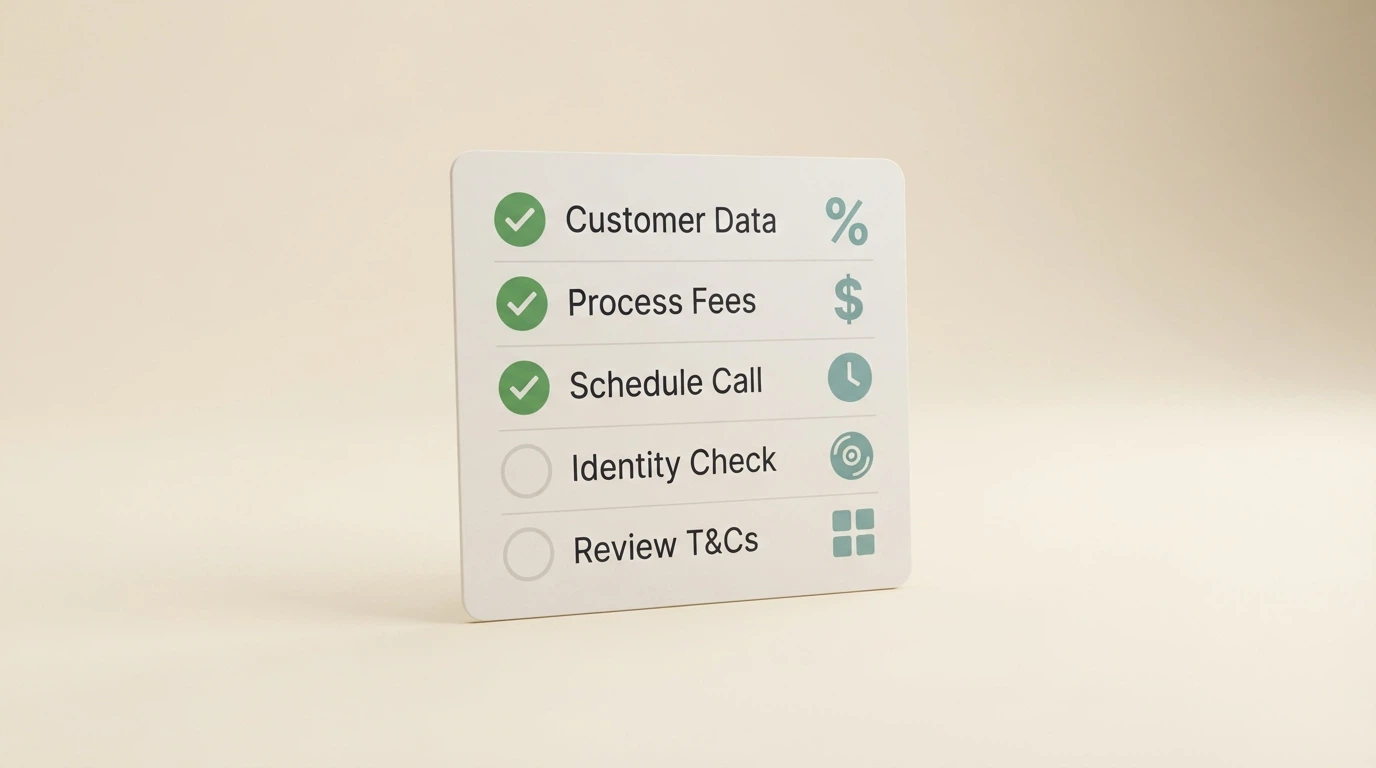
First, check the wagering multiple. The range across the market is 35x to 70x. At 35x on a $300 bonus, the player must run $10,500 in turnover. At 70x, the player must run $21,000. The expected loss across that turnover, at a 96% RTP, runs from roughly $420 to $840. The bonus is a time-and-money commitment before it is a chance at a payout.
Second, check the maximum cashout cap. A “$300 bonus” with an A$50 cap is functionally an A$50 offer. A “$300 bonus” with an A$300 cap is functionally $300 only if the player hits the cap exactly. The market range is A$50 to A$300, with most operators around A$100. Fair Go caps at $180 AUD; Rocket Spin caps at 75 AUD on no-deposit. The cap is the figure the player actually walks away with, not the headline.
Third, check the validity window. A 30-day window gives a casual player time to grind through the playthrough at a comfortable pace. A 24-hour window makes the same playthrough nearly impossible without committing a full day. A three-day window sits between those extremes but still punishes any player who does not play immediately. Rocket Spin runs a three-day window; Fair Go’s window is not explicitly confirmed. The shorter the window, the harder the bonus is to clear.
Fourth, check the max bet per spin. While the bonus is active, the operator limits individual bets to a stated ceiling — typically A$5 to A$10. One oversized bet voids the bonus and any winnings. Fair Go’s ceiling is $10; Rocket Spin’s is 7.5 AUD. The cap is easy to miss because the casino interface does not always flag it.
Fifth, check the game contribution table. Pokies contribute 100%. Table games contribute 10% to 20%. Live dealer and most progressives contribute 0%. A player who prefers blackjack faces an effective playthrough of five to ten times the stated requirement. The bonus is a pokies-only product, even when the casino floor is accessible.
The sixth check, which is not in the bonus terms but is in the regulatory environment, is the operator’s licence status. No online casino licence exists in Australia. Every operator on this page is offshore. The player is not protected by Australian consumer law, not covered by BetStop, and not able to invoke any Australian complaints process if the operator refuses a withdrawal. The bonus terms tell the player what the offer costs; the licence status tells the player what protections they have — and at every offshore casino on this page, the answer to the second question is none.
FAQ
Is it legal to play at online casinos offering $300 no deposit bonuses in Australia?
Playing at an offshore casino is not illegal for the individual. The Interactive Gambling Act 2001 targets the provider, not the player, and no Australian has ever been prosecuted for accessing an offshore casino. Providing the service is illegal, however, and the operator is breaking Australian law on the supply side. The player accepts the offshore status; the operator accepts the regulatory risk.
What happens if an offshore casino blocks my account or refuses a withdrawal?
The player has no Australian complaints body to invoke. The ACMA cannot recover funds. The operator’s own terms page is the only contract, and the casino wrote it. A blocked account or a refused withdrawal leaves the player with the option of pursuing the matter in the operator’s home jurisdiction, which is costly and rarely worthwhile for the amounts in question. The site can also be blocked at any time, with the balance still on the account.
Are $300 no deposit bonus offers real, or are they too good to be true?
Genuine $300 no-deposit bonuses are extremely rare in the Australian-facing market. The offers that appear under that search term are usually deposit-gated welcome packages rebranded for the search, with the player required to fund the bonus before claiming it. Where a genuine no-deposit offer exists, it carries wagering requirements of 35x to 70x and a cashout cap of A$50 to A$300, which means the player walks away with a fraction of the headline even if they convert.
Can I use PayID to deposit and withdraw at offshore online casinos in Australia?
PayID deposits work at most offshore casinos accepting Australian players, with minimums typically between AU$10 and AU$50 and deposits arriving in seconds through the NPP. PayID withdrawals are not guaranteed; the operator controls the timeline and may decline to process the withdrawal at all. Some Australian banks have started blocking gambling PayID transactions, and from 1 January 2027 banks gain express authority to block transactions to illegal gambling operators.
What is the maximum I can bet per spin while playing with a no deposit bonus?
The market range is A$5 to A$10 per spin. Fair Go’s cap is $10. Rocket Spin’s cap is 7.5 AUD. One bet above the cap voids the bonus and any winnings attached to it. The cap is enforced at the casino’s interface and is easy to miss; a player who raises their stake to chase a near-miss can lose the entire bonus balance in a single oversized spin.
Does BetStop cover offshore casinos that accept Australian players?
No. BetStop, the National Self-Exclusion Register, binds Australian-licensed wagering services only. An offshore casino is not connected to the register and will keep accepting deposits and play from a self-excluded person. The exclusion is meaningless against the operators on this page. A player who has registered with BetStop and intends the exclusion to cover online casino play needs to understand that the offshore market is outside the register’s reach.
Published by the Instant Withdrawal Casinos AU team.